Search the Blog
Categories
- Books & Reading
- Broadband Buzz
- Census
- Education & Training
- General
- Grants
- Information Resources
- Library Management
- Nebraska Center for the Book
- Nebraska Memories
- Now hiring @ your library
- Preservation
- Pretty Sweet Tech
- Programming
- Public Library Boards of Trustees
- Public Relations
- Talking Book & Braille Service (TBBS)
- Technology
- Uncategorized
- What's Up Doc / Govdocs
- Youth Services
Archives
Subscribe
Author Archives: Devra Dragos
Announcing the New NebraskAccess
This summer we have been busy reconfiguring NebraskAccess to accommodate new content, new database access pages, and new authentication options. NebraskAccess continues to offer the databases available in the past, as well the updated Websites Selected by Librarians, which provides the best information on Nebraska-related topics, including living and working in the state; researching Nebraska government, history and genealogy; planning a Nebraska visit or exploring the state; finding services, entertainment, education; and other frequently asked questions.
What’s new?
Content
Two new K12 databases have been added to the NebraskAccess lineup—MAS Complete, designed for high school libraries, and Middle Search Plus, designed for middle school libraries. The Explora for High Schools interface has been added, and Explora Primary is now Explora for Elementary/Middle Schools.
Database Access Pages
To support libraries that prefer to direct their users to a ready-made database access page on the NebraskAccess website, there are now three options. We will continue to maintain a page that links to all NebraskAccess databases. Additionally, we have taken the opportunity provided by our new MAS Complete and Middle Search Plus subscriptions to create two new database access pages—one aimed at high school students and one aimed at elementary/middle school students—each with customized versions of databases we think are most likely to meet the everyday research needs of those students.
As always, Nebraska libraries can link directly to individual NebraskAccess databases from pages on their own websites. This is a great way for libraries to integrate access to state- and locally-funded resources. It also gives librarians, who know their patrons best, control over which NebraskAccess databases to promote and how to present them. Information about linking to the individual databases can be found in NebraskAccess Librarian’s Toolbox: Linking to NebraskAccess.
Note: Biblionix users please stay tuned. We are working with Karl Beiser to make adding new content to your Biblionix Electronic Resources section as smooth as possible.
Authentication Options
Current methods of authentication will continue to work but there are changes in the password option, as well as other new authentication options.
To accompany the three new access pages, we will distribute three unique NebraskAccess passwords to each participating library—one for each access page. These passwords will be updated annually, on August 1. This is a change from our past practice of distributing a single NebraskAccess password to each library, and updating it twice per year.
To help you distribute passwords to patrons for home use, customizable business cards can be found in the NebraskAccess Librarian’s Toolbox.
New options for implementation of IP Authentication are available, so we ask that you read NebraskAccess Linking and Authentication to find the best option for your library.
EBSCO, the vendor responsible for many NebraskAccess database offerings, now provides an SSO (Single Sign On) option for students. K12 schools not already set up but interested in this option should contact Allana Novotny, 402-471-6681, 800-307-2665.
Notes:
- The NebraskAccess URL remains the same.
- The Databases Available to Nebraskans page will remain available until the passwords issued in March 2022 expire on October 1. It will then redirect visitors to the new Databases for Nebraskans page.
- Be sure to check out the NebraskAccess Librarian’s Toolbox for more information on the new NebraskAccess site.
Omaha’s Riot in Story & Picture
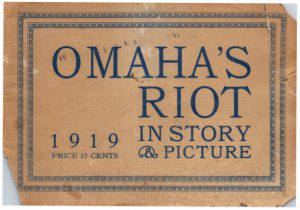
One hundred years ago on September 28th, Will Brown was lynched by a mob in Omaha. This week a number of events are being held in Omaha to remember Mr. Brown and discuss events that took place.
Students of history are encouraged to research primary sources—items from, documents written, or witnesses quoted at the time of the event or period of study. Also consulted by researchers, secondary sources present information collected from primary sources and provide the writers’ viewpoint on the subject.
One such contemporaneous secondary source, Omaha’s Riot in Story & Picture, can be found in Nebraska Memories. Printed and distributed by the Educational Publishing Company of Omaha, Nebraska, the document, written shortly after the event, purports to have an educational purpose. It states in part: “… publicity is the surest cure for lawlessness. The story of the riot has its lessons for all thinking citizens. The dramatic facts of the mob scenes are herein set forth in word and picture, with the view of stimulating serious thought and a possible probe into conditions that seem to foster anarchy.”
Nebraska Memories is a cooperative project to digitize Nebraska-related historical and cultural heritage materials and make them available to researchers of all ages via the Internet. The Nebraska Memories archive is brought to you by the Nebraska Library Commission. If your institution is interested in participating in Nebraska Memories, see http://nlc.nebraska.gov/nebraskamemories/participation.aspx for more information.
Posted in Nebraska Memories
Leave a comment
What Goes Around
Some people say change is inevitable, but how much have things really changed over the past 100 years?
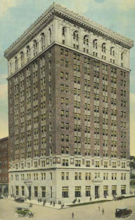 In 1917, the Nebraska Telephone Co. Building at left was completed in Omaha with a “modern telephone exchange” (Omaha Public Library Collection). There were over 6,000 independent telephone companies in the United States at that time with a fair number in Nebraska. Over the years many of those companies merged or were bought out. Today with the cell phone technology, different service providers, who buy out and/or merge with each other regularly, are again working to provide a new “telephone exchange” by expanding cell phone service to the more rural areas of Nebraska.
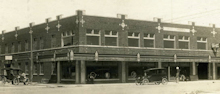 Transportation was in flux in 1917. While horse-drawn vehicles were still in use in some rural areas, motorized vehicles were taking over–both gas and electric. This brought about the building of automobile dealerships, gas stations, garages, solid-surface roads, and more. The Osborne Garage in Sidney at right was one of many such businesses being built in Nebraska (Cheyenne County Historical Society and Museum Collection). Mechanics today use computers to tune-up cars and trucks, but the basic need is still there for new tires, oil changes, etc. Now new dealerships and their garages are being built on the outskirts of town. And while gas cars won out for a number of decades, electric cars are making a comeback and bringing about the construction of re-charging stations. And who doesn’t run into road construction–or the need for it–on a regular basis?
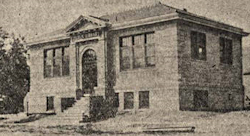 The population growth in early twentieth-century Nebraska brought a demand for amenities such as public libraries. At least 72 Nebraska towns erected new public library buildings between 1900 and 1920. 1917 alone saw the construction of at least nine public library buildings, two of which are still used as libraries: Cordelia B. Preston Memorial Library in Orleans and Arcadia Public Library at left (Nebraska Library Commission Collection). Other libraries have had to move on from old buildings to new buildings as technology has brought demands for different services. In 2017, Blair Public Library and Scribner Public Library both celebrated grand openings of their new facilities.
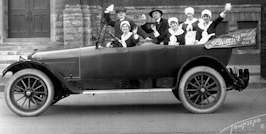 Live entertainment was popular in 1917 as it is today. In the Boileau Chautauqua Company photograph at right cast members in costume pose in a car. (Townsend Studio Collection). As the banner on the rear promotes the model of the car, perhaps this is an early example of promoting products for corporate sponsorship. While many people still traveled by train in 1917, touring cars (open cars that could carry five or more passengers a long distance) would become popular. A car allowed more flexibility in timetables and destinations. Today many entertainers move on to their next venue in tour buses.
So visit Nebraska Memories and see what old things or concepts are new again among the many historical images digitized from photographs, negatives, postcards, maps, lantern slides, books and other materials.
Nebraska Memories is a cooperative project to digitize Nebraska-related historical and cultural heritage materials and make them available to researchers of all ages via the Internet. Nebraska Memories is brought to you by the Nebraska Library Commission. If your institution is interested in participating in Nebraska Memories, see http://nlc.nebraska.gov/nebraskamemories/participation.aspx for more information, contact Devra Dragos, Technology & Access Services Director.
Posted in Nebraska Memories
Leave a comment
Caring for the Children
Nebraska Memories Archive: Nebraska Orthopedic Hospital
If you lived in a small rural town in the early 1900s, would you expect your local physician to be able to handle a case of Pott’s disease or a cleft palate? In 1905, the Nebraska Legislature believed children with deformities needed extra help and funded what was first known as the Nebraska State Hospital for Crippled, Ruptured and Deformed Children but soon became the Nebraska Orthopedic Hospital. As reported in the Biennial Report of The Nebraska Orthopedic Hospital for the period ending November 30, 1908, the hospital was established “by act of the Legislature … to provide hospital care for the crippled and deformed of this state who by such hospital treatment might be converted from wards of the municipalities or counties from which they came into individuals who in one way or another might become self-sustaining and independent.” As further biennial reports show, the patients were not all children.
Half of the $10,000 budget for the first year was used to remodel the boys’ dormitory on the campus of the Home for the Friendless. The hospital then opened for patients on October 1, 1905. The first year’s report to the governor, while describing its work with 106 patients, outlines the problems of not having a newly built hospital with all the facilities needed to treat and rehabilitate patients.
In 1908, the Lincoln City Directory lists the hospital’s address as 2129 S. 11th Street and directs visitors to take the S. 10th Street streetcar. No matter how patients arrived, they came from all parts of the state, including Sioux County in the farthest northwest corner.
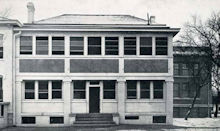 Over the next few years, the hospital took over additional buildings on the campus and extensions to the buildings were added, like the sleeping porches at right. Fresh air was considered important in recuperation, and without air conditioning, sleeping quarters with as many windows as possible made things more comfortable. As a number of the patients stayed for an extended period of time, various services needed to be provided such as a teacher to school classes and a gymnasium for physical training.
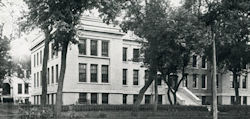 By 1915, the hospital had its new building (shown at left) at 1041 South Street, a block away from the old one. According to the biennial report of 1916, this building included “new and modern office rooms, library, reception rooms, dining rooms, school rooms, laboratory, surgical department complete, and three wards with a capacity of forty beds. … the different floors communicate by inclines instead of stairways.” But the report also includes recommendations for further updates of the other buildings.
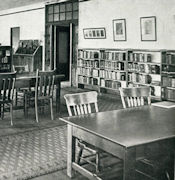 The State Library Commission was in charge of furnishing the new library at right, as well as stocking it with materials and supervising it. The library served both patients and employees. Students of the nursing school established at the hospital would have found many useful materials here. The school started in 1906, provided two years of training, following which some graduates went on to study for higher degrees. The students provided extra help with nursing duties and probably cut down on salaries that would have been paid to full-time staff.
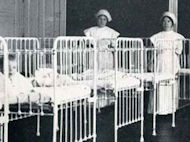 The children’s ward at left looks rather spartan but was probably very easy to keep clean. Patients didn’t necessarily stay in the wards all the time. In addition to fresh air, the doctor’s also promoted the benefits of sunshine and activity. Vocational training was encouraged for those who could manage it. Visitors were permitted for a few hours every day. And the entertainment was provided, especially in later years. For example, in the 1950s, Jock Mahoney, an actor, stuntman, and former stepfather of actress Sally Field, visited with patients in the hospital.
The hospital continued to add buildings and make improvements over the years. In the 1920s a cottage was built for the superintendent, and a separate dormitory was built for the nurses. A dental department was added and the physiotherapy equipment expanded in the 1930s.
Although the hospital admitted and treated 1,587 patients in the 1970-1971 biennium, the 1971 Legislature decided to accept the recommendation of a 1968 study which said the hospital should be closed.
Visit Nebraska Memories to search for or browse through many more historical images digitized from photographs, negatives, postcards, maps, lantern slides, books and other materials.
Nebraska Memories is a cooperative project to digitize Nebraska-related historical and cultural heritage materials and make them available to researchers of all ages via the Internet. Nebraska Memories is brought to you by the Nebraska Library Commission. If your institution is interested in participating in Nebraska Memories, see http://nlc.nebraska.gov/nebraskamemories/participation.aspx for more information, contact Devra Dragos, Technology & Access Services Director.
Posted in Nebraska Memories
Tagged Archive, free, Nebraska, Nebraska Memories, Nebraska Orthopedic Hospital, NLC Blog
Leave a comment
Over There
The Great War (later known as World War I) was the first large multi-country conflict in which United States forces fought. Although the U.S. took an non-intervention stance when the war started in 1914, Congress declared war and joined the Allies in April 1917 after Germany returned to torpedoing U.S. ships and offered Mexico financing to attack the U.S. on its southern border. While it took almost a year for the American Expeditionary Forces (AEF) to arrive in France in great numbers, AEF was established one hundred years ago this month under the command of General John J. “Black Jack” Pershing.
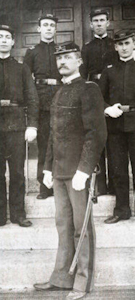 Pershing started his military career at forts in the western
 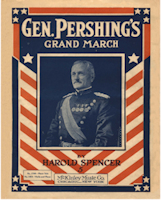 territories after graduating from West Point in 1886. After fighting in several Indian campaigns, he was assigned to the University of Nebraska in Lincoln as a professor for military science and tactics and Commandant of Cadets (at left Pershing with some of his staff at the University, Townsend Studio Collection) . While there, Pershing formed a drill company which was later renamed the Pershing Rifles. Pershing attended the UNL law school and took his degree in 1893. Pershing is remembered in the naming of several buildings in Lincoln, including an elementary school and an event facility. And while they may have been singing Gershwin’s “Over There” on Broadway, Fall City’s own Harold Spencer honored Pershing with “General Pershing’s Grand March” (above right, Polley Music Library Collection).
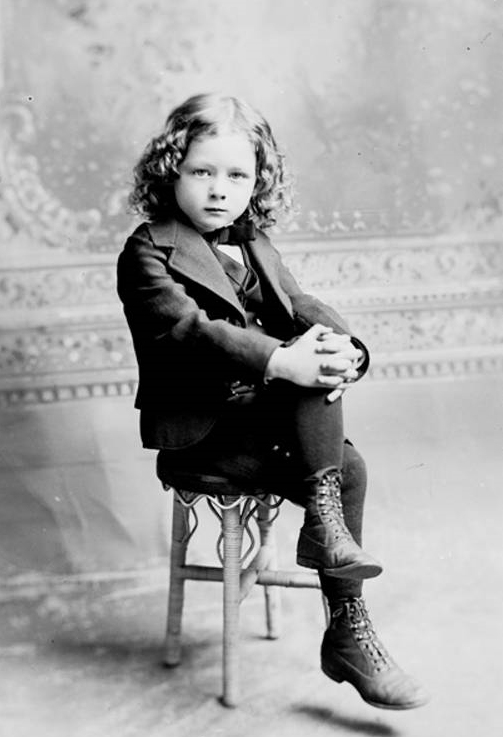 Young men such as Marvin Murphy (above, Butler County Gallery) volunteered from towns across Nebraska joined the fight. Of course this photo was taken a few years before Marvin served in France and Germany at the age of twenty-two. As did many Nebraska veterans, Marvin returned to Nebraska, raised his family, worked in the family business, and served in a civic capacity.
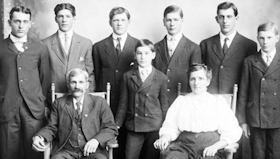 Some families saw more than one son off to war. The two youngest sons of Joseph Welty both served in the war (at left, Butler County Gallery). Herbert would also have been twenty-two and Paul twenty-six. Three of the sons already had military experience, serving with the Nebraska National Guard during the Mexican insurrection in 1916. And, as happens in small towns, relativ
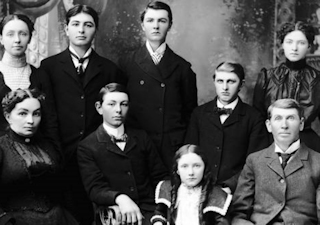 es through marriage also served in the military. Louis Welty, the second oldest son, married Mary Rosetta Delaney (standing at far right in the photo at right) whose younger brothers Charles (seated next to their mother) and Michael (seated next to Mary) were two of the older participants in the Great War. Charles was thirty-five in 1918 and Michael thirty-eight.
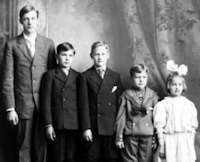
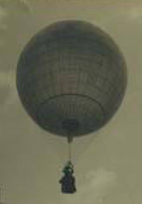 Not all the volunteers served in the army or overseas during the war. From the George Schweser family (at left, Butler County Gallery), Harold, the oldest served as a lieutenant in the Balloon Service in Oklahoma. Closer to home, at Fort Omaha, was the Balloon School (at right, Omaha Public Library Collection) which taught about 800 men for the Signal Corp in the war. Carl, the second oldest Schweser, served as an airplane mechanic at Camp Taylor in Alabama. And, Robert, the third in line, served in the navy.
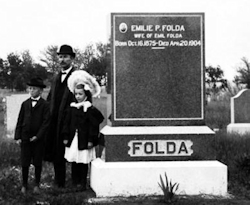 Not all those who served made it back home from the Great War. Some died in the training camps from measles, flu, dysentary, or other diseases. Some died when their ships were sunk on the way to Europe and many more, like Albin Folda (at right with his father and sister at his mother’s grave, Butler County Gallery) died on the battlefield. Albin’s grandparents had emigrated from Bohemia, looking for a better life in the United States. They found it on a Nebraska farm they homesteaded fifty years before their twenty-four year old grandson died in France.
Visit Nebraska Memories to search for or browse through many more historical images digitized from photographs, negatives, postcards, maps, lantern slides, books and other materials.
Nebraska Memories is a cooperative project to digitize Nebraska-related historical and cultural heritage materials and make them available to researchers of all ages via the Internet. Nebraska Memories is brought to you by the Nebraska Library Commission. If your institution is interested in participating in Nebraska Memories, see http://nlc.nebraska.gov/nebraskamemories/participation.aspx for more information, contact Devra Dragos, Technology & Access Services Director.
Posted in Nebraska Memories
Leave a comment
Got the Washboard Blues?
Do your dirty clothes and linens seem to multiply overnight? Do you never get to the bottom of your laundry basket? Can you hum the old Hoagy Carmichael tune, “Washboard Blues”? Do you know the F.B. Callahan lyrics? “Keep rubbin’–keep scrubbin’–keep tubbin’–keep drubbin’ ole dirty cloes.” Just imagine not having an electric washing machine and clothes dryer to do most of the back-breaking work for you.
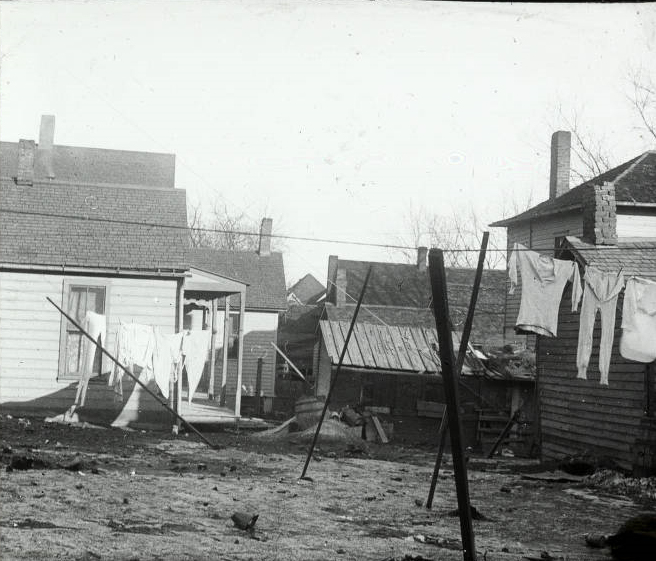 The women who washed the clothes in the picture above probably had to rub, scrub, tub and drub the dirt away as in the song. Most likely using a corrugated washboard and a tub. Note that the backyards in this Omaha neighborhood didn’t have lawns, flower beds, patios, grills, or other ornamentation–just clotheslines. (Omaha Public Library)
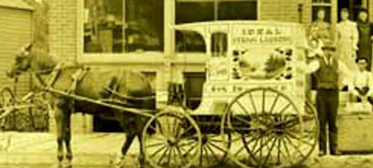 Not all women had to bend over a washboard, some would have had hired girls to do that heavy work while others who could afford it would send out the laundry to be done. Women had been “taking in washing” for centuries. But enterprising businessmen opened full-service laundries in a number of towns across Nebraska in the 1890s and early 1900s. In the photograph (from about 1895) at right, a horse-drawn delivery cart sports the name Ideal Steam Laundry located in Fremont. Women employees stand in front of the door while the man by the cart is probably the owner. (Keene Memorial Library Collection)
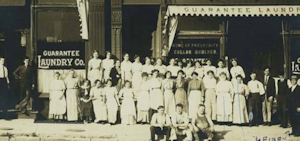 Working in a laundry was acceptable labor for women at that time, as you can see in the postcard at left, most of the Guarantee Laundry Company employees are women. Business must have been booming
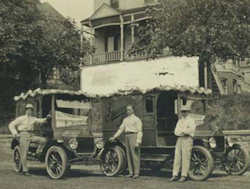 with that number of employees. It also appears that it expanded from one building to two over time, and this was only one of several laundries in Omaha owned by Leonard Heine and his wife in the early 1900s. The photograph at right shows two of the Guarantee’s first motorized delivery trucks in 1916. Note the size of the house in the background; the lady of this house definitely wouldn’t be bending over a washboard. (Omaha Public Library Collection)
Lincoln also had its share of laundries (not including dry cleaners or dyers and cleaners). The 1908 Lincoln City Directory listed seven laundries and two “Chinese laundries.” In 1924, the number had increased to ten; 1930 also lists ten, but with a loss of one and a gain of another; the 1951 directory lists the first self-service laundries; and in 1960 the number of full-service laundries had dropped by half while the number of self-service laundries had quadrupled to twenty. People who wanted the convenience of fully automatic washers and dryers but could not afford their own had a place to go, while those who could have afforded to send their laundry out could easily purchase the machines to do their own.
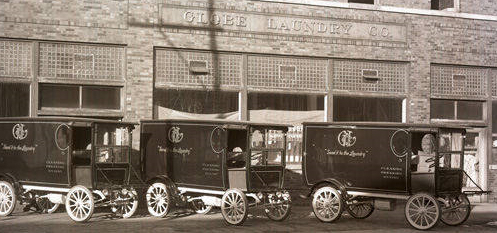 The Globe Laundry was one of the longest lasting Lincoln laundries. Listed in the 1908 City Directory at 330-340 S. 11th Street or the southwest corner of the block. The address by 1930 is reported as 1124 L Street placing it in the south center of the same block, possibly a new building was built in between times. Their building and neat delivery trucks at left, may have been at either location. This entire block was cleared in the 1980s for new development. (Townsend Studio Collection)
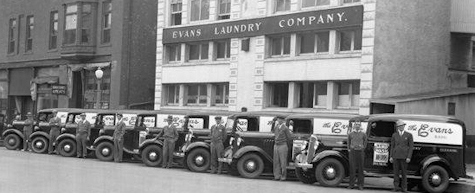 Another long-lived Lincoln business, Evans Laundry Company was located on North 12th Street, close to the University of Nebraska. The 1936 photograph at right shows nine of their delivery trucks parked in front of the southern of their two building with drivers standing at the ready. This block was cleared in 1986 for the building of the Lied Performing Arts Center. (Townsend Studio Collection)
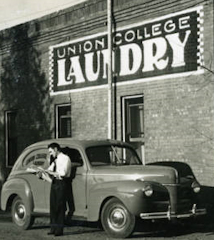 A third long-lived business, Union College Laundry was on the actual campus of Union College in College View, which was annexed by Lincoln in 1929. This laundry opened when the college was established in the 1890s to serve the students; however, it later became a commercial enterprise providing students with part-time jobs to pay their way through school. One employee was Eddie Holweger shown at left reading a newspaper while leaning against a delivery vehicle. (Union College, Ella Johnson Crandall Memorial Library Collection)
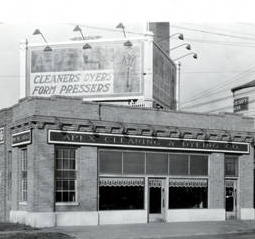 Items needing special care such as furs, hats, tie, and drapes could be taken to cleaners such as Apex Cleaning & Dyeing Company shown at right. While Peter Plamondon had opened the business with offices downtown several years earlier, the new office and main plant building shown at 123 S. 23rd Street was built in 1923. Notice the use of billboard advertising in 1928. This block was also cleared in the 1980s. (Jane Pope Geske Heritage Room of Nebraska Authors Collection)
Visit Nebraska Memories to search for or browse through many more historical images digitized from photographs, negatives, postcards, maps, lantern slides, books and other materials.
Nebraska Memories is a cooperative project to digitize Nebraska-related historical and cultural heritage materials and make them available to researchers of all ages via the Internet. Nebraska Memories is brought to you by the Nebraska Library Commission. If your institution is interested in participating in Nebraska Memories, see http://nlc.nebraska.gov/nebraskamemories/participation.aspx for more information, contact Devra Dragos, Technology & Access Services Director.
Posted in Nebraska Memories
Leave a comment
Paving the Way
Spring is here and birds have been returning to Lincoln and building their nests. However, the rat-a-tat-tats I’ve been hearing aren’t all woodpeckers! It’s construction season for houses and roads. Lincoln’s 2015 population estimate was 277,348, up 7.3% from 2010; it is a seller’s market at the moment as the city continues to grow.
Between 1920 and 1930 Lincoln’s population increased by 38.2%. Although the annexation of Bethany Heights (1922), University Place (1926) and College View (1929) contributed about 8,000 of the 20,985 new Lincoln residents, there was still a definite need for more housing.
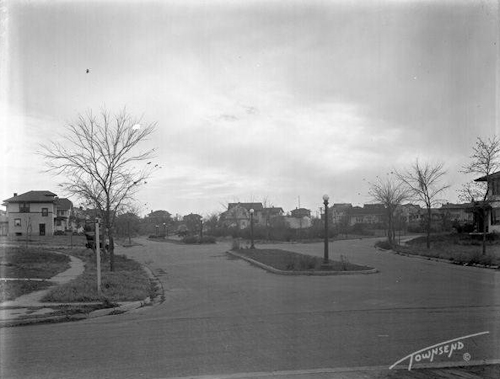
Sheridan Park, one new housing development, was organized by Harvey Rathbone, secretary and manager of Sheridan Park Investment Company and president of Rathbone Company (real estate). Now part of the Boulevards Historic District, Sheridan Park’s original plat map shows a rectangle bounded by South and Van Dorn Streets and 27th and 31st Streets, and includes several interior streets that curve and have medians. Sheridan Boulevard follows a geographical ridge with the streets on either side following the same line. The final layout was very close to that of the plat map, but a few streets have different names, and 31st Street, which became Winthrop Road, ended up with several curves in it. On the east side of Winthrop Road, Rathbone later created a subdivision called Rathbone Village; that name was sometimes used when referring to all of Rathbone’s development in this area. The photograph below shows Bradfield Drive, the north entrance to Sheridan Park/Rathbone Village, from South Street in 1923 (all historical photographs in this post are from the Townsend Studio Collection).
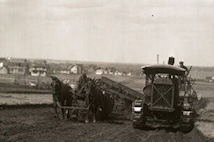 The first house on Bradfield Drive was built in 1917 and the last in 1940. Along the way, streets were cut and paved as needed. New machinery helped with the process, as seen in the photograph at right. With the brand name “Best” stamped above the grill, the machine used to pull the equipment that cut and lifted the sod has a motor and continuous tracks like a tank for traction. However, the wagons used to haul away the sod were still pulled by horses.
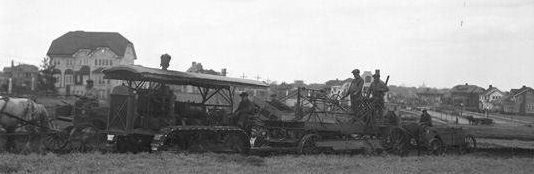
The side view of this machine shows its size and the equipment it is pulling. This second section has various rods and chains as well as three wheels shaped like a ship’s wheel that the men appear to be working. Instead of continuous treads, it has wheels–the back ones larger than the front. Abel Construction Co. is printed on the side of the second section. Abel Construction Company started as a paving contracting company in Lincoln in 1908 and is still in business today under the name Constructors, Inc.
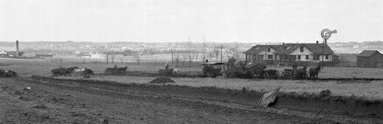 Along with brick-paved streets, the new housing division had other modern conveniences, such as electricity. Even though there is a windmill behind one of the bungalows in the photograph at the right, there are electric poles and lines running by the houses. Perhaps the reliability of the electricity was still a little iffy and the windmill was used like a backup generator.
In addition to housing, people have various other needs. In the above photograph, at left in the distance behind the building with the smokestack, was the dancing pavilion at Antelope Park. The park eventually expanded to run down the length of the east side of the development and is part of the city’s current bike trail system. In 1925, Sheridan Elementary School was built in Sheridan Park on Plymouth Avenue, and Westminster Presbyterian Church was built a few blocks to the west on Sheridan Boulevard.
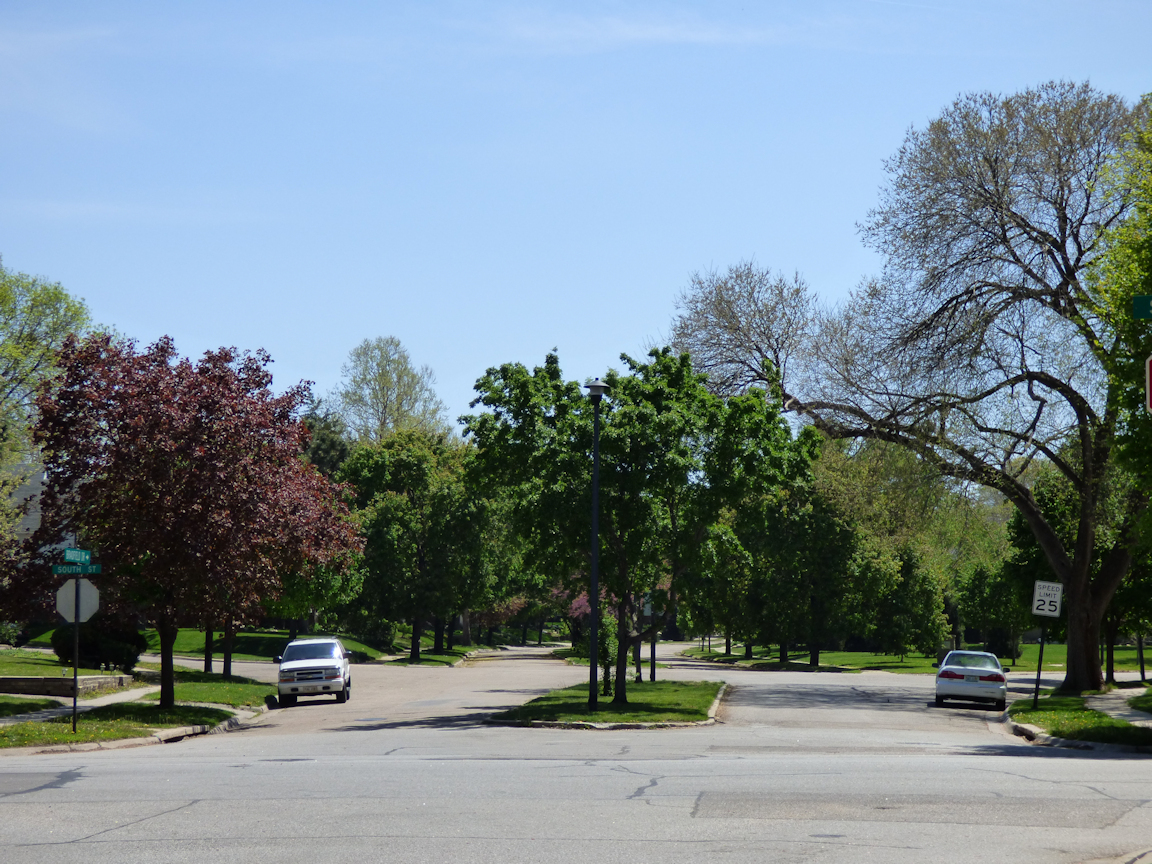
When you drive through the new housing developments today and see the little stick trees planted in the front yards, just think of how they will look 90+ years from now. As in the photo below taken at the South Street entrance to Bradfield Drive, you won’t be able to see the houses for the trees!
Visit Nebraska Memories to search for or browse through many more historical images digitized from photographs, negatives, postcards, maps, lantern slides, books and other materials.
Nebraska Memories is a cooperative project to digitize Nebraska-related historical and cultural heritage materials and make them available to researchers of all ages via the Internet. Nebraska Memories is brought to you by the Nebraska Library Commission. If your institution is interested in participating in Nebraska Memories, see http://nlc.nebraska.gov/nebraskamemories/participation.aspx for more information, contact Devra Dragos, Technology & Access Services Director.
Posted in Nebraska Memories
Leave a comment
The Luck of the Irish
At 32,599 square miles, the island that contains the Republic of Ireland and Northern Ireland has just over two-fifths the area of the state of Nebraska. However, it has made a huge impact on the world through the immigration of its people to other places. While the largest diaspora occurred during the potato famines of the 1840s, many Irish continued to move to the United States throughout the rest of the nineteenth century and the early twentieth century. A fair number of them came to Nebraska.
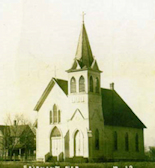 According to Nebraska Moments by Donald R. Hickey, et al., the very first church built in Nebraska Territory was a Catholic church to serve the Irish population in 1856. Another church purported to have been built for residents of Irish descent some 26 years later was the St. James Catholic Church of Fairmont at left (Fairmont Public Library Collection). After Germans (a mix of Catholic and Protestant faiths) and Swedes (generally Lutheran), the Irish made up the third largest ethnic group of immigrants to Nebraska.
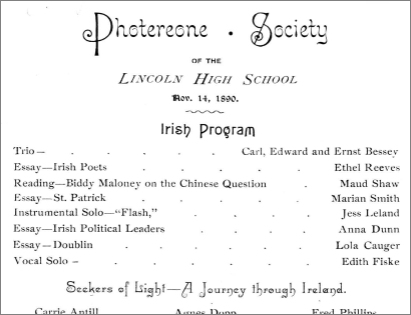 O’Neill, which has been proclaimed “The Irish Capital of Nebraska,” was named for John O’Neill, who helped establish several towns in Nebraska with Irish settlers. O’Neill, a U.S. Civil War veteran, had worked for “Home Rule” in Ireland, trying to push the British out. Some years later in 1890 that topic was raised in a program at Lincoln High School by the Photereone Society (Polley Music Library Collection). Along with a mixture of music and dramatics, students debated Irish Home Rule and discussed the issue of Chinese immigration. In two years the Chinese Exclusion Act that suspended Chinese laborer immigration to the United States was due to expire; the Act was renewed in 1892. Some people also wanted to restrict the immigration of other ethnic groups, including the Irish.
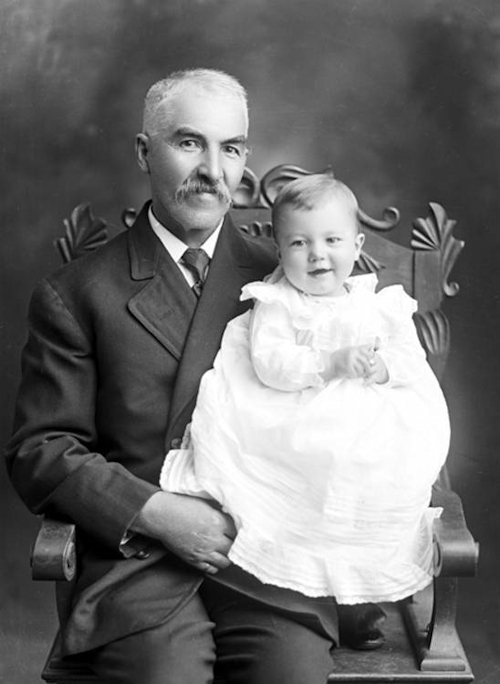
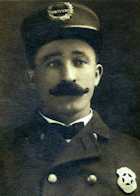 The Irish worked at a variety of jobs in Nebraska. William McGaffin, above with his son Wesley (Butler County Gallery), and his first wife Margery emigrated to the United States in the late 1860s. After spending some years in New York, the McGaffins moved to Butler County, Nebraska in 1885. McGaffin published the Bellwood Gazette that year and ran the paper into the 1920s. Joseph Haney, at right (The Lincoln Police Department Collection), was a baby when his family emigrated in 1881. From age 16-20, Haney drove a police wagon for the Lincoln police department. Another Irishman, Captain William T. B. Ireland who was born in New York, served with the Lincoln Police Department for over 20 years.
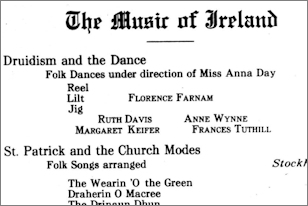 Whether or not you have descended from those earlier Irish immigrants, you might have enjoyed the St. Patrick’s Day musicale at the Temple Theatre in 1913 with song and dance (Polley Music Library Collection). I plan to enjoy some Irish dancing myself tonight across the street in the newer performing arts center. Enjoy your St. Patrick’s Day!
Visit Nebraska Memories to search for or browse through many more historical images digitized from photographs, negatives, postcards, maps, lantern slides, books and other materials.
Nebraska Memories is a cooperative project to digitize Nebraska-related historical and cultural heritage materials and make them available to researchers of all ages via the Internet. Nebraska Memories is brought to you by the Nebraska Library Commission. If your institution is interested in participating in Nebraska Memories, see http://nlc.nebraska.gov/nebraskamemories/participation.aspx for more information, contact Devra Dragos, Technology & Access Services Director.
Posted in Nebraska Memories
Leave a comment
To Serve at the Pleasure of the President
Among the positions appointed by a United States president are ambassadors to foreign countries. One former ambassador with Nebraska ties was David Eugene Thompson.
Born in Michigan, Thompson came to Lincoln by way of his work with the Burlington Railroad and made his mark in Lincoln during the 1890s and early 1900s. In addition to his work with the railroad, he was president of local gas and insurance companies.
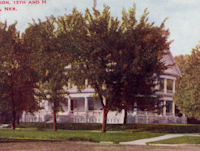
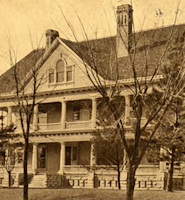 In 1892, Thompson and his wife, Jeannette, built a Neoclassical Revival-style two-and-a-half story house at 1445 H Street, seen in the postcards at left and right (Nebraska Library Commission Collection). The elegant residence contained several wood-paneled rooms on the first floor, six fireplaces, and a third floor ballroom. The Thompsons sold this house to the State of Nebraska in 1899 to serve as the first official Governor’s mansion. The sale included many of the furnishings. For more information about and photographs of the house, see James E. Potter, “The Governor’s House, the People’s House: Nebraska Governors’ Residences” Nebraska History 89 (2008):26-41.
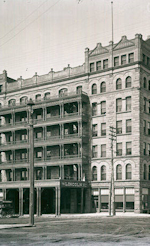 The Thompsons next lived in the Lincoln Hotel seen at right (Townsend Studio Collection) and maintained rooms there as late as 1908. While living here, Thompson founded the Lincoln Daily Star newspaper, later the Lincoln Star, which finally merged with the Lincoln Journal in 1995 to become the current Lincoln Journal Star. He also became more involved in politics. President Theodore Roosevelt appointed Thompson as the “Envoy Extraordinary and Minister Plenipotentiary” to Brazil. Thompson took up his position as of April 1,1903. As of March 16, 1905, the position became “Ambassador Extraordinary and Plenipotentiary,” and the Thompsons remained in Brazil until November 1905. President Roosevelt next appointed Thompson as Ambassador to Mexico where he served from March 1906 to December 1909.
The Thompsons remained in Mexico City where Thompson bought and managed the Pan-American Railway until his wife’s death in 1911. Mrs. Thompson was buried in the Wyuka Cemetery in Lincoln, and Thompson lived in Lincoln for a few more years before moving to California. After his death in 1942, Thompson was also buried in the Wyuka Cemetery.
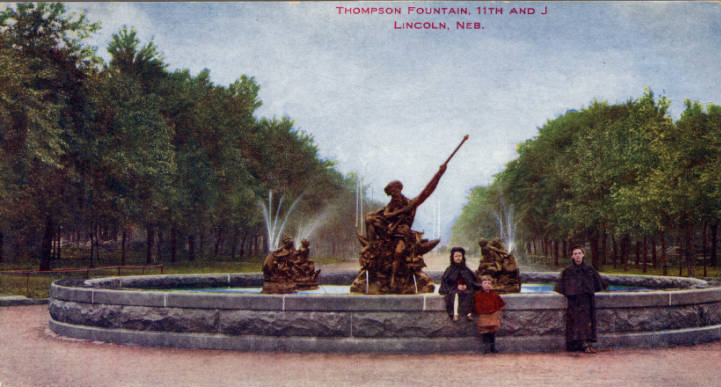
At some point during the 1900s, the Thompsons gifted the city of Lincoln with the fountain seen below (Nebraska Library Commission Collection). Located at 11th and J Streets, the fountain remained a prominent feature of the capitol/university/downtown district until it was moved to Antelope Park which was developed in the late 1910s.
Visit Nebraska Memories to search for or browse through many more historical images digitized from photographs, negatives, postcards, maps, lantern slides, books and other materials.
Nebraska Memories is a cooperative project to digitize Nebraska-related historical and cultural heritage materials and make them available to researchers of all ages via the Internet. Nebraska Memories is brought to you by the Nebraska Library Commission. If your institution is interested in participating in Nebraska Memories, see http://nlc.nebraska.gov/nebraskamemories/participation.aspx for more information, contact Devra Dragos, Technology & Access Services Director.
Posted in Nebraska Memories
Leave a comment
Dressed to the Nines
The origin of the phrase “to the nines” is debatable; however, the meaning or intent seems to be consistent, as in to perfection or to the highest degree. When combined with the word dress, it can mean smartly or flamboyantly.
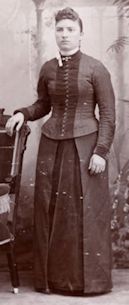
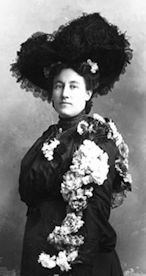 Formal dress was de rigueur for photographs taken in a photographer’s studio, even in small town Nebraska. Florence Martin Stevens, dressed in a trim two-piece fitted top and matching skirt, posed for the photograph, at left, taken by A. C. Strauss in Osceola, Nebraska, probably in the 1890s. The only embellishment on her tidy costume appears to be a bow at the collar. Margaret Meister’s costume, on the other hand, is a bit looser fitting, embellished with flowers, and topped by a very large frilly hat. Mrs. Meister’s photographer, Harvey Boston of David City, perhaps contributed the flowers as some of the women in other photographs taken by him are also decked out in a similar manner (Butler County Gallery Collection).
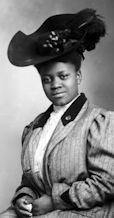 In the following decade, Dora Lane dressed just as fine but her costume is a two-piece suit made of a lighter colored pinstripe material and worn over a white blouse with lace at its collar. The jacket, while fitted around the body, has puffed sleeves and insets of darker cloth at the cuffs which match the attachment on her collar. Her large hat of a dark color isn’t quite as frilly as Mrs. Meister’s; it has a bit of frill at the back and some type of ornamentation on the front brim. Harvey Boston also took this photograph.
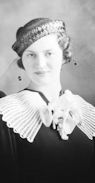 A few decades later, during the Great Depression, hemlines had risen and clothing tended to be less bulky. However, in Mr. and Mrs. Victor Barta’s wedding picture, the bride, Helen, wears a dark dress lightened by a wide, white lace over-collar and calla lilies pinned at the center of her neckline. Her soft hat is much smaller than the other two, more like a cap, but it has a wide woven ribbon around the edge and a short piece of netting attached to the back edge. This photograph was taken by Harvey’s daughter, Edith Boston Proskovec in 1936.
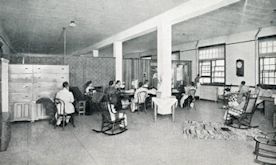 So where would these ladies have gotten their fine outfits? The first three were most likely made at home or by a dressmaker specifically for the wearers. Into the beginning of the twentieth century, even in institutions, like the Nebraska Hospital for the Insane, clothing had to be sewn (Section of sewing room in Industrial Building, Nebraska Hospital for the Insane. Lincoln, Nebraska Library Commission Collection).
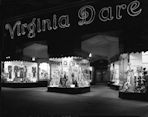
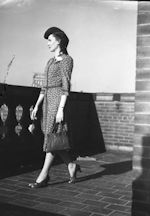 Mrs. Barta, Helen, may have had her dress specially made, too. Or it’s possible she made the trip to one of the larger towns in Nebraska to shop at a store such as Virginia Dare Women’s Apparel in Omaha. William Wentworth’s night time photograph from the late 1930s or early 1940s shows lots of wonderful costumes and accoutrements. The Brandeis Store was another popular department store in Omaha, and Wentworth’s photograph at right shows one of their models wearing a ready-to-wear print dress in 1939. (The Durham Museum Collection)
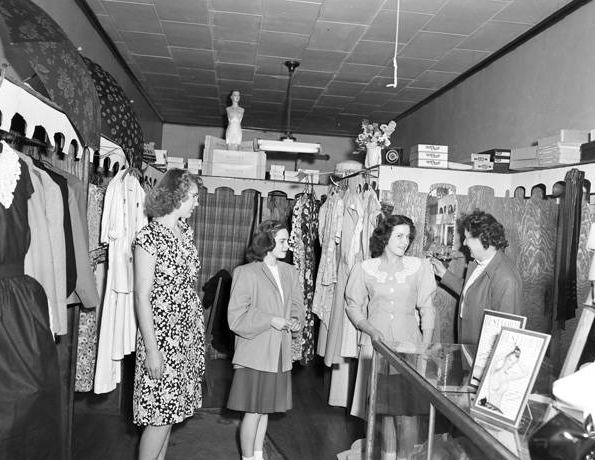
It is also possible that Helen shopped in her local dress store the A to Z Dress Shop in David City, shown below. Small to be sure, but customers were certain to receive personal service.
Visit Nebraska Memories to search for or browse through many more historical images digitized from photographs, negatives, postcards, maps, lantern slides, books and other materials.
Nebraska Memories is a cooperative project to digitize Nebraska-related historical and cultural heritage materials and make them available to researchers of all ages via the Internet. Nebraska Memories is brought to you by the Nebraska Library Commission. If your institution is interested in participating in Nebraska Memories, see http://nlc.nebraska.gov/nebraskamemories/participation.aspx for more information, contact Devra Dragos, Technology & Access Services Director.
Posted in Nebraska Memories
Leave a comment
Looking Sharp
So fellas, did you think about your clothes when you put them on this morning? Dress up with a suit and tie or down with torn jeans and a baseball cap? Coordinate the colors or fabrics of top and bottoms? And where did you buy your fine fashions–a fine men’s store, a shop at the mall, or the local convenience store?
Where do you suppose a man-about-town or a hard-working farmer would have gone to get advice and purchase the latest fashions in the early part of the last century?
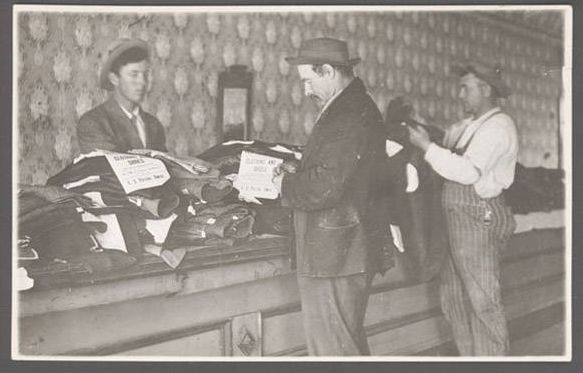 In a small northeastern Nebraska town, they may have gone to a store like the one in the photographic postcard above. The store had the simple name of “Clothing and Shoes” and had an equally simple method of displaying the merchandise by stacking it on a long counter. Notice that the clerk behind the counter is the most formally attired, but all three men wear hats and two wear suit coats. (Men looking at clothing, Nebraska State Historical Society Collection, circa 1907)
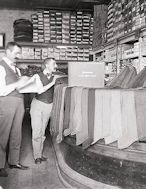 In Neligh, another northeastern Nebraska town, the men’s store at left has more merchandise displayed in a more formal layout. While much of the merchandise is stored in boxes which are stacked and organized on shelves behind the counter, pants in a variety of colors are laid out along the curved counter so that customers can get a better view. With the pants display is an order book for “Custom Made Trousers,” which it appears could be ordered in from another company. The two clerks, formally dressed in dress pants, shirts, vests, and bow ties, appear ready to advise their customers in the latest sartorial fashions. (Clothing store and employees, Neligh, Nebraska; Antelope County Historical Society Collection, circa 1910)
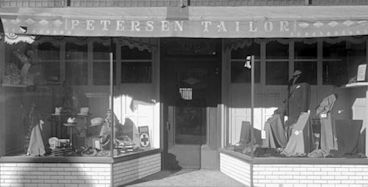 If you wanted to order clothing fitted specifically for yourself directly from the source, you may have visited your local tailor such as Herman Petersen of Fremont, who displayed examples of his clothing in the windows of his establishment as shown in the photograph at right. (Herman Petersen Tailoring, Keene Memorial Library Collection, 1925)
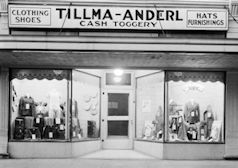 Residents of David City and the surrounding area may have shopped at Tillma-Anderl Cash Toggery, left, whose signs above the display windows advertise clothing, shoes, hats and furnishings. The displays on either side of the door include a variety of clothing and a couple of suitcases. Notice that formal clothing, including suit jackets are still the main parts of the display(Tillma-Anderl Storefront, Butler County Gallery Collection, 1938)
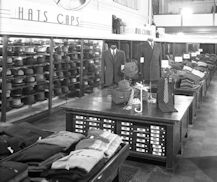 Or, if you visited the big city of Omaha, you may have shopped at the Nebraska Clothing Store, right. Shelves line the walls of the large room, and additional items are stored beneath the display tables in the center. Several suggested combinations of jackets, shirts and ties grace the top of one table. A fan helps customers keep their cool while making the right choice. (Interior view of men’s department of Nebraska Clothing Store, The Durham Museum Collection, circa 1940)
Visit Nebraska Memories to search or browse for other historical images digitized from photographs, negatives, postcards, maps, lantern slides, books and various materials.
Nebraska Memories is a cooperative project to digitize Nebraska-related historical and cultural heritage materials and make them available to researchers of all ages via the Internet. Nebraska Memories is brought to you by the Nebraska Library Commission. If your institution is interested in participating in Nebraska Memories, see http://nlc.nebraska.gov/nebraskamemories/participation.aspx for more information, or contact Devra Dragos, Technology & Access Services Director.
Posted in Nebraska Memories
Leave a comment
We Were Sailing Along
Although the central part of the country is some distance from an ocean, 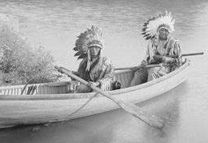 people still enjoy access to water by boat. Rivers and lakes offer a means of travel and transportation, acquiring food, recreation, and maybe a little canoodling.
Canoes were developed by Native Americans and used for thousands of years. Although the first ones were dugout of tree trunks, later ones featured tree bark over frames. The framed variety worked best for the rivers, streams and lakes in North America, as in the John Anderson photograph at left from the late 1800s of two Brule Sioux, Hollow Horn Bear and Stands and Looks Back, paddling on a river (Nebraska State Historical Society Collection).
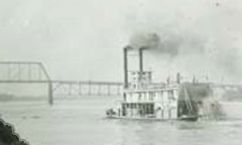 Lewis and Clark’s Expedition of 1804-1806 to explore the territory acquired with the Louisiana Purchase began on keelboat up the Missouri River which also forms the eastern border of Nebraska. A little over one hundred years later, the United States Army Corps of Engineers steamboat, Lieutenant Lewis, (right) plied the same river (Omaha Public Library Collection). In addition to surveying and exploration, boats moved people and goods more quickly than horse or oxen and wagon for many decades.
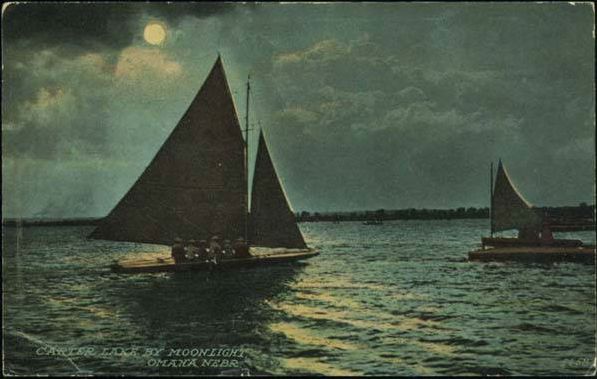
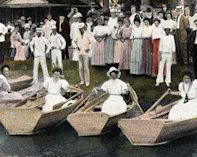 The shifting of the Missouri River after the flood of 1877 created a curved lake and the opportunity of additional recreation for the locals. The Rod and Gun Club of Omaha used the lake, known as Lake Nakoma at the time the postcard at left was created. As shown in the postcard, members were not limited to men–women are ready at the oars of the rowboats on the water. The lake, later renamed Carter Lake for the family donating funds to establish a city park on the lake, also saw craft such as canoes and sailboats like the ones below sailing in the moonlight (both postcards from the Omaha Public Library Collection).
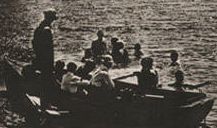 Boats are at times required for more serious duty. Many of the rivers in Nebraska are not very deep, so heavy rains or run-off from an extra deep snowpack melting in mountains to the west can cause flooding across the plains. In such cases, like the flood in Erickson, Nebraska at right, required boats to navigate the streets (Nebraska State Historical Society Collection). Other images of canoes, rowboats, and sailboats can be found in Nebraska Memories.
Visit Nebraska Memories to search or browse for more advertising materials or other historical images digitized from photographs, negatives, postcards, maps, lantern slides, books and various materials.
Nebraska Memories is a cooperative project to digitize Nebraska-related historical and cultural heritage materials and make them available to researchers of all ages via the Internet. Nebraska Memories is brought to you by the Nebraska Library Commission. If your institution is interested in participating in Nebraska Memories, see http://nlc.nebraska.gov/nebraskamemories/participation.aspx for more information, or contact Devra Dragos, Technology & Access Services Director.
Posted in Nebraska Memories
Leave a comment
Music in the Air
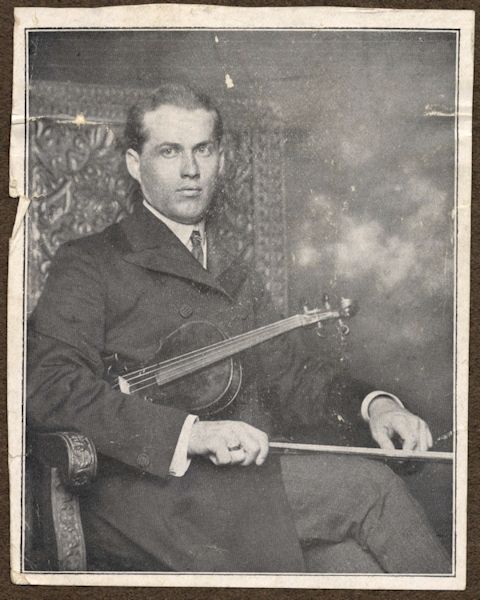
As mentioned in Beat of a Different Drummer, Lincoln had a thriving music scene at the turn of the twentieth century, and opera houses could be found in many small towns across Nebraska. How did they find performers before mass media or social media? Not all performers made their livings solely from performing. For an example, take a look at the career of August Molzer, violinist, pictured above (from a promotional pamphlet in the Donated Materials Collection).
Molzer was something of a local celebrity. Some years after moving to Wilber, Nebraska, from Bohemia as a boy of seven with his family, Molzer was sent back to Bohemia for musical schooling due to his aptitude for playing the violin. As noted in the promotional pamphlet, he studied under well-known musicians in the Prague Conservatory and performed well-received concerts in Europe. Upon his return to Nebraska, he taught music at both Nebraska Wesleyan University and the University of Nebraska School of Music in Lincoln. The pamphlet was printed and distributed by Nebraska Wesleyan University circa 1907.
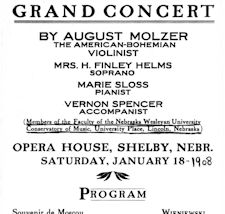
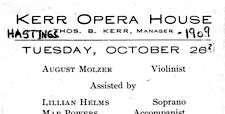 Two concert programs from the Polley Music Library Collection detail performances Molzer gave in Nebraska after the promotional pamphlet was produced. The program at left was for a concert at the Shelby Opera House given January 18, 1908, and the one at the right was for a concert at the Kerr Operal House in Hastings given October 26, 1909. Note in the Kerr Opera House program the other performers are also faculty of the Nebraska Wesleyan Conservatory of Music.
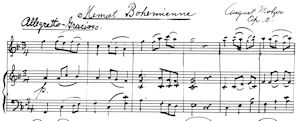 In addition to teaching and performing, Molzer also composed music. The Polley Music Collection also contains two
 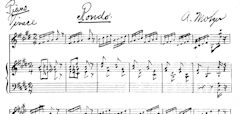 manuscripts of Molzer’s pieces for violin and piano: the “Menuet Bohemian” at left and “Rondo” at right, both circa 1910.
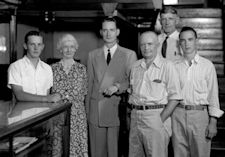 After teaching in Lincoln for nearly three decades, Molzer, his wife and their two youngest children moved to Laramie where he taught music at the University of Wyoming. However, it seems there was also music in the “heir”, as Molzer’s oldest son, Robert, remained in Lincoln where he later owned the Molzer Music Store. In the 1946 photograph at the right, Robert is most likely the man dressed in a suit, standing with his employees (Townsend Studio Collection). In addition to selling music and musical instruments, employees repaired instruments as can be seen in other store photographs.
Visit Nebraska Memories to search or browse for more advertising materials or other historical images digitized from photographs, negatives, postcards, maps, lantern slides, books and various materials.
Nebraska Memories is a cooperative project to digitize Nebraska-related historical and cultural heritage materials and make them available to researchers of all ages via the Internet. Nebraska Memories is brought to you by the Nebraska Library Commission. If your institution is interested in participating in Nebraska Memories, see http://nlc.nebraska.gov/nebraskamemories/participation.aspx for more information, or contact Devra Dragos, Technology & Access Services Director.
Posted in Nebraska Memories
Leave a comment
High on Education
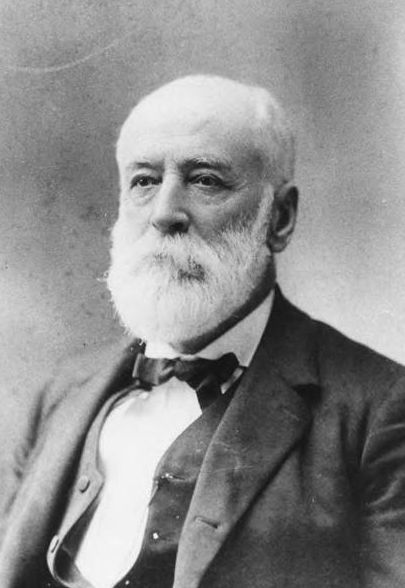 Education was very important in the growth of the new state of Nebraska, and colleges were established in many communities. Bethany Heights, Blair, College View, Crete, Fremont, Hastings, Kearney, Lincoln, Omaha, Peru, Seward, Spalding, University Place, and York, to name a few, all had a public or private college before 1900; some thrived, others did not. One still very much in existance today was founded by the gentleman pictured above, Thomas Doane (Doane College Library collection).
Doane, chief engineer for the Burlington and Missouri Railroad, helped establish the Crete Academy in 1871 which became Doane College after the grant of acreage on the hills east of Crete from the railroad in 1872. Doane continued to support the college until his death in 1897 by sitting on the board of trustees and contributing funds.
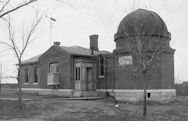
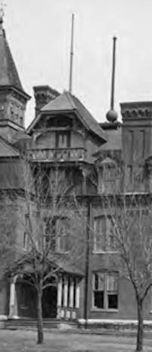 Other benefactors of the college included Charles Boswell, the stepfather of one of the instructors, for whom the Boswell Observatory (left) was named. One of the first astronomical observatories in Nebraska, the building also housed weather observation equipment and a Greenwich Mean Time clock. The clock was connected to a “time ball” atop Merrill Hall (right). Shown in the lowered position, the ball indicates that it is past noon on the day this photograph was taken. Each day at noon the clock in Boswell Observatory would send an electrical pulse to the ball at the top of the shaft on Merril Hall; the 56-pound ball measuring 32 inches in diameter would then fall down the shaft, slowed by a brake before coming to a rest at the roof. A student using a pulley system would raise it back to the top each morning. Standard time was just coming into common use and people from the community as well as at the college would watch the ball on top of the building on the hill fall at noon to set their watches and clocks.
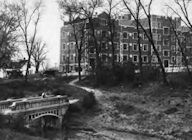 Merrill Hall, the first building built on the new campus, was just one of the buildings at the college designed by a prominent architectural firm. While Thomas Doane hired a Boston firm to design Merrill Hall, two former Doane students working for a Chicago architectural firm designed the dormitory, Men’s Hall (Men’s Hall and Brandt Bridge, left), in the Collegiate Gothic style. Built in 1929, the men’s dormitory contained the latest modern conveniences. A women’s dormitory designed in the same style sat at the opposite end of the campus.
See other pictures in this newest Nebraska Memories collection under Doane College Library.
Visit Nebraska Memories to search or browse for other historical images digitized from photographs, negatives, postcards, maps, lantern slides, books and various materials.
Nebraska Memories is a cooperative project to digitize Nebraska-related historical and cultural heritage materials and make them available to researchers of all ages via the Internet. Nebraska Memories is brought to you by the Nebraska Library Commission. If your institution is interested in participating in Nebraska Memories, see http://nlc.nebraska.gov/nebraskamemories/participation.aspx for more information, or contact Devra Dragos, Technology & Access Services Director.
Posted in Nebraska Memories
Leave a comment
Sell, Sell, Sell
Any good marketer will tell you that you need to continually put your product or 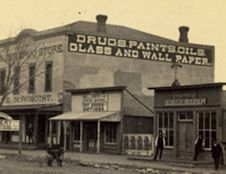 service in front of people to make a sale. Today we are bombarded on all sides with commercials and advertising. But years ago there wasn’t such a wide range of media, so how did businesses reach their prospective customers? For some businesses that meant going beyond putting the name of their business on the front of their buildings to spelling out their products on signs meant to catch people’s attention. The Pioneer Drug Store spelled out their interesting combination of products–
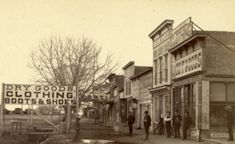 DRUGS PAINTS OILS GLASS AND WALLPAPER–on the side of the building in the photograph at left. (South side of Front Street looking east from Chestnut Street, Sidney, Nebraska; Cheyenne County Historical Society and Museum Collection) Down the street, Adam Ickes’ Dry Goods Store positioned a sign perpendicular to the street that could be easily read by passersby, at right. (Front Street, Sidney, Nebraska)
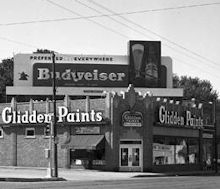 Signage advanced to individual letters attached to buildings as in the picture at right with Glidden Paints capitalizing on their corner position by spelling out their name on two sides of the building. And if you have space on the roof, why not lease it to someone else–like Budweiser–for advertising? (Exterior of Glidden Paints Building, The Durham Museum Collection)
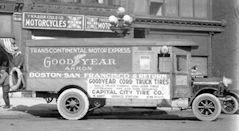 Mobile advertising works well, too. Capitol City Tire Company’s truck at left advertises the brand of tires they carried (Capitol City Tire Company;
 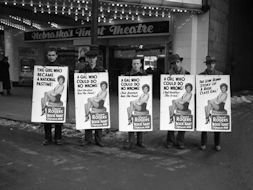 Townsend Studio Collection). And what could be more eye-catching than a group of men walking the street in sandwich board signs promoting the movie Roxie Hart with a pretty Ginger Rogers at right? (Men wearing signs advertising movie; The Durham Museum Collection)
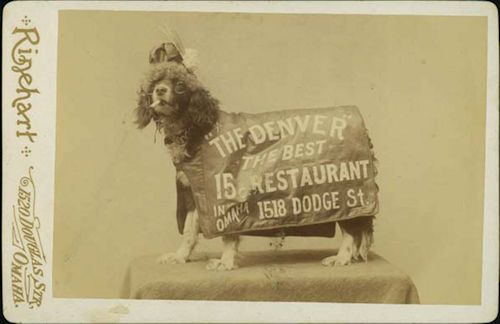 But what could be better than advertising that a person takes home with them? Use a picture of a cute dog and who wouldn’t want to try out the Denver Chop House Restaurant? (Denver Chop House Restaurant doggie, Omaha Public Library collection) Or if a pretty Gibson-style lady is more to your taste, perhaps you would have hung the calendar plate given out by a Papillion bank. (Banking House of A.W. Clarke 1909 calendar plate, Sarpy County Historical Museum Collection)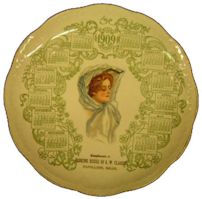
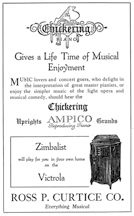
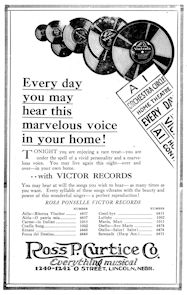 Targeted advertising can be very profitable. If you attended the Efrem Zimbalist concert in 1919, your program contained an advertisement encouraging you to purchase a Victrola from Ross P. Curtice Co. so that “Zimbalist will play for you in your own home.” (Great artist course: Efrem Zimbalist; Polley Music Library Collection) Or if you attended the Rosa Ponselle concert a few seasons later, your program listed the Victor Records containing her songs also available at Ross P. Curtice Co. (Great artist course presenting Miss Rosa Ponselle, Polley Music Library Collection)
Visit Nebraska Memories to search or browse for more advertising materials or other historical images digitized from photographs, negatives, postcards, maps, lantern slides, books and various materials.
Nebraska Memories is a cooperative project to digitize Nebraska-related historical and cultural heritage materials and make them available to researchers of all ages via the Internet. Nebraska Memories is brought to you by the Nebraska Library Commission. If your institution is interested in participating in Nebraska Memories, see http://nlc.nebraska.gov/nebraskamemories/participation.aspx for more information, or contact Devra Dragos, Technology & Access Services Director.
Posted in Nebraska Memories
Leave a comment
Palimpsest anyone?
A recent radio news piece about the redevelopment of an urban area brought to mind a term I first read during a college history course. Palimpsest may be used as a noun, verb or adjective and originally was used in reference to paper or other writing materials which were reused so that the original text was partially erased or obliterated and new text overlay the old. By the nineteenth century the term was used for things which similarly had been layered with something new but still had a trace of the original such as land and buildings.
Take, for instance, the site of the oldest photographic image in Nebraska Memories, “View looking northwest from 15th and Douglas” (Omaha Public Library Collection). The colorized lantern slide below is from about 1865 and shows Douglas Street from 15th Street to just past 18th Street in Omaha, then the Territorial capital of Nebraska. The roads are dirt (or mud), but houses and other buildings, including the Captiol building on the hill right of center, have been built and trees planted. When Omaha was established in 1854, the topography would have been the same with the land sloping upward from the Missouri River, but it would have been covered in prairie grass as far as the eye could see.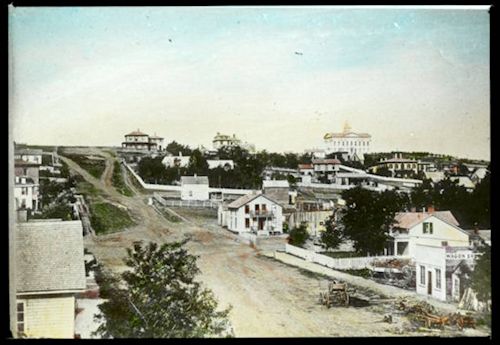
Millions of years ago, Omaha’s locale was close to a large inland sea when dinosaurs roamed the land. Later, glaciers shaped and re-shaped the lay of the land. But we don’t have any images of those times, so back to recorded history…
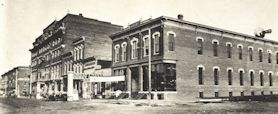 As Omaha grew, more businesses moved in and started replacing houses as shown in the image to the left (15th and Douglas Streets, Omaha Public Library Collection). In the five years or so since the previous image was taken, building materials have already been upgraded to brick. The building on the corner which features extra architechtural detailing around the windows housed the City Livery stables.
In addition to new buildings, in the 1890s city officials changed the lay of the land with a re-grading project that lowered the steep rise in Douglas Street as seen in the first image. For more details and images, see Re-Shaping Omaha.
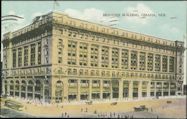 By the turn of the twentieth century, houses and trees have disappeared along this section of Douglas. “Downtown” businesses as shown in these two postcards from the Omaha Public Library Collection were being built to serve customers who lived farther out.
 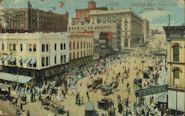 The Brandeis Building, built in 1906 at 16th and Douglas Streets to house a department store and other businesses, is featured in the postcard to the left and is in the background of the postcard showing “Douglas west from 15th, Omaha, Neb.” at right. However, what goes around comes around–the Brandeis Building now houses apartments and condominiums for those wishing to live downtown.
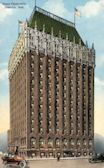
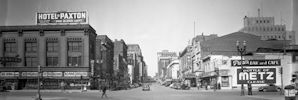 New buildings grew taller. Built in 1917, the Hotel Fontenelle at 18th and Douglas Streets, shown in a postcard from the Omaha Public Library at left, had all the modern conveniences of the time. But it later changed its shape as seen (or not seen, as the top of the hotel has been changed) in the photograph at right taken from 17th and Douglas Streets in 1945 (Omaha business district, The Durham Museum collection). It would disappear totally from the landscape in 1983.
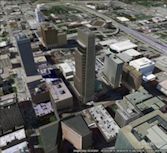 So, what does that northwest view from 15th and Douglas Streets look like today? If one of the first Omaha residents looked at the Google Earth snapshot at right, they would be totally astonished to see all of those buildings. But the hill that the territorial capitol sat on is still there; perhaps there are other features they would recognize too. Imagine what this area might look like one hundred years from now. We can only hope that someone takes and archives pictures over the decades so that others may see the changes that occur.
Visit Nebraska Memories to search for or browse through many more historical images digitized from photographs, negatives, postcards, maps, lantern slides, books and other materials.
Nebraska Memories is a cooperative project to digitize Nebraska-related historical and cultural heritage materials and make them available to researchers of all ages via the Internet. Nebraska Memories is brought to you by the Nebraska Library Commission. If your institution is interested in participating in Nebraska Memories, see http://nlc.nebraska.gov/nebraskamemories/participation.aspx for more information, or contact Devra Dragos, Technology & Access Services Director.
Posted in Nebraska Memories
Leave a comment
Preserving Nebraska’s Past
Are your paper archives crumbling? Are your photographs fading? Now may be the time to plan for preservation, and digitization is one of the best ways to preserve your historical materials.
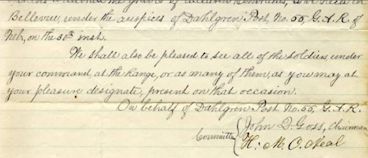
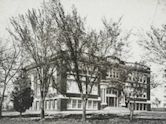 Digital versions of items provide access to content while limiting the handling of delicate materials. The lantern slide of the Van Fleet Teachers College (Nebraska Wesleyan University Collection) to the left has a crack down the right side which, while not readily obvious in the digital image, could become worse if the slide is handled regularly. The 1887 Letter from John Q. Goss and H.M. O’Neal to Major Butler (Sarpy County Historical Museum Collection) below has creases from folds that could eventually crack or tear.
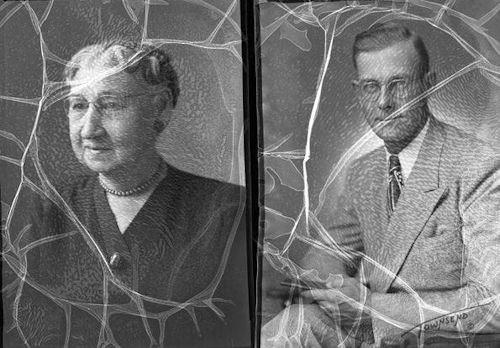
Some items may disintegrate for other reasons such as chemical reactions within the structure of the material or a poor storage environment. The acetate negative of Lena Carveth and Ernest F. Carveth (Townsend Studio Collection) below is an example of deterioration due to a chemical reaction. Nitrate negatives are even more unstable; as the chemicals in the negatives decay, they become highly flammable and require very specific storage conditions. Before these items disappear forever, consider scanning them according to archival standards.
If you are wondering where to start with preservation, check out the Nebraska Library Commission’s Preservation of Library Materials list of resources. You will find guidelines and tips on the care and preservation of many different types of materials. And remember, if you do plan to digitize any materials, Nebraska Memories hosts Nebraska-related materials for web access and Library Commission staff may be contacted for consultation.
Nebraska Memories is a cooperative project to digitize Nebraska-related historical and cultural heritage materials and make them available to researchers of all ages via the Internet. Nebraska Memories is brought to you by the Nebraska Library Commission. If your institution is interested in participating in Nebraska Memories, see http://nlc.nebraska.gov/nebraskamemories/participation.aspx for more information, or contact Devra Dragos, Technology & Access Services Director.
Posted in Nebraska Memories
Leave a comment
Baby, It’s Cold Outside
 The temperatures have been up and down this winter, to the extreme at either end, but only a couple of longstanding records have been broken. When many of the original temperature records were set, people didn’t have the wide-range of clothing material options that we d
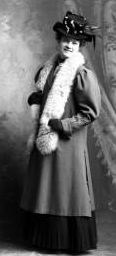
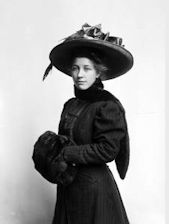 o today. Wool was one of the most common materials used for coats. We assume the coat Miss Tony Smith, in the picture at the left, is wearing was made from wool (Butler County Gallery, 1908). With fashionable puff sleeves, the hem ends about a foot above her floor-length skirt, presumably to keep it out of the wet snow and mud. On some cold mornings I would appreciate those long skirts and multiple petticoats for added warmth. It appears that the scarf around her neck is a fur of some sort. For the middle-class, fur was another material used for warm apparel such as the muff held by Maude Zeilinger in the photo to the right (Butler County Gallery, 1909) .
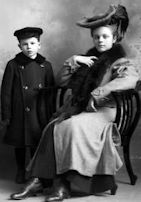
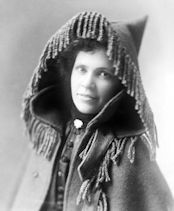 Children wore garments similar to that of adults. The teenage girl seated in the picture to the left wears also wears a wool coat almost the length of long skirts and a fur scarf around her neck. Her brother wears a coat and hat that may have been fashioned after a sailor’s outfit–the wool coat is double-breasted with two rows of large buttons, and his hat is a flat cap (C.E. McNeal family, Butler County Gallery, 1906). While the two ladies and the teenage girl all wear fancy hats, Christie Otoupalik, pictured at the left, would appear to have an advantage against the cold wind with her hooded wool coat (Butler County Gallery, 1902).
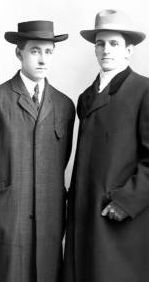
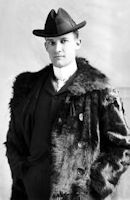 Men also wore warm weather apparal made of various materials. Friends Matt Cram and John Ayers wear long cloth overcoats in their studio portrait on the left (Butler County Gallery, 1907), while Jay Rising of Rising City, in the photograph on the right, wears a coat made from some type of fur or perhaps buffalo hide (Rising City Library Collection, 1902). A couple of decades later the rage would include racoon fur coats for the fashionably dressed young folks about town. While today there is a definite taboo against wearing real animal skins and fur, they have been used since the age of cavemen for clothing and other household goods.
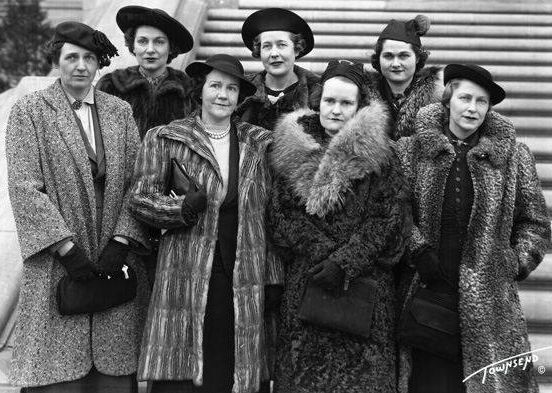 The trend for fur coats continued on for several decades. Although no longer of racoon, several of the ladies who were part of the Fine Arts Association Committee in Lincoln, wear full coats made of various types of fur (Townsend Studio Collection, 1938.)
Visit Nebraska Memories to search for or browse through many more historical images digitized from photographs, negatives, postcards, maps, lantern slides, books and other materials.
Nebraska Memories is a cooperative project to digitize Nebraska-related historical and cultural heritage materials and make them available to researchers of all ages via the Internet. Nebraska Memories is brought to you by the Nebraska Library Commission. If your institution is interested in participating in Nebraska Memories, see http://nlc.nebraska.gov/nebraskamemories/participation.aspx for more information, or contact Beth Goble, Historical Services Librarian, or Devra Dragos, Technology & Access Services Director.
Posted in Nebraska Memories
Leave a comment
Home, Sweet Home, Part II
Be it ever so humble … The interiors of early Nebraskans’ homes varied as much as the exteriors. Sod houses may have had only one room, and tenement houses may have had shared public areas, but there were mansions, too, containing extras like formal entry halls, libraries, smoking rooms, conservatories, sun rooms, and billiards rooms.
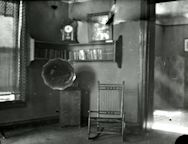 The image at left shows a sparsely finished room in an early 1900s Omaha settlement house which still provided a corner for relaxing in a rocking chair to read a book from the
 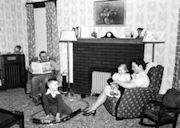 shelf while listening to music on the gramophone (Gramophone and chair inside settlement house, Omaha Public Library Collection). About four decades later, the descendants of those immigrants would have had a living room more similar to the one at the right (John Birkel family, Butler County Gallery Collection). While basics furnishings are the same and the room is used for reading, relaxing and listening to music, the easy chairs are now upholstered and the floor carpeted while the music comes from the radio at the left. Note that in the settlement house a clock and picture sit on top of the book shelf, while in the later living room a clock sits on the fireplace mantel with a picture hanging above.
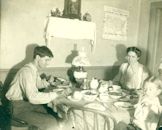 In a simple house or farm house, meals were most likely served in the kitchen as is the case in the phot
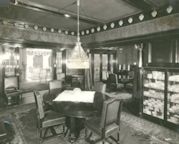 ograph to the left (Kitchen dining, Keene Memorial Library Collection). In the better part of town, a fancy house would have had a separate dining room such as the one at right, featuring chandelier lighting, coffered ceiling, carved dining table with matching upholstered chairs, oriental carpet and glass-front cabinet showcasing the fine china (Ray Julius Nye residence dining room, Keene Memorial Library Collection). Still the family in the kitchen looks happy enough.
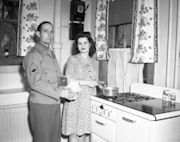 While the woman in the picture above probably cooked her family’s meals on a wood stove and used kerosene in her lamps, the young woman in the picture at right appears to have all the latest appliances available in 1945 (Man and woman in a kitchen, Omaha Public Library Collection). In addition to the gas stove and oven, she has electricity (the fuse box is behind her), indoor plumbing and probably a water heater. All that and a soldier safely returned from the war!
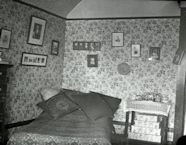
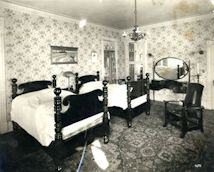 How comfortable do you think the bed at the left would be? It seems to dip a bit in the middle. But then this photograph is of a “third floor bedroom,” so even though the room is nicely furnished with extra pillows on the bed, framed photographs hung from a picture rail and a bedside table, perhaps it was not the “best guest room” (Bed at Wallace residence, Omaha Public Library Collection). In the master bedroom at the right, however, one would think the Mr. and Mrs. slept quite well in their own beds with the carved and turned frames (Ray Julius Nye residence master bedroom, Keene Memorial Public Library Collection).
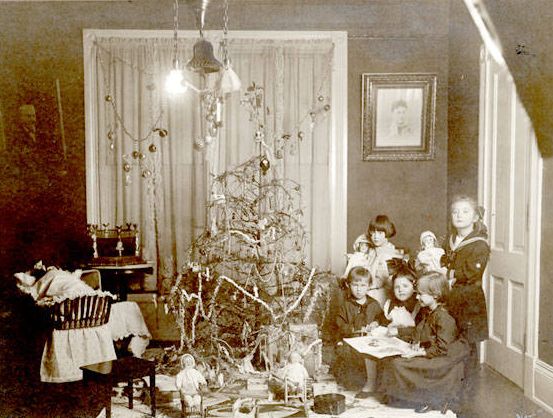
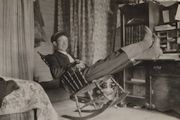 No matter the furnishings or the number or types of rooms, people could still kick back and relax in their own personal space like the gentleman above (Man in rocking chair at desk, Nebraska State Historical Society Collection). Or perhaps enjoy a Christmas party like the children in the picture below with the interesting tree and decorations (Joseph T. May residence Christmas party, Keene Memorial Public Library Collection). We hope your Christmas is as merry as theirs!
Nebraska Memories is a cooperative project to digitize Nebraska-related historical and cultural heritage materials and make them available to researchers of all ages via the Internet. Nebraska Memories is brought to you by the Nebraska Library Commission. If your institution is interested in participating in Nebraska Memories, see http://nlc.nebraska.gov/nebraskamemories/participation.aspx for more information, or contact Beth Goble, Historical Services Librarian, or Devra Dragos, Technology & Access Services Director.
Posted in Nebraska Memories
Leave a comment
Home, Sweet Home, Part I
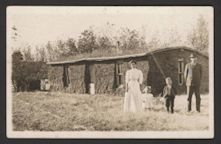 Shelter is one of the most important requirements for people living in a harsh environment. Even though we have been enjoying warm fall weather here in Nebraska recently, temperatures will soon drop and snow will fall and the wind will howl at times during the winter. The first homesteaders settling the prairies didn’t always have much to work with in constructing their homes. A number of them used the sod that lay under their feet, cut and stacked into walls. Sod houses provided protection from the sun, wind, and other natural elements; however, residents sometimes wound up sharing the space with more critters than they would have preferred. Some sod houses were used for many years, into the early 1900s, like this sod house belonging to Ben Miller and his family (Ben Miller family outside of sod house, Nebraska State Historical Society Collection).
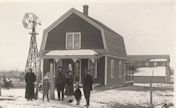 As years went by and their farms became prosperous, families could afford the cost of lumber to build new houses. The farm family in the picture to the right lived in a snug wooden house with a gambrel roof. It does appear that the house is somewhat smaller than the barn in the background, but the barn protected their sources of income (Family in front of wooden house, Nebraska State Historical Society).
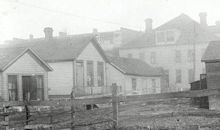 Those families moving west looking for a new life in a larger town, may have wound up in housing such as that to the right. Tenements were built in Omaha in the early 1900s to house not only poor people moving from the east but also immigrants from overseas just as tenements were being built in larger cities such as New York City and Chicago (Tenement houses and alley, Omaha Public Library Collection).
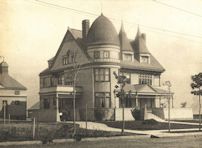 Nebraska residents who made their money quickly often built homes to reflec
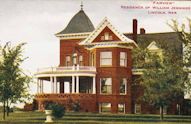 t their wealth. O.M. Carter’s residence to the left was built with wood in the Queen Anne-style of the time. “Fairview”, residence of William Jennings Bryan at the right, also built in a style popular in the United States at the time, was constructed of brick. (Both images from Omaha Public Library Collection.)
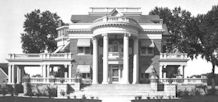 Some homes were even more grandiose. Westfield Acres in Fremont, N
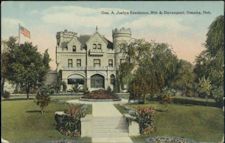 ebraska, to the left, was designed by Alfred C. Class of Ferry and Clas, architects of the 1893 World’s Fair (Westfield Acres, east elevation, Dodge County Historical Society Collection). Joslyn Castle, as its name suggests, was designed along the lines of a European estate house (Geo. A. Joslyn Residence, 39th & Davenport, Omaha, Neb., Omaha Public Library Collection).
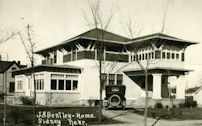 As time passed and other design styles became popular, examples of those homes were also built across Nebraska. J. A. Bentley’s home in Sidney, to the right, is a nice example of the Prairie-style house (J.A. Bentley home, Sidney, Nebr., Cheyenne County
 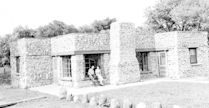 Historical Society and Museum). Floyd Nichols’ home, at the left, is a unique style of architechture for Nebraska and still stands in David City (Floyd Nichols home, Butler County Gallery Collection). Browse other exterior pictures of homes in Nebraska at Nebraska Memories.
Visit Nebraska Memories to search for or browse through many more historical images digitized from photographs, negatives, postcards, maps, lantern slides, books and other materials.
Nebraska Memories is a cooperative project to digitize Nebraska-related historical and cultural heritage materials and make them available to researchers of all ages via the Internet. Nebraska Memories is brought to you by the Nebraska Library Commission. If your institution is interested in participating in Nebraska Memories, see http://nlc.nebraska.gov/nebraskamemories/participation.aspx for more information, or contact Beth Goble, Historical Projects Librarian, or Devra Dragos, Technology & Access Services Director.
Posted in Nebraska Memories
Leave a comment

