Search the Blog
Categories
- Books & Reading
- Broadband Buzz
- Census
- Education & Training
- General
- Grants
- Information Resources
- Library Management
- Nebraska Center for the Book
- Nebraska Memories
- Now hiring @ your library
- Preservation
- Pretty Sweet Tech
- Programming
- Public Library Boards of Trustees
- Public Relations
- Talking Book & Braille Service (TBBS)
- Technology
- Uncategorized
- What's Up Doc / Govdocs
- Youth Services
Archives
Subscribe
Category Archives: Books & Reading
NCompass Live: NLC Grants for 2025
Learn more about the NLC Grants for 2025 on this week’s NCompass Live webinar on Wednesday, September 25 at 10am CT.
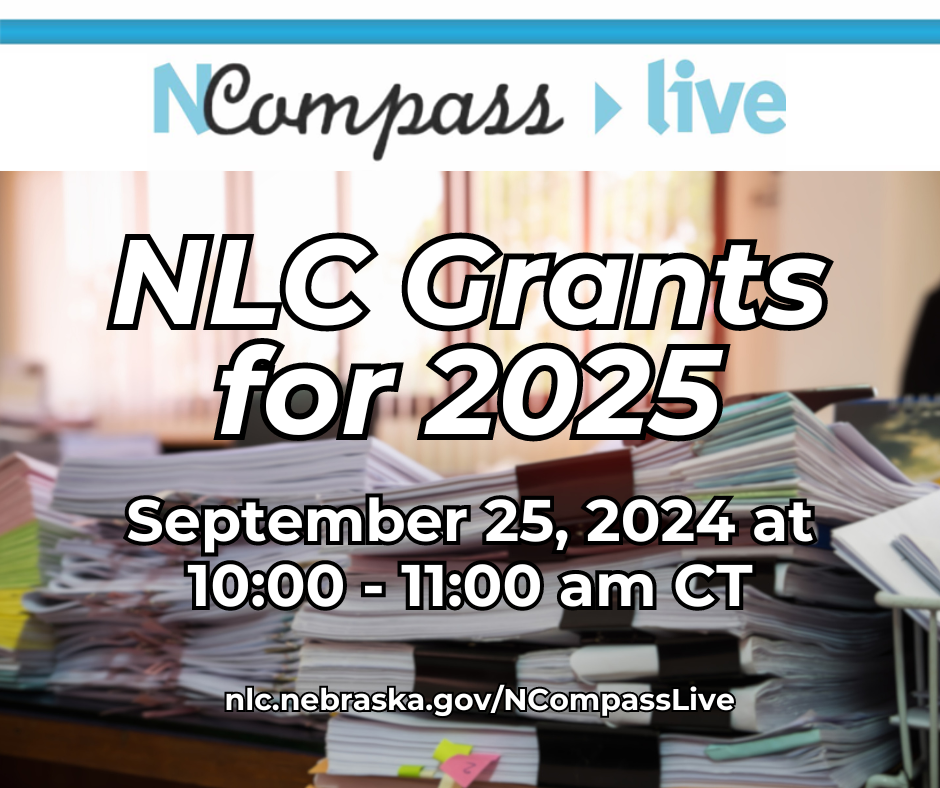
Nebraska Accredited Public Libraries and State-run Institutions! Do you have an idea for a program or project you would like to see funded? Apply for an NLC Grant!
The Nebraska Library Commission has made funding available for four grants for 2025: Continuing Education & Training, Internship, Library Improvement, and Youth Grants for Excellence. Don’t let your library miss out on these opportunities!
Grant applications for all 2025 NLC grants opened on September 20 and will be due November 15, 2024.
Join Christa Porter, Sally Snyder, and Holli Duggan, from the Nebraska Library Commission’s Library Development Team, as they provide an overview of the grants, including eligibility requirements and grant guidelines, the application process and grant review, timelines and deadlines. They will also share some tips on writing effective grants.
Upcoming NCompass Live shows:
- Oct. 2 – Pretty Sweet Tech: Digital Navigators & Digital Equity in Nebraska
- Oct. 9 – NO NCOMPASS LIVE – ENJOY NLA!
- Oct. 16 – Dragons at the Library: An Exciting New Reading Program
- Oct. 23 – Letters About Literature 2024
- Oct. 30 – Pretty Sweet Tech
- Nov. 6 – Summer Reading Program 2025: Color Our World
- Nov. 13 – Nebraska Open Meetings Act: 2024 Overview and Update
To register for an NCompass Live show, or to listen to recordings of past shows, go to the NCompass Live webpage.
NCompass Live is broadcast live every Wednesday from 10am – 11am Central Time. Convert to your time zone on the Official U.S. Time website.
The show is presented online using the GoTo Webinar online meeting service. Before you attend a session, please see the NLC Online Sessions webpage for detailed information about GoTo Webinar, including system requirements, firewall permissions, and equipment requirements for computer speakers and microphones.
Posted in Books & Reading, Education & Training, General, Grants, Information Resources, Library Management, Now hiring @ your library, Preservation, Programming, Public Library Boards of Trustees, Public Relations, Technology, Youth Services
Tagged Continuing Education, Internship Grants, library improvement gratns, NCompLive, Youth Grants for Excellence
Leave a comment
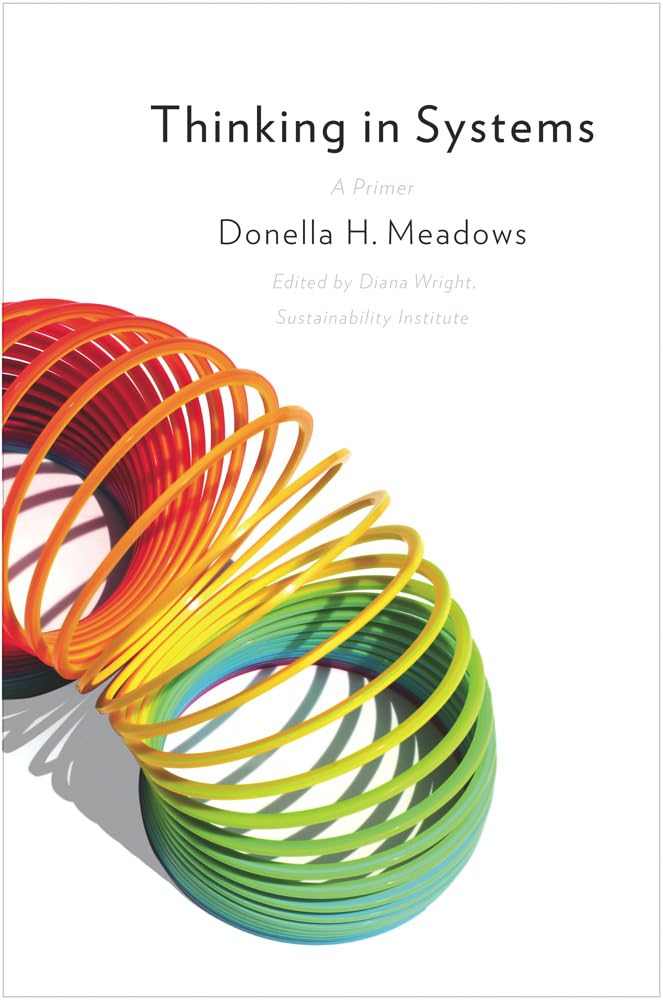
Friday Reads: Thinking in Systems by Donella Meadows
Last night I went to a Community Building workshop on affordable housing here in Lincoln. To be clear, I personally have affordable, well-maintained housing. My landlord is cool. He fixes stuff. But apparently that’s not so true in the Near South Neighborhood. Probably other neighborhoods too.
I heard about code violations, landlord retaliation, rising housing costs, and mold aplenty. So very much mold. Everyone in that room knew about the problem, but was looking for a solution. That’s where Thinking in Systems by Donella Meadows comes into play.
That was the first comprehensive book I read about systems thinking. In a nutshell it says what we all know to be true: one things affects another, which affects another in a big, messy cycle. In this case, housing structures are designed and built decades ago. Funding is raised for building and construction, but all houses need repair eventually. The landlords who own the units do not always have funding for costly repairs, like extensive mold damage or updated plumbing. Some just plain don’t seem to care. I could go on. It’s just turtles all the way down.
Thinking in Systems talks about how to bring some order to the chaos. I read this book many moons ago, but it was one of the things that inspired me to make this Affordable Housing Map that shows what it takes to tackle the problem statewide. View it on a desktop. Maybe a tablet. It’s too big to see on a smartphone.
The map is one way to visualize a system, but that gets paired with root cause analysis to dig deep and make sure efforts are addressing the right problem. Finding new and different ways to bring people together to share ideas, innovate and collaborate are good tools too , among others.
All in all, it turns out I like to think in systems. Who knew? I’m a systems nerd! Give this book a read if you want to find out what it takes to solve the big, messy problems of the world.
#BookFaceFriday “Haven’s Wake” by Ladette Randolph & “Hell or High Water” by Joy Castro
When one #BookFace closes, another one opens.
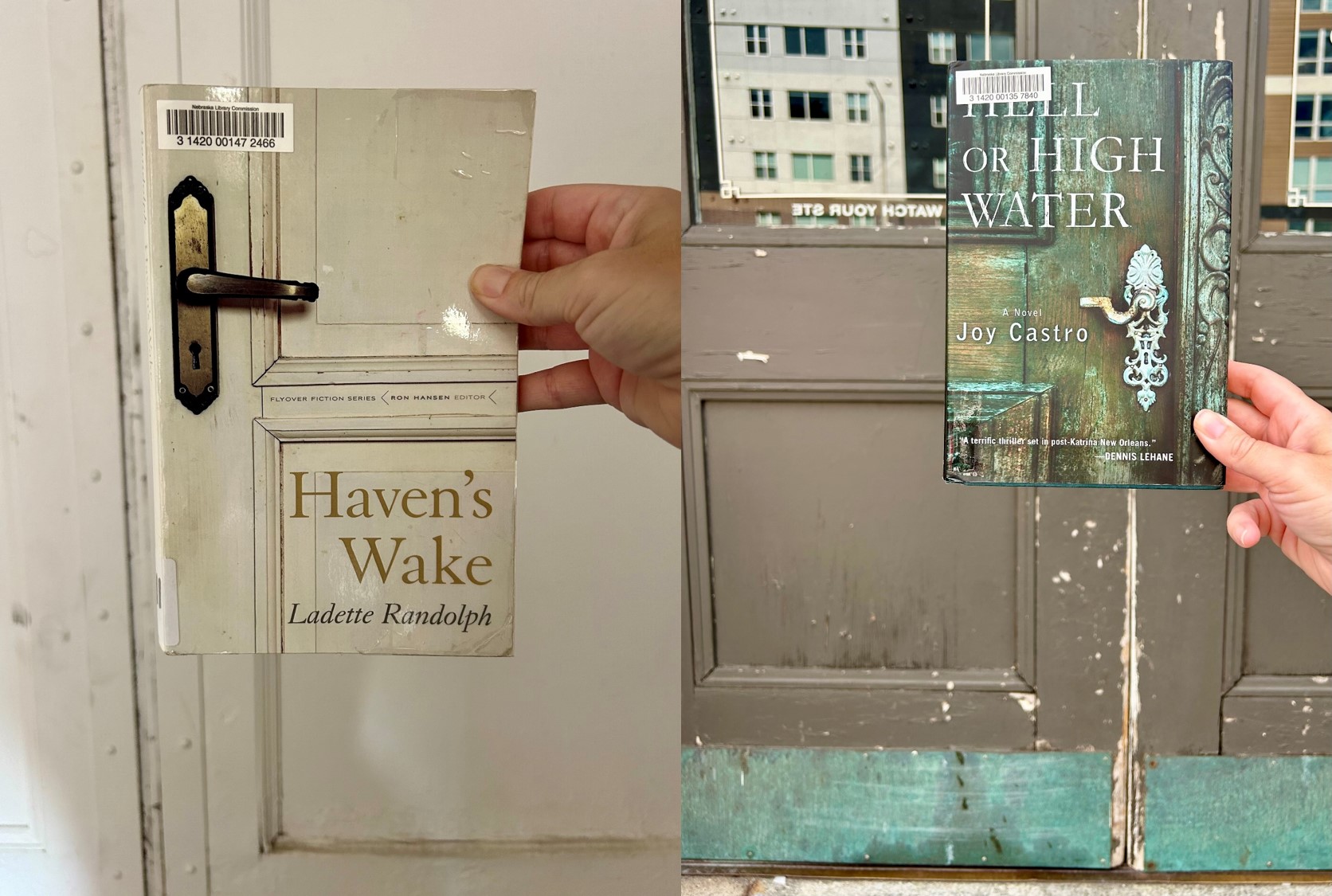
There’s nothing better than supporting Nebraska’s great literary talent by reading their books! This week’s #BookFaceFriday highlights two great Nebraska authors! “Haven’s Wake” by Ladette Randolph and “Hell or High Water” by Joy Castro, both novels are available as Book Club Kits for your library. Find more titles using the Nebraska-Related books located in the Browse Options section of our Book Club Kit Collection which includes fiction, nonfiction, adult, and kids/YA titles. Both “Haven’s Wake” and “Hell or High Water” can also be checked out through Nebraska OverDrive Libraries.
“With prose that vivifies the intricate patchwork of characters and captures the landscape’s simplicity, Haven’s Wake explores ‘the various attempts to explain the unexplainable,’ including family, faith, and death.”
—Katharine Fronk, Booklist Online
“A terrific mystery, but Hell or High Water is more than just a mystery; it’s a heartfelt examination of a second America–poor but undaunted–that was swept under the rug but refuses to stay there . . . I can’t wait to see what Joy Castro does next.”
– Dennis Lehane, New York Times bestselling author of Mystic River
Book Club Kits Rules for Use
- These kits can be checked out by the librarians of Nebraska libraries and media centers.
- Circulation times are flexible and will be based upon availability. There is no standard check-out time for book club kits.
- Please search the collection to select items you wish to borrow and use the REQUEST THIS KIT icon to borrow items.
- Contact the Information Desk at the Library Commission if you have any questions: by phone: 800/307-2665, or by email: Information Services Team
Libraries participating in the Nebraska OverDrive Libraries Group currently have access to a shared and growing collection of digital downloadable audiobooks and eBooks. 194 libraries across the state share the Nebraska OverDrive collection of 26,898 audiobooks, 36,794 ebooks, and 5,133 magazines. As an added bonus it includes 130 podcasts that are always available with simultaneous use (SU), as well as SU ebooks and audiobook titles that publishers have made available for a limited time. If you’re a part of it, let your users know about this great title, and if you’re not a member yet, find more information about participating in Nebraska Overdrive Libraries!
Love this #BookFace & reading? Check out our past #BookFaceFriday photos on the Nebraska Library Commission’s Facebook page!
Shortlist for 2025 One Book One Nebraska Announced
FOR IMMEDIATE RELEASE:
September 18, 2024
FOR MORE INFORMATION:
Tessa Timperley
402-471-3434
800-307-2665
Shortlist for 2025 One Book One Nebraska Announced
What book will all Nebraskans be encouraged to read in 2025? We will all find out on October 12th at the Nebraska Celebration of Books (N.COB) literary festival. A collection of nonfiction essays about Nebraska, a novel set in 1950’s about personal journeys, a historical fiction novel about the Pacific theater in World War II —all stories with ties to Nebraska—are the finalists for the 2025 One Book One Nebraska statewide reading program. The finalists are: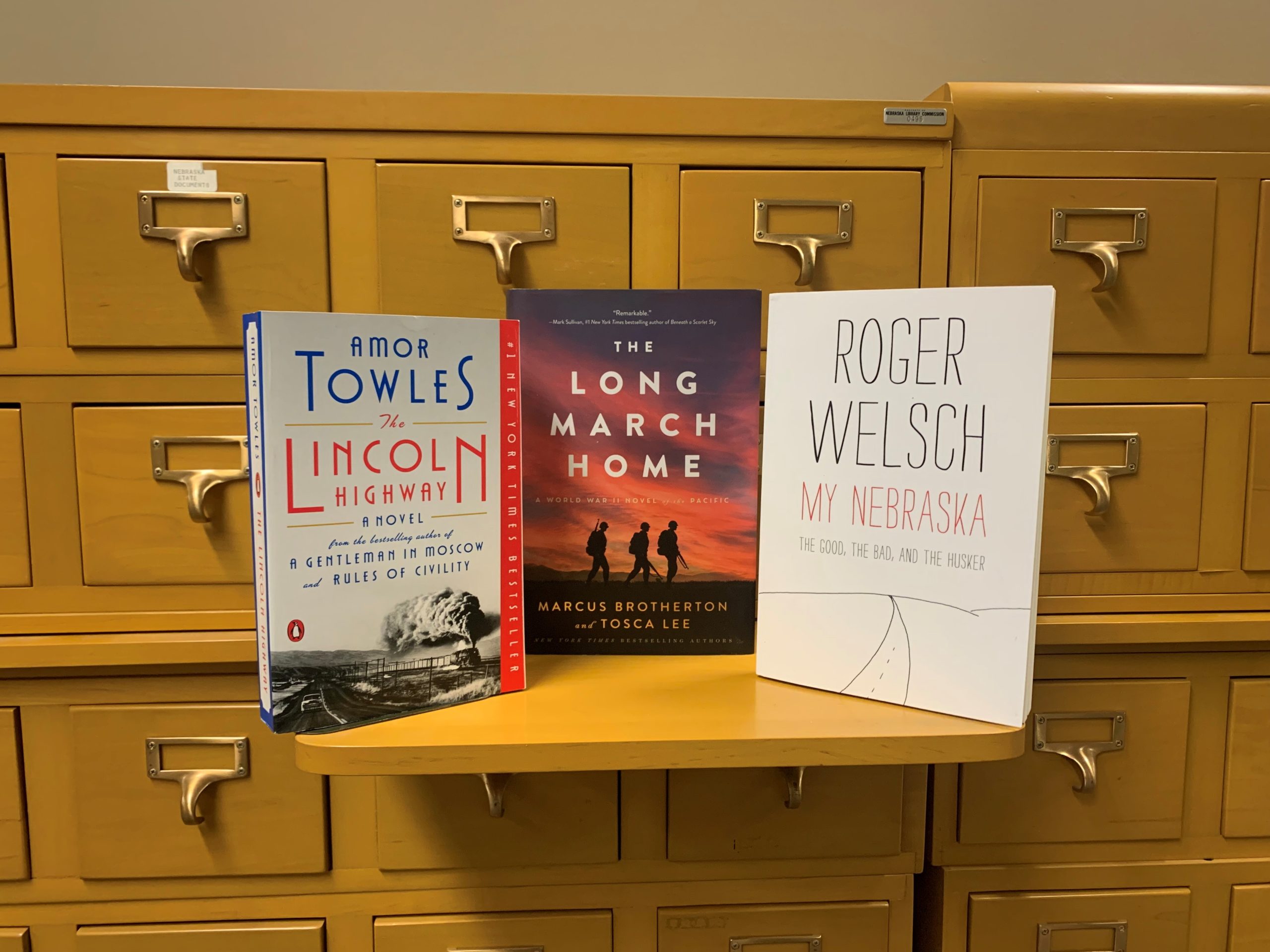
- My Nebraska: The Good, the Bad, and the Husker by Roger Welsch, The Globe Pequot Press, 2006.
- The Lincoln Highway: A Novel by Amor Towles, Viking Press, 2021.
- The Long March Home: A World War II Novel of the Pacific by Marcus Brotherton and Tosca Lee, Revell, 2023.
The One Book One Nebraska reading program is sponsored by the Nebraska Center for the Book, Humanities Nebraska, and the Nebraska Library Commission. It encourages Nebraskans across the state to read and discuss the same book, chosen from books written by Nebraska authors or that have a Nebraska theme or setting. A Nebraska Center for the Book committee selected the three finalists from a list of nineteen titles nominated by Nebraskans. In the coming weeks, Nebraska Center for the Book board members will vote on the 2025 selection.
Nebraskans are invited to take part in the Nebraska Celebration of Books (N.COB) Literary Festival where the choice for the 2025 One Book One Nebraska will be announced. Held on Saturday, October 12th, from 10:00am-5:30pm, in the Regency Suite, Heritage Room, and Swanson Auditorium located on the second floor of the UNL City Campus Union, this event aims to celebrate Nebraska’s literary heritage and contemporary authors. The festival will honor the 20th anniversary of the One Book One Nebraska program with a panel of past authors, in addition it will feature Nebraska authors, a SLAM poetry showcase, book vendors, and presentation of the Nebraska Center for the Book’s Nebraska Book Awards, Mildred Bennett Award and Jane Geske Award.
This year’s One Book One Nebraska selection, Dancing with the Octopus: A Memoir of a Crime by Debora Harding, will be featured with a memoir writing workshop facilitated by Lucy Atkins from Larksong Writers Place. See http://onebook.nebraska.gov or https://www.facebook.com/OneBookOneNebraska for more information about ongoing 2024 One Book One Nebraska activities.
The Nebraska Center for the Book is housed at the Nebraska Library Commission and brings together the state’s readers, writers, booksellers, librarians, publishers, printers, educators, and scholars to build the community of the book, supporting programs to celebrate and stimulate public interest in books, reading, and the written word. The Nebraska Center for the Book is supported by the national Center for the Book in the Library of Congress and the Nebraska Library Commission.
As the state library agency, the Nebraska Library Commission is an advocate for the library and information needs of all Nebraskans. The mission of the Library Commission is statewide promotion, development, and coordination of library and information services, “bringing together people and information.”
###
The most up-to-date news releases from the Nebraska Library Commission are always available on the Library Commission website, http://nlc.nebraska.gov/publications/newsreleases.
Children’s Book Now Available on BARD!
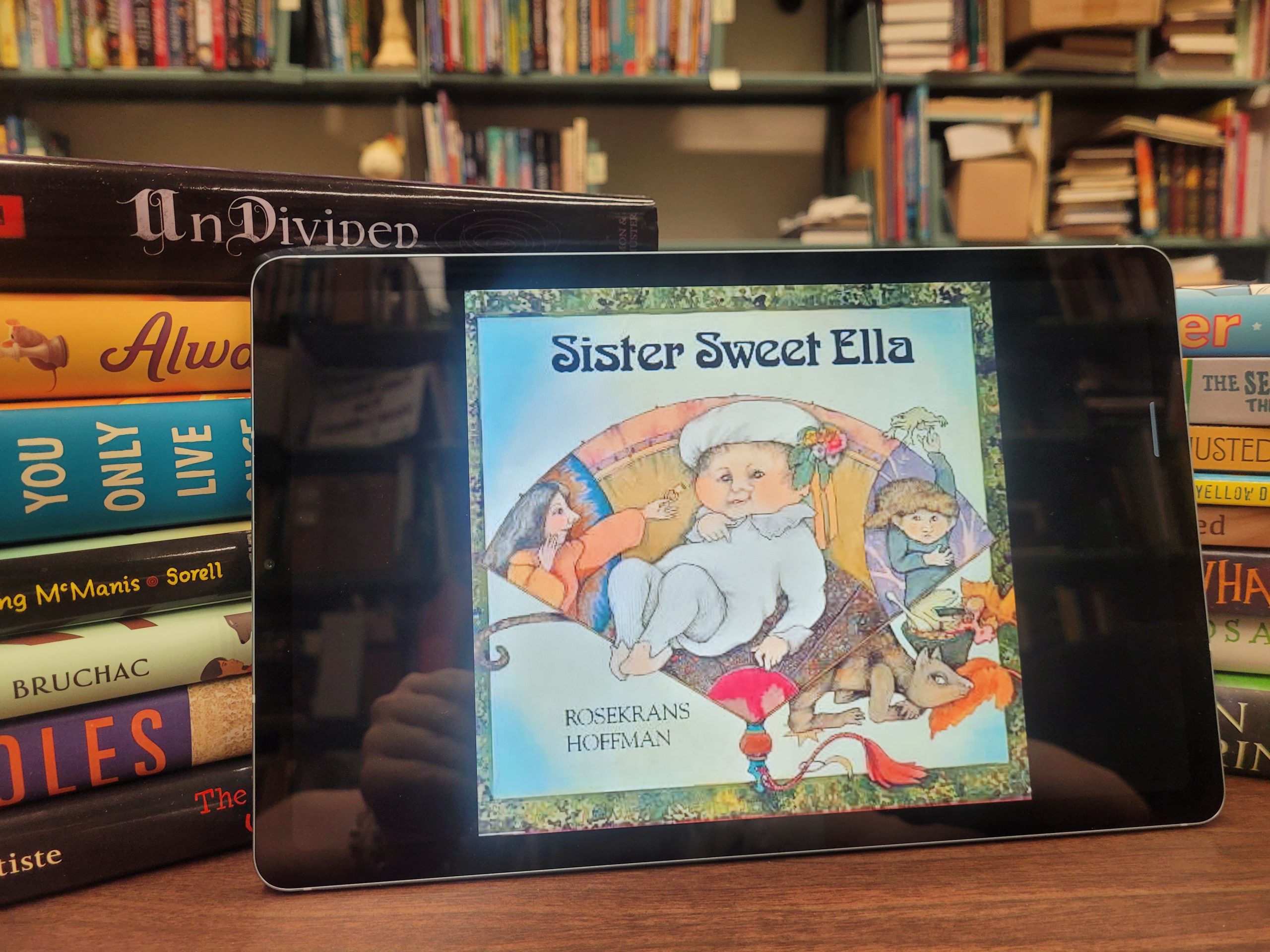
“Sweet Sister Ella” by Nebraska author Rosekrans Hoffman is now available on cartridge and for download on BARD, the Braille and Audio Reading Download service. BARD is a service offered by the Nebraska Library Commission Talking Book and Braille Service and the National Library Service for the Blind and Print Disabled at the Library of Congress.
A neglected older brother plots to recapture his mother’s attention, in this original tale of sibling rivalry. Recommended for grades 2 – 4.
TBBS borrowers can request “All is But a Beginning: Youth Remembered, 1881-1901” DCB02010 or download it from the National Library Service BARD (Braille and Audio Reading Download) website. If you have high-speed internet access, you can download books to your smartphone or tablet, or onto a flash drive for use with your player. You may also contact your reader’s advisor to have the book mailed to you on cartridge.
#BookFaceFriday “The Underground Library” by Jennifer Ryan
Take a look, it’s in a #BookFaceFriday!
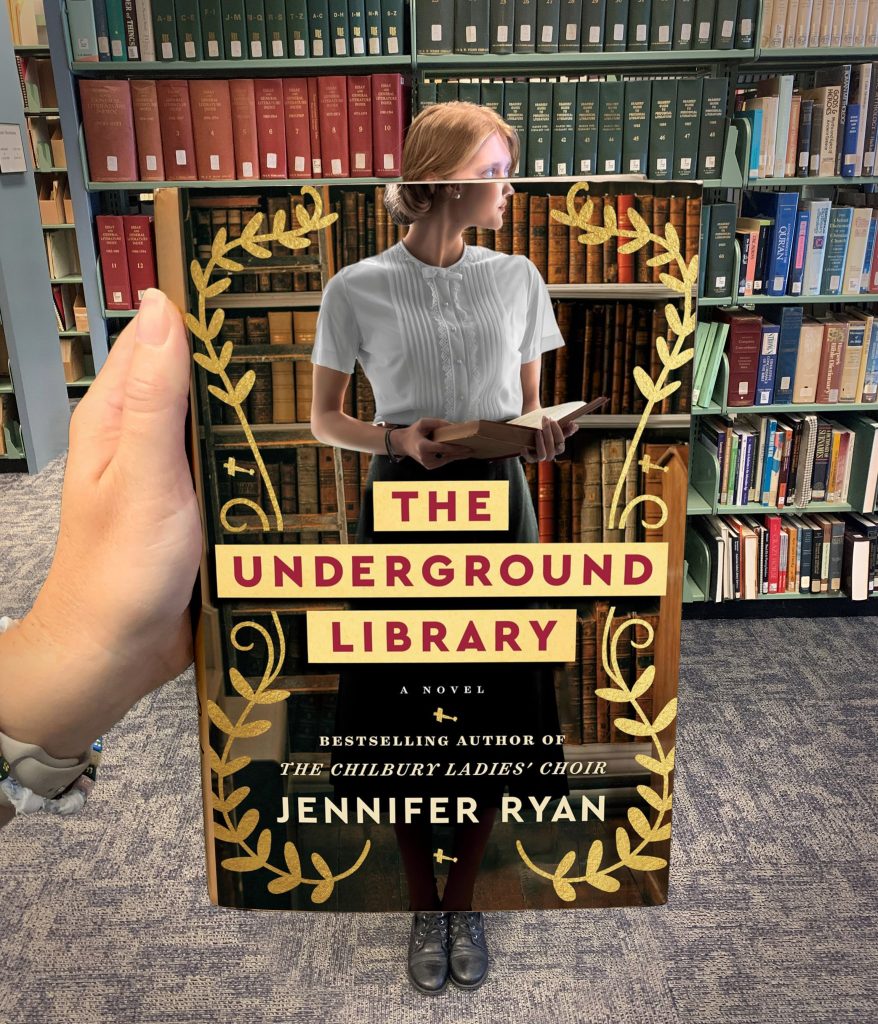
This week’s #BookFaceFriday is all about celebrating Library Card Sign Up Month! Join in with “The Underground Library: A Novel” by Jennifer Ryan (Ballantine Books, 2024). Libraries- More than Meets the Eye is this year’s theme. What can you do to help your community celebrate? Get out to your library, sign up for a library card, tell someone what you love about your library, and tell your local library staff how much you appreciate them! It’s that easy. This title is available as a an eBook and Audiobook through Nebraska OverDrive Libraries, and can be found in the specially curated collection “Library Card Sign Up Month,” which is filled with library themed titles.
“This uplifting and inspirational story is perfect for readers looking for heroic home front World War II novels with connections to actual events.”
— Historical Novel Society
Libraries participating in the Nebraska OverDrive Libraries Group currently have access to a shared and growing collection of digital downloadable audiobooks and eBooks. 194 libraries across the state share the Nebraska OverDrive collection of 26,898 audiobooks, 36,794 ebooks, and 5,133 magazines. As an added bonus it includes 130 podcasts that are always available with simultaneous use (SU), as well as SU ebooks and audiobook titles that publishers have made available for a limited time. If you’re a part of it, let your users know about this great title, and if you’re not a member yet, find more information about participating in Nebraska Overdrive Libraries!
Love this #BookFace & reading? We suggest checking out all the titles available for book clubs at http://nlc.nebraska.gov/ref/bookclub. Check out our past #BookFaceFriday photos on the Nebraska Library Commission’s Facebook page!
Friday Reads: Small Acts of Courage: A Legacy of Endurance and the Fight for Democracy, by Ali Velshi
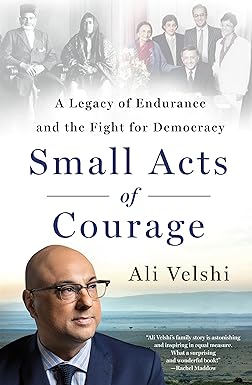
Many readers will recognize Ali Velshi, author of Small Acts of Courage, as a journalist who’s worked for CNN, Al Jazeera America, and MSNBC. Small Acts of Courage is not a typical celebrity memoir, however. Instead, it is a family story dating back to the late 19th century. It starts in Gujarat, India, with Velshi’s great-great-grandfather, and follows subsequent generations as they relocate to South Africa, Kenya, Canada, and finally, in Velshi’s case, the United States.
One thing I appreciated about this book was the historical perspective it provided. It answered questions about the Indian diaspora, especially as it exists in South Africa and Canada, and also connected some dots about the impact of the British Empire and colonialism on migration. The biggest takeaway, however, relates to the lessons Velshi learned from his family about the importance of civic engagement and pluralism in a healthy democracy.
Having grown up in South Africa under apartheid, Velshi’s parents knew the destructive power of racial segregation, as well as the impotence of having no political voice. So when they moved to Canada in the early 1970s, at a time the country was not only actively welcoming immigrants but had also adopted an official policy of multiculturalism, they were all in. They became politically active, served on boards and committees, and dedicated themselves to building and participating in a civil society. Velshi’s father even ran for political office in 1981, not because he had a chance to win, but because at that time virtually no immigrants did so; he felt someone needed to show the immigrant community they could: “There was a point to be made, that you could run for office here without landing in jail or being shot by somebody, and it had to be done if for no other reason than to prove that it could be done” (188-189).
Although Velshi writes about earlier generations of his family rubbing shoulders with Gandhi in South Africa—Velshi’s great-grandfather was Gandhi’s contemporary and friend and his grandfather was Gandhi’s youngest student at Tolstoy Farm ashram–this book isn’t about the impact big-name historical influencers have on society. It barely even touches on Velshi’s life as a jet-setting journalist. Instead, it’s a celebration of and an argument for the contributions of everyday people who serve society by serving others. People like his sister, a civil servant in Toronto who performs “the grueling, thankless grunt work of citizenship” (237). And his parents, whose Canadian citizenship “was something they created, something they built themselves out of the raw materials and opportunities [they had] access to” (266.) I’d say the main takeaway from Velshi’s book is that citizenship is “a muscle that atrophies if you don’t use it . . . “ (266). If this is a message that resonates with you, be sure to check out Small Acts of Courage.
Velshi, Ali. Small Acts of Courage: A Legacy of Endurance and the Fight for Democracy. St. Martin’s Press, 2024.
What’s Up Doc? New State Agency Publications at the Nebraska Library Commission
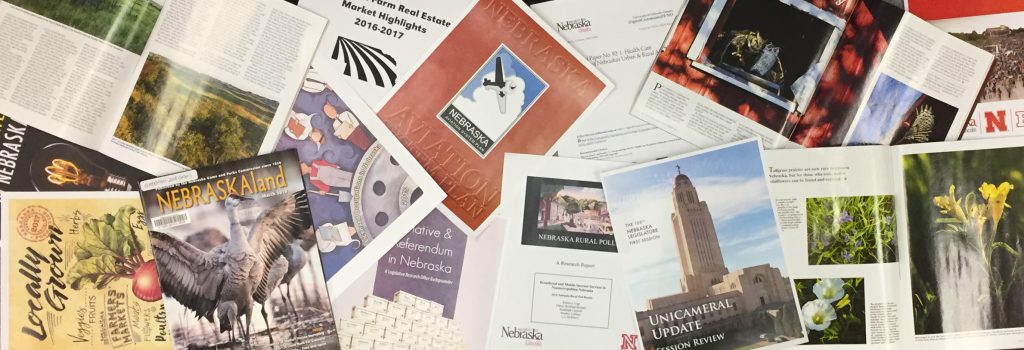
New state agency publications have been received at the Nebraska Library Commission for July and August, 2024. Included are Annual Reports from the Nebraska Department of Health and human Services, reports from the Nebraska Auditor of Public Accounts, the Nebraska State Treasurer, the Nebraska Department of Revenue, the Nebraska Department of Transportation, and the Nebraska Public Employees Retirement System, to name a few.
With the exception of University of Nebraska Press titles, items are available for immediate viewing and printing by clicking directly in the .pdf below.
The Nebraska Legislature created the Nebraska Publications Clearinghouse in 1972 as a service of the Nebraska Library Commission. Its purpose is to collect, preserve, and provide access to all public information published by Nebraska state agencies. By law (State Statutes 51-411 to 51-413) all Nebraska state agencies are required to submit their published documents to the Clearinghouse. For more information, visit the Nebraska Publications Clearinghouse page, contact Mary Sauers, Government Information Services Librarian; or contact Bonnie Henzel, State Documents Staff Assistant.
Posted in Books & Reading, Education & Training, General, Information Resources, What's Up Doc / Govdocs
Tagged books, GovDocs, Reading
Leave a comment
Book Club Spotlight – You Don’t Know Everything, Jilly P!
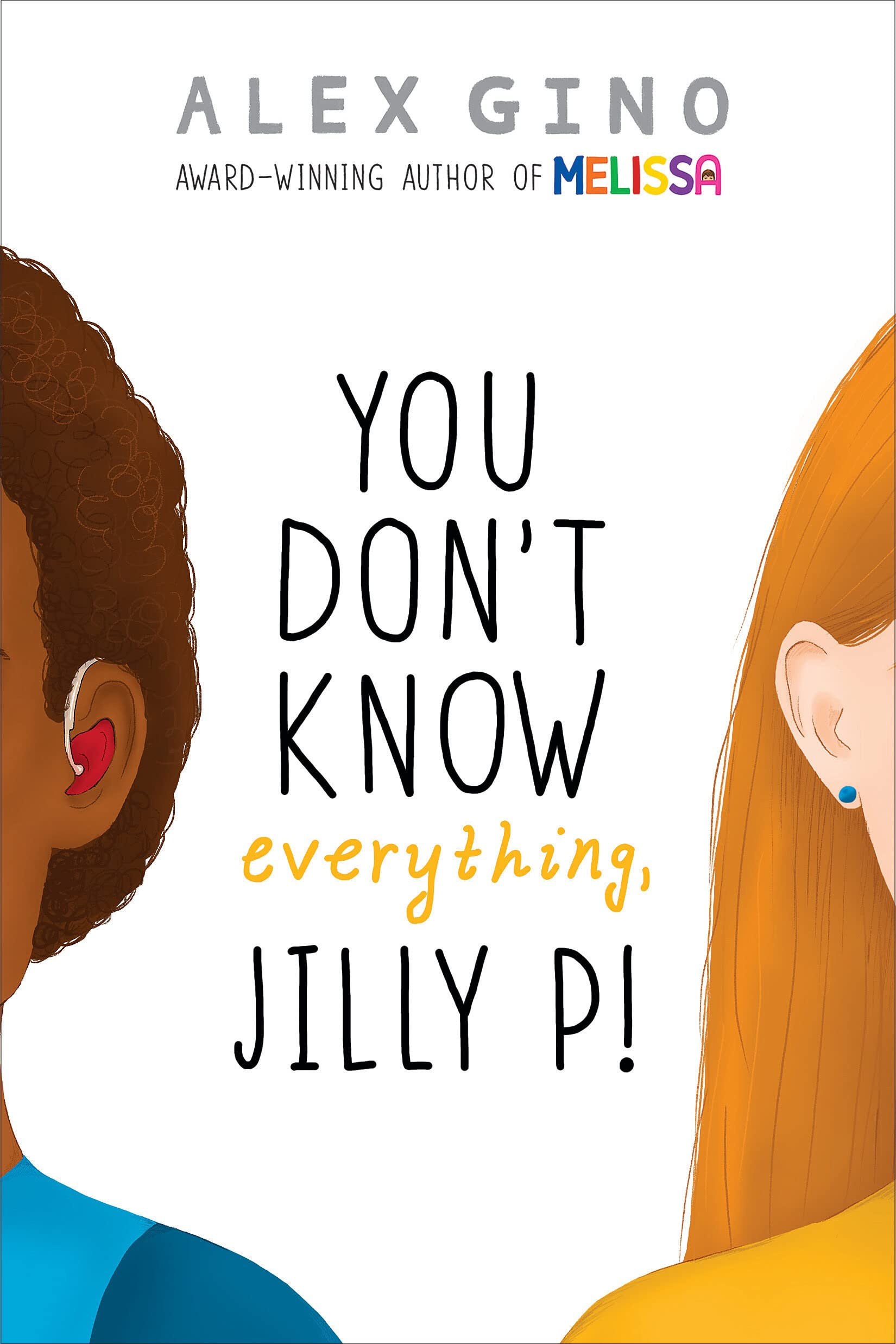
This month is National Deaf Awareness Month, which includes International Week of Deaf People from Sept 23rd through the 29th! Each day of the week is themed with ways to get involved and learn about the deaf community worldwide! Today’s Book Club Spotlight, You Don’t Know Everything Jilly P!, by Alex Gino, features a young girl learning about the Deaf community and beyond, when her sister is unexpectedly born Deaf. Best known for their debut novel, Melissa, Gino is a member of We Need Diverse Books and PEN America; two organizations with the mission to uplift marginalized voices and secure the right to read.
Jilly’s aunts say that after her baby sister is born, life will never go back to normal. And they’re right! When Emma is born Deaf, her parents aren’t prepared, but Jilly is way excited to tell her Deaf online friend Derek aka profoundinoaktown, the news. When his excitement doesn’t match hers, she’s confused and hurt. While her parents are busy meeting with audiologists, Jilly begins noticing her own differences and how they impact others. She’s hearing, so she doesn’t have to worry about communication and being left out of conversation. She’s also white and doesn’t have to worry about racism and violence like her Black friends and family do. Jilly’s aunt and her cousins are more than people who are Black, and Derek is more than someone who is Black and Deaf. They’re proud of their identities because each piece of them comes together to make who they are, but sometimes being who they are is unsafe. Jilly has a lot to learn, and even though she messes us up, she keeps trying. So when her sister is ready for the world, she will be too.
“The hard thing about accidentally saying the wrong thing is that you don’t know it’s the wrong thing until you’ve already said it and hurt someone. And even if you didn’t mean it that way, you can’t take it back.”
Alex Gino
For 3rd-grade readers and up, You Don’t Know Everything, Jilly P, takes on aspects of Gino’s real-life experience of having Deaf and Black family and friends and learning how their life experiences and opportunities differ. In traditional Alex Gino fashion, the book handles some pretty intense topics with care and compassion, from learning and respecting Deaf culture, to spotting racist microaggressions and talking to others about racism. In the author’s note, Gino states that “books and stories are tools for talking about contemporary issues and that young readers need and deserve these tools just as much as the rest of us”. When it comes to discussing these topics with your students or a Book Club Group, don’t fear- the Scholastic Discussion Guide not only includes great questions for readers of all ages- but further resources into Deaf Culture, ASL, Civil Rights, and how to act as an ally, not just a bystander, in your community.
Interview with Alex Gino by Deaf writer Ann Clare Le Zotte:
If you’re interested in requesting You Don’t Know Everything, Jilly P! for your book club, you can find the Request Form here. There are 22 copies. (A librarian must request items)
Gino, Alex. You Don’t Know Everything, Jilly P!. Scholastic. 2019
Posted in Books & Reading
Tagged book club spotlight, books, Deaf awareness month, Reading
Leave a comment
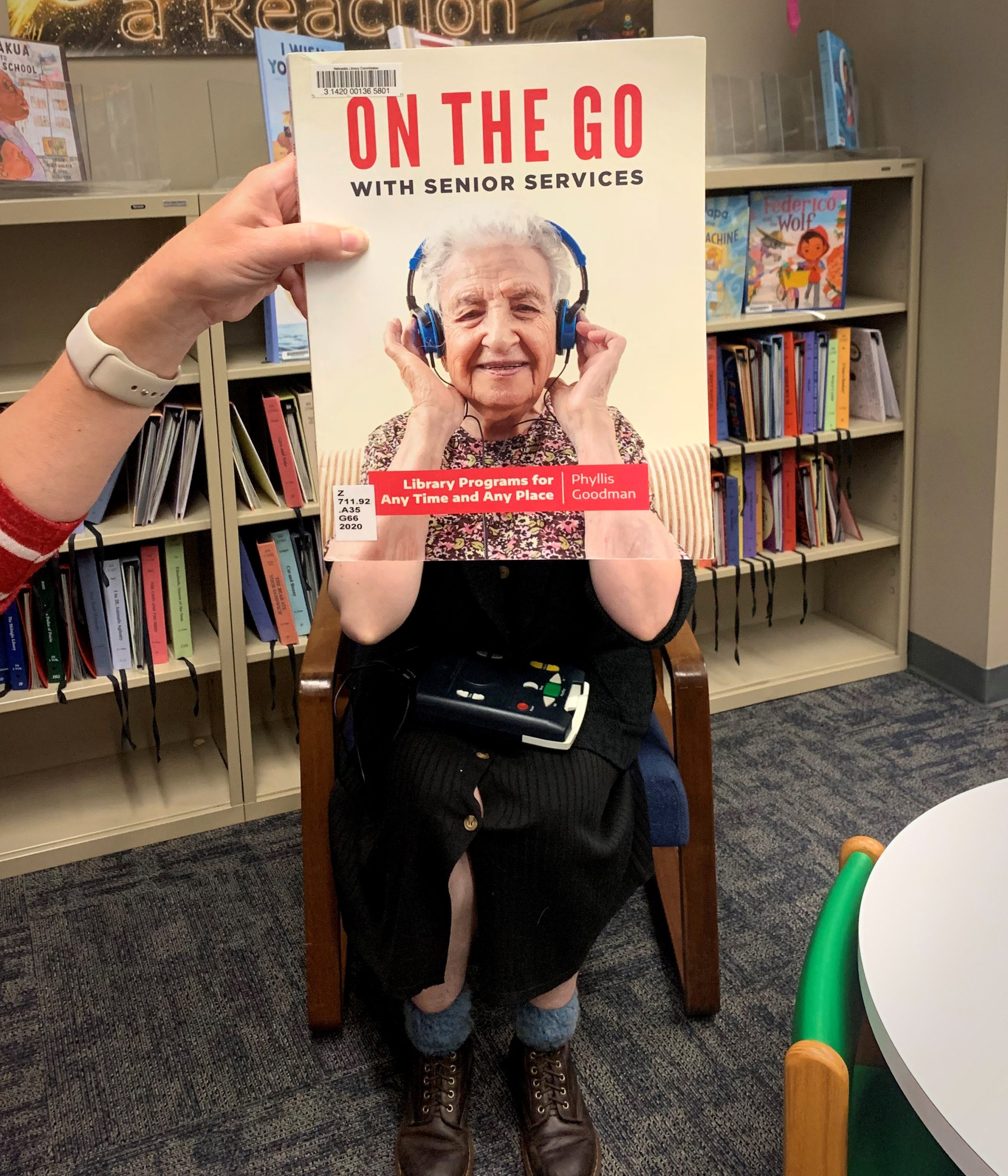
#BookFaceFriday – “On the Go with Senior Services” by Phyllis Goodman
Listen up, it’s #BookFaceFriday!
The Nebraska Library Commission is hiring! We are looking for a Marketing and Outreach Coordinator for our Talking Book and Braille (TBBS) department to help us recruit, retain, and engage our TBBS patrons.
The Talking Book and Braille Service is a no-cost braille and Audiobook library service for people with temporary or permanent low vision, blindness, or a physical or perceptual disability that prevents them from reading or holding the printed page or a reading disability. It’s one of the NLC’s core services and, while not limited to, is used by many Nebraska senior citizens.“On the Go with Senior Services : Library Programs for Any Time and Any Place” by Phyllis Goodman (Libraries Unlimited, 2020) is a part of NLC’s Library Science Collection, which provides professional and reference materials for Nebraska librarians and library science programs. This includes all librarians and library science students. The checkout period is 4 weeks, and items can be sent through the mail or picked up in person. You can find all of these books and more in our catalog, or reach out to our reference staff for a recommendation!
“Providing programming at senior living facilities may be uncharted territory for many libraries. If you’re looking to begin offering programs for senior residents, start your research with this book. Find inspiration to take seniors to the past or around the world, make everyone an artist or author, empower them to use technology confidently, and connect with people living with dementia.”
― Jennie Fidler, Special Services Coordinator, Oconomowoc Public Library
Love this #BookFace & reading? Check out our past #BookFaceFriday photos on the Nebraska Library Commission’s Facebook page!
Posted in Books & Reading, Education & Training, Library Management, Talking Book & Braille Service (TBBS)
Tagged Book Covers, bookface, bookfacefriday, books, Hiring, Librarians, Library Development, Library Science, Marketing Outreach Coordinator, On the Go with senior Services, Phyllis Goodman, TBBS
Leave a comment
Friday Reads : Flight Patterns, by Karen White
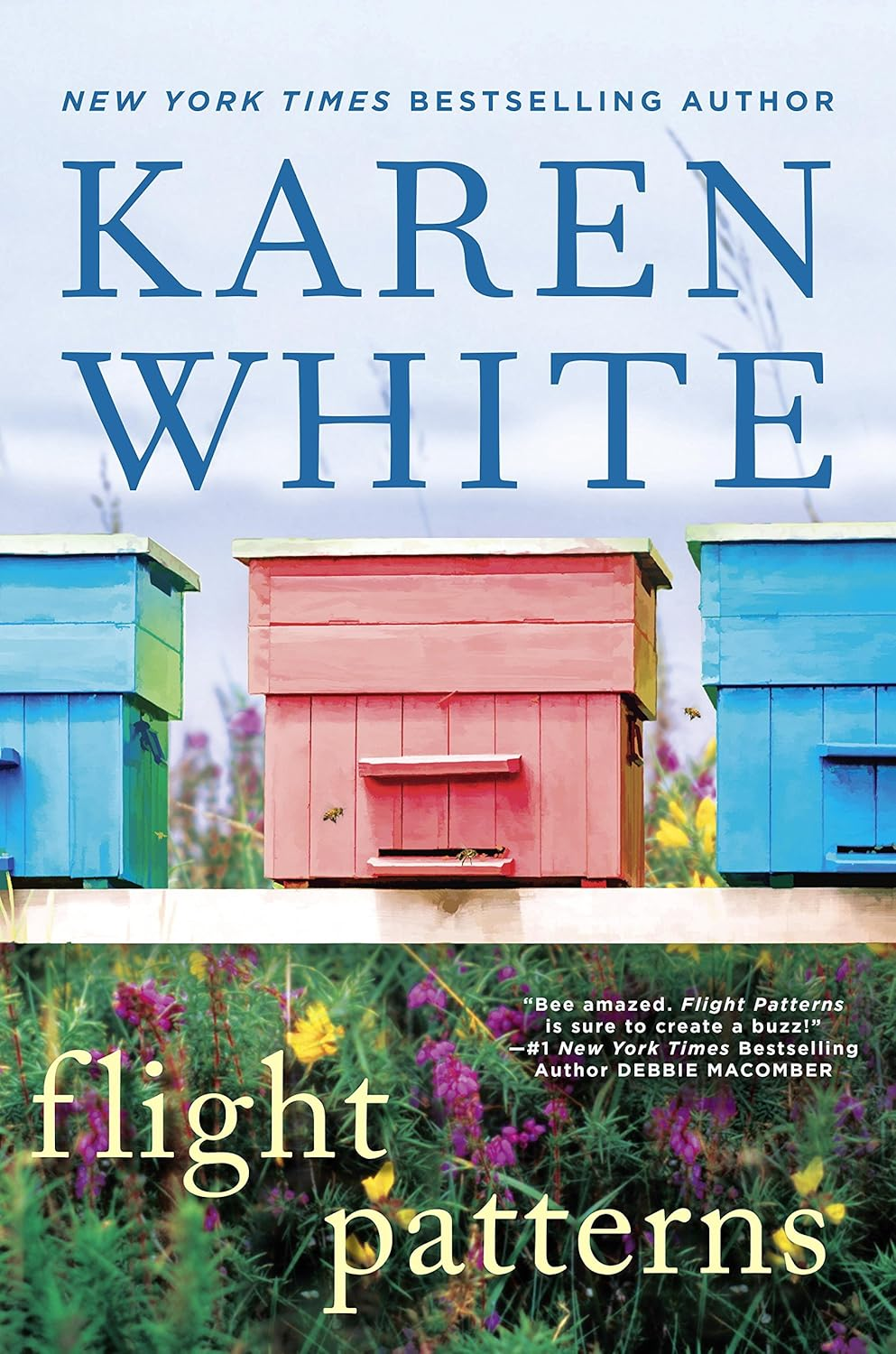
I recently picked up Flight Patterns, by Karen White, at a library book sale. And while the author was new to me, what really drew my attention was not just the description of the story, but of the story’s location: Apalachicola, Florida. Apalach, as it’s known to it’s residents, is a town not far from where I grew up and that offers some of the most beautiful homes, gorgeous beaches, and best seafood in the entire South. Flight Patterns tells the story of a woman coming home to the Apalach family she left behind – and to the woman she always wanted to be. In the telling of this woman’s story, Ms. White has done such a magnificent job of describing the beauty of the town, area and people, that it brought back many fond memories of summer days there with my family. As per my usual habit, I both read and listened to this title, and was riveted from beginning to end, as I’m sure you will be too!
Georgia Chambers has spent her life sifting through other people’s pasts while trying to forget her own. But then her work as an expert on fine china – especially Limoges and the mystery surrounding a particular pattern – requires her to return to the one place she swore she’d never revisit: her home town.
It’s been 13 years since Georgia left her family home on the coast of Florida, and nothing much has changed except that there are fewer oysters and more tourists. She finds solace in seeing her grandfather still toiling away with his bees in the apiary where she spent much of her childhood, but encountering her estranged mother and sister leaves her rattled. Seeing them after all this time makes Georgia realize that something has been missing – and unless she finds a way to heal these rifts, she will forever be living vicariously through other people’s remnants. To embrace her own life – mistakes and all – she will have to find the courage to confront the ghosts of her past and the secrets she was forced to keep. **Synopsis courtesy of Audible
Call for Speakers: Big Talk From Small Libraries 2025
The Call for Speakers for Big Talk From Small Libraries 2025 is now open!
Submit your proposal by Friday, December 13, 2024.
This free one-day online conference is tailored for staff from small libraries; the smaller the better!
Small libraries of all types – public, academic, school, museum, special, etc. – are encouraged to submit a proposal. We’re looking for seven 50-minute presentations and four 10-minute “lightning round” presentations.
Do you offer a service or program at your small library that other librarians might like to hear about? Have you implemented a new (or old) technology, hosted an event, partnered with others in your community, or just done something really cool? The Big Talk From Small Libraries online conference gives you the opportunity to share what you’ve done, while learning what your colleagues in other small libraries are doing.
Here are some possible topics to get you thinking:
- Unique Libraries
- Special Collections
- New buildings
- Fundraising
- Improved Workflows
- Staff Development
- Advocacy Efforts
- Community Partnerships
- That great thing you’re doing at your library!
Speakers from libraries serving fewer than 10,000 people will be preferred, but presentations from libraries with larger service populations will be considered. Speakers must be from small libraries or directly partnered with a small library and submitting a proposal to co-present with the library.
Big Talk From Small Libraries 2025 will be held on Friday, February 28, 2025 between 8:45 a.m. and 5:00 p.m. (CT) via the GoTo Webinar online meeting service. Speakers will present their programs from their own desktops. The schedule will accommodate speakers’ time-zones.
This conference is sponsored by the Association for Rural & Small Libraries (ARSL) and the Nebraska Library Commission.
Photo by Patrick Fore on Unsplash
Nebraska Author Biography is Now Available on BARD!
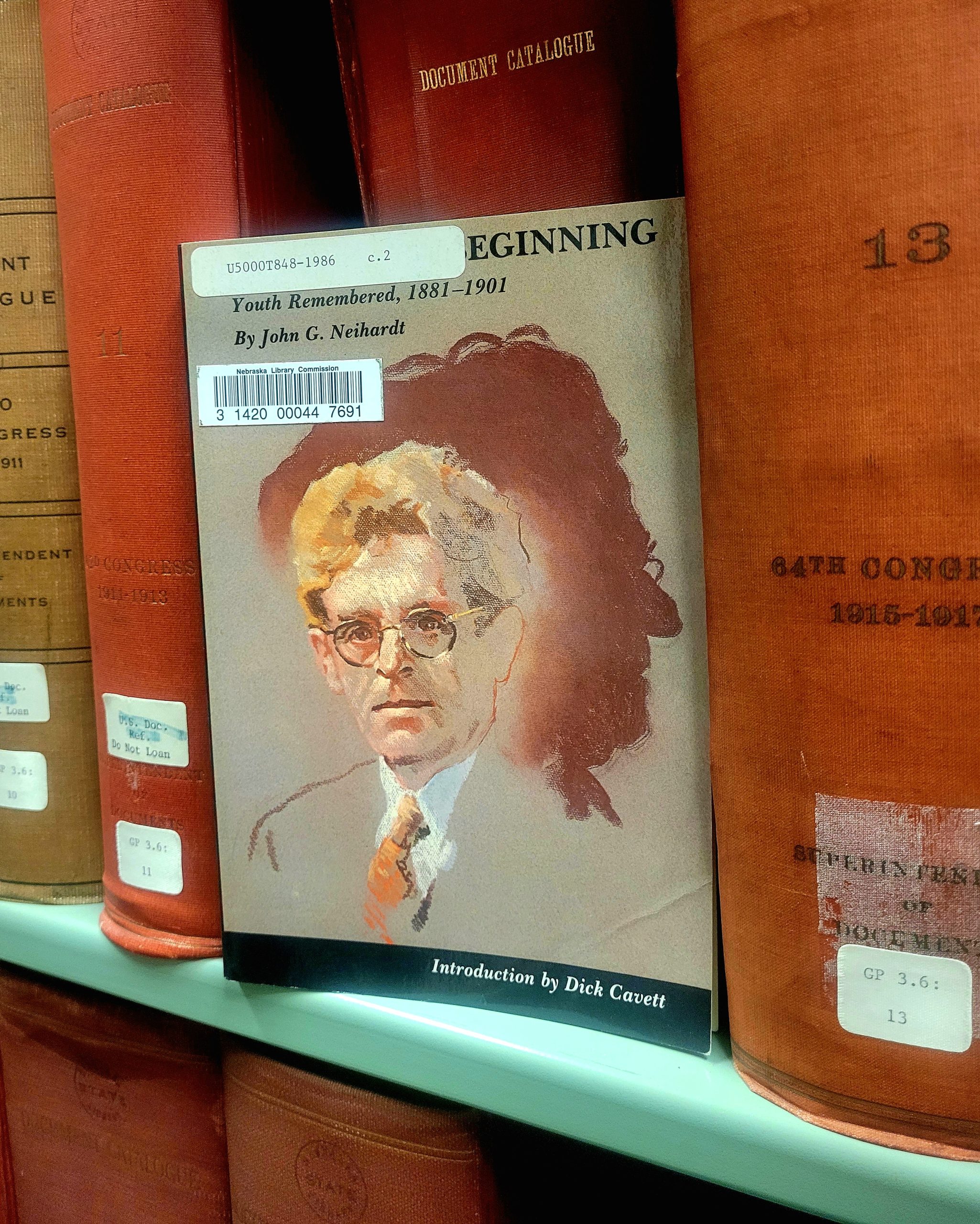
“All is But a Beginning: Youth Remembered, 1881-1901” by John G. Neihardt with introduction by Dick Cavett is now available on cartridge and for download on BARD, the Braille and Audio Reading Download service. BARD is a service offered by the Nebraska Library Commission Talking Book and Braille Service and the National Library Service for the Blind and Print Disabled at the Library of Congress.
Nebraska poet, teacher, historian, and Indian scholar here provides a history of his youth, relating childhood experiences and outside influences (family, friends, and teachers) to the development of his life and his struggle to be a poet. He paints a realistic picture of growing up in the Midwest at the end of the 19th century, and of the people and events instrumental in shaping his life.
TBBS borrowers can request “All is But a Beginning: Youth Remembered, 1881-1901” DCB02033 or download it from the National Library Service BARD (Braille and Audio Reading Download) website. If you have high-speed internet access, you can download books to your smartphone or tablet, or onto a flash drive for use with your player. You may also contact your reader’s advisor to have the book mailed to you on cartridge.
#BookFaceFriday “The Book of Unknown Americans” by Cristina Henríquez
Did you know it’s #BookFaceFriday?
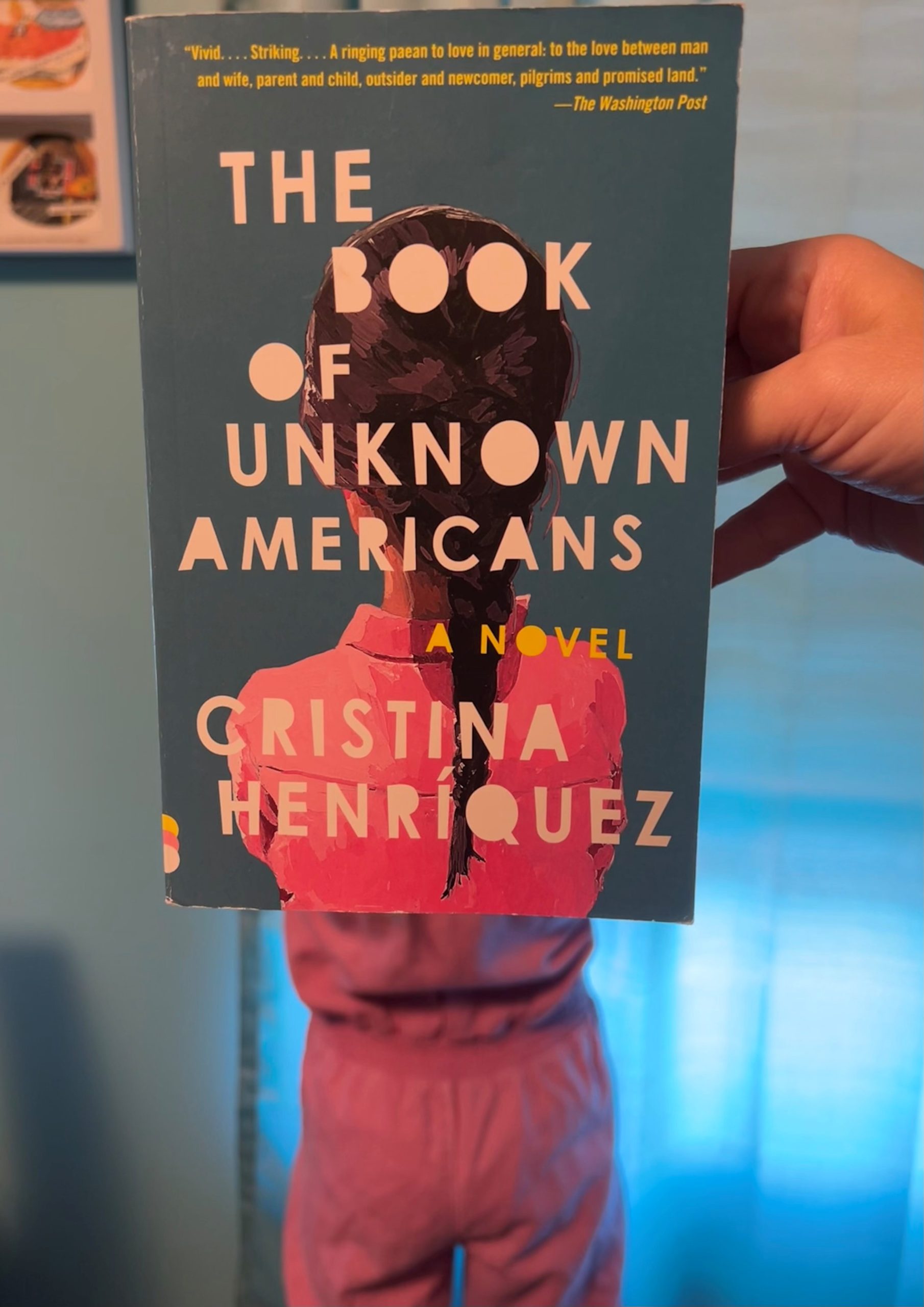
Don’t blame us for judging a book by its cover – this one was just asking to become this week’s #BookFace! But sometimes those first impressions prove to be correct; “The Book of Unknown Americans” by Cristina Henríquez, was “named a New York Times and Washington Post Notable Book, an NPR Great Read, The Daily Beast’s Novel of the Year, and a Mother Jones, Oprah.com, School Library Journal, and BookPage Best Book of the Year.” This title is available as a part of our Book Club Kit collection, and also as an eBook and Audiobook through Nebraska OverDrive Libraries. Will your book club enjoy it? Only one way to know for sure…
“There’s an aura of benevolence in these pages…. Henríquez’s feat is to make the reader feel at home amid these good, likable people.”
—The Wall Street Journal
“Unfailingly well written and entertaining…. [Henríquez’s] stories illuminate the lives behind the current debates about Latino immigration.”
– The New York Times Book Review
Book Club Kits Rules for Use
- These kits can be checked out by the librarians of Nebraska libraries and media centers.
- Circulation times are flexible and will be based upon availability. There is no standard check-out time for book club kits.
- Please search the collection to select items you wish to borrow and use the REQUEST THIS KIT icon to borrow items.
- Contact the Information Desk at the Library Commission if you have any questions: by phone: 800/307-2665, or by email: Information Services Team
Libraries participating in the Nebraska OverDrive Libraries Group currently have access to a shared and growing collection of digital downloadable audiobooks and eBooks. 194 libraries across the state share the Nebraska OverDrive collection of 26,898 audiobooks, 36,794 ebooks, and 5,133 magazines. As an added bonus it includes 130 podcasts that are always available with simultaneous use (SU), as well as SU ebooks and audiobook titles that publishers have made available for a limited time. If you’re a part of it, let your users know about this great title, and if you’re not a member yet, find more information about participating in Nebraska Overdrive Libraries!
Love this #BookFace & reading? Check out our past #BookFaceFriday photos on the Nebraska Library Commission’s Facebook page!
Friday Reads: The Bear and the Nightingale by Katherine Arden
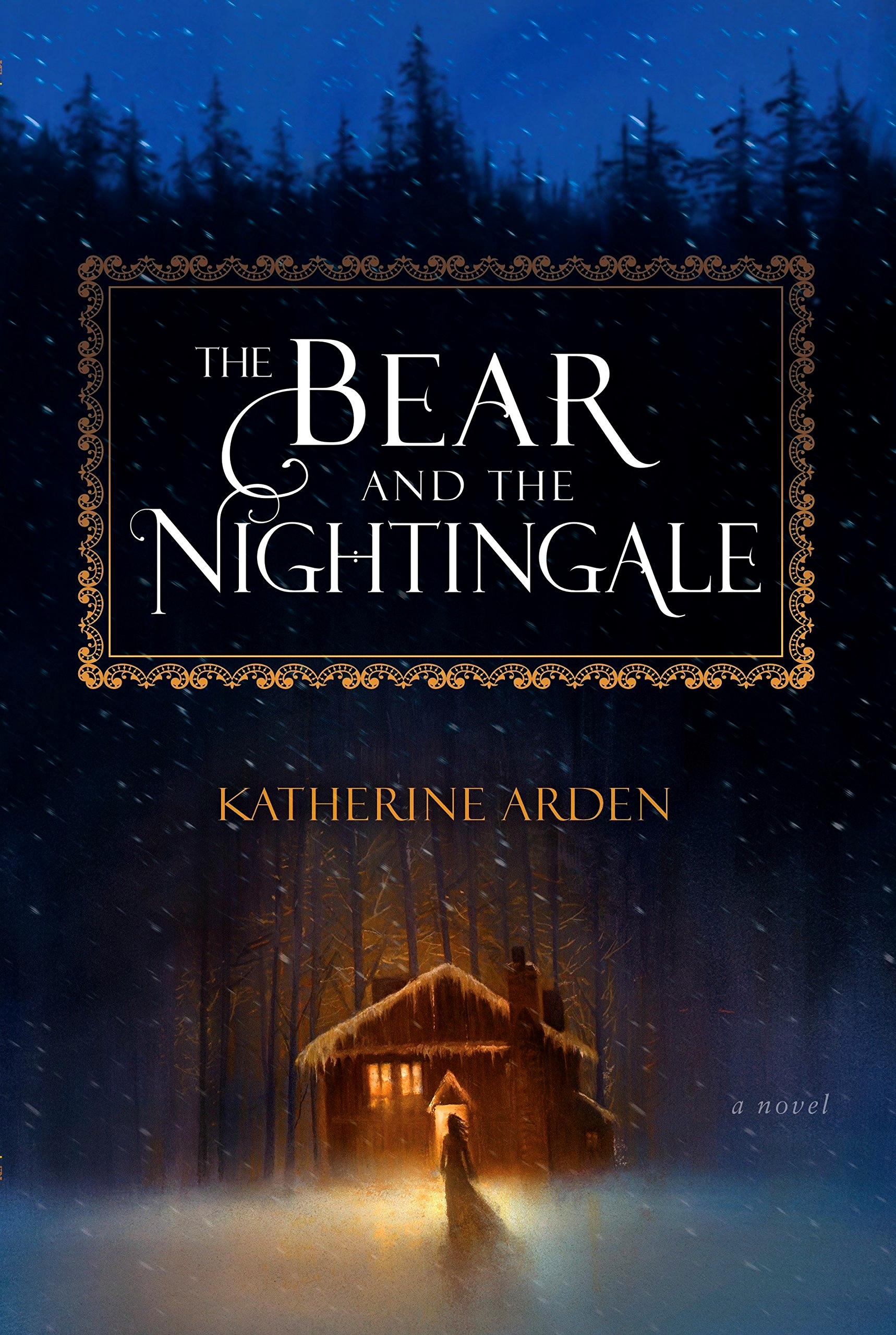
With the last few days of heat warnings, a story about endless winter nights and frost-demons seemed like a good choice.
Told much like a fairy tale, the story centers on Vasilisa, who lives with her father, nurse, and siblings in a small village at the edge of a great frozen wilderness. The village exists somewhere between the influences of the “modern” religion and the “old” faith which honors the spirits of the house and surrounding forest, who have always offered protection. Most nights are spent around the hearth listening to stories, especially the one about the evil frost-demon lurking in the woods.
Vasilisa has always been a strong, rebellious child with dreams of adventure and no desire to marry or settle down. When her father decides it’s finally time to remarry (and hopefully find a positive role model), he brings home her new stepmother, Anna, from the city.
Fiercely devout and fighting against a terrifying curse, Anna forbids all practices related to the old spirits. A young priest follows shortly after, determined to prove himself by “saving” the village and returning to the city as a hero. As evil creatures grow closer and the village suffers, Vasilisa becomes a target due to her own strange gifts.
Defying those she loves most, she has to find the true cause and battle against the darkness to save them all.
The Winternight Trilogy:
- 1. The Bear and the Nightingale
- 2. The Girl in the Tower
- 3. The Winter of the Witch
Arden, Katherine. (2017). The Bear and the Nightingale. Del Rey.
Book Club Spotlight – The Invisible Man
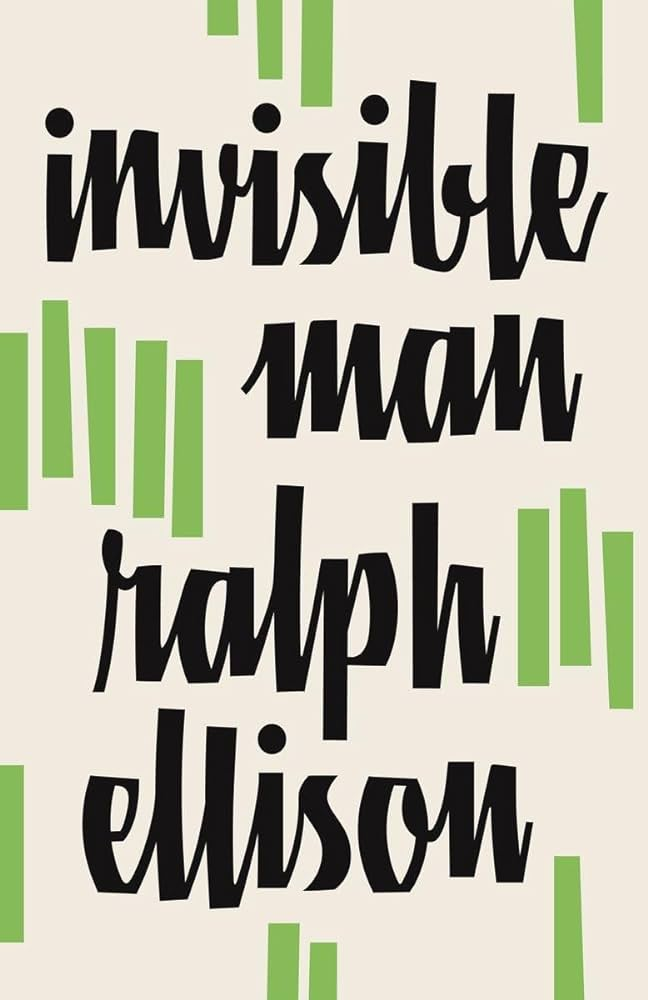
A man of many passions, from music, art, to class consciousness, and social theory, Ralph Waldo Ellison (named after the leader of the Transcendentalist movement), is best known for his contributions to the American literary canon. His sharp satirical works and his contemporary exploration of the varied lives of African Americans pre-Civil Rights earned his place as the first African-American to win the National Book Award for Fiction for his 1952 novel, Invisible Man.
When we meet our narrator, the eponymous Invisible Man, he is living in an abandoned basement of a whites-only apartment in New York City. He reassures us that this is no hovel, as it glows with a thousand lights of promise (and siphoned electricity). Before he was in this shelter, he lived a life full of promise. As a young man, his academic prowess awarded him a chance to speak in front of the town’s white elites. But instead of a simple speech, he is forced into a blinded battle royale with other Black youth; and only once he is debased and beaten bloodless is he allowed to speak. As his life’s journey takes him from his home in the south to New York City, he is struck by how this promised land holds the same prejudices and obstacles to self-actualization. As a disillusioned young man stuck in the perpetual cycle of fighting for liberation, he must put on a respectable front to exist in a world that is systemically works against him.
“I was pulled this way and that for longer than I can remember. And my problem was that I always tried to go in everyone’s way but my own. I have also been called one thing and then another while no one really wished to hear what I called myself.”
― Ralph Ellison
Not to be confused with the science fiction book of the same name- the invisibility in Ellison’s Invisible Man, is theoretical and social, rather than a physical condition. His unnamed narrator, a bright young Black man in the Jim Crow South, has a promising future that depends on him making himself inoffensive, and inconsequential to the white men who hold power over him. It’s also important to remember that these Black men who had to be “invisible” to the white society, were absolutely not invisible to the women and children in their lives. As we discussed in The Bluest Eye, Pecola Breedlove’s situation is informed by those around her and their treatment by society. Invisible Man was a large influence on Morrison’s work- acting as a conversation point to where she would take those deemed “invisible” and show them in the light that their contemporaries would have seen them. Here, her perspective is just as valuable as Ellison’s.
Invisible Man, while an important piece of American literature, is not an easy read. Taught in AP Literature courses and College-Level Classes, this book demands dissection and close reading. When working with your class, or dedicated Book Club Group, I highly recommend taking advantage of the Cliffs Notes. (Did you know that the founder, Clifton Hillegass, was a lifelong Nebraskan?) Study tools, like Cliffs Notes, are a great accessible tool for modern readers who might lack context for classic literature, and content thoughtful analysis that assists, not hinder the reading experience.
If you’re interested in requesting Invisible Man for your book club, you can find the Request Form here. There are 10 copies. (A librarian must request items)
Ellison, Ralph. Invisible Man. Random House. 1952
Nebraska’s 2024 Book Award Winners Announced
FOR IMMEDIATE RELEASE:
August 23, 2024
FOR MORE INFORMATION:
Tessa Timperley
402-471-3434
800-307-2665
Nebraska’s 2024 Book Award Winners Announced
Celebrate Nebraska’s 2024 Book Award winners with author readings and an awards presentation ceremony at the Nebraska Celebration of Book’s (NCOB) literary festival. Held at the UNL City Campus Union on October 12th, winners of the 2024 Nebraska Book Awards will be honored at the celebration which will include an author roundtable during the festival and the awards ceremony directly after at 3:30. The ceremony will feature readings by some of the winning authors, designers, and illustrators of books with a Nebraska connection published in 2023. And the winners are: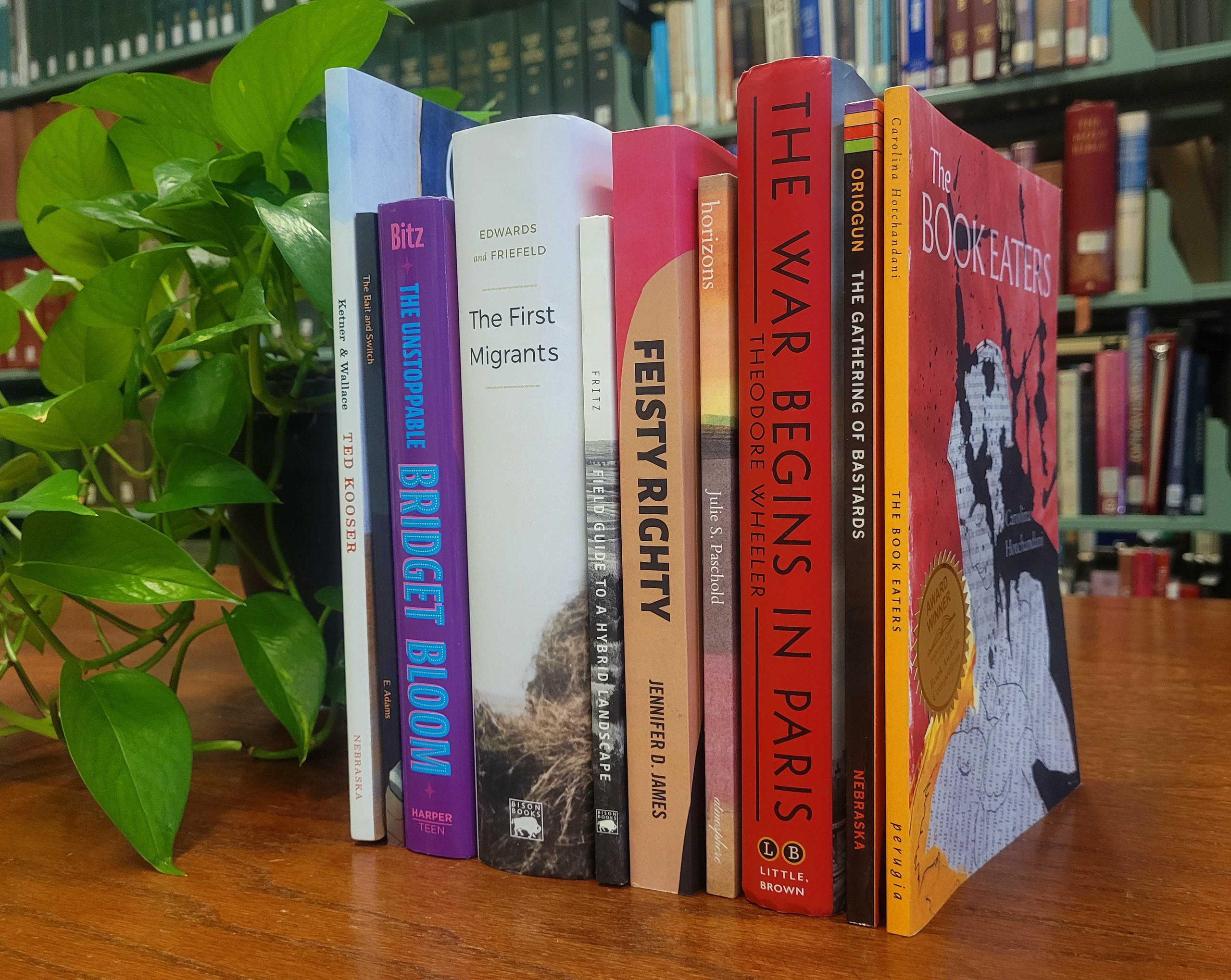
Children’s Picture Book: Ted Kooser: More Than a Local Wonder written by Carla Ketner, illustrated by Paula Wallace. Publisher: University of Nebraska Press.
Children’s Novel: The Adventures of Pearl and Monty: The Bait and Switch by E. Adams. Publisher: Jade Forest Publishing.
Teen Novel: The Unstoppable Bridget Bloom by Allison L. Bitz. Publisher: HarperTeen.
Cover and Design: Feisty Righty: A Cancer Survivor’s Journey by Jennifer D. James, Cover Art by Courtney Keller. Publisher: Self Published.
Design Honor: Horizons by Julie S. Paschold. Publisher: Atmosphere Press.
Fiction: The War Begins in Paris: A Novel by Theodore Wheeler. Publisher: Little, Brown and Company.
Nonfiction Nebraska as Place: Field Guide to a Hybrid Landscape by Dana Fritz. Publisher: Bison Books.
Nonfiction History: The First Migrants by Richard Edwards and Jacob K. Friefeld. Publisher: Bison Books.
Poetry: The Gathering of Bastards by Romeo Oriogun. Publisher: University of Nebraska Press.
Poetry Honor: The Book Eaters by Carolina Hotchandani. Publisher: Perugia Press.
This year’s Book Awards Celebration will be a combined event with the Nebraska Book Festival, called “The Nebraska Celebration of Books” which aims to celebrate Nebraska’s literary heritage and contemporary authors. Held, Saturday, October 12th, from 10:00am-4:30pm, on the second floor of the UNL City Campus Union in the Regency Suite, Heritage Room, and Swanson Auditorium, the event will honor the 20th anniversary of the One Book One Nebraska program with a panel of past authors. In addition it will feature Nebraska authors, a SLAM poetry showcase, book vendors, and presentation of the Nebraska Center for the Book’s Nebraska Book Awards, Mildred Bennett Award, Jane Geske Award, and 2025 One Book One Nebraska announcement.
The 2024 One Book One Nebraska selection, Dancing with the Octopus: A Memoir of a Crime by Debora Harding (Bloomsbury Publishing, 2020) will be featured with a memoir writing workshop facilitated by Lucy Adkins of Larksong Writers Place.
The Nebraska Book Awards are sponsored and facilitated by the Nebraska Center for the Book and the Nebraska Library Commission.
The Nebraska Center for the Book is housed at the Nebraska Library Commission and brings together the state’s readers, writers, booksellers, librarians, publishers, printers, educators, and scholars to build the community of the book, supporting programs to celebrate and stimulate public interest in books, reading, and the written word. The Nebraska Center for the Book is supported by the national Center for the Book in the Library of Congress and the Nebraska Library Commission.
As the state library agency, the Nebraska Library Commission is an advocate for the library and information needs of all Nebraskans. The mission of the Library Commission is statewide promotion, development, and coordination of library and information services, “bringing together people and information.”
The Nebraska Celebration of Books (NCOB) host sponsors include Nebraska Center for the Book, Nebraska Library Commission, University of Nebraska Press, Lincoln City Libraries, and Francie and Finch Bookshop, with supporting sponsors including Outskirts Press, KZUM 89.3FM, and Concierge Marketing at this time. Humanities Nebraska provides support for the One Book One Nebraska program.
###
The most up-to-date news releases from the Nebraska Library Commission are always available on the Library Commission website, http://nlc.nebraska.gov/publications/newsreleases.
#BookFaceFriday “The White House: A Meet the Nation’s Capital Book” by Lindsay Ward
This #BookFaceFriday is in Washington D.C.!
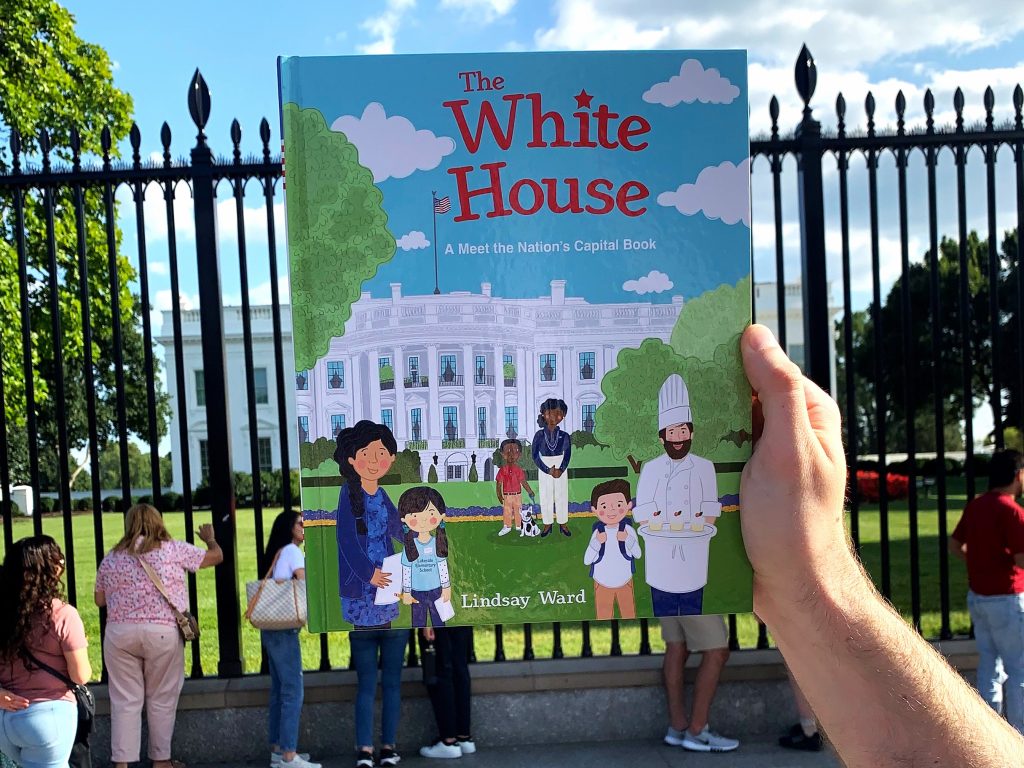
There’s so much to learn in this week’s #BookFace! “The White House: A Meet the Nation’s Capital Book” by Lindsay Ward (HarperCollins, August 2024) is a fun, interactive picture book that’s perfect for educating kids on the inner workings and different people who work inside of the White House.
“An expansive reminder that our government is of, as well as by and for, the people.” —Kirkus Reviews
We couldn’t resist bringing this week’s bookface with us to the National Book Festival in Washington, D.C.! The Nebraska Center for the Book has selected one youth book and one adult book by Nebraska authors to represent the state at the 2024 National Book Festival: “Eat Your Woolly Mammoths!: Two Million Years of the World’s Most Amazing Food Facts, from the Stone Age to the Future” by James Solheim and “Dancing with the Octopus: A Memoir of a Crime” by Debora Harding. Both titles will be part of the National Center for the Book’s Great Reads from Great Places program. Check out the festival schedule, featured authors, and highlights for past events on the Library of Congress’s event page!
This title comes from our large collection of children’s and young adult books sent to us as review copies from book publishers. When our Children and Young Adult Library Services Coordinator, Sally Snyder, is done with them, the review copies are available for the Library System Directors to distribute to school and public libraries in their systems.
Love this #BookFace & reading? Check out our past #BookFaceFriday photos on the Nebraska Library Commission’s Facebook page!
Friday Reads – The Mona Lisa Vanishes by Nicholas Day
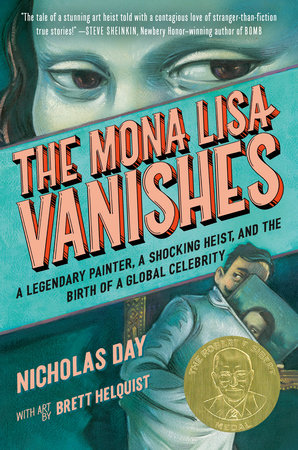
Did you ever wonder why the Mona Lisa is so famous? Surely it’s because Leonardo Da Vinci was such a talented artist. Or perhaps the actual Mona Lisa was so beautiful and beloved that artists clamored to paint her portrait? Or… perhaps the painting gained its stature as one of the most recognizable pieces of art worldwide because of a little incident that took place 113 years ago this week, on August 21, 1911. A mysterious man in a white smock hid inside a closet at the Lourve until the museum was closed, and when the coast was clear, he took the Mona Lisa off its wall, removed its frame, and walked out the door.
And thus begins Nicholas Day’s “The Mona Lisa Vanishes: a Legendary Painter, a Shocking Heist, and the Birth of a Global Celebrity.” Curious to find out more? I certainly was!
Day weaves a compelling tale of how lax security at the Lourve and a bungled police investigation led to an international fascination with a small painting most of the world had never seen. Intertwined with the intrigue of the art heist is the rather absurd life story of Da Vinci himself and how he came to paint the Mona Lisa – one of the few endeavors he seems to have carried out to completion. Brilliant but easily distracted, Leonardo Da Vinci was famous for his flakiness as much as his talent.
Aimed at middle-grade readers, this fast-paced work of narrative nonfiction should hold the attention of mystery-lovers of all ages. Fans of the “A Series of Unfortunate Events” books by Lemony Snicket may recognize the illustrations of Brett Helquist throughout.
Day, Nicholas. (2023). The Mona Lisa Vanishes. Random House Studio.
Posted in Books & Reading, General
Tagged art history, art theft, books, Da Vinci, Friday Reads, middle grade, Mona Lisa, narrative nonfiction, Reading, True Crime
Leave a comment
“Nebraska Folklore” is Now Available on BARD!
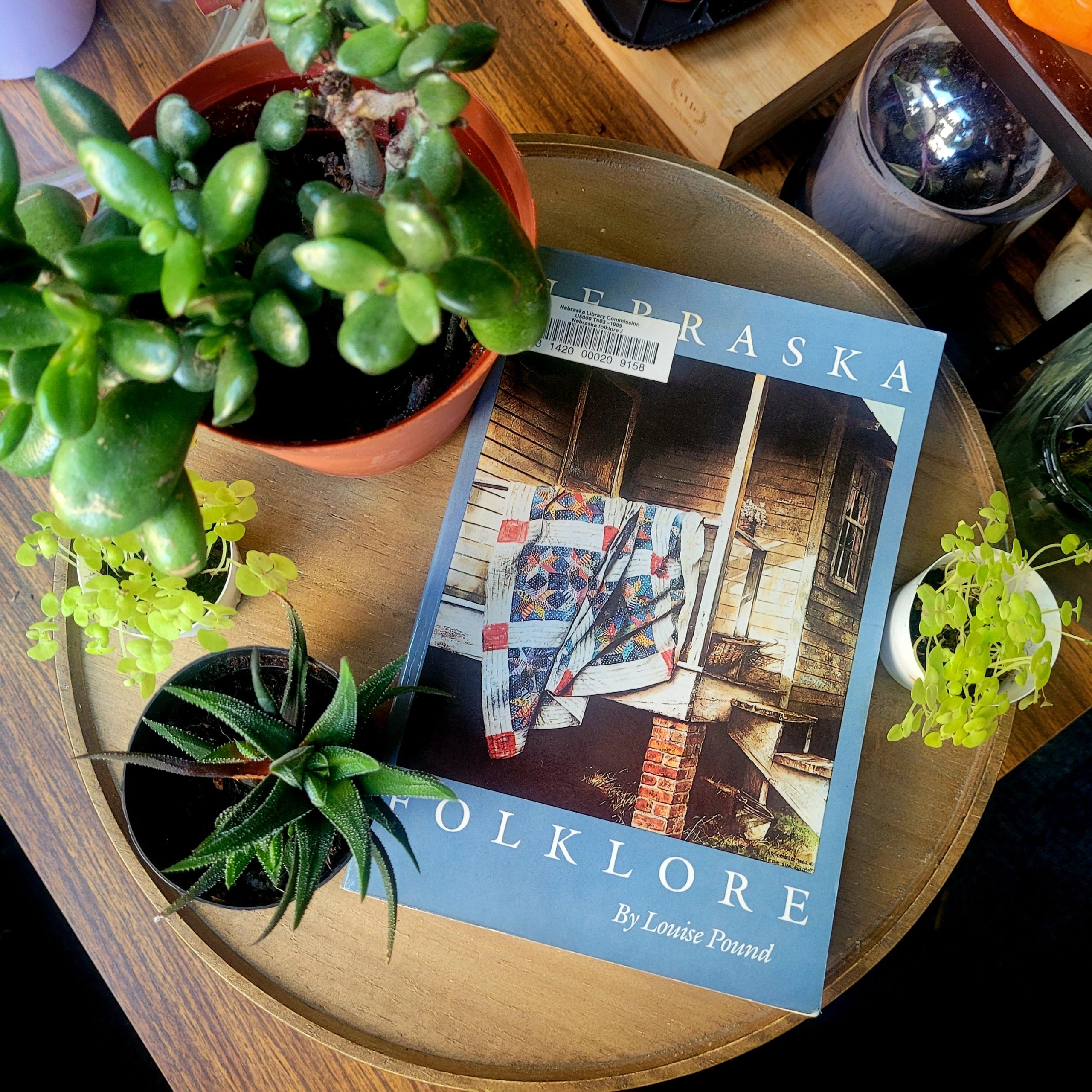
“Nebraska Folklore” by Louise Pound is now available on cartridge and for download on BARD, the Braille and Audio Reading Download service. BARD is a service offered by the Nebraska Library Commission Talking Book and Braille Service and the National Library Service for the Blind and Print Disabled at the Library of Congress.
A distinguished scholar and writer who, in the words of H. L. Mencken, “put the study of American English on its legs,” Louise Pound was always intensely interested in the folklore of her home state. “Nebraska Folklore”, first published in 1959, collects her best work in that rich vein. Included are cave legends, snake superstitions, weather lore, tales of strong men who rival Paul Bunyan, stories of Indian lovers’ leaps, and the legends of Weeping Water and Lincoln Salt Basin. A section on old Nebraska folk customs provides a wealth of information about holiday observances, literary and debating societies, and various social traditions.
“Few people are successful in becoming authorities on the folklore of a region, fewer still on the folklore of a state. Louise Pound was recognized by folklorists for her mastery of both areas. Therefore, as one should expect, “Nebraska Folklore” is an important book.” — William E. Koch, Nebraska History
TBBS borrowers can request “Nebraska Folklore” DCB02004 or download it from the National Library Service BARD (Braille and Audio Reading Download) website. If you have high-speed internet access, you can download books to your smartphone or tablet, or onto a flash drive for use with your player. You may also contact your reader’s advisor to have the book mailed to you on cartridge.

