Search the Blog
Categories
- Books & Reading
- Broadband Buzz
- Census
- Education & Training
- General
- Grants
- Information Resources
- Library Management
- Nebraska Center for the Book
- Nebraska Memories
- Now hiring @ your library
- Preservation
- Pretty Sweet Tech
- Programming
- Public Library Boards of Trustees
- Public Relations
- Talking Book & Braille Service (TBBS)
- Technology
- Uncategorized
- What's Up Doc / Govdocs
- Youth Services
Archives
Subscribe
Tag Archives: Reading
Friday Reads: “The Essex Serpent” by Sarah Perry
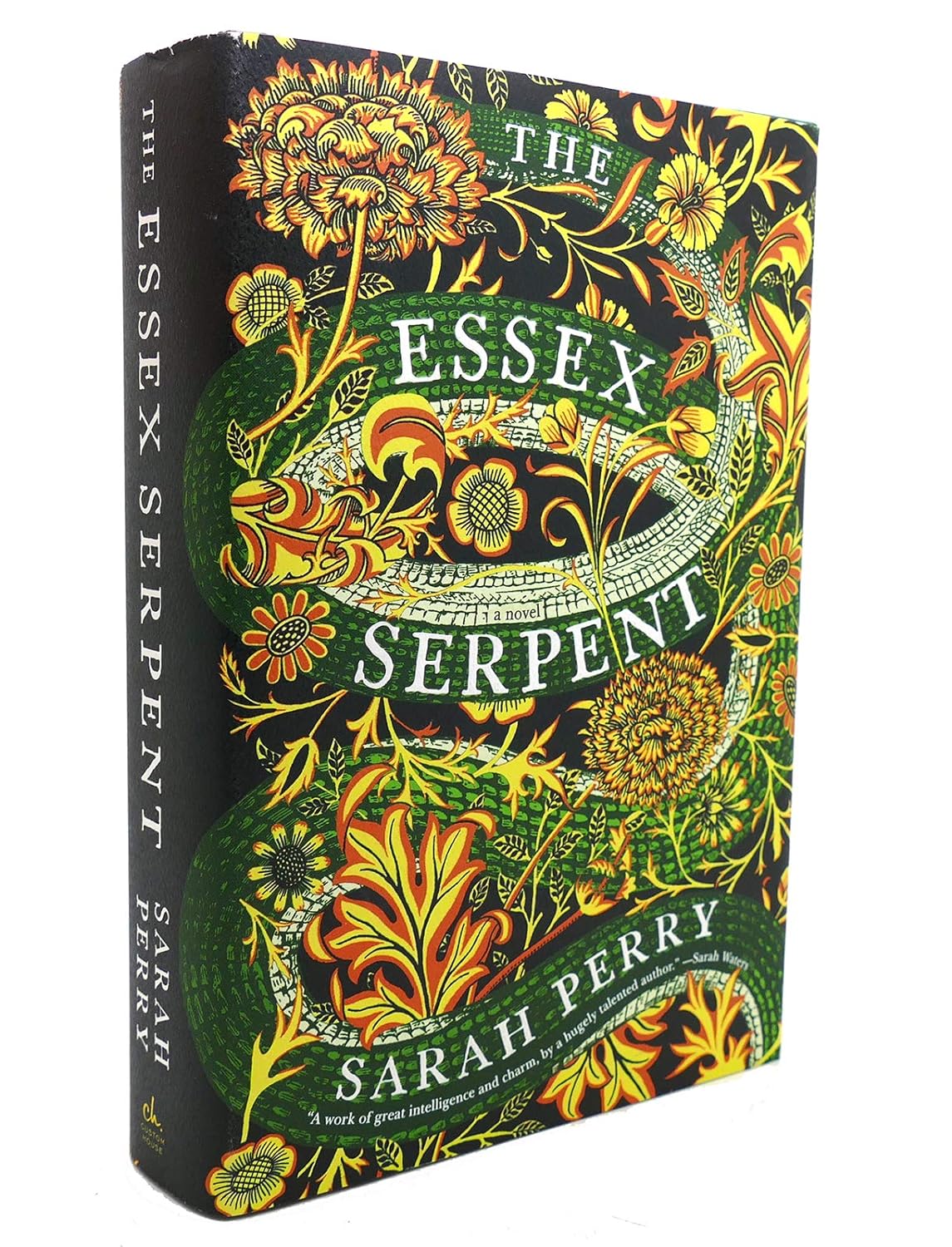
Set in Victorian England, this historical fiction novel perfectly embraces the setting and mystery of its time-period. Filled with unique and interesting characters from beginning to end, Sarah Perry has written a beautiful, intelligent, and charming novel.
Newly widowed, Cora Seaborne is finding her stride again after the death of her domineering husband. Determined to escape the stuffy rules of London society, she takes her son and maid to the English countryside to pursue her studies as a budding naturalist. While tramping the marshes and collecting specimens she becomes fascinated with the local lore of the Essex Serpent, and the possibilities that a Paleolithic species could be resurfacing and prime for discovery. Pushed together with the local reverend in her pursuit of science and discovery, circumstances will lead to a magnetic and clandestine attraction that could ruin them both.
Reverend William Ransom is an unlikely clergyman, young and easy-going, he’s more likely to be assumed a farmer than a reverend. Living in the countryside of Essex with his wife and children, tending to his flock with a more practical and intelligent approach to life, he’s often dismayed and annoyed by his congregation’s flights of fancy and superstitions, especially when a local man drowns and it’s blamed on the mysterious Essex Serpent.
Dr. Luke Garrett is single-minded in his pursuit of knowledge and advancing medicine, especially surgery of the heart. Taciturn and churlish, he’s found himself unexpectedly mesmerized by Cora since tending her dying husband. Striking up an unlikely friendship with her and visiting the countryside as often as his practice allows just to see her. He’s dismayed as her letters at first just mentioned formally, The Reverend Ransom, but now are filled with the familiar, Will.
Perry strings the lives and experiences of these dissimilar characters together with letters and first-person storytelling to create an almost magical whole.
Perry, Sarah. The Essex Serpent. Mariner Books. 2017.
#BookFaceFriday “The Boys in the Boat” by Daniel James Brown
This #BookFaceFriday is going for the gold!
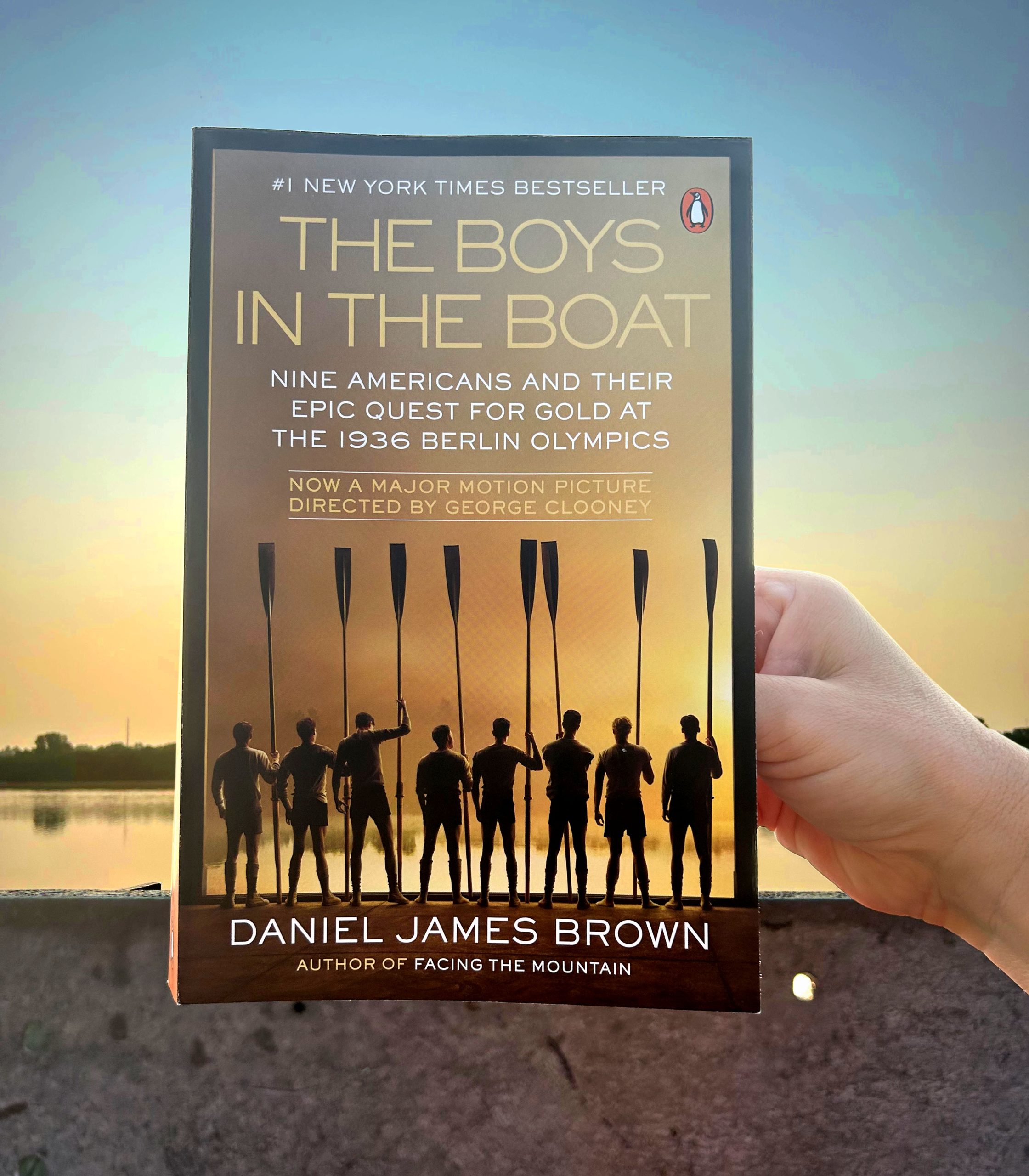
As Olympic hopefuls flock to Paris for this year’s games, take a trip back in time to the 1936 Berlin Olympics. This week’s #BookFace, “The Boys in the Boat: Nine Americans and Their Epic Quest for Gold at the 1936 Berlin Olympics” by Daniel James Brown, is a #1 New York Times–bestselling story. This epic story of Olympic hopefuls is available as a part of our Book Club Kit collection. This title is also available as an eBook and Audiobook through Nebraska OverDrive Libraries.
“For those who like adventure stories straight-up, THE BOYS IN THE BOAT… is this year’s closest approximation of Unbroken…. It’s about the University of Washington’s crew team: “Nine working-class boys from the American West who at the 1936 Olympics showed the world what true grit really meant.”
—New York Times
Book Club Kits Rules for Use
- These kits can be checked out by the librarians of Nebraska libraries and media centers.
- Circulation times are flexible and will be based upon availability. There is no standard check-out time for book club kits.
- Please search the collection to select items you wish to borrow and use the REQUEST THIS KIT icon to borrow items.
- Contact the Information Desk at the Library Commission if you have any questions: by phone: 800/307-2665, or by email: Information Services Team
Libraries participating in the Nebraska OverDrive Libraries Group currently have access to a shared and growing collection of digital downloadable audiobooks and eBooks. 194 libraries across the state share the Nebraska OverDrive collection of 26,898 audiobooks, 36,794 ebooks, and 5,133 magazines. As an added bonus it includes 130 podcasts that are always available with simultaneous use (SU), as well as SU ebooks and audiobook titles that publishers have made available for a limited time. If you’re a part of it, let your users know about this great title, and if you’re not a member yet, find more information about participating in Nebraska Overdrive Libraries!
Love this #BookFace & reading? Check out our past #BookFaceFriday photos on the Nebraska Library Commission’s Facebook page!
Posted in Books & Reading, General
Tagged book club kit, Book Covers, bookfacefriday, Daniel James Brown, libraries, Olympics, OverDrive, Reading, The Boys in the Boat
Leave a comment
#BookFaceFriday “Creative Genius: The Art of the Nebraska Capitol”
Life imitates art with #BookFaceFriday!
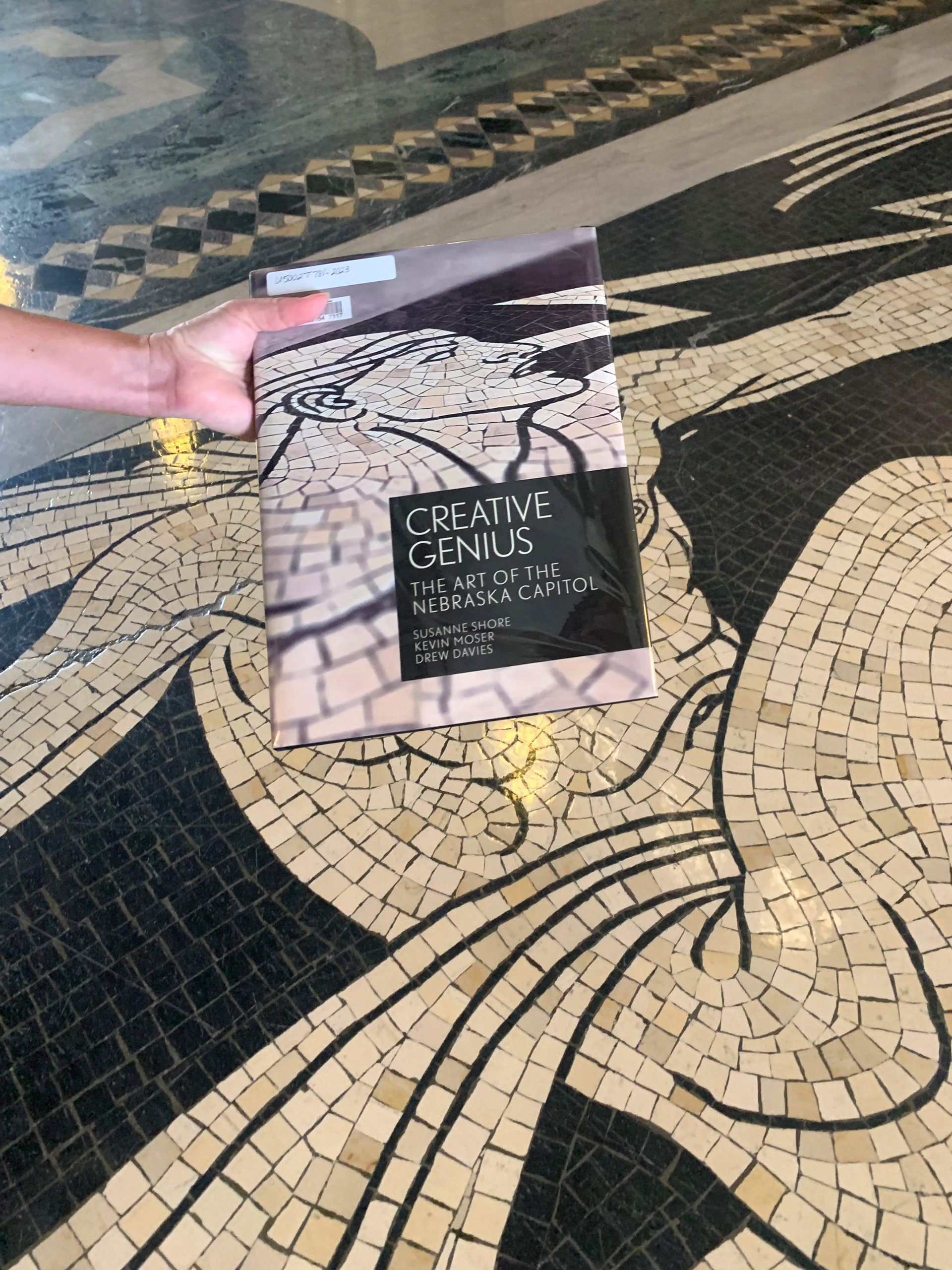
The surprisingly complex task of photographing the surprisingly complex photography of this #BookFaceFriday was a challenge. While nothing can compare to seeing it in person, this week’s #BookFace is an excellent way to bring a little of the Nebraska Capitol’s beauty and history into your own home. “Creative Genius: The Art of the Nebraska Capitol” by by Susanne Shore, Kevin Moser, Drew Davies, with a foreword by Robert C. Ripley, is available as a part of our Nebraska State Documents Collection.
One of the most prestigious academic presses in the country, the University of Nebraska Press sends us around 75 select titles per year, which are added to the Nebraska Publications Clearinghouse, also known as the Nebraska State Documents Collection. This collection is comprised of publications issued by Nebraska state agencies, ensuring that state government information is available to a wide audience and that those valuable publications are preserved for future generations. University of Nebraska Press books, as well as all state documents, are available for checkout by libraries and librarians for their patrons.
“The Nebraska State Capitol may be the most beautiful capitol building in the United States. From the day it opened, it’s been recognized as an outlier relative to its forty-nine rivals. The influential leaders of American Architect certainly thought so, choosing to feature the Nebraska Capitol in the October 1934 issue soon after the building opened. In the introduction, they wrote: ‘From the engineering standpoint, the building embodies the cumulative results of American energy, inventive skill and organizing ability; and from all combined points of view, it stands as a remarkable interpretation of innumerable events that have shaped the progress of American art, industry, and democratic government.’”
—from the prologue
Love this #BookFace & reading? Check out our past #BookFaceFriday photos on the Nebraska Library Commission’s Facebook page!
What’s Up Doc? New State Agency Publications at the Nebraska Library Commission
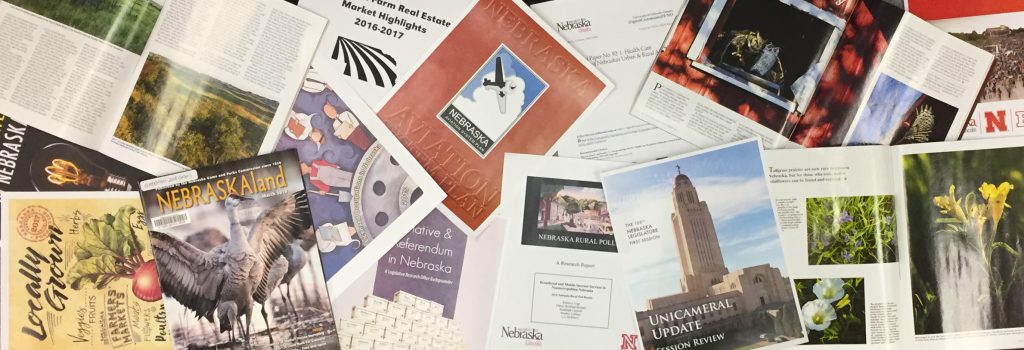
New state agency publications have been received at the Nebraska Library Commission for March through June, 2024. Included are reports from the Nebraska Auditor of Public Accounts, the Nebraska Department of Administrative Services, the Nebraska Equal Opportunity Commission, the Nebraska Department of Transportation, and the Nebraska Public Power District, to name a few.
Items are available for immediate viewing and printing by clicking directly in the .pdf below.
The Nebraska Legislature created the Nebraska Publications Clearinghouse in 1972 as a service of the Nebraska Library Commission. Its purpose is to collect, preserve, and provide access to all public information published by Nebraska state agencies. By law (State Statutes 51-411 to 51-413) all Nebraska state agencies are required to submit their published documents to the Clearinghouse. For more information, visit the Nebraska Publications Clearinghouse page, contact Mary Sauers, Government Information Services Librarian; or contact Bonnie Henzel, State Documents Staff Assistant.
Posted in Books & Reading, Education & Training, General, Information Resources, What's Up Doc / Govdocs
Tagged books, GovDocs, Reading
Leave a comment
Book Club Spotlight – Being Mortal
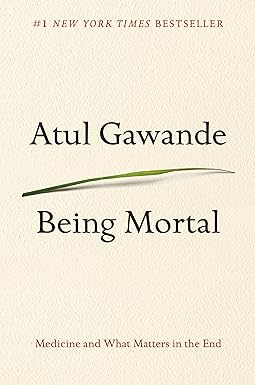
For generations, kids have been warned by their parents to not “put them in a home” when they get too old to care for themselves. But why is that? There is a stigma around placing our elderly in the care of others, especially in seemingly harsh and sterile nursing homes, but with no cultural framework in America for intergenerational family homes, there are few other options. Dr. Atul Gawande, a surgeon, public health researcher, and the Assistant Administrator for Global Health at USAID, wants to bring our attention to how we treat those in the last years of their lives as their health starts to fail them and look toward a future of more involved and personalized care. His book, Being Mortal: Medicine and What Matters in the End (2016’s One Book One Lincoln) may seem morbid, but Gawande writes with knowing compassion and professionalism giving insight and tools for caregivers and those who need end of life care.
Son of immigrant doctors from India, Dr. Atul Gawande’s first introduction to the elderly was his grandfather who lived on his own land surrounded by family and riding horses until he passed at 110 years old. It was a communal end of life that is not familiar in the United States, where aging and death are taboo topics. There is a shame in needing help, and the sacrifice of freedom that it often brings. Interspersed with personal stories of his ailing father, friends, and patients, Being Mortal takes the reader through the medical side of caring for those at the end of their lives, and how often the goals of treatment can outweigh the wishes of the dying. Through his years of practice, Dr. Gawande began to ask himself difficult questions concerning his very field. When does prolonging life through technology and medicine begin to harm the patient? Comparing notes and practices between nursing homes, assisted living, hospice, and independent communities, he found that when people are given a chance at informed and substantive comfort for end-of-life care, they not only experience less suffering but they live longer. Dr. Gawande argues for giving the patient a “reason to live”, even if they know it’s their last days. Interventions simple as a garden or a pet can evoke powerful changes in how we exit our lives fulfilled.
“Our ultimate goal, after all, is not a good death but a good life to the very end.”
Atul Gawande
With The Americans with Disabilities Act, turning 34 this year, we must reconcile that how we care for our aging/ end-of-life population is a disability issue at its core. One of Being Mortal’s biggest talking points focuses on the loss of independence that comes with nursing homes and hospice care. Residents lose what little control over their schedule that they had when put into these systems. In a quality of life assessment by The Down Syndrome Educational Trust, people with Down Syndrome or other intellectual disabilities, aged 45 and above, “expressed a desire to be allowed to go to bed when they wanted to”. Our care homes are consistently taking away the agency of the elderly and disabled. There’s a saying that everyone will eventually become disabled, it’s not a matter of if, but when. And with 71.5 million baby boomers reaching 65 by 2030 [X], we will need more robust services to care for a larger aging population than we have ever had. Are we ready for that? And are these 71.5 million people and their families prepared for the difficult decision of end-of-life care?
Being Mortal may not seem like the most chipper choice for a Book Club Group but with our rapidly aging population, there is a lot to be gained from community insights on how we want to be treated at our most vulnerable and in turn it will expand our understanding of each other.
If you’re interested in requesting Being Mortal for your book club, you can find the Request Form here. There are 17 copies, 2 Audio CDs, and 1 Large Print available. (A librarian must request items) Gawande, Atul. Being Mortal. Picador. 2017
#BookFaceFriday “Year of Wonders” by Geraldine Brooks
Don’t hold your breath for this #BookFaceFriday!
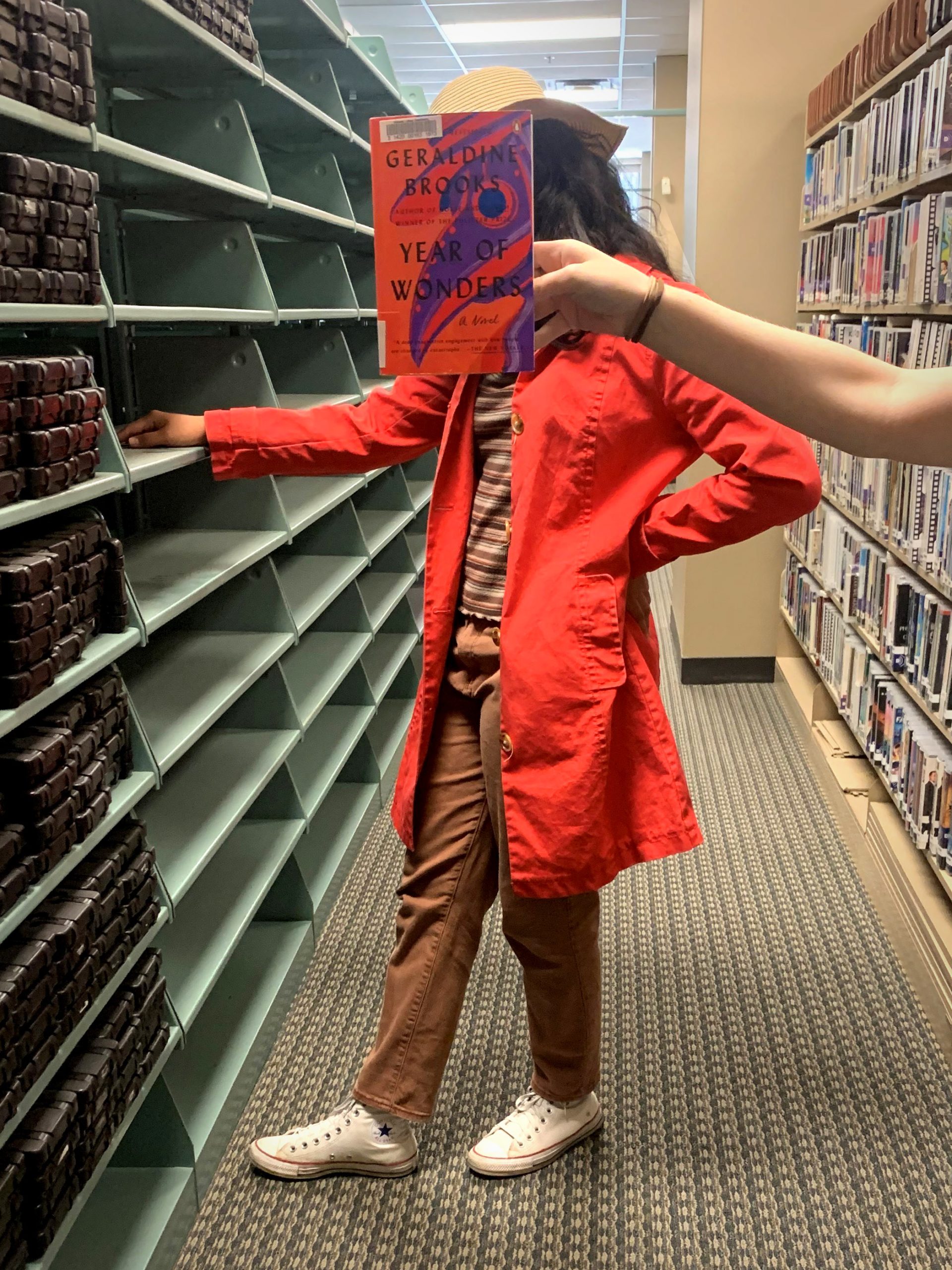
“Bring out your dead! Bring out your dead!” This week’s #BookFace isn’t exactly a Monty Python comedy but it is all about the plague in 1666 in a small village in England. “Year of Wonders: A Novel” by Pulitzer Prize winning author Geraldine Brooks, is a beautifully written novel, available as a part of our Book Club Kit collection along with three other books written by Geraldine Brooks.
“Plague stories remind us that we cannot manage without community . . . Year of Wonders is a testament to that very notion . . . [The villagers] assume collective responsibility for combating the plague, rather than seeing it as an act of God before which they are powerless.”
—Washington Post
This week’s model is the newest addition to the Talking Book and Braille Services. Welcome, Liz Macias, as TBBS’s Studio and Book Circulation Support. Liz comes to us from Kearney with a broadcasting background. Her favorite reads are mystery fantasy graphic novels, and currently reading “The Sandman” by Neil Gaiman. When her eyes are not on a graphic novel, it’s either on her latest crocheting project, plants, or catching up on shows. If you see Liz make sure to say hello!
Book Club Kits Rules for Use
- These kits can be checked out by the librarians of Nebraska libraries and media centers.
- Circulation times are flexible and will be based upon availability. There is no standard check-out time for book club kits.
- Please search the collection to select items you wish to borrow and use the REQUEST THIS KIT icon to borrow items.
- Contact the Information Desk at the Library Commission if you have any questions: by phone: 800/307-2665, or by email: Information Services Team
This title is also available as an Audiobook through Nebraska OverDrive Libraries. You can find six books by Geraldine Brooks in our OverDrive Libraries collections! Libraries participating in the Nebraska OverDrive Libraries Group currently have access to a shared and growing collection of digital downloadable audiobooks and eBooks. 194 libraries across the state share the Nebraska OverDrive collection of 26,898 audiobooks, 36,794 ebooks, and 5,133 magazines. As an added bonus it includes 130 podcasts that are always available with simultaneous use (SU), as well as SU ebooks and audiobook titles that publishers have made available for a limited time. If you’re a part of it, let your users know about this great title, and if you’re not a member yet, find more information about participating in Nebraska Overdrive Libraries!
Love this #BookFace & reading? Check out our past #BookFaceFriday photos on the Nebraska Library Commission’s Facebook page!
Book Briefs: New University of Nebraska Press Books at the Nebraska Publications Clearinghouse
Apologies that this installment of Book Briefs has taken so long–we have been without a cataloger since December 1st, 2023, but our new cataloger starts July 15th!
The Nebraska Publications Clearinghouse receives documents every month from all Nebraska state agencies, including the University of Nebraska Press (UNP). We normally post every two months, but today we are catching up with our backlog of the UNP books that the Clearinghouse has received.
UNP books, as well as all Nebraska state documents, are available for checkout by libraries and librarians for their patrons.
Here are the UNP books the Clearinghouse received in January through June, 2024:
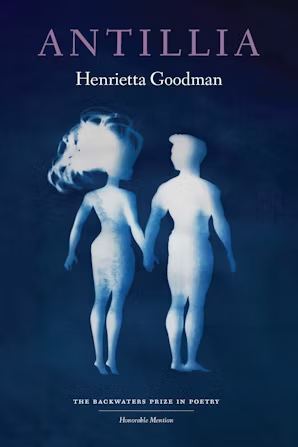
Antilla, by Henrietta Goodman. Series: The Backwaters Prize in Poetry Honorable Mention
The title poem of this collection refers to the phantom island of Antillia, included on maps in the fifteenth century but later found not to exist. The ghosts that haunt this collection are phantom islands, moon lakes, lasers used to clean the caryatids at the Acropolis, earlier versions of the self, suicides, a madam from the Old West, petroleum, snapdragons, pets, ice apples, Casper, and a “resident ghost” who makes the domestic realm of “the cradle and the bed” uninhabitable. The ghosts are sons, fathers “asleep in front of the TV,” and a variety of exes—“lost boys” with names like The Texan and Mr. No More Cowboy Hat whom Henrietta Goodman treats with snarky wit but also with grief, guilt, and love.
Although memories pervade this collection, these poems also look forward and outward into a world where social inequality and environmental disaster meet the possibility of metamorphosis.
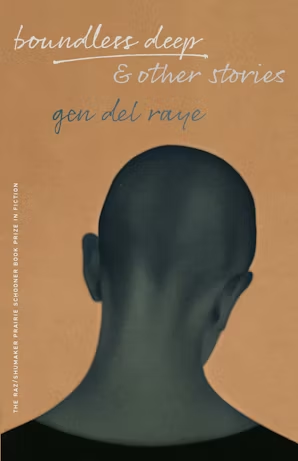
Boundless Deep, and Other Stories, by Gen Del Raye. Series: The Raz/Shumaker Prairie Schooner Book Prize in Fiction
Winner of the Raz/Shumaker Prairie Schooner Book Prize in Fiction, Boundless Deep, and Other Stories is a portrait of a family that holds together despite everything. By turns introspective, surreal, and bitingly funny, this collection of linked short stories spans seven decades across Japan and the United States and shows the tenacity of relationships fractured by language and distance.
At the funeral of her old boss, a grandmother confronts the legacy of the draft letters she delivered as a girl during World War II. Facing the loss of his job, a father becomes the caricature strangers have always believed him to be. A graduate student living far from home is worn down by the reality of what it takes to save even a small piece of the world. Along the way, we meet communist revolutionary Shigenobu Fusako hiding out in a Tokyo hotel, submariner and war criminal Nishina Sekio in his tortured dreams, and Edwin, a half-dolphin friend, wreaking havoc in a public pool. Written in the compressed style of Amy Hempel and Lucia Berlin, these stories examine characters whose struggles submerge them, weighing them down from every angle, until they can finally float free.
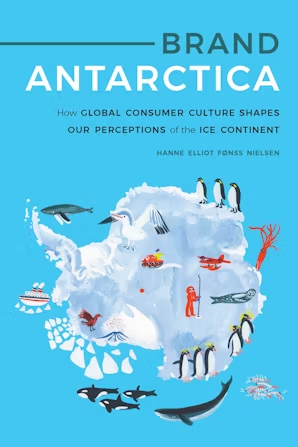
Brand Antarctica : How Global Consumer Culture Shapes Our Perceptions of the Ice Continent, by Hanne Elliot Fonss Nielsen. Series: Polar Studies
Antarctica is, and has always been, very much “for sale.” Whales, seals, and ice have all been marketed as valuable commodities, but so have the stories of explorers. The modern media industry developed in parallel with land-based Antarctic exploration, and early expedition leaders needed publicity to generate support for their endeavors. Their lectures, narratives, photographs, and films were essentially advertisements for their adventures. At the same time, popular media began to use the newly encountered continent to draw attention to commercial products. These advertisements both trace the commercialization of Antarctica and reveal how commercial settings have shaped the dominant imaginaries of the place.
By contextualizing and analyzing Antarctic advertisements from the late nineteenth century to the present, Brand Antarctica identifies five key framings of the South Polar continent: a place for heroes, a place of extremity, a place of purity, a place to protect, and a place that transforms. Demonstrating how these conceptual framings of Antarctica in turn circulate through our culture, Hanne Elliot Fønss Nielsen challenges common assumptions about Antarctica’s past and present, encouraging readers to rethink their own relationship with the Far South.

Bribed With Our Own Money : Federal Abuse of American Indian Funds in the Termination Era, by David R. M. Beck. Series: New Visions in Native American and Indigenous Studies
In Bribed with Our Own Money David R. M. Beck analyzes the successes and failures of Indigenous nations’ opposition to federal policy in the 1950s and 1960s. Focusing on case studies from six Native nations, Beck recounts how the U.S. government coerced American Indian nations to accept termination of their political relationship with the United States by threatening to withhold money that belonged to the tribes.
Termination was the continuation—and, federal officials hoped, the culmination—of more than a century of policy initiatives intended to end the political relationship between Indian tribal nations and the federal government. Termination was also intended to assimilate American Indian individuals into the country’s social and economic culture and to remove the remainder of reservation lands from federal trust. American Indians hoped to gain greater opportunities of self-governance and self-determination, but they wanted to do so under the protection of the federal trust relationship.
Bribed with Our Own Money analyzes both successful and unsuccessful efforts of Native nations to oppose this policy within the larger context of long-standing federal abuse of tribal funds. It is the first book to view federal termination efforts grounded in bribery for what they were: a form of coercion.
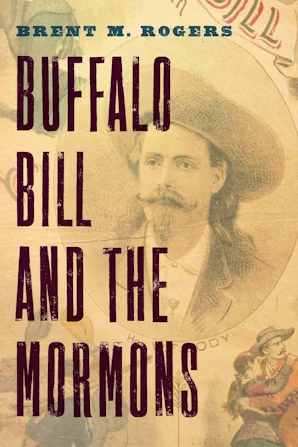
Buffalo Bill and the Mormans, by Brent M. Rogers.
In this never-before-told history of Buffalo Bill and the Mormons, Brent M. Rogers presents the intersections in the epic histories of William F. “Buffalo Bill” Cody and the Latter-day Saints from 1846 through 1917. In Cody’s autobiography he claimed to have been a member of the U.S. Army wagon train that was burned by the Saints during the Utah War of 1857–58. Less than twenty years later he began his stage career and gained notoriety by performing anti-Mormon dramas. By early 1900 he actively recruited Latter-day Saints to help build infrastructure and encourage growth in the region surrounding his town of Cody, Wyoming.
In Buffalo Bill and the Mormons Rogers unravels this history and the fascinating trajectory that took America’s most famous celebrity from foe to friend of the Latter-day Saints. In doing so, the book demonstrates how the evolving relationship between Cody and the Latter-day Saints can help readers better understand the political and cultural perceptions of Mormons and the American West.
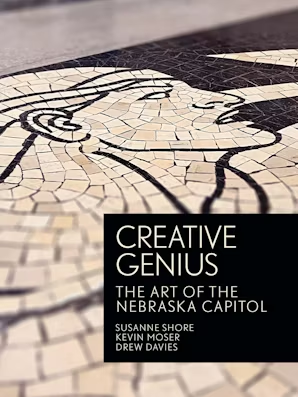
Creative Genius : The Art of the Nebraska Capitol, by Susanne Shore, Kevin Moser, and Drew Davies.
Few buildings reveal truths, inspire greatness, and narrate the creation of humanity. Creative Genius: The Art of the Nebraska Capitol documents such a place. The Nebraska Capitol—once called “a peak in the history of building accomplishment”—breaks the boundaries of architecture and art.
Creative Genius unveils new images of the art of the Capitol in striking detail. Included are some of the greatest works by some of America’s most recognized artists and visionaries.
Along with remarkable visuals, Creative Genius delivers insights into the extraordinary stories and vision behind the art. Steeped in history and lore, the building narrates the creation of the universe and life, as well as the epic journey of the peoples of Nebraska. This book reveals the themes driving the art, chronicles the stories behind artists and their creations, and celebrates the beauty embodied in this influential building.
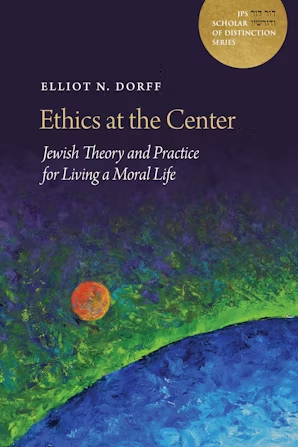
Ethics at the Center : Jewish Theory and Practice for Living a Moral Life, by Elliot N. Dorff. Series: A JPS Scholar of Distinction Book
Ethics at the Center culls the best of Rabbi Elliot N. Dorff’s pioneering thinking in Jewish ethics over nearly five decades. Dorff shows that our response to moral issues depends ultimately on our conceptions of the nature of human beings and God; how Jewish law, theology, prayer, history, and community should also define and motivate Jewish responses to moral issues; and how the honorable and divergent stances of Western philosophy and other religions about moral living shed light on Judaism’s distinctive standpoints.
From there Dorff applies Judaism’s ethics to real life: abortion post–Roe v. Wade, sexual orientation and human dignity, avoiding harm in communication, playing violent or defamatory video games, modern war ethics, handling donations of ill-gotten gain after the fact. In conclusion he explores how Jewish family and community, holidays and rituals, theology, study, and law have moral import as well.
Dorff’s personal introduction to each chapter reflects on why and when he wrote its contents, its continuing relevance, and if—and if so, how—he would now change what he wrote earlier. Readers will experience not only his evolving ethical thought but many facets of the person and the Jew that Dorff is today.
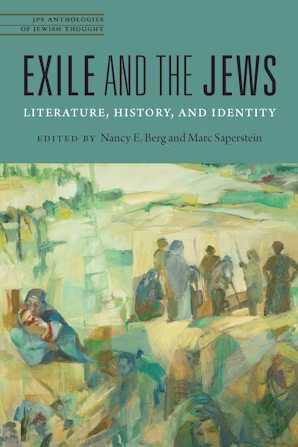
Exile and the Jews : Literature, History, and Identity, Edited by Nancy E. Berg and Marc Saperstein. Series: JPS Anthologies of Jewish Thought
This first comprehensive anthology examining Jewish responses to exile from the biblical period to our modern day gathers texts from all genres of Jewish literary creativity to explore how the realities and interpretations of exile have shaped Judaism, Jewish politics, and individual Jewish identity for millennia. Ordered along multiple arcs—from universal to particular, collective to individual, and mythic-symbolic to prosaic everyday living—the chapters present different facets of exile: as human condition, in history and life, in holiday rituals, in language, as penance and atonement, as internalized experience, in relation to the Divine Presence, and more. By illuminating the multidimensional nature of “exile”—political, philosophical, religious, psychological, and mythological—widely divergent evaluations of Jewish life in the Diaspora emerge. The word “exile” and its Hebrew equivalent, galut, evoke darkness, bleakness—and yet the condition offers spiritual renewal and engenders great expressions of Jewish cultural creativity: the Babylonian Talmud, medieval Jewish philosophy, golden age poetry, and modern Jewish literature.
Exile and the Jews will engage students, academics, and general readers in contemplating immigration, displacement, evolving identity, and more.
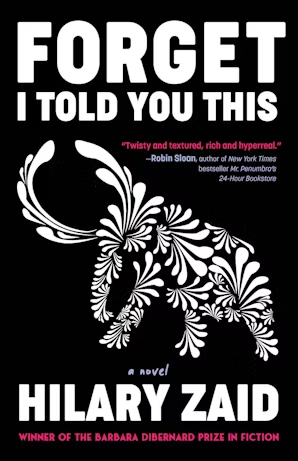
Forget I Told You This : A Novel, by Hilary Zaid. Series: Zero Street Fiction
Amy Black, a queer single mother and an aspiring artist in love with calligraphy, dreams of a coveted artist’s residency at the world’s largest social media company, Q. One ink-black October night, when the power is out in the hills of Oakland, California, a stranger asks Amy to transcribe a love letter for him. When the stranger suddenly disappears, Amy’s search for the letter’s recipient leads her straight to Q and the most beautiful illuminated manuscript she has ever seen, the Codex Argentus, hidden away in Q’s Library of Books That Don’t Exist—and to a group of data privacy vigilantes who want her to burn Q to the ground.
Amy’s curiosity becomes her salvation, as she’s drawn closer and closer to the secret societies and crackpot philosophers that haunt the city’s abandoned warehouses and defunct train depots. All of it leads to an opportunity of a lifetime: an artist’s residency deep in the holographic halls of Q headquarters. It’s a dream come true—so long as she follows Q’s rules.
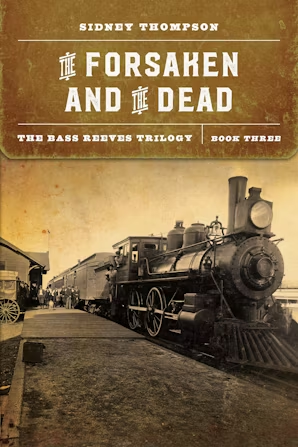
The Forsaken and the Dead : The Bass Reeves Trilogy, Book Three, by Sidney Thompson. Series: The Bass Reeves Trilogy Series
**Books 1 & 2 of the Bass Reeves Trilogy adapted for the Paramount+ miniseries Lawmen: Bass Reeves
2023 Foreword INDIES Finalist in Historical Fiction
National Indie Excellence Award Winner in Western Fiction
All heroes have fatal flaws and a moment of defining hubris, but few rise from the ashes to achieve greater heights. In 1884 Deputy U.S. Marshal Bass Reeves was arrested for murder and placed among his own prisoners in Hell on the Border, the infamous federal jail in Fort Smith, Arkansas. It was the single greatest setback of his illustrious career, but it wouldn’t be his last mistake or trial by fire.
In The Forsaken and the Dead we meet Reeves again. In the 1890s, past his prime, Reeves proceeds through the valleys and shadows of Indian and Oklahoma Territories. Despite his caution and innovations as a lawman and detective, his nation no longer seems a product of his own making—so much like his children and his marriage to Jennie. While a modern world implodes around him and demons from his past continue to haunt his present, he remains resolute in his faith that he can be a steady rider on a pale horse.
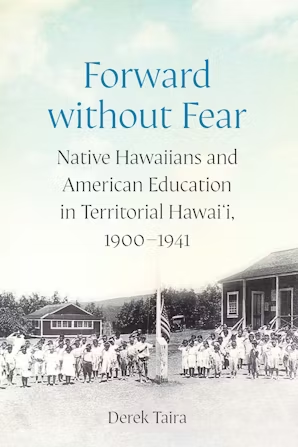
Forward Without Fear : Native Hawaiians and American Education in Territorial Hawai’i, 1900-1941, by Derek Taira. Series: Studies in Pacific Worlds
During Hawai‘i’s territorial period (1900–1959), Native Hawaiians resisted assimilation by refusing to replace Native culture, identity, and history with those of the United States. By actively participating in U.S. public schools, Hawaiians resisted the suppression of their language and culture, subjection to a foreign curriculum, and denial of their cultural heritage and history, which was critical for Hawai‘i’s political evolution within the manifest destiny of the United States.
In Forward without Fear Derek Taira reveals that many Native Hawaiians in the first forty years of the territorial period neither subscribed nor succumbed to public schools’ aggressive efforts to assimilate and Americanize them but instead engaged with American education to envision and support an alternate future, one in which they could exclude themselves from settler society to maintain their cultural distinctiveness and protect their Indigenous identity. Taira thus places great emphasis on how they would have understood their actions—as flexible and productive steps for securing their cultural sovereignty and safeguarding their future as Native Hawaiians—and reshapes historical understanding of this era as one solely focused on settler colonial domination, oppression, and elimination to a more balanced and optimistic narrative that identifies and highlights Indigenous endurance, resistance, and hopefulness.
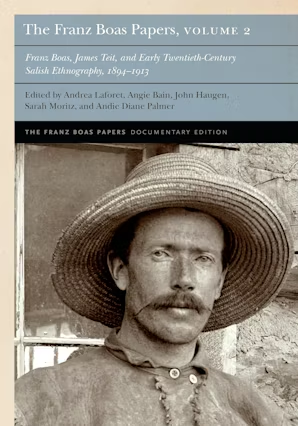
The Franz Boas Papers, Volume 2 : Franz Boas, James Teit, and Early Twentieth-Century Salish Ethnology. 2 Volumes– Part 1: 1894-1913, and Part 2: 1914-1922, Edited by Angie Bain, John Haugen, et al. Series: Franz Boas Papers Documentary Edition
The Franz Boas Papers, Volume 2 explores the development of the ethnography of Salishan-speaking societies on the North American Plateau as revealed through the correspondence between Franz Boas and the Scottish-born James Teit, who married into an Interior Salish family and community and became fluent in the Nlaka’pamux language. The letters between Teit (1864–1922) and Boas (1858–1942) chronicle Teit’s varied career as an ethnographer, from shortly after his initial meeting with Boas in 1894 until Teit’s death at the age of fifty-eight. A postscript documents Boas’s contribution to Teit’s legacy through the posthumous publication of the manuscripts Teit left unfinished at his death.
Teit made significant contributions to ethnography and the history of southern British Columbia through his photography of the people with whom he worked, his contributions to ethnomusicology and ethnobotany, his anthologies of mythic narrative, and his collections of Interior Salish—primarily Nlaka’pamux—material culture. In addition to collaborating with Boas in the development of Interior Salish ethnography, between 1909 and 1922 Teit worked to support Indigenous groups in British Columbia who were seeking recognition of Aboriginal title and resolution of their outstanding land claims.
The Franz Boas Papers, Volume 2 meticulously tracks the impact of the differing career trajectories of Teit and Boas on the primary product of their collaboration—the initial development of the ethnography of societies speaking Interior Salish languages. This second volume of the Franz Boas Papers Documentary Edition is an essential primary source of archival materials for research libraries and for students and scholars of Northwest Coast and Interior Mountain West ethnohistory, Native American and Indigenous studies, history of anthropology, and modern U.S. history. It is also an essential source for Indigenous and settler descendant communities.
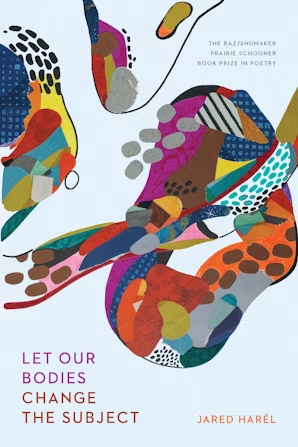
Let Our Bodies Change the Subject, by Jared Harel. Series: The Raz/Shumaker Prairie Schooner Book Prize in Poetry
National Jewish Book Award Finalist
Paterson Poetry Prize Finalist
Let Our Bodies Change the Subject is a poetry collection that dives headlong into the terrifying, wondrous, sleep-deprived existence of being a parent in twenty-first-century America. In clear, dynamic verses that disarm then strike, Jared Harél investigates our days through the keyhole of domesticity, through personal lyrics and cultural reckonings. Whether taking a family trip to Coney Island or simply showing his son snowflakes on Inauguration morning, Harél guides us toward moments of intimacy and understanding, humor and grief.
“I will try,” he admits, “to be better than myself, which is all/I’ve ever wanted and everything I need.” Winner of the Raz/Shumaker Prairie Schooner Book Prize in Poetry, Let Our Bodies Change the Subject is a secular prayer. Hoping against hope, Harél works to reconcile feelings of luck and loss, of living for joy while fearing the worst.

Loving the Dying, by Len Verwey. Series: African Poetry Book
Loving the Dying is a collection of poems on life’s different stages. Set against the backdrop of a conflicted society, Len Verwey looks at a person’s life from youth and growing up to aging and dying, considering what the ineluctable reality of death might imply about how we should think about our lives.
These are poems of uncertainty rather than certainty. The more overtly biographical ones end with as many questions as they start with, and there is often sympathy for the outsider or the marginalized voice. Varying in tone and complexity, Verwey’s poems focus on the tension between escapism and reality, truth and delusion (for individuals and societies), and the need to face death if we are to care for the aged and learn to understand the process of dying.
As in his first poetry collection, In a Language That You Know, Verwey continues his effort to understand the successes and failures of the South African post-apartheid journey, with both humor and some despair.
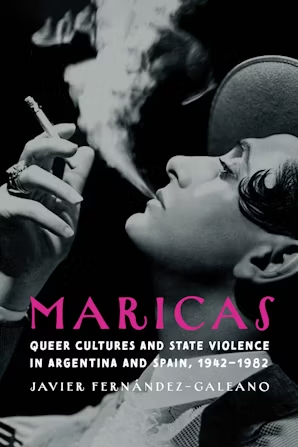
Marcias : Queer Cultures and State Violence in Argentina and Spain, 1942-1982, by Javier Fernandez-Galeano. Series: Engendering Latin America
In Maricas Javier Fernández-Galeano traces the erotic lives and legal battles of Argentine and Spanish gender- and sexually nonconforming people who carved out their own spaces in metropolitan and rural cultures between the 1940s and the 1980s. In both countries, agents of the state, judiciary, and medical communities employed “social danger” theory to measure individuals’ latent criminality, conflating sexual and gender nonconformity with legal transgression.
Argentine and Spanish queer and trans communities rejected this mode of external categorization. Drawing on Catholicism and camp cultures that stretched across the Atlantic, these communities constructed alternative models of identification that remediated state repression and sexual violence through the pursuit of the sublime, be it erotic, religious, or cultural. In this pursuit they drew ideological and iconographic material from the very institutions that were most antagonistic to their existence, including the Catholic Church, the military, and reactionary mass media. Maricas incorporates non-elite actors, including working-class and rural populations, recruits, prisoners, folk music fans, and defendants’ mothers, among others. The first English-language monograph on the history of twentieth-century state policies and queer cultures in Argentina and Spain, Maricas demonstrates the many ways queer communities and individuals in Argentina and Spain fought against violence, rejected pathologization, and contested imposed, denigrating categorization.
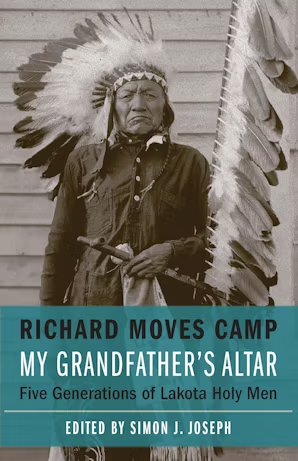
My Grandfather’s Altar : Five Generations of Lakota Holy Men, by Richard Moves Camp, edited by Simon J. Joseph. Series: American Indian Lives
Richard Moves Camp’s My Grandfather’s Altar is an oral-literary narrative account of five generations of Lakota religious tradition. Moves Camp is the great-great-grandson of Wóptuȟ’a (“Chips”), the holy man remembered for providing Crazy Horse with war medicines of power and protection. The Lakota remember the descendants of Wóptuȟ’a for their roles in preserving Lakota ceremonial traditions during the official prohibition period (1883–1934), when the U.S. Indian Religious Crimes Code outlawed Indian religious ceremonies with the threat of imprisonment.
Wóptuȟ’a, his two sons, James Moves Camp and Charles Horn Chips, his grandson Sam Moves Camp, and his great-great-grandson Richard Moves Camp all became well-respected Lakota spiritual leaders. My Grandfather’s Altar offers the rare opportunity to learn firsthand how one family’s descendants played a pivotal role in revitalizing Lakota religion in the twentieth century.
The Narrator : A Problem in Narrative Theory, by Sylvie Patron, translated by Catherine Porter. Series: Frontiers of Narrative
The narrator (the answer to the question “who speaks in the text?”) is a commonly used notion in teaching literature and in literary criticism, even though it is the object of an ongoing debate in narrative theory. Do all fictional narratives have a narrator, or only some of them? Can narratives thus be “narratorless”? This question divides communicational theories (based on the communication between real or fictional narrator and narratee) and noncommunicational or poetic theories (which aim to rehabilitate the function of the author as the creator of the fictional narrative).
Clarifying the notion of the narrator requires a historical and epistemological approach focused on the opposition between communicational theories of narrative in general and noncommunicational or poetic theories of the fictional narrative in particular. The Narrator offers an original and critical synthesis of the problem of the narrator in the work of narratologists and other theoreticians of narrative communication from the French, Czech, German, and American traditions and in representations of the noncommunicational theories of fictional narrative. Sylvie Patron provides linguistic and pragmatic tools for interrogating the concept of the narrator based on the idea that fictional narrative has the power to signal, by specific linguistic marks, that the reader must construct a narrator; when these marks are missing, the reader is able to perceive other forms and other narrative effects, specially sought after by certain authors.
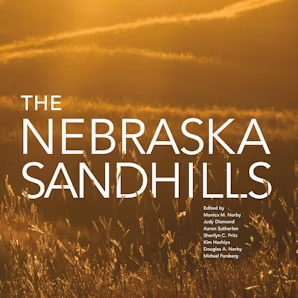
The Nebraska Sandhills, Edited by Monica M. Norby, Judy Diamond, and Aaron Sutherlen, et al.
“Like a rumpled wool blanket, the Nebraska Sandhills spreads out over twenty thousand square miles of north central Nebraska and is the largest stabilized dune field in the Western Hemisphere. It is also the largest intact mixed-grass prairie left on the continent.”
This description by photographer Michael Forsberg alludes to the exceptional physical geography of the Nebraska Sandhills, a place of rolling grasslands, rivers, and wetlands created by the Ogallala Aquifer that underlies the region. Home to abundant wildlife, from pronghorn antelope to sandhill cranes, the Sandhills are an ecological treasure. Dotted with ranches and small towns, the Sandhills are rich with deep cultural history, including those of Indigenous peoples, settlers, Black homesteaders, immigrants, ecotourists, and some adventurous golfers.
The Nebraska Sandhills features nearly forty essays about the history, people, geography, geology, ecology, and conservation of the Nebraska Sandhills. Illustrated with hundreds of remarkable color photographs of the area, this is the most up-to-date and illuminating portrayal of this remarkable yet largely unknown region of the United States.
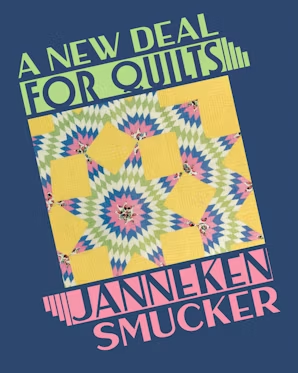
A New Deal for Quilts, by Janneken Smucker.
During the Roosevelt administration’s efforts to combat the Great Depression, the quilt became an emblem for how to lift one’s family out of poverty, piece by piece. A New Deal for Quilts explores how the U.S. government drew on quilts and quilt-making, encouraging Americans to create quilts individually and collectively in response to unemployment, displacement, and recovery efforts. Quilters shared their perspectives on New Deal programs such as the Tennessee Valley Authority and the National Recovery Administration, which sent quilts as gifts to the Roosevelts and other officials. Federal programs used quilts’ symbolic heft to communicate the values and behaviors individuals should embrace amid the Depression, perceiving the practical potential of crafts to lift morale and impart new skills. The government embraced quilts to demonstrate the efficacy of its programs, show women how they could contribute to their families’ betterment, and generate empathy for impoverished Americans.
With more than one hundred period photographs and images of quilts, A New Deal for Quilts evokes the visual environment of the Depression while conveying ways craft, work, race, poverty, and politics intersected during this pivotal era. Accompanying the book is a fall 2023 exhibit at the International Quilt Museum, featuring 1930s quilts drawn from its renowned collection.
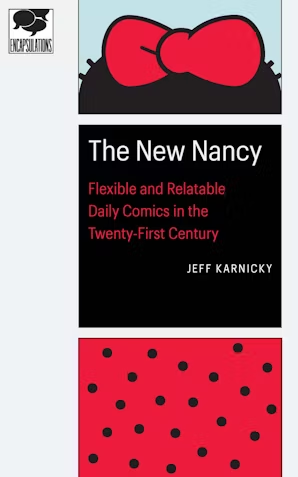
The New Nancy : Flexible and Relatable Daily Comics in the Twenty-First Century, by Jeff Karnicky. Series: Encapsulations: Critical Comics Studies
In The New Nancy Jeff Karnicky explores how today’s successful daily comic strips are flexible and relatable, and he uses Olivia Jaimes’s 2018 reboot of the long-running comic strip Nancy to illustrate the ways that contemporary comics have adapted to twenty-first-century technology and culture.
Because comic creation has become part of the gig economy, flexible comics must be accessible to both online and print readers, and they must quickly grab readers’ attention. Flexible comic creators like Jaimes must focus both on the work of producing comics and on building an audience.
Daily comics also must form a relatable connection with readers. Most contemporary comic creators cultivate an online persona through which they engage readers with specific identities, beliefs, and expectations. This work might form a mutually beneficial bond that results in a successful daily comic strip, but it risks becoming fraught, toxic, and sometimes even dangerous.
Jaimes cultivates a relatable persona in connection with longtime readers and new fans. Nancy finds its humor in both nostalgic objects (like cookie jars) and contemporary technological objects (like smartphones). Rebooted comic strips like Nancy directly confront the stereotypical representations that haunt the past of comics. Focusing on Nancy’s role in contemporary culture, Karnicky uses literary studies, cultural studies, and media studies to argue that Jaimes’s comic strip has something to say about comics, contemporary culture, and the intersection of the two.
Object-Oriented Narratology, by Marie-Laure Ryan and Tang Weisheng. Series: Frontiers of Narrative
The quick spread of posthumanism and of critiques of anthropomorphism in the past few decades has resulted in greater attention to concrete objects in critical theories and in philosophy. This new materialism or new object philosophy marks a renewal of interest in the existence of objects. Yet while their mode of existence is independent of human cognition, it cannot erase the relation of subject to object and the foundational role of our experience of things in our mental activity.
These developments have important implications for narratology. Traditional conceptions of narrative define its core components as setting, characters, and plot, but nonhuman entities play a crucial role in characterizing the setting, in enabling or impeding the actions of characters, and thus in determining plot.
Marie-Laure Ryan and Tang Weisheng combine a theoretical approach that defines the basic narrative functions of objects with interpretive studies of narrative texts that rely more closely on ideas advanced by proponents of new object philosophy. Object-Oriented Narratology opens new theoretical horizons for narratology and offers individual case studies that demonstrate the richness and diversity of the ways in which narrative, both Western and non-Western, deals with humans’ relationships to their material environment and with the otherness of objects.
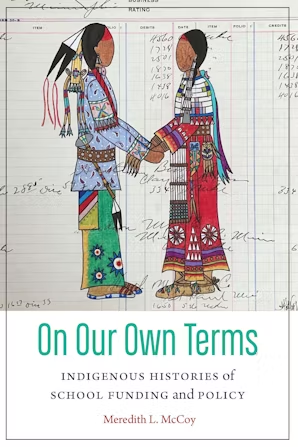
On Our Own Terms : Indigenous Histories of School Funding and Policy, by Meredith L. McCoy. Series: Indigenous Education
On Our Own Terms contextualizes recent federal education legislation against the backdrop of two hundred years of education funding and policy to explore two critical themes: the racial and settler colonial dynamics that have shaped Indian education and an equally long and persistent tradition of Indigenous peoples engaging schools, funding, and policy on their own terms. Focusing primarily on the years 1819 to 2018, Meredith L. McCoy provides an interdisciplinary, methodologically expansive look into the ways federal Indian education policy has all too often been a tool for structural violence against Native peoples. Of particular note is a historical budget analysis that lays bare inconsistencies in federal support for Indian education and the ways funds become a tool for redefining educational priorities.
McCoy shows some of the diverse strategies families, educators, and other community members have used to creatively navigate schooling on their own terms. These stories of strategic engagement with schools, funding, and policy embody what Gerald Vizenor has termed survivance, an insistence of Indigenous presence, trickster humor, and ironic engagement with settler structures. By gathering these stories together into an archive of survivance stories in education, McCoy invites readers to consider ongoing patterns of Indigenous resistance and the possibilities for bending federal systems toward community well-being.
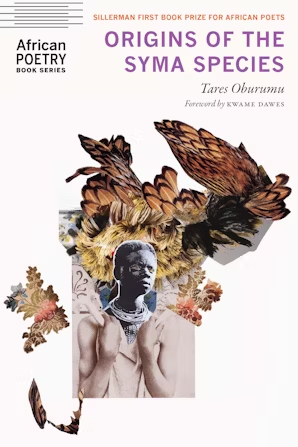
Origins of the Syma Species, by Tares Oburumu. Series: African Poetry Book
Winner of the Sillerman First Book Prize for African Poets
Winner of the Sillerman First Book Prize for African Poets, Tares Oburumu’s collection is a brief history of where he came from: Syma, a neglected oil-producing region of Nigeria. After growing up with a single mother in the creek- and brook-marked region, and himself now a single parent, Oburumu examines single parenthood and how love defines family circles. Mixing music, religion, and political critique, Origins of the Syma Species evokes pasts and futures.
Inspired by the relative chaos found in the origin of things, Oburumu’s poems explore how the beauty of chaos binds us to our ancestral roots. In his poems Oburumu identifies with anyone who is a single parent or is dealing with the lonely trauma of a broken home. His poems instill hopefulness in a world that has the means to throw many into poverty and agony.
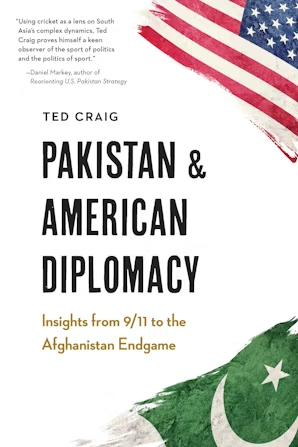
Pakistan and American Diplomacy : Insights from 9/11 to the Afghanistan Endgame, by Ted Craig.
Pakistan and American Diplomacy offers an insightful, fast-moving tour through Pakistan-U.S. relations, from 9/11 to the U.S. withdrawal from Afghanistan, as told from the perspective of a former U.S. diplomat who served twice in Pakistan. Ted Craig frames his narrative around the 2019 Cricket World Cup, a contest that saw Pakistan square off against key neighbors and cricketing powers Afghanistan, India, and Bangladesh, and its former colonial ruler, Britain.Craig provides perceptive analysis of Pakistan’s diplomacy since its independence in 1947, shedding light on the country’s contemporary relations with the United States, China, India, Sri Lanka, and Afghanistan. With insights from the field and from Washington, Craig reflects on the chain of policy decisions that led to the fall of the Kabul government in 2021 and offers a sober and balanced view of the consequences of that policy failure. Drawing on his post–Cold War diplomatic career, Craig presents U.S.-Pakistan policy in the context of an American experiment in promoting democracy while combating terrorism.
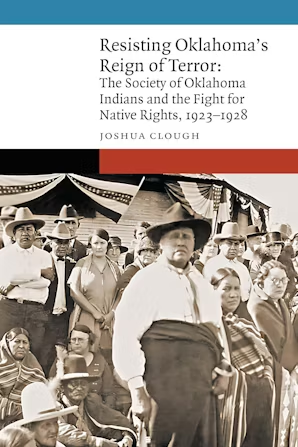
Resisting Oklahoma’s Reign of Terror : The Society of Oklahoma Indians and the Fight for Native Rights, 1923-1928, by Joshua Clough. Series: New Visions in Native American and Indigenous Studies
The oil and natural gas boom in pre–World War I Oklahoma brought unbelievable wealth to thousands of tribal citizens in the state on whose lands these minerals were discovered. However, as Angie Debo recognizes in her seminal study of the period, And Still the Waters Run, and, more recently, as David Grann does in Killers of the Flower Moon, this affluence placed Natives in the crosshairs of unscrupulous individuals. As a result, this era was also marked by two of the most heinous episodes of racial violence in the state’s history: the Tulsa Race Massacre of 1921 and the Osage Murders between 1921 and 1925.
In Resisting Oklahoma’s Reign of Terror Joshua Clough details the responses of one largely forgotten Native organization—the Society of Oklahoma Indians (SOI)—to the violence and pillaging of tribal resources during the 1920s. Clough provides historical understanding of its formation and its shared values of intertribal unity, Native suffrage, and protection of Native property. He also reveals why reform efforts were nearly impossible in 1920s Oklahoma and how this historical perspective informs today’s conflicts between the state and its Indigenous inhabitants.
Through this examination of the SOI, Clough fills the historiographic gap regarding formal Native resistance between the dissolution of the national Society of American Indians in 1923 and the formation of the National Congress of American Indians in 1944. Dismissed or overlooked for a century as an inconsequential Native activist organization, the history of the SOI, when examined carefully, reveals the sophistication and determination of tribal members in their struggle to prevent depredations on their persons and property.

Shift : A Memoir of Identity and Other Illusions, by Penny Guisinger. Series: American Lives
Penny Guisinger was not always attracted to women. In Shift she recounts formative relationships with women and men, including the marriage that produced her two children and ultimately ended in part due to her affair with her now-wife. Beginning her story as straight and ending as queer, she struggles to make sense of how her identity changed so profoundly while leaving her feeling like the same person she’s always been. While covering pivotal periods of her life, including previous relationships and raising her children across the chasm of divorce, Guisinger reaches for quantum physics, music theory, planetary harmonics, palmistry, and more to interrogate her experiences. This personal story plays out against the backdrop of the national debate on same-sex marriage, in rural, easternmost Maine, where Guisinger watched her neighbors vote against the validity of her family.
Shift examines sexual and romantic fluidity while wrestling with the ways past and present mingle rather than staying in linear narratives. Under scrutiny, Guisinger’s sense of her own identity becomes like a Mobius strip or Penrose triangle—an optical illusion that challenges the dimensions and possibilities of the world.
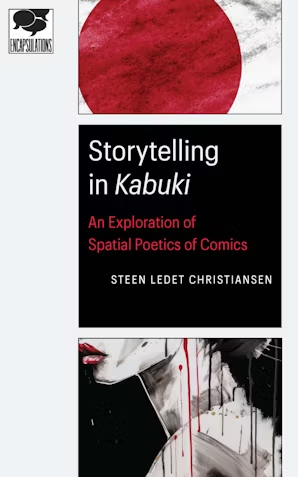
Storytelling in Kabuki : An Exploration of Spatial Poetics of Comics, by Steen Ledet Christiansen. Series: Encapsulations: Critical Comics Studies
Steen Ledet Christiansen’s Storytelling in “Kabuki” explores the series created by David Mack—a slow, recursive narrative that focuses on the death of Kabuki and her past. The series ran from 1994 to 2004 in a variety of miniseries, one-shots, and spin-offs, rather than following a conventional American monthly release schedule. Most of the series explores different perspectives on the same event and adds background to Kabuki’s past, usually through surreal sequences, dreams, and near-death experiences. The flexibility of comics’ approach to chronology, space, focalization, narrative, and fictionality enabled Mack to produce an unusual experience. Kabuki tells a story that can only exist via comics.
Christiansen analyzes the visual design of the series, a heterogeneous collection of styles depending on the story. To understand Kabuki, it is crucial to explore the visual styles, as well as the use of visual and spatial rhymes and mixed media forms. Because Kabuki employs a complex layering of focalizations, diegetic levels, and metafictional self-reflectivity that is rare in mainstream American comics, it utilizes a narrative poetics that focuses on constant repeating, restating, and returning to the same events.
Kabuki’s unique compositional layering allows Christiansen to provide a clear example of how comics work while also expanding on critical vocabulary, especially in terms of spatial poetics. By exploring spatial form, Christiansen illuminates and gives a critical framework to a different and underexamined aspect of comics.
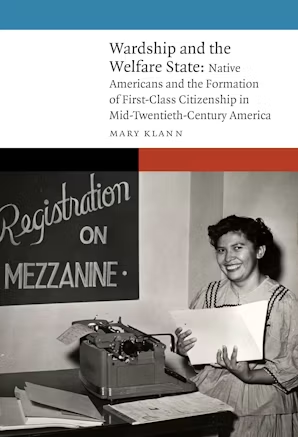
Wardship and the Welfare State : Native Americans and the Formation of First-Class Citizenship in Mid-Twentieth-Century America, by Mary Klann. Series: New Visions in Native American and Indigenous Studies
Wardship and the Welfare State examines the ideological dimensions and practical intersections of public policy and Native American citizenship, Indian wardship, and social welfare rights after World War II. By examining Native wardship’s intersections with three pieces of mid-twentieth-century welfare legislation—the 1935 Social Security Act, the 1942 Servicemen’s Dependents Allowance Act, and the 1944 GI Bill—Mary Klann traces the development of a new conception of first-class citizenship.
Wardship and the Welfare State explores how policymakers and legislators have defined first-class citizenship against its apparent opposite, the much older and fraught idea of Indian wardship. Wards were considered dependent, while first-class citizens were considered independent. Wards were thought to receive gratuitous aid from the government, while first-class citizens were considered responsible. Critics of the federal welfare state’s expansion in the 1930s through 1960s feared that as more Americans received government aid, they too could become dependent wards, victims of the poverty they saw on reservations. Because critics believed wardship prevented Native men and women from fulfilling expectations of work, family, and political membership, they advocated terminating Natives’ trust relationships with the federal government. As these critics mistakenly equated wardship with welfare, state officials also prevented Native people from accessing needed welfare benefits.
But to Native peoples wardship was not welfare and welfare was not wardship. Native nations and pan-Native organizations insisted on Natives’ government-to-government relationships with the United States and maintained their rights to welfare benefits. In so doing, they rejected stereotyped portrayals of Natives’ perpetual poverty and dependency and asserted and defined tribal sovereignty. By illuminating how assumptions about “gratuitous” government benefits limit citizenship, Wardship and the Welfare State connects Native people to larger histories of race, inequality, gender, and welfare in the twentieth-century United States.
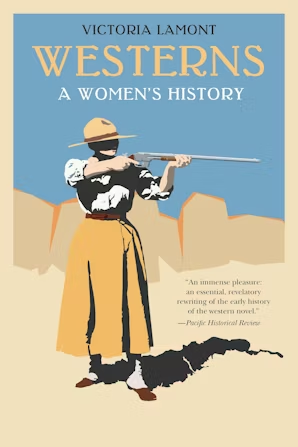
Westerns : A Women’s History, by Victoria Lamont. Series: Postwestern Horizons
At every turn in the development of what we now know as the western, women writers have been instrumental. Yet the myth that the western is male-authored persists. Westerns: A Women’s History debunks this myth once and for all by recovering the women writers of popular westerns who were active during the late nineteenth and early twentieth centuries when the western genre as we now know it emerged.
Victoria Lamont offers detailed studies of some of the many women who helped shape the western. Their novels bear the classic hallmarks of the western—cowboys, schoolmarms, gun violence, lynchings, cattle branding—while also placing women characters at the center of their adventures and improvising with western conventions in surprising and ingenious ways. In Emma Ghent Curtis’s The Administratrix a widow disguises herself as a cowboy and infiltrates the cowboy gang responsible for lynching her husband. Muriel Newhall’s pulp serial character Sheriff Minnie comes to the rescue of a steady stream of defenseless women victims. B. M. Bower, Katharine Newlin Burt, and Frances McElrath use cattle branding as a metaphor for their feminist critiques of patriarchy. In addition to recovering the work of these and other women authors of popular westerns, Lamont uses original archival analysis of the western-fiction publishing scene to overturn the long-standing myth of the western as a male-dominated genre.

Who Would You Kill to Save the World?, by Claire Colebrook. Series: Provocations
2024 Hugh J. Silverman Book Prize in Philosophy and Literature
Who Would You Kill to Save the World? examines how postapocalyptic cinema uses images from the past and present to depict what it means to preserve the world—and who is left out of the narrative of rebuilding society. Claire Colebrook redefines “the world” as affluent Western society and “saving the world” as preventing us from becoming the othered them who are viewed in their suffering. Colebrook further examines how the use of postapocalyptic cinema is a humanist—Western, capitalist, colonizing, white, heteronormative, and individualist—creation and challenges the notion that a world built on foundations of exploitation is worth saving.
Colebrook combines postapocalyptic fiction, concern over the global climate crisis, colonialism, and anti-Blackness to explain how contemporary postapocalypse blockbusters circulate ideas of whiteness and the right of the privileged to rebuild the world. Who Would You Kill to Save the World? is a provocative addition to the field of extinction studies and challenges the conceptual frames we use to define ourselves.
**Pictures and Synopses courtesy of University of Nebraska Press.
#BookFaceFriday “Mr. and Mrs. American Pie” by Juliet McDaniel
This #BookFaceFriday is a socialite!
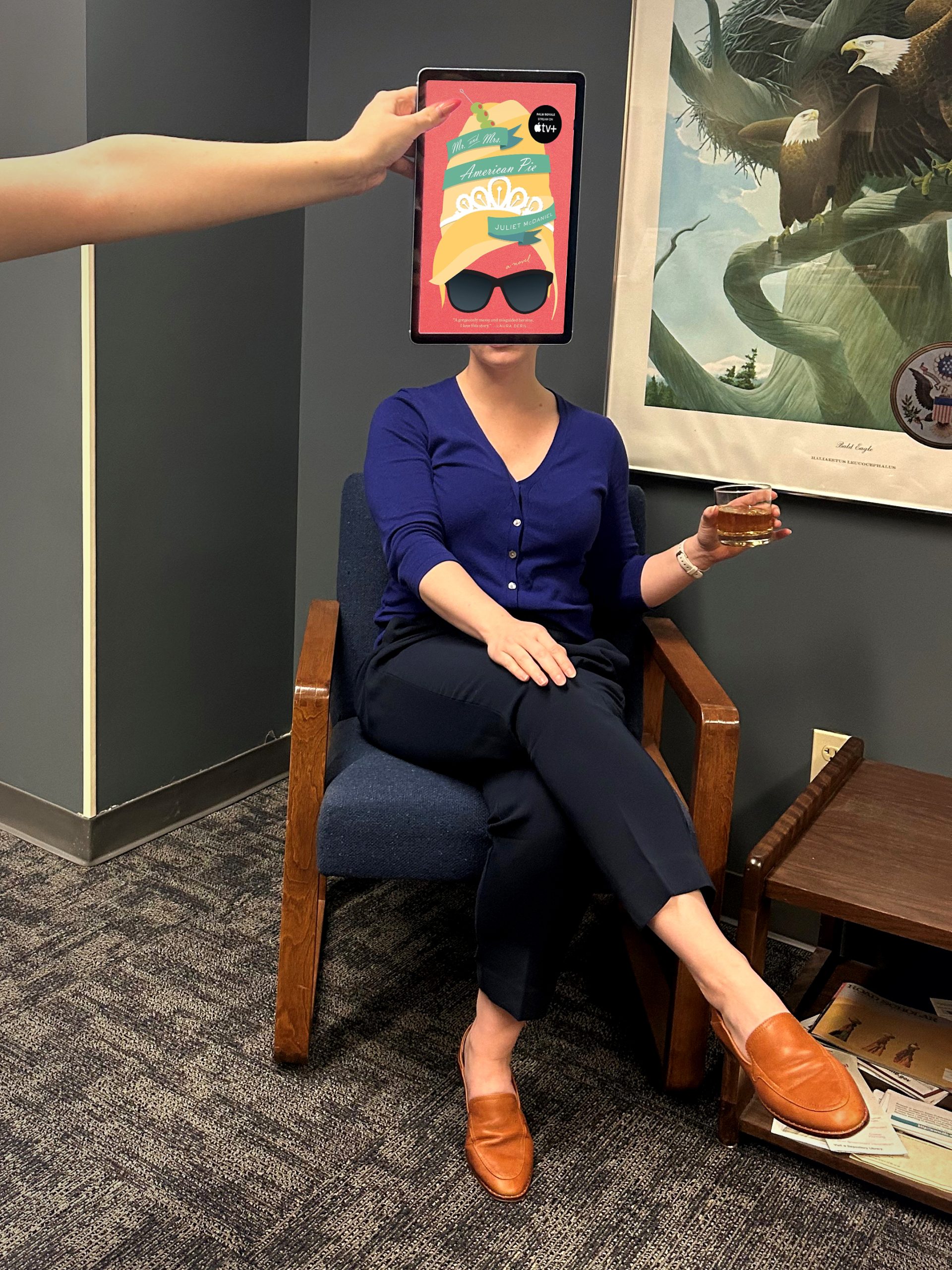
The year is 1969 in this week’s #BookFace! “Mr. and Mrs. American Pie” by Juliet McDaniel ( Inkshares, 2018) stars notable Palm Springs socialite and beauty queen Maxine Simmons- recently divorced and outcast. She must find, or build a family all on her own to earn the title of Mrs. American Pie. Perfect for comedy lovers, the novel also serves as the inspiration for Apple TV’s “Palm Royale.” It’s available for checkout as an eBook from Nebraska Overdrive Libraries. This oddball adventure, featuring themes of friendship, motherhood, and complicated relationships keeps Finlay and her nanny/partner-in-crime Vero’s story rolling.
“McDaniel’s debut is the perfect blend of salty and sweet, combining 1970s culinary horrors like ham and bananas hollandaise with a motley crew of fakers learning what family really means.”
— Booklist (starred review)
Find this title and many more through Nebraska OverDrive! Libraries participating in the Nebraska OverDrive Libraries Group currently have access to a shared and growing collection of digital downloadable audiobooks and eBooks. 194 libraries across the state share the Nebraska OverDrive collection of 26,898 audiobooks, 36,794 ebooks, and 5,133 magazines. As an added bonus it includes 130 podcasts that are always available with simultaneous use (SU), as well as SU ebooks and audiobook titles that publishers have made available for a limited time. If you’re a part of it, let your users know about this great title, and if you’re not a member yet, find more information about participating in Nebraska Overdrive Libraries!
Love this #BookFace & reading? Check out our past #BookFaceFriday photos on the Nebraska Library Commission’s Facebook page!
Book Club Spotlight – Insignificant Events in the Life of a Cactus
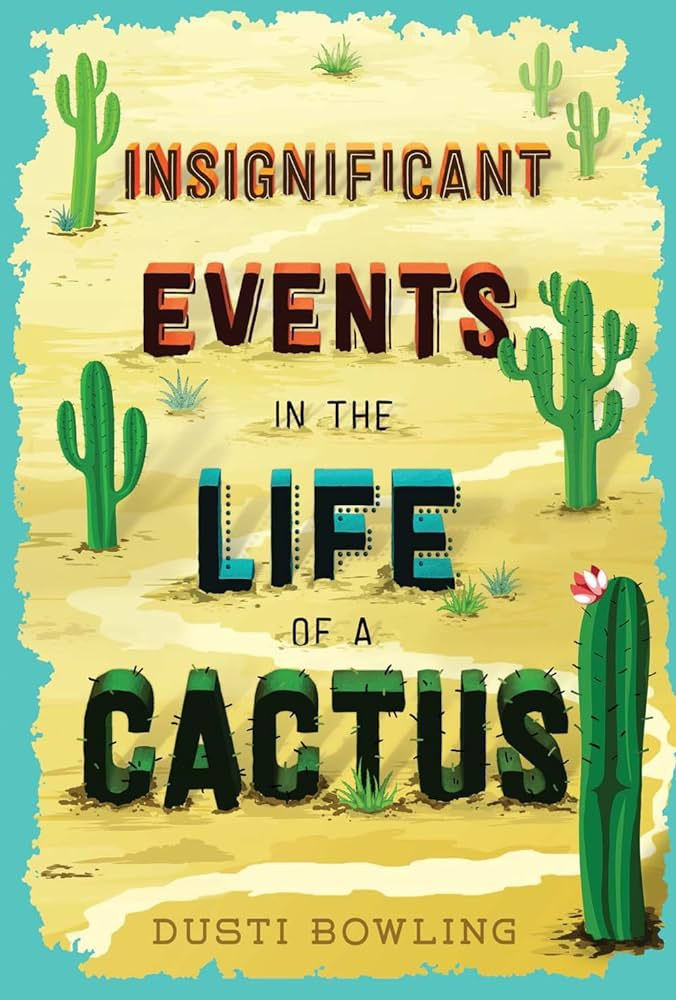
I hope everyone is as excited about the Summer Reading Program at their local library as I am! (I don’t want to brag, but I just received the Little Reader badge) This year’s theme is “Adventure Begins at Your Library”, and who knows better about Adventure than the spunky protagonists of middle-grade novels? Author Dusti Bowling is quickly becoming an icon in the middle-grade literature world, with her award-winning novels The Canyons Edge and Across the Desert flying off the shelves. After Bowling’s cousin experienced medical trauma and possible limb amputation, she wanted to read as much about limb differences as she could, but the books just weren’t there! Thus, Aven Green and the novel Insignificant Events in the Life of a Cactus were born.
Aven Green’s life is turned upside down when her family moves from Kansas to a failing western theme park in Arizona. Being the “new kid” is hard on any middle schooler, but Aven dreads the inevitable stares and questions when her classmates realize she doesn’t have arms. Don’t let her lack of arms fool you- Aven can do just about anything a regular kid can do, with some sass thrown in for good measure. Alongside the unwavering support of her adoptive parents and her new friends Connor and Zion, Aven is determined to get through the school year without dying from embarrassment in the lunch room when she has to eat with her feet. And if a new school wasn’t enough, there’s a mystery to solve! Something is afoot at Stagecoach Pass, and Aven Green is determined to get to the bottom of it, even if it means rooting out the mysterious owner, Joe Cavanaugh!
“I’m not sure I want to get involved with murders and dead lizards and stuff. I don’t know if my parents would like it”
Dusti Bowling
The hilarious and energetic Aven Green is a storyteller, athlete, musician, and detective in the charming Insignificant Events in the Life of a Cactus. A story about overcoming your fears, embracing differences, and getting through middle school with some great friends, Bowling pays close attention to illustrating how everyone has something they’re insecure about, even if it’s not as obvious as missing both your arms. Full of lighthearted radical acceptance, Insignificant Events in the Life of a Cactus may not be the end-all-be-all for perfect representation. Still, it is an incredible jumping-off point for students and adults alike looking to explore how those different from them experience life. And while Bowling doesn’t have a limb difference, she encourages the perspective of people who do, specifically the armless women, Barbie Thomas, and Tisha UnArmed, who helped with her manuscript!
This Disability Pride Month, lets celebrate the increasing visibility of disabled people. The rise of tools like social media has helped spread awareness and promote acceptance in the community! One of my favorite creators, actress Ren Willow, makes comedy videos about her life with a limb difference with realness and lightheartedness. Influencer Briel Adams-Wheatley, who, without arms or legs, shows off her skills as a makeup artist and fashion icon. While everyone’s abilities are different, these content creators and writers like Bowling are helping to reduce the stigma around people with limb differences and disabilities.
Your readers might also be interested in the sequel Momentous Events in the Life of a Cactus. Or her prequel illustrated chapter books: Aven Green!
If you’re interested in requesting Insignificant Events in the Life of a Cactus for your book club, you can find the Request Form here. There are 22 copies available. (A librarian must request items)
Bowling, Dusti. Insignificant Events in the Life of a Cactus. Scholastic. 2017
Posted in Books & Reading
Tagged book club spotlight, books, Disability Pride Month, Reading
Leave a comment
#BookFaceFriday “The Good Sister” by Sally Hepworth
I always feel like #BookFace is watching me!
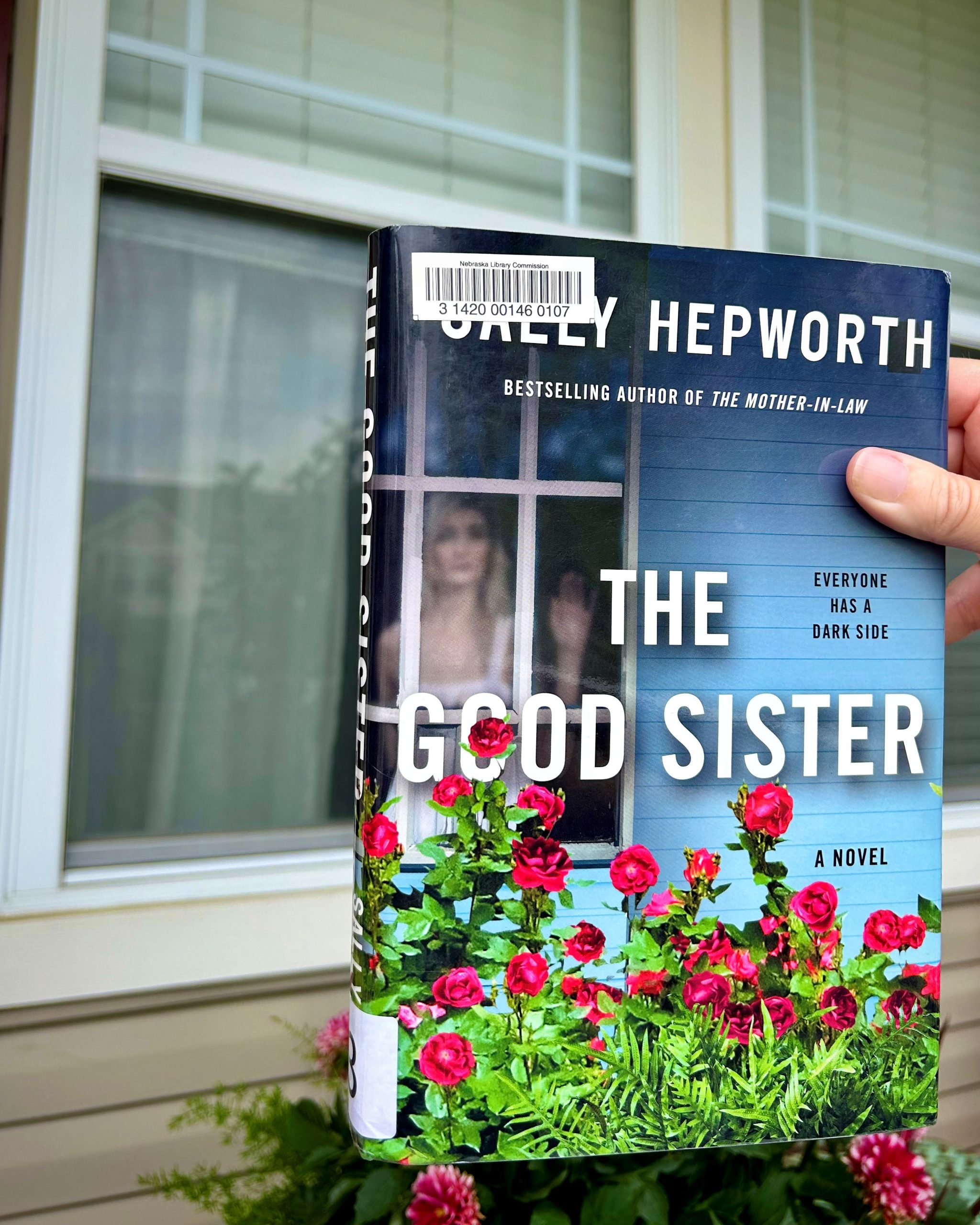
There’s no sibling rivalry with this week’s #BookFaceFriday. Read all about it in “The Good Sister” by Sally Hepworth, it’s available for check out from our Book Club Kit Collection.
Your book club won’t be able to put down this psychological thriller about two sisters and devastating family secrets. Put it on your TBR list today and request this kit for your book club.“Hepworth’s latest further solidifies her place among the top domestic suspense authors…Fern is drawn as smart, capable, and probably on the spectrum, and she is multilayered and relatable, illustrating Hepworth’s talent for page-turners with depth.”
—Booklist
Book Club Kits Rules for Use
- These kits can be checked out by the librarians of Nebraska libraries and media centers.
- Circulation times are flexible and will be based upon availability. There is no standard check-out time for book club kits.
- Please search the collection to select items you wish to borrow and use the REQUEST THIS KIT icon to borrow items.
- Contact the Information Desk at the Library Commission if you have any questions: by phone: 800/307-2665, or by email: Information Services Team
This title is also available as both an eBook and Audiobook through Nebraska OverDrive Libraries. You can find seven other titles by Sally Hepworth in the OverDrive collection! Libraries participating in the Nebraska OverDrive Libraries Group currently have access to a shared and growing collection of digital downloadable audiobooks and eBooks. 194 libraries across the state share the Nebraska OverDrive collection of 26,898 audiobooks, 36,794 ebooks, and 5,133 magazines. As an added bonus it includes 130 podcasts that are always available with simultaneous use (SU), as well as SU ebooks and audiobook titles that publishers have made available for a limited time. If you’re a part of it, let your users know about this great title, and if you’re not a member yet, find more information about participating in Nebraska Overdrive Libraries!
Love this #BookFace & reading? Check out our past #BookFaceFriday photos on the Nebraska Library Commission’s Facebook page!
Friday Reads – “Says Who?” by Anne Curzan
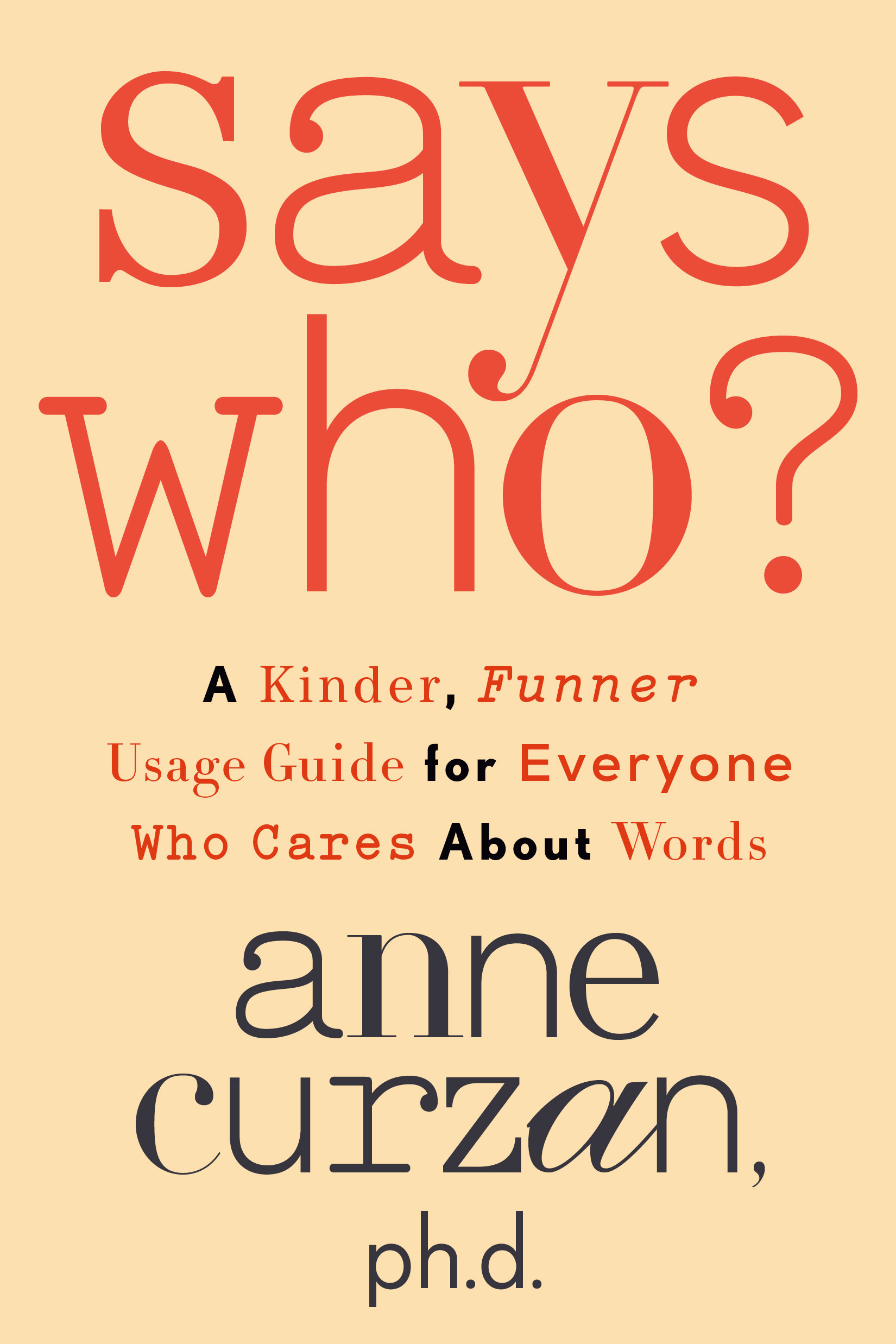
Sometimes I reserve books from my public library and by the time they become available, I have completely forgotten why I was interested. One such book was Anne Curzan’s “Says Who? A Kinder, Funner Usage Guide for Everyone Who Cares About Words.” It fell to the bottom of my library bag and I almost returned it unopened. Fortunately, I decided to skim the introduction and held onto it, and I’m so glad I did.
Curzan’s new book discusses the various linguistic pet peeves she is regularly questioned about as an English professor, radio show host, and member of the Usage Panel for the American Heritage Dictionary. (Did you know this was a thing? It’s quite the who’s who of the “Masters of the English Language.” Go check out the list – I’ll wait!)
Each chapter dives into a common complaint or point of confusion about the use of a word, part of speech, or punctuation, and how the grammar rules most of us learned in school came to be (spoiler alert – it was usually just one guy’s opinion). Curzan also talks about the evolution of common word usage, and the acceptance of those changes into standard usage over time.
Some of my favorite examples Curzan presents include:
- Mark Twain using the adverb “literally” in a way that would make most English teachers want to literally throw their copies of The Adventures of Tom Sawyer at the wall (and Louisa May Alcott does it as well!) (p. 69);
- The incongruity behind why few people notice when the * symbol is pronounced “asteriks” (instead of “asterisk”) but many are agitated when they hear “aks” in place of “ask“. In fact, William Chaucer used both “ask” and “axe” interchangeably in his writing – neither are incorrect, just examples of dialectal differences (p. 92).
- “They” has functioned as a singular gender-neutral pronoun for at least 8 centuries – Shakespeare used it, as did Jane Austen (p. 144).
Through the book, Curzan challenges the reader to step back from their inner “grammando” (a long-overdue replacement for “grammar Nazi”) and embrace their inner “wordie”- to be curious, not judgy, and find joy in the ever-changing English language and its many dialects and variations.
Curzan, Anne. (2024). Says Who? Crown.
Posted in Books & Reading, General
Tagged #FridayReads, Anne Curzan, books, Friday Reads, grammar, Reading, word usage
Leave a comment
#BookFaceFriday “Long Way Down” by Jason Reynolds
This #BookFaceFriday will really push your buttons!
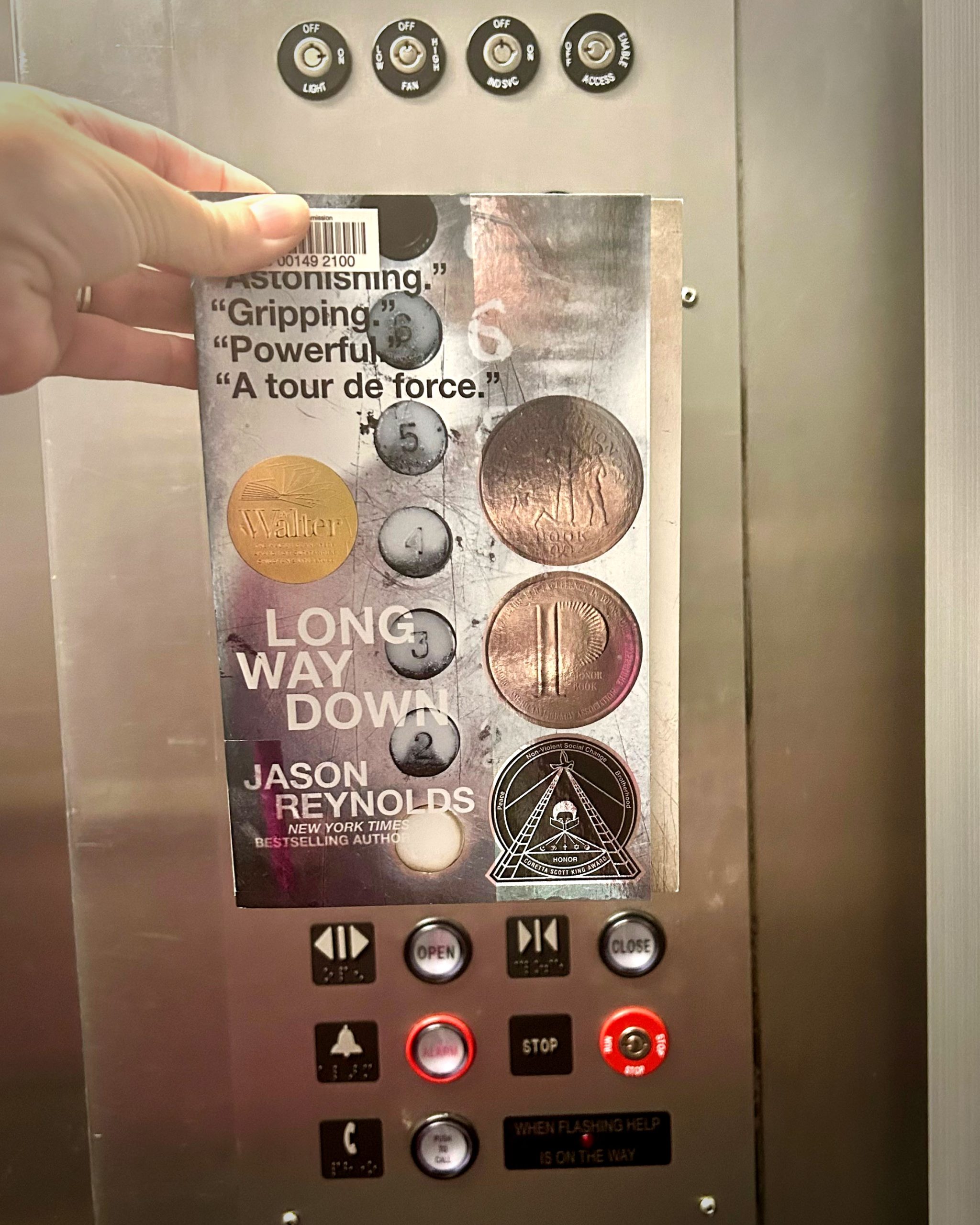
This week’s #BookFace, “Long Way Down” by New York Times bestselling author Jason Reynolds, is a Newbery Honor Book and a Coretta Scott King Honor Book.
This electric YA novel is available as a part of our Book Club Kit collection, along with five other books written by Jason Reynolds.“Spanning a mere one minute and seven seconds, Reynolds’ new free-verse novel is an intense snapshot of the chain reaction caused by pulling a trigger. Reynolds’ concise verses echo like shots against the white space of the page, their impact resounding. He peels back the individual stories that led to this moment in the elevator and exposes a culture inured to violence because poverty, gang life, or injustice has left them with no other option. In this all too real portrait of survival, Reynolds goes toe-to-toe with where, or even if, love and choice are allowed to exist.”
—Booklist, starred review
Book Club Kits Rules for Use
- These kits can be checked out by the librarians of Nebraska libraries and media centers.
- Circulation times are flexible and will be based upon availability. There is no standard check-out time for book club kits.
- Please search the collection to select items you wish to borrow and use the REQUEST THIS KIT icon to borrow items.
- Contact the Information Desk at the Library Commission if you have any questions: by phone: 800/307-2665, or by email: Information Services Team
This title is also available as an Audiobook through Nebraska OverDrive Libraries. You can find ten other books by Jason Reynolds in our Kids and Teens collection! Libraries participating in the Nebraska OverDrive Libraries Group currently have access to a shared and growing collection of digital downloadable audiobooks and eBooks. 194 libraries across the state share the Nebraska OverDrive collection of 26,898 audiobooks, 36,794 ebooks, and 5,133 magazines. As an added bonus it includes 130 podcasts that are always available with simultaneous use (SU), as well as SU ebooks and audiobook titles that publishers have made available for a limited time. If you’re a part of it, let your users know about this great title, and if you’re not a member yet, find more information about participating in Nebraska Overdrive Libraries!
Love this #BookFace & reading? Check out our past #BookFaceFriday photos on the Nebraska Library Commission’s Facebook page!
Book Club Spotlight – Funny Boy
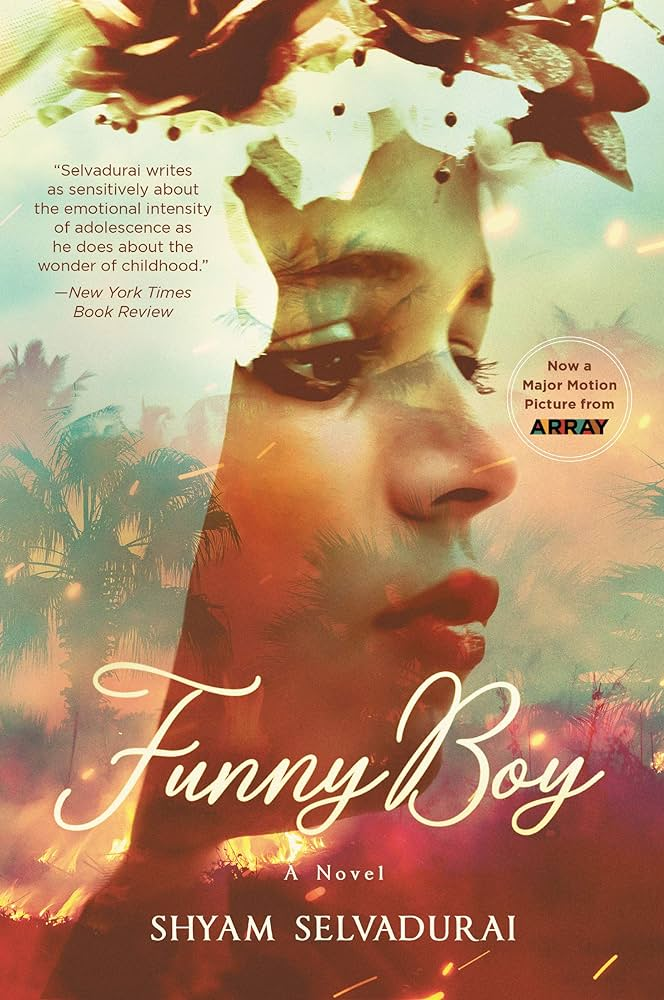
June 28th will be the 54th anniversary of the Stonewall Uprising. Although we have come so far in equal rights for the LGBTQ+ community, it’s important to remember our history and those who came before us as we celebrate Pride Month. Funny Boy by Shyam Selvadurai is a historical fiction novel taking place in Colombo, Sri Lanka when the Tamil diaspora was the target of racism and violence leading to the Black July pogroms and the Sri Lankan Civil War (1983 to 2009). Funny Boy is a work of courage in the face of anti-LGBTQ+ laws in Sri Lanka, that author Selvadurai faced before he emigrated to Canada to escape persecution. His novel portrays love and humanity in a time of violence, and was awarded the Lambda Literary Award for Gay Men’s Fiction and the Books in Canada First Novel Award.
In the politically strife 70s and 80s Sri Lanka, a young boy must come to himself in his queerness as political and ethnic tensions threaten him and his affluent Tamil family. Though he is not aware of it himself, Arjie’s supposed homosexuality labels him as “funny” when he shows his feminine side and dreams often about the romance of true love. When he meets soon-to-be bride Radha Aunty, Arjie’s perception of love shifts as she falls for a Sinhalese man and their relationship threatens the family. As he matures, Arjie also falls for a Sinhalese boy and has to look past the shame to find himself as the ambivalent world violently crashes around them.
“For how could loving Shehan be bad? Yet if my parents or anybody else discovered this love, I would be in terrible trouble”
Shyam Selvadurai
This coming-of-age novel reminds us that the personal is political, and even in these war-torn and horrifying situations, queer people and love still exist and persevere. Like recent spotlight, Pachinko, Funny Boy follows international history and how it affects everyday people. Book Groups can discuss and learn Sri Lankan history and the story of human perseverance in the face of deadly circumstances, as well as the many themes and critiques of racism, class, gender discrimination, patriarchal structures, and, of course, homophobia. Selvadurai has had a lasting impact as a post-colonial author, with not only Funny Boy having both radio drama and movie adaptations but also having a species of spider named after him by Sri Lankan researchers (Brignolia shyami) which he expressed gratitude for the recognition from his homeland and for his work for reconciliation.
For more information on the history of Sri Lanka, the Civil War, and Tamil persecution:
To see more of our LGBT+ & Queer book club titles, visit the link here.
If you’re interested in requesting Funny Boy for your book club, you can find the Request Form here. There are 10 copies available. (A librarian must request items)
Selvadurai, Shyam. Funny Boy. McClelland and Stewart. 1994
#BookFaceFriday “Finlay Donovan Rolls the Dice” by Elle Cosimano
Feel the wind in your hair with #BookFaceFriday!
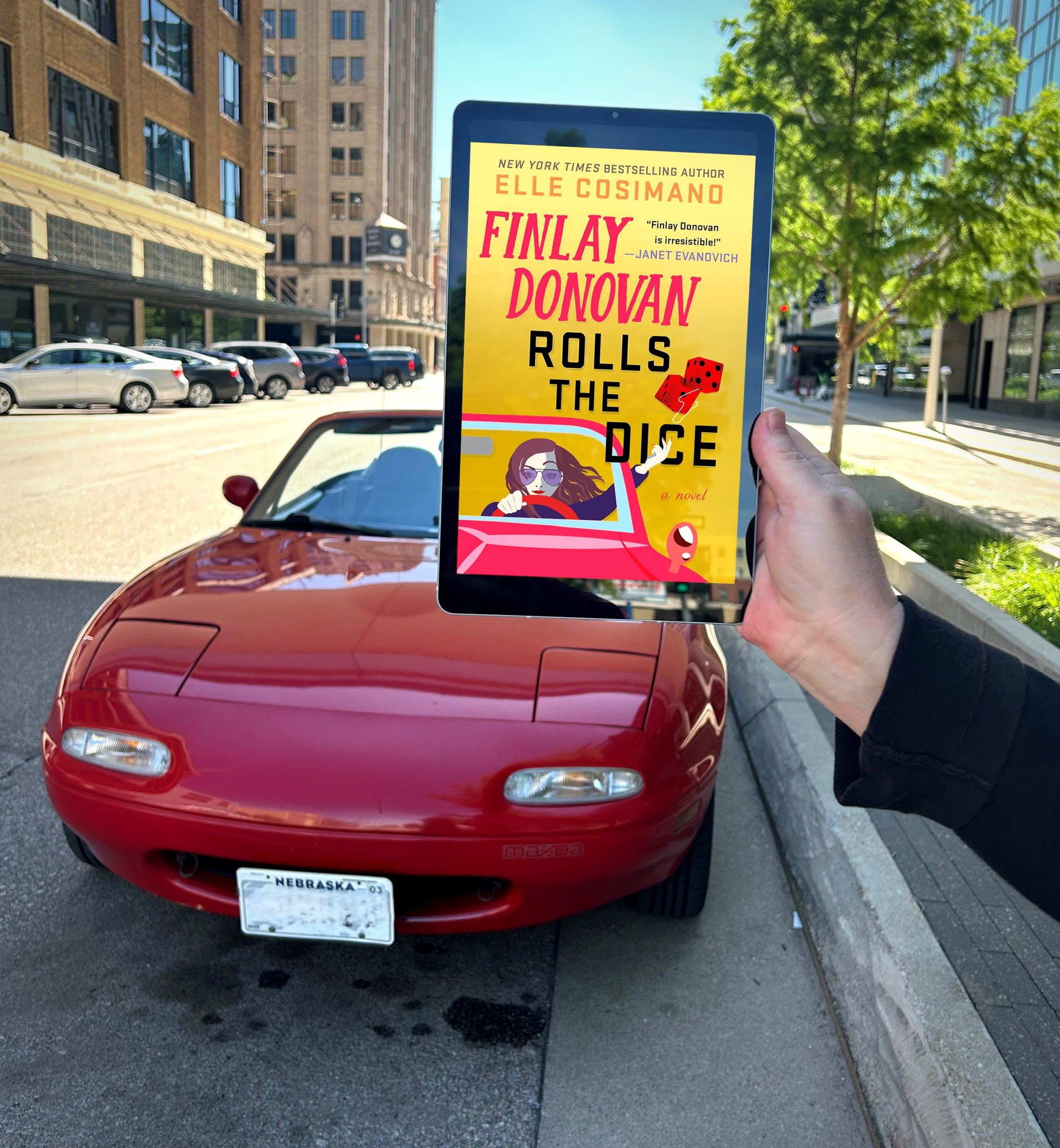
You know what every good road trip needs? A great read, like this week’s #BookFace, “Finlay Donovan Rolls the Dice: A Novel” by Elle Cosimano ( Minotaur Books, 2024.) The fourth book in Cosimano’s Finlay Donovan series, it’s available for checkout as an eBook and as an Audiobook from Nebraska Overdrive Libraries, along with the first three books in the series. This oddball adventure, featuring themes of friendship, motherhood, and complicated relationships keeps Finlay and her nanny/partner-in-crime Vero’s story rolling.
“Cosimano’s fourth Finlay Donovan novel is brilliantly plotted, bringing the witty humor and thrilling, nail-biting action the series is known for while also tackling emotional family dynamics. Cosimano knocks this one out of the park. Highly recommended for all fans of the series.”
— Booklist (starred review)
Find this title and many more through Nebraska OverDrive! Libraries participating in the Nebraska OverDrive Libraries Group currently have access to a shared and growing collection of digital downloadable audiobooks and eBooks. 194 libraries across the state share the Nebraska OverDrive collection of 26,898 audiobooks, 36,794 ebooks, and 5,133 magazines. As an added bonus it includes 130 podcasts that are always available with simultaneous use (SU), as well as SU ebooks and audiobook titles that publishers have made available for a limited time. If you’re a part of it, let your users know about this great title, and if you’re not a member yet, find more information about participating in Nebraska Overdrive Libraries!
Love this #BookFace & reading? Check out our past #BookFaceFriday photos on the Nebraska Library Commission’s Facebook page!
#BookFaceFriday “Miss Morissa” by Mari Sandoz
We’ve struck gold this #BookFaceFriday!
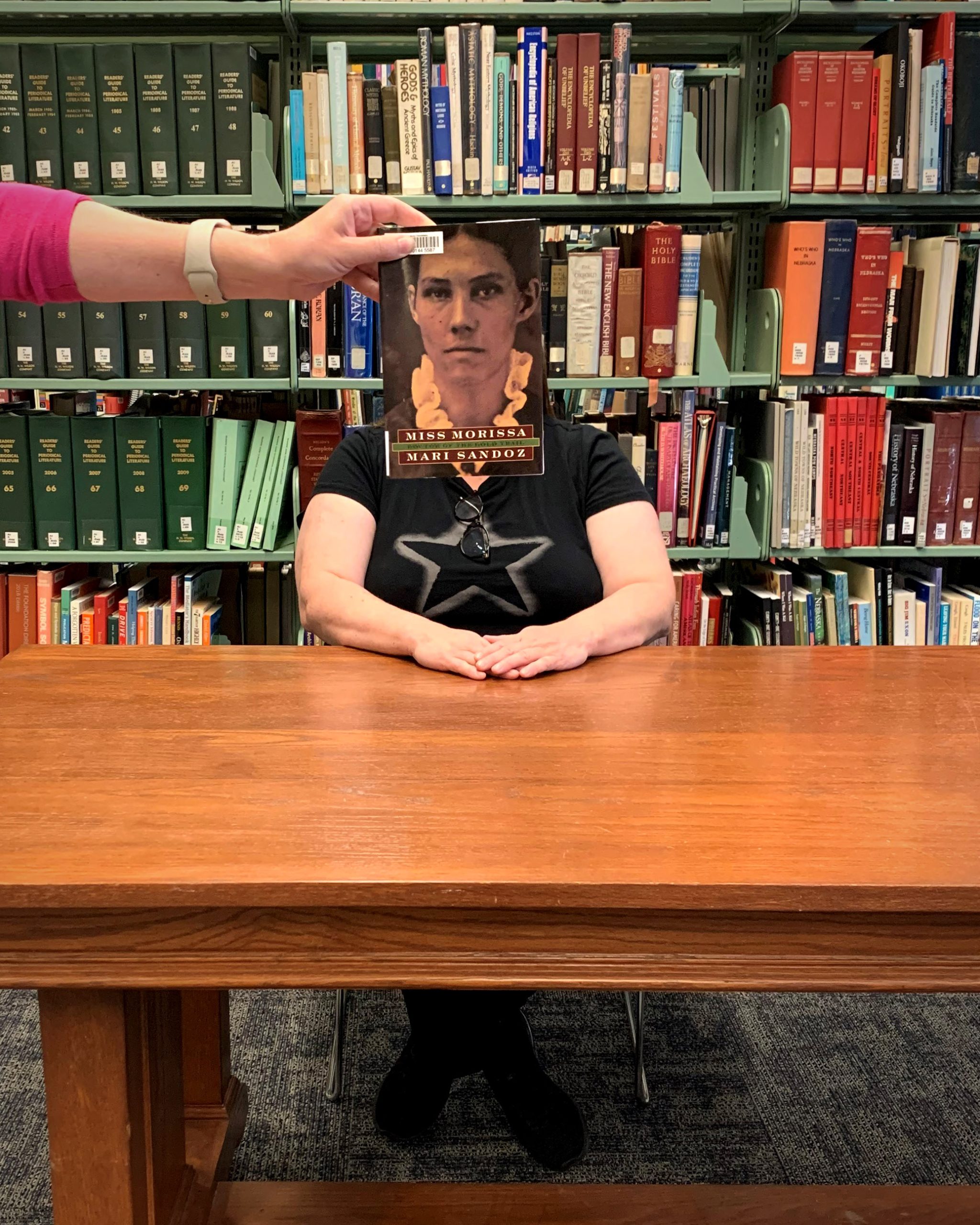
This week’s #BookFace is “Miss Morissa: Doctor of the Gold Trail” by Nebraskan author Mari Sandoz; it tells the story of a young pioneering woman doctor on the Nebraska frontier in the 1870’s as rumors of gold strikes begin to spread. This dramatic and moving historical fiction novel is available as a part of our Book Club Kit collection, along with eight other books written by Mari Sandoz.
“Beautifully written and full of striking images and masterful descriptions.”
—New York Times
This week’s model is model is our brand-new Computer Help Desk Support, Kim Ramsey! Kim recently transferred to the Library Commission from Nebraska Dept. of Health and Human Services. She reached 25 years of state employment in May and most of that time has been providing computer and technical support to state employees and other agencies. Kim lives in Lincoln with her husband Mike, and their two cats, Mei and Juno, who are their entertainment and sometimes their alarm clock. Science fiction is her favorite genre and she is currently re-reading “The Expanse” series by authors Daniel Abraham and Ty Franck. Gardening and reading are her stress relief, and garden/plant talk is probably the best way to distract her from whatever she’s supposed to be doing. If you get the chance, say hello to Kim!
Book Club Kits Rules for Use
- These kits can be checked out by the librarians of Nebraska libraries and media centers.
- Circulation times are flexible and will be based upon availability. There is no standard check-out time for book club kits.
- Please search the collection to select items you wish to borrow and use the REQUEST THIS KIT icon to borrow items.
- Contact the Information Desk at the Library Commission if you have any questions: by phone: 800/307-2665, or by email: Information Services Team
While we don’t have this particular title available through Nebraska OverDrive Libraries, we do have a significant number of the author’s other works available. You can find eleven books by Mari Sandoz, including the 2007 One Book One Nebraska selection “Crazy Horse” on Nebraska Overdrive! Libraries participating in the Nebraska OverDrive Libraries Group currently have access to a shared and growing collection of digital downloadable audiobooks and eBooks. 194 libraries across the state share the Nebraska OverDrive collection of 26,898 audiobooks, 36,794 ebooks, and 5,133 magazines. As an added bonus it includes 130 podcasts that are always available with simultaneous use (SU), as well as SU ebooks and audiobook titles that publishers have made available for a limited time. If you’re a part of it, let your users know about this great title, and if you’re not a member yet, find more information about participating in Nebraska Overdrive Libraries!
Love this #BookFace & reading? Check out our past #BookFaceFriday photos on the Nebraska Library Commission’s Facebook page!
Posted in Books & Reading, General
Tagged book club kit, Book Covers, bookfacefriday, Historical Fiction, libraries, Mari Sandoz, Miss Morissa, Nebraska Author, Reading
Leave a comment
#BookFaceFriday “Defiant” by Brandon Sanderson
Adventure awaits for this #BookFaceFriday!
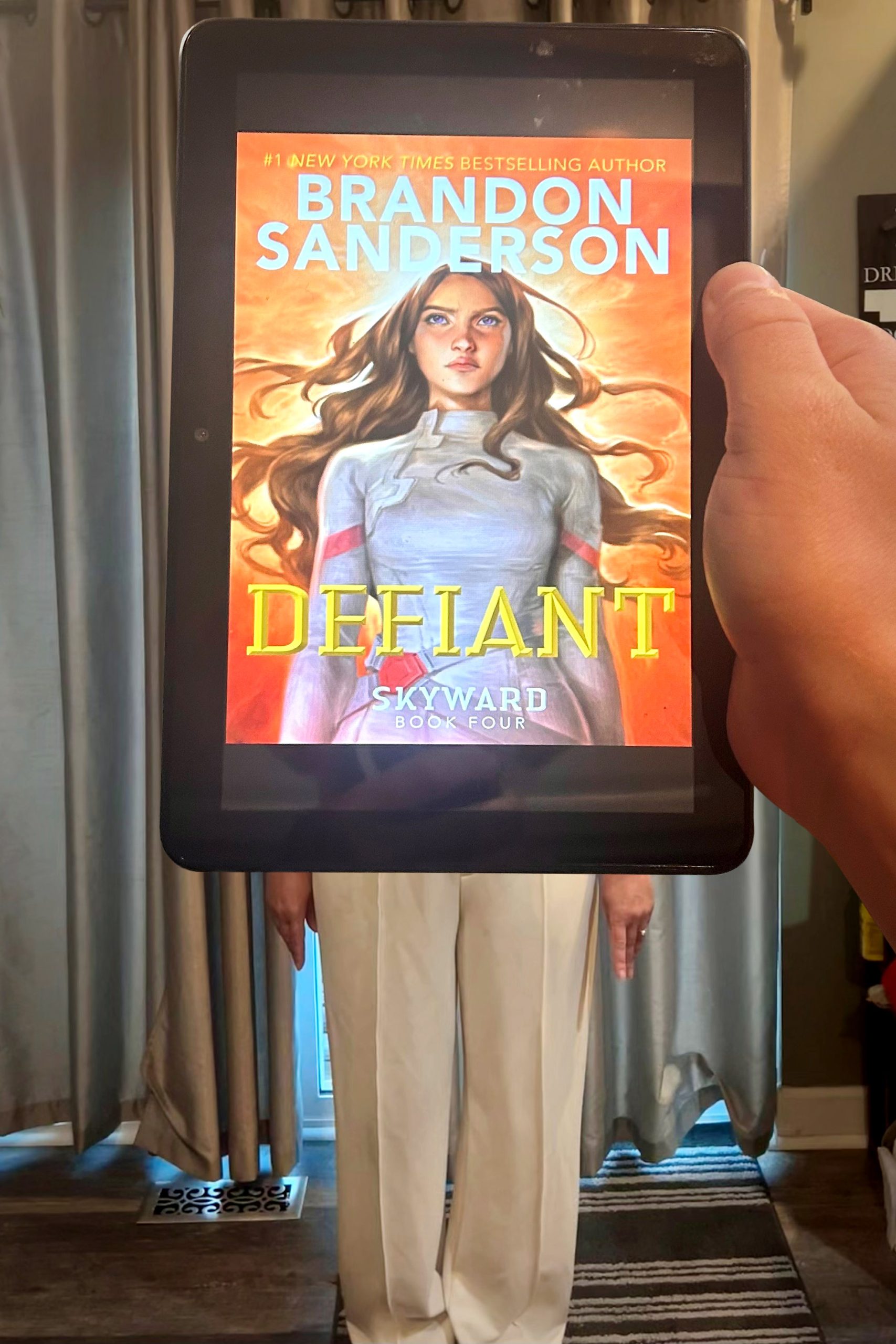
With another school year ending, that can only mean one thing: Summer Reading Program is upon us! This week’s #BookFace is “Defiant” by Brandon Sanderson (Random House Children’s Books, 2023), the fourth book in his Skyward series.
It’s available for checkout as an eBook from Nebraska Overdrive Libraries; it can be found in the “Adventure Begins at your Library” collection. This action-packed epic Sci-fi series is an excellent YA pick for both boys and girls and fits perfectly in this year’s Summer Reading Program theme.“Sanderson delivers a cinematic adventure that explores the defining aspects of the individual versus the society…[and] fans of [his] will not be disappointed.”
— School Library Journal
Find this title and many more through Nebraska OverDrive! Libraries participating in the Nebraska OverDrive Libraries Group currently have access to a shared and growing collection of digital downloadable audiobooks and eBooks. 194 libraries across the state share the Nebraska OverDrive collection of 26,174 audiobooks, 36,611 ebooks, and 5,210 magazines. As an added bonus it includes 130 podcasts that are always available with simultaneous use (SU), as well as SU ebooks and audiobook titles that publishers have made available for a limited time. If you’re a part of it, let your users know about this great title, and if you’re not a member yet, find more information about participating in Nebraska Overdrive Libraries!
Love this #BookFace & reading? Check out our past #BookFaceFriday photos on the Nebraska Library Commission’s Facebook page!
#BookFaceFriday “Better Living Through Birding” by Christian Cooper
Keep your eye’s peeled for this #BookFaceFriday.
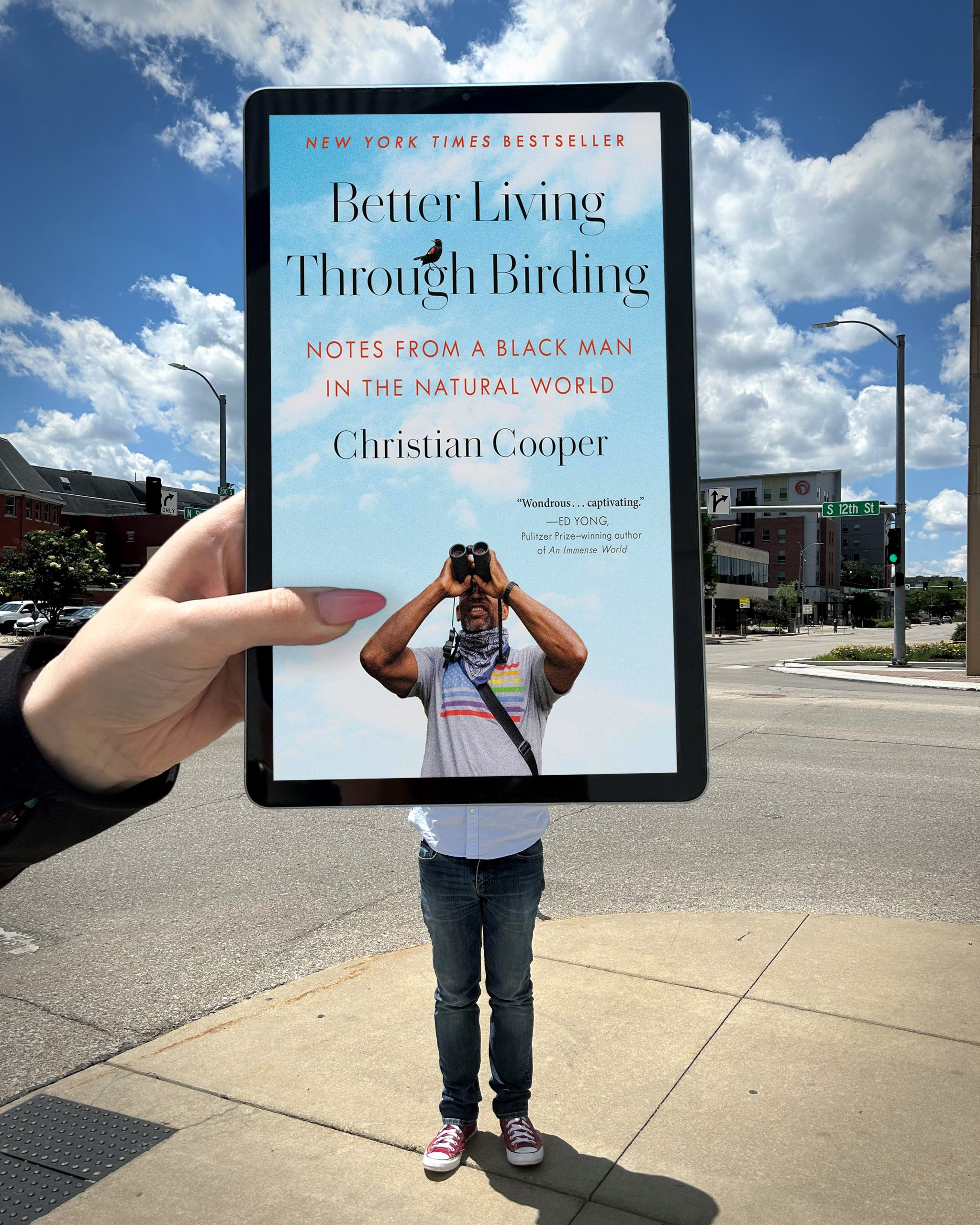
This week’s #BookFace is perfect for those of us who are outdoorsy, as in we like a nice cocktail on the patio. “Better Living Through Birding: Notes from a Black Man in the Natural World” by Christian Cooper (Books on Tape, 2023), is the nonfiction story of a New Yorker bird watching in Central Park. It’s available for checkout as an Audiobook from Nebraska Overdrive Libraries, it can be found in the “Best Titles of 2023” collection.
“This unforgettable memoir, featuring fun birdsongs between chapters, is well narrated by Cooper, the science and comics writer who was falsely accused of threatening a white woman in Central Park in 2020 as she was walking her dog and he was bird-watching. This brilliant multidimensional nonfiction debut by Cooper, now the host of National Geographic’s Extraordinary Birder, should be cherished by all memoir fans and will strike a chord with his fellow sci-fi and comics fans.”
—Library Journal
Find this title and many more through Nebraska OverDrive! Libraries participating in the Nebraska OverDrive Libraries Group currently have access to a shared and growing collection of digital downloadable audiobooks and eBooks. 194 libraries across the state share the Nebraska OverDrive collection of 26,174 audiobooks, 36,611 ebooks, and 5,210 magazines. As an added bonus it includes 130 podcasts that are always available with simultaneous use (SU), as well as SU ebooks and audiobook titles that publishers have made available for a limited time. If you’re a part of it, let your users know about this great title, and if you’re not a member yet, find more information about participating in Nebraska Overdrive Libraries!
Love this #BookFace & reading? Check out our past #BookFaceFriday photos on the Nebraska Library Commission’s Facebook page!
Friday Reads: Beyond the Wand by Tom Felton
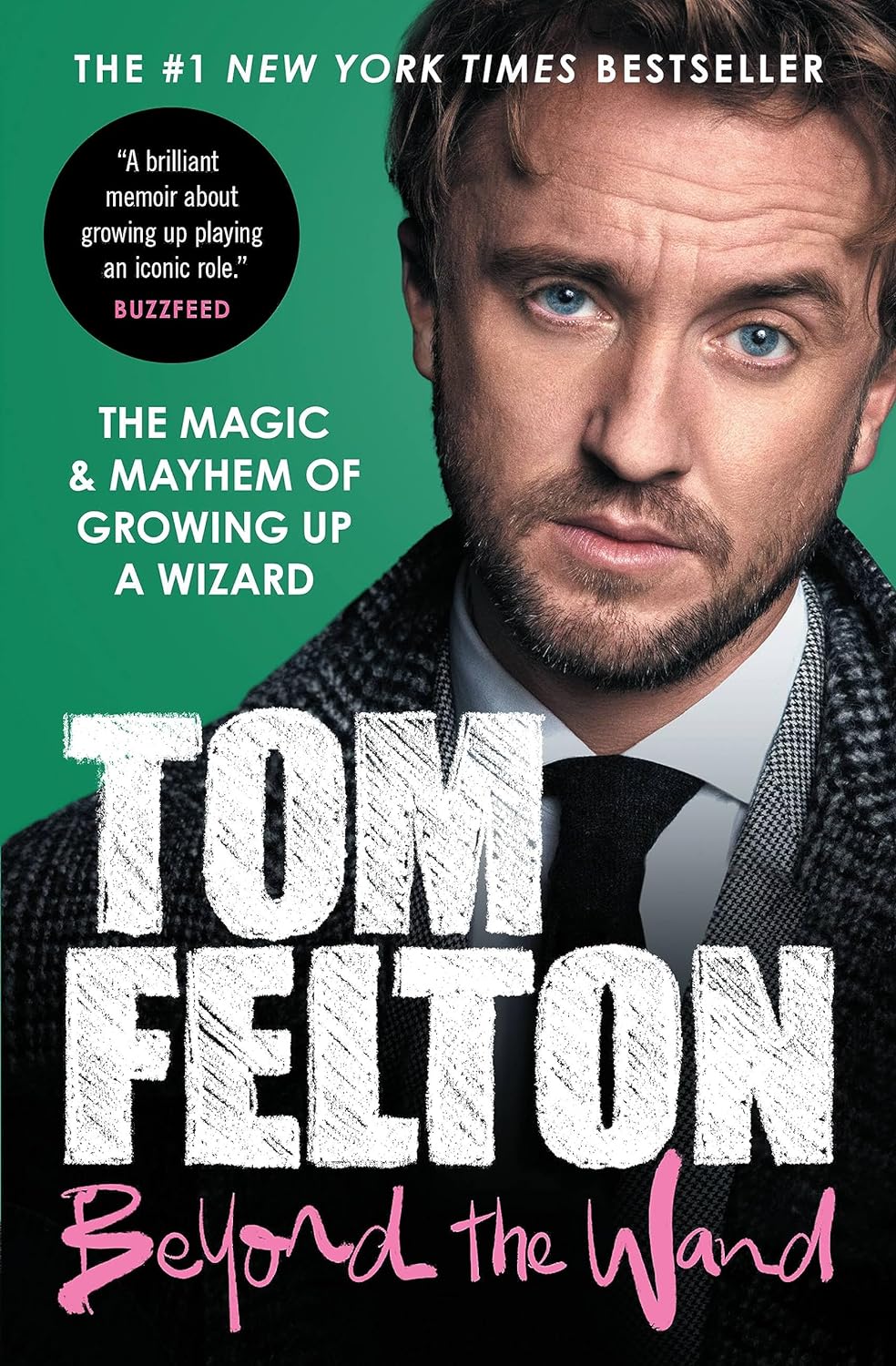
Malfoy. The name alone sparks hatred among the Harry Potter community. Unless you’re a Slytherin. Then I guess it strikes hero worship. Maybe envy? In the Harry Potter movies, Tom Felton embodied this boy-bully wizard character with his whole shriveled up heart and blackened soul. The smallest, well-timed facial expressions almost made me feel sorry for a darkened boy wizard, shaped by a domineering father. Tom Felton never appeared on screen. Only Malfoy.
Then Tom Felton wrote a memoir. I almost didn’t read Beyond the Wand: The Magic and Mayhem of Growing Up a Wizard because I love to hate Malfoy so much. I didn’t want to watch the movies and know the mix of pain and triumph behind the scenes. I didn’t want to be yanked out of my carefully crafted fantasy land by looking at the man behind the wizard. But I decided to stir that cauldron anyway.
Now I wonder if Felton would have made the same life choices if he had known he would likely hear wizard puns until he was old and gray. Probably. There are worse ways to go down in history. He has plenty of wizard puns himself. I had seen him on the Graham Norton Show and other chat shows with the stars, but his memoir made him more real than any TV show. In my mind he was still a teenager, but he’s actually 36, a year older than me. I know actors age beyond their movies, but I never realized he was so close to my own age all these years.
The collision of fantasy and reality felt unnatural. There’s a reason I never want to meet the actor. They’re never like the characters you know and love. Or hate. It took about four or five chapters for me to see Tom instead of Malfoy. I know I’m not the only one with this problem because Tom still gets death glares from Gryffindors on a regular basis. Even when he tried to go back to his regular school life in between filming movies. The Muggle is real. Ahem. Struggle.
When he’s just Tom, it’s fascinating to learn how he sees the wonderful world of Harry Potter as a tool to bring people together. He believes in unity and shared purpose, just like his co-star Emma Watson. Off screen, he is a whole person who struggles with depression and figuring out who he is and what’s next in life. Regardless of common human struggles, Tom’s overall outlook on life and the world is something everyone should aspire towards.
Long story short, I’m glad I lifted the curtain and saw the man behind the wizard. Incredible things can happen when you decide to stir the cauldron.
Felton, Tom. Beyond the Wand: The Magic and Mayhem of Growing up a Wizard. Grand Central Publishing, 2022.
Book Club Spotlight – The Rim of the Prairie
Today, as we prepare for another Nebraska summer, we will be reading a classic of Nebraska literature, Rim of the Prairie by Bess Streeter Aldrich. Born in Iowa, Aldrich moved to Elmwood, Nebraska, with her husband and child in her late 20s. Aldrich’s writing became a full-time job when her husband passed away in 1925, shortly after sending in the manuscript for what would become her first full-length novel, The Rim of the Prairie. Though not a native Nebraskan, Aldrich fully embraced the state as her own. She was awarded an Honorary Doctorate from the University of Nebraska and inducted posthumously into the Nebraska Hall of Fame in 1973. Her book A Lantern in Her Hand was the 2009 One Book One Nebraska.
Small and midwestern is Maple City when young banker Warner Field retreats to a lonely cabin on the Moore property for a vacation focused on his once great love for writing. While there, he happens upon artifacts of a young girl who once used the cabin. Small journal entries, a china doll, and an old photograph lead him to believe the owner of these items is long passed on. He finds fascination in her lush descriptions of the prairie all around him, her poetic styling and love for her surroundings touch him deeply. Through the journals, he learns of an mysterious tragedy, the girl’s entries abruptly stopping on her 18th birthday as she prepares to run away. Only a day before he departs from the cabin, 22-year-old Nancy Moore steps off the train and arrives home in Maple City for the first time in 4 years after her disappearance.
“There was something about the lunch that was gayer than usual. An atmosphere of fun pervaded it, a sense of exhilaration was upon every one. Nancy Moore seemed in some inexplicable way to be responsible for it. There was something infectious about her approval of life”
Bess Streeter Aldrich
This unassuming Nebraskan mystery romance contains a portrait of rural life during the turn of the century. Maple City and its inhabitants coexist in their own peculiar but charming and folksy ways with their own secrets kept close to their chests. In The Rim of the Prairie, Aldrich weaves her thoughts on life, her love for her husband, and the day-to-day foils and perseverance of prairie life. Appropriate for Book Groups of all ages, readers can enjoy the lush descriptions of the prairie in contrast with the bustling small town trying to stretch its wings into the modern day, and the mystery of the brown shawl. Encouraged to read by my mother, (Happy late Mother’s Day!) The Rim of the Prairie was one of the first books I read that took place in Nebraska. It gave me the words to shape my cultural identity and knowledge of our greater social landscape. As Aldrich said herself, “I tried to do my bit in helping preserve a little of the spirit of these pioneers in fiction”.
If you’re interested in requesting The Rim of the Prairie for your book club, you can find the Request Form here. There are 10 copies available. (A librarian must request items)
Aldrich, Bess Streeter. The Rim of the Prairie. University of Nebraska Press. 1966
Posted in Books & Reading
Tagged book club spotlight, books, Nebraska Authors, Reading
Leave a comment
Friday Reads & BookFace Friday: “Making It So” by Patrick Stewart
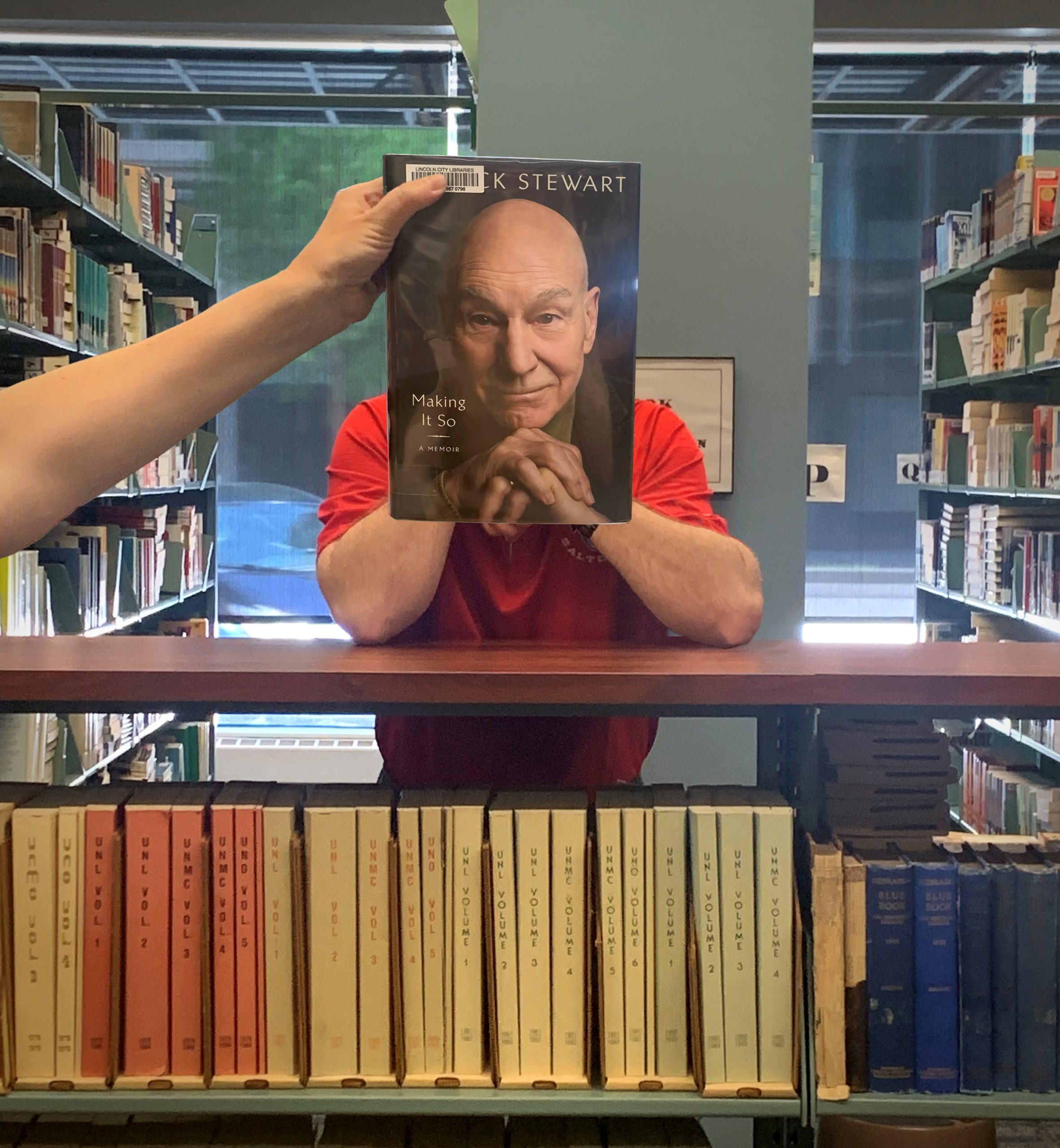
I remember watching and enjoying Star Trek: The Next Generation, starring Patrick Stewart as Jean-Luc Picard, but I wouldn’t call myself a diehard Trekkie. That was no barrier to finding Making It So, Stewart’s recently released memoir, enchanting and delightful. Especially the Audie award-winning audio edition, narrated by Stewart, himself.
As you can imagine, he declaims every word of every sentence with gusto!Stewart (b. 1940) starts at the beginning, describing what it was like growing up working class in Yorkshire in the 1940s and early 1950s. This includes a brief etymology lesson on the Yorkshire dialect he grew up speaking, which, according to Stewart, would have been “nearly incomprehensible to Londoners, let alone Americans.” For instance, he explains that “ata,” which meant “are you,” descended from “art though”; “nowt” meant “nothing”; “Geroff!” meant “leave me alone”; and a chamber pot was a “gazunder,” because it “goes under” the bed. This is relevant since in order to become an actor he had to learn “received pronunciation,” or “RP.” (RP was the standard pronunciation used by BBC broadcasters back in the day.)
Stewart also does a good job conveying the degree to which theater permeated English society at the time. It ranged from amateur dramatics (“am-drams”) at the local level, to a network of regional repertory theaters, all the way up to the Royal Shakespeare Company in Stratford-upon-Avon and the National Theatre in London. And thanks to financial support by the government in the form of grants and scholarships, it was accessible to all—even a working-class boy like Stewart, who got his start locally and then worked his way to the top.
If you are particularly interested in the Star Trek: Next Generation portion of this memoir, you’ll have to be patient, or skip to chapter 16. From there on out (there are a total of 25 chapters in the book), you will be rewarded with lots of insider, behind-the-scenes information about Stewart’s time as Picard. There are also plenty of details about his stint as Charles Xavier in the X-Men movie franchise, and voice work for Seth MacFarlane’s Family Guy and American Dad, as well as other television, film, theater, and social media projects he’s participated in, including reciting all Shakespeare’s sonnets on Instagram during the pandemic lockdown.
While this memoir will appeal to Trekkies, theater nerds, and Anglofiles, there are also elements that will resonate with anyone who has lived a long life filled with both gratitude and regret. In later chapters, Stewart expresses remorse over the demise of his 23-year marriage to his first wife, and the damage that did to his relationship with their children, Daniel and Sophie: “[T]he hurt caused by my split with their mother has never fully gone away,” he writes. After a second brief marriage falls apart, he laments: “And so, another divorce. I felt stupid and responsible.” But he also joyfully expounds on life with his third wife, Sunny Ozell, to whom he’s been married since 2013, as well as his well-publicized friendship with Ian McKellen. Overall, Stewart comes across as a vibrant, engaged octogenarian who, despite living a full, rich life, is still ready for more!
Stewart, Patrick. Making It So: A Memoir. Gallery Books, 2023.
You can find “Making It So: A Memoir” by Patrick Stewart as an eBook in Nebraska OverDrive Libraries! Libraries participating in the Nebraska OverDrive Libraries Group currently have access to a shared and growing collection of digital downloadable audiobooks and eBooks. 194 libraries across the state share the Nebraska OverDrive collection of 26,174 audiobooks, 36,611 ebooks, and 5,210 magazines. As an added bonus it includes 130 podcasts that are always available with simultaneous use (SU), as well as SU ebooks and audiobook titles that publishers have made available for a limited time. If you’re a part of it, let your users know about this great title, and if you’re not a member yet, find more information about participating in Nebraska Overdrive Libraries!
Love this #BookFace & Friday Reads? We suggest checking out all the titles available in our Book Club collection, permanent collection, and Nebraska OverDrive Libraries. Check out our past #BookFaceFriday photos on the Nebraska Library Commission’s Facebook page!
Posted in Books & Reading, General
Tagged Book Covers, bookface, bookfacefriday, Ebook, Friday Reads, Making It So, Memoir, Nebraska OverDrive Libraries, Patrick Stewart, Reading
Leave a comment

