Search the Blog
Categories
- Books & Reading
- Broadband Buzz
- Census
- Education & Training
- General
- Grants
- Information Resources
- Library Management
- Nebraska Center for the Book
- Nebraska Memories
- Now hiring @ your library
- Preservation
- Pretty Sweet Tech
- Programming
- Public Library Boards of Trustees
- Public Relations
- Talking Book & Braille Service (TBBS)
- Technology
- Uncategorized
- What's Up Doc / Govdocs
- Youth Services
Archives
Subscribe
Author Archives: Bailee Juroshek
Throwback Thursday: Mill and Electric Light Plant, Cedar Rapids, Nebraska
Nebraska Memories is here with another #ThrowbackThursday!
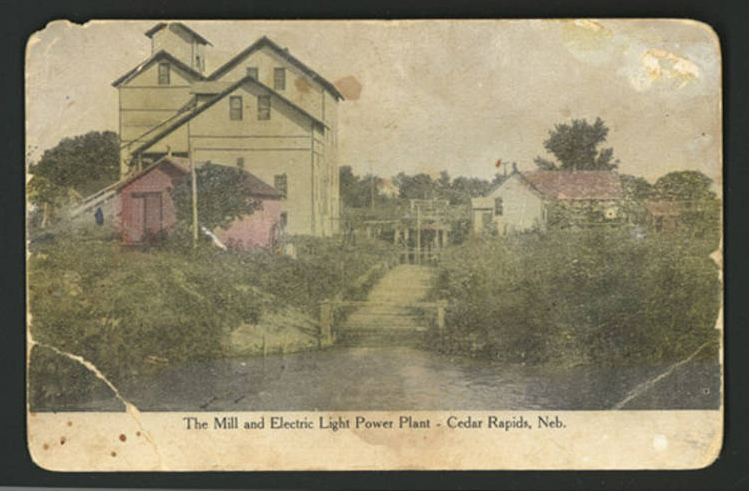
This postcard has a colorized photograph from 1907-1917 that shows the mill and electric light power plant in Cedar Rapids, Nebraska, along with its surrounding landscape.
This image is owned and published by History Nebraska. They digitized content from the John Nelson and the J. A. Anderson collection. John Nelson came to Nebraska with his parents at the age of seventeen from Sweden. His photographs tell the story of small town life in Nebraska during the first decades of the twentieth century.
See this collection and many more on the Nebraska Memories archive!
The Nebraska Memories archive is brought to you by the Nebraska Library Commission. If your institution is interested in participating in Nebraska Memories, see http://nlc.nebraska.gov/nebraskamemories/participation.aspx for more information.
Posted in General, Nebraska Memories, Preservation
Tagged Cedar Rapids, History Nebraska, Postcard, Throwback Thursday
Leave a comment
Nebraska Book Now Available on BARD!

“Caril” by Ninette Beaver, B. K. Ripley, and Patrick Trese is now available on cartridge and for download on BARD, the Braille and Audio Reading Download service. BARD is a service offered by the Nebraska Library Commission Talking Book and Braille Service and the National Library Service for the Blind and Print Disabled at the Library of Congress.
In 1958, fourteen-year-old Caril Ann Fugate followed Charles Starkweather on a cold-blooded murder spree. This is the story of Caril’s triumph over desperation and tragedy — of a young woman who found faith and hope behind prison walls.
TBBS borrowers can request “Caril” DCB02043 or download it from the National Library Service BARD (Braille and Audio Reading Download) website. If you have high-speed internet access, you can download books to your smartphone or tablet, or onto a flash drive for use with your player. You may also contact your reader’s advisor to have the book mailed to you on cartridge.
Throwback Thursday: Dog Walking on Tight Rope
Gather ‘round for this #ThrowbackThursday!

This black and white photograph postcard is from around 1907-1917. It shows a crowd of people standing around a stage, watching a dog walking across a tightrope suspended from a frame and placed over a stage set up on a city street. A man on the stage stands below the dog, looking up as it crosses.
This image is owned and published by History Nebraska. They digitized content from the John Nelson and the J. A. Anderson collection. John Nelson came to Nebraska with his parents at the age of seventeen from Sweden. His photographs tell the story of small town life in Nebraska during the first decades of the twentieth century.
See this collection and many more on the Nebraska Memories archive!
The Nebraska Memories archive is brought to you by the Nebraska Library Commission. If your institution is interested in participating in Nebraska Memories, see http://nlc.nebraska.gov/nebraskamemories/participation.aspx for more information.
Announcing a New Literary Festival Event to Take Place this Fall
FOR IMMEDIATE RELEASE:
July 16, 2024
FOR MORE INFORMATION:
Tessa Timperley
Communications Coordinator
Nebraska Library Commission
Email
Rosemary Sekora
Marketing and Sales Manager
University of Nebraska Press
rsekora@unl.edu
Announcing a New Literary Festival Event to Take Place this Fall
Book lovers, get your calendars to save the date. A new literary festival is taking place in Lincoln.
The 2024 Nebraska Celebration of Books (NCOB) will take place on Oct. 12, 2024, in the University of Nebraska-Lincoln City Campus Union at 1400 R Street. Two presentations, a writing workshop, and a slam poetry competition will take place on second floor leading up to the presentation of the Nebraska Book Awards at 3:30 p.m. NCOB will also host local bookstores and other vendors throughout the day beginning at 10:00 a.m.
The event will officially kick off on Oct. 11 at White Elm Brewing with a literary trivia night at 5:00 p.m.
All events are free and open to the public. NCOB would like to thank the following organizations for making this new event possible: Nebraska Center for the Book, Zero Street Fiction series, Larksong Writers Place, Nebraska Writers Collective, Nebraska Library Commission, Lincoln City Libraries, and the University of Nebraska Press.
For additional information on attending or becoming a sponsor of this event, please visit https://bookfestival.nebraska.gov/
###
The most up-to-date news releases from the Nebraska Library Commission are always available on the Library Commission Website, http://nlc.nebraska.gov/publications/newsreleases.
Throwback Thursday: Hodgman Ambulance
We’re back with another #ThrowbackThursday!
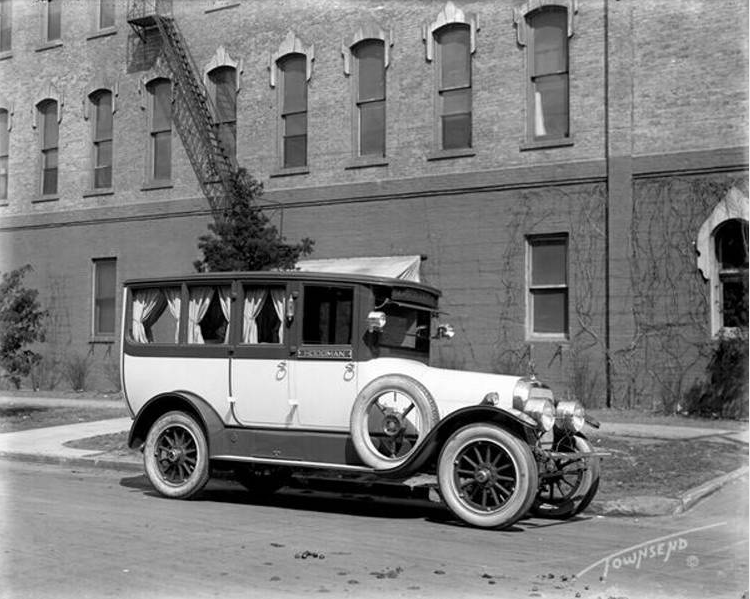
This 8” x 10” glass plate negative shows a Hodgman ambulance from the year 1922. The ambulance is white with black trim, white wheel tires, and curtains in the back. A plaque just under the window of the front passenger door reads “Hodgman” and another plaque over the windshield reads “Ambulance.”
This image is published and owned by Townsend Studio, which has been in continuous operation since its foundation in 1888 in Lincoln, Nebraska. The studio holds a collection of glass plate and acetate negatives of early Lincoln and its residents.
See this collection and many more on the Nebraska Memories archive!
The Nebraska Memories archive is brought to you by the Nebraska Library Commission. If your institution is interested in participating in Nebraska Memories, see http://nlc.nebraska.gov/nebraskamemories/participation.aspx for more information.
Posted in General, Nebraska Memories, Preservation
Tagged glass plate negative, Hodgman, Throwback Thursday, Townsend Studio
Leave a comment
Historical Nebraska Book Now Available on BARD!
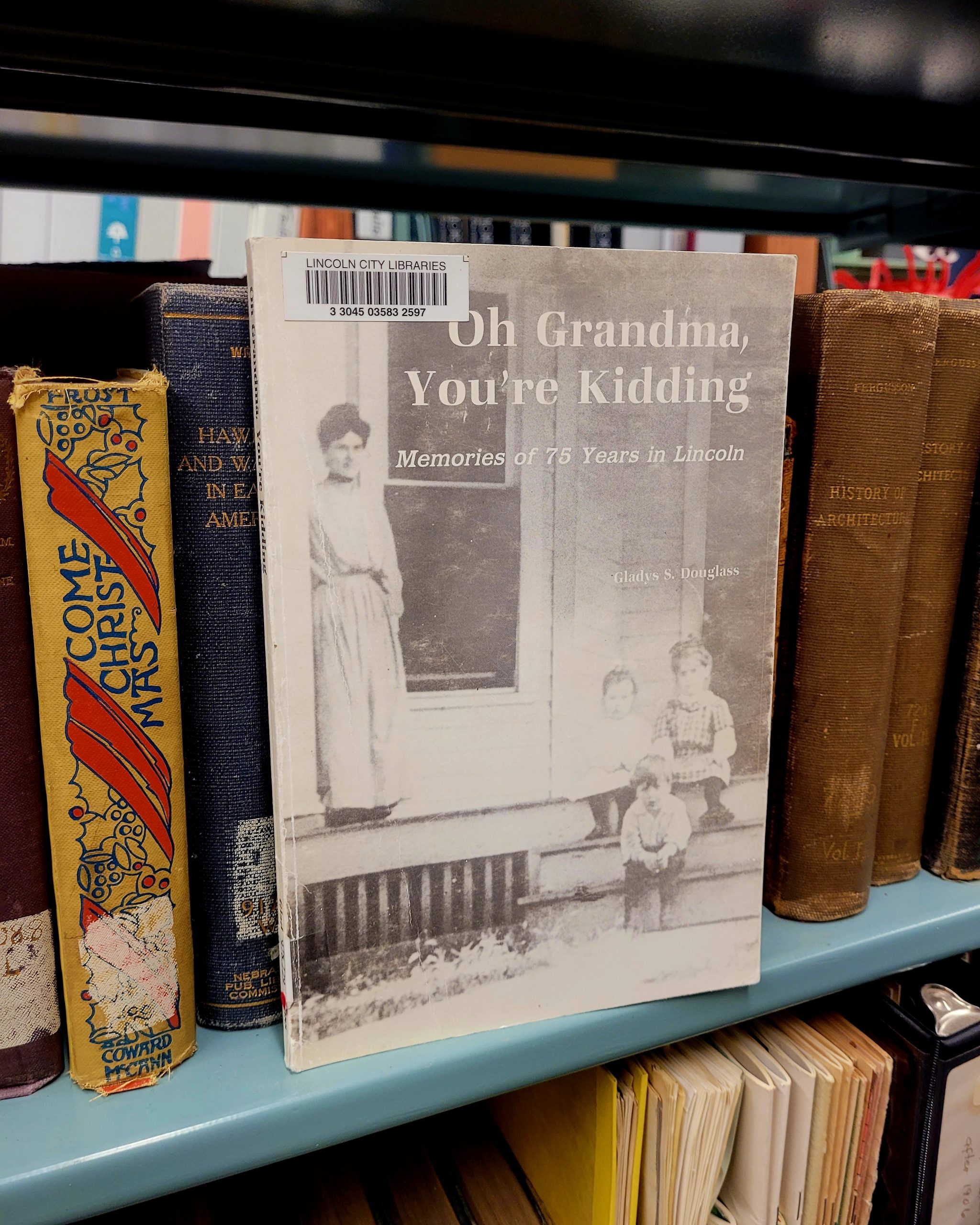
“Oh Grandma, You’re Kidding: Memories of 75 Years in Lincoln” by Gladys S. Douglass, is now available on cartridge and for download on BARD, the Braille and Audio Reading Download service. BARD is a service offered by the Nebraska Library Commission Talking Book and Braille Service and the National Library Service for the Blind and Print Disabled at the Library of Congress.
The author tells of her own early experiences in Lincoln, shortly after the turn of the century. The book previously appeared in the form of short articles which were published in Lincoln’s SUNDAY JOURNAL AND STAR.
“In these pages the reader will find the flow of family and tradition, the story of the common man and woman in Nebraska during the early years of the century. Mari Sandoz knew this secret: the story of the Kinkaid lands lay not with Moses Kinkaid – the “important” man of the law – but rather with the “unimportant” people who were the Kinkaiders – like her father Old Jules. Here we see the fabric of Nebraska life 75 years ago.”
—Roger L. Welsch
TBBS borrowers can request “Oh Grandma, You’re Kidding” DCB02041 or download it from the National Library Service BARD (Braille and Audio Reading Download) website. If you have high-speed internet access, you can download books to your smartphone or tablet, or onto a flash drive for use with your player. You may also contact your reader’s advisor to have the book mailed to you on cartridge.
#BookFaceFriday “Mr. and Mrs. American Pie” by Juliet McDaniel
This #BookFaceFriday is a socialite!
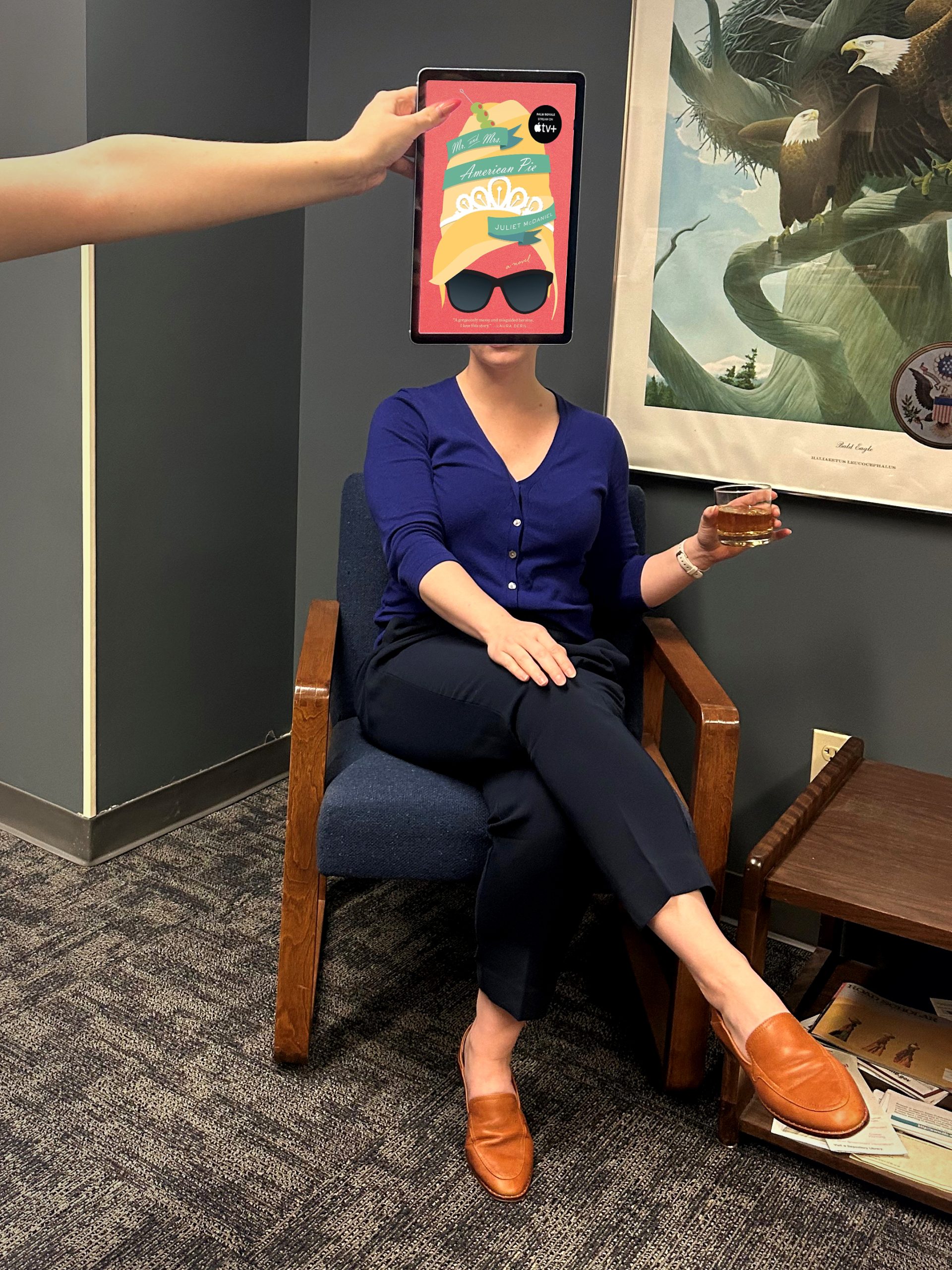
The year is 1969 in this week’s #BookFace! “Mr. and Mrs. American Pie” by Juliet McDaniel ( Inkshares, 2018) stars notable Palm Springs socialite and beauty queen Maxine Simmons- recently divorced and outcast. She must find, or build a family all on her own to earn the title of Mrs. American Pie. Perfect for comedy lovers, the novel also serves as the inspiration for Apple TV’s “Palm Royale.” It’s available for checkout as an eBook from Nebraska Overdrive Libraries. This oddball adventure, featuring themes of friendship, motherhood, and complicated relationships keeps Finlay and her nanny/partner-in-crime Vero’s story rolling.
“McDaniel’s debut is the perfect blend of salty and sweet, combining 1970s culinary horrors like ham and bananas hollandaise with a motley crew of fakers learning what family really means.”
— Booklist (starred review)
Find this title and many more through Nebraska OverDrive! Libraries participating in the Nebraska OverDrive Libraries Group currently have access to a shared and growing collection of digital downloadable audiobooks and eBooks. 194 libraries across the state share the Nebraska OverDrive collection of 26,898 audiobooks, 36,794 ebooks, and 5,133 magazines. As an added bonus it includes 130 podcasts that are always available with simultaneous use (SU), as well as SU ebooks and audiobook titles that publishers have made available for a limited time. If you’re a part of it, let your users know about this great title, and if you’re not a member yet, find more information about participating in Nebraska Overdrive Libraries!
Love this #BookFace & reading? Check out our past #BookFaceFriday photos on the Nebraska Library Commission’s Facebook page!
Throwback Thursday: Flag Print Clothing
Happy fourth of July #ThrowbackThursday!
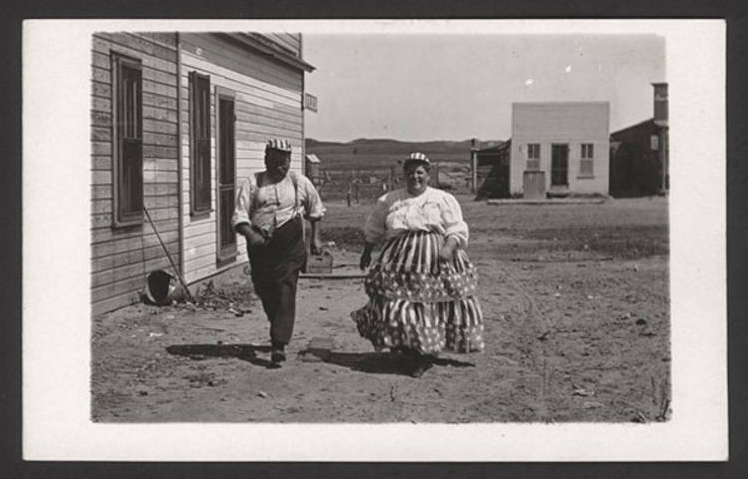
This black and white photograph on a postcard shows man and a woman walking together. The woman is wearing an American flag printed skirt and hat and the man has an American flag print hat. Perhaps they are celebrating the 4th of July!
This image is owned and published by History Nebraska. They digitized content from the John Nelson and the J. A. Anderson collection. John Nelson came to Nebraska with his parents at the age of seventeen from Sweden. His photographs tell the story of small town life in Nebraska during the first decades of the twentieth century.
See this collection and many more on the Nebraska Memories archive!
The Nebraska Memories archive is brought to you by the Nebraska Library Commission. If your institution is interested in participating in Nebraska Memories, see http://nlc.nebraska.gov/nebraskamemories/participation.aspx for more information.
Nebraska State Poet Nominations Due August 16th
FOR IMMEDIATE RELEASE:
June 28, 2024
FOR MORE INFORMATION:
Sam Hennigh, Communications Manager
402-595-3809
samuel.hennigh@nebraska.gov
Nebraska State Poet Nominations Due August 16th
The Nebraska Arts Council, Humanities Nebraska, and Nebraska Library Commission are seeking nominations for the next Nebraska State Poet. This designation recognizes and honors a Nebraska poet of exceptional talent and accomplishment. Nominations must be submitted online no later than midnight CDT on August 16, 2024.
Nominations may be made by any organization or individual in the state of Nebraska. To be considered, nominees must consent to the nomination. All nominations will be reviewed by the State Poet Selection Committee, which is made up of five individuals who are established members of Nebraska’s literary, cultural, educational and academic communities. After the committee selects finalists, the governor will make the final selection.
State Poet nominations will be collected and reviewed online only. The first step is to contact nac.info@nebraska.gov to verify if the poet in question has been nominated already. After the nominator has received a response to their query, the second step is to complete the online nomination form using the Nebraska Arts Council’s SlideRoom application site. The site includes complete instructions for submitting nomination materials.
The Nebraska State Poet will be chosen based on artistic excellence, exemplary professionalism demonstrated by significant publications and special honors, an established history of community service in the advancement of poetry in Nebraska, and the ability to present poetry and interact effectively with a public audience. In addition, the State Poet must be a legal, full-time resident for at least three years prior to the nomination deadline and must maintain Nebraska residence during his or her full term of office.
Once selected, the Nebraska State Poet will serve a five-year renewable term as an advocate for poetry, literacy, and literature in Nebraska. Duties include giving public presentations and readings, leading workshops and discussions, and providing outreach in schools, libraries, literary festivals, and various venues in rural and urban communities throughout the state.
Statewide presentations will be funded in part through the Nebraska Arts Council’s Nebraska Touring Program and the Humanities Nebraska Speakers Bureau. An annual stipend will also be provided to support a statewide project, designed by the State Poet, and participation in programming led by the Nebraska Arts Council, Humanities Nebraska, and Nebraska Library Commission. The stipend will be $10,000 annually for the first two years of the term, with possible adjustments during the final three years, subject to sponsoring organization budgets.
The position of Nebraska Poet Laureate was established in 1921 when John G. Neihardt was appointed by the Legislature. In 1982, William Kloefkorn was appointed Nebraska State Poet by Governor Charles Thone. Kloefkorn served as State Poet for more than 25 years until his death in May 2011. In November 2013, Governor Dave Heineman appointed Twyla Hansen as Nebraska State Poet. When her term ended in December 2018, Governor Pete Ricketts appointed Matt Mason as State Poet. Mason’s service ends in December 2024.
For more information about the Nebraska State Poet selection process, visit State Poet Selection Guidelines – Nebraska Arts Council or State Poet Nomination Guidelines – Humanities Nebraska. Humanities Nebraska is a private nonprofit with a mission to help people explore what connects us and makes us human. Humanities Nebraska is funded in part by the National Endowment for the Humanities, an appropriation from the Nebraska Legislature, private donations, and the Nebraska Cultural Endowment, a public-private partnership with state dollars matching private dollars to benefit the arts and humanities in Nebraska.
Posted in General
Tagged Humanities Nebraska, Nebraska Arts Council, Nebraska State Poet
Leave a comment
Seeking Nebraska Yearbooks!
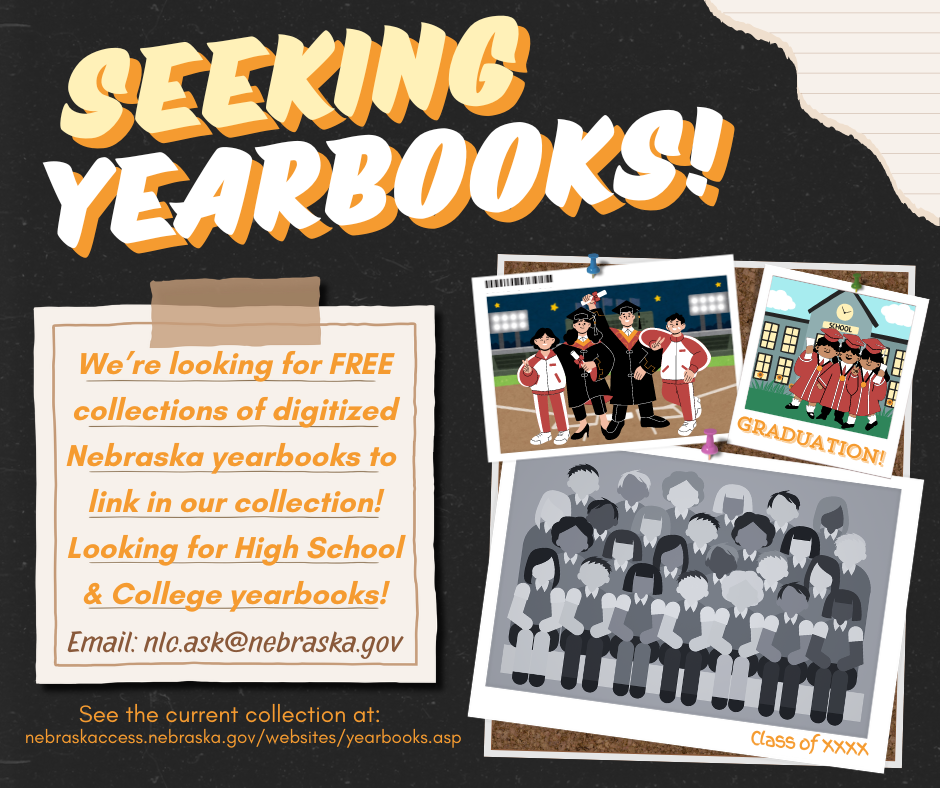
Do you know of or have access to free digital collections of Nebraska yearbooks? We would love to link them in our collection! We’re looking for both High School and College yearbooks!
Comment below or email us if you have a free digital collection of Nebraska yearbooks you’d like to share with us!
You can see the current collection at https://nebraskaccess.nebraska.gov/websites/Yearbooks.asp
Throwback Thursday: Epworth Lake Park
Hope you’re keeping cool this #ThrowbackThursday!
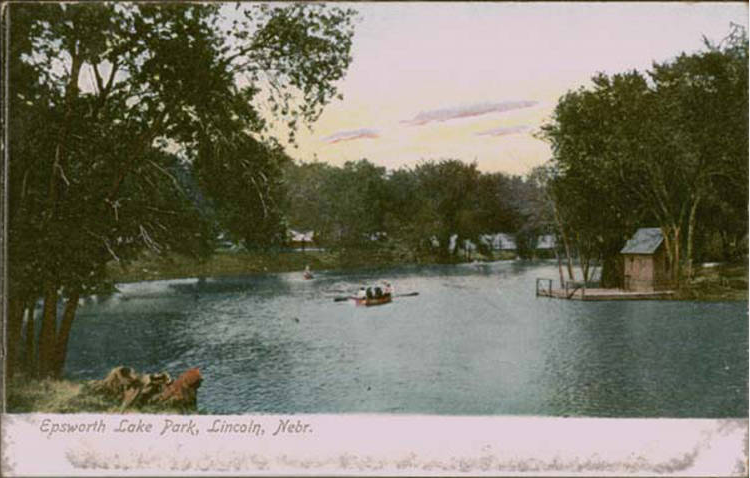
This 14 x 9 cm color postcard shows a view of Epworth Lake Park in Lincoln, Nebraska from around 1901-1907. In the lake are people in a row boat near a dock and wooden house to the right. The lake is surrounded by trees and other buildings are seen beyond the trees. The name Epworth is misspelled on the card as “Epsworth Lake Park, Lincoln, Nebr.”
The Epworth Association was formed in 1897 with ties to the Methodist Church and patterned after the program and meeting grounds at Lake Chautauqua, New York. A large area southwest of Lincoln, Nebraska, along Salt Creek was purchased and Epworth Lake was dredged near its center and filled by the creek. Buildings erected included a dormitory, hotel, four restaurants, post office, an amphitheater seating 500, and a huge, roofed, open-sided amphitheater which seated between 2,500 and 3,000 people. Many small cabins and 857 wooden, raised tent bases were also built to accommodate vacationing families. The park could provide accommodations for 2,500 and by 1910-11 it was in full swing. The Burlington Railroad built a spur line from Lincoln to the park offering summer specials. Because evening programs and Chautauqua were popular, it was common for 25 railroad cars to wait outside the gates to return attendees to Lincoln after the shows. Daily admission was 25 cents or an 8-day pass for $1. Speakers included Booker T. Washington, Enrico Caruso, Theodore Roosevelt, William Jennings Bryan, and Howard Taft. During the summer daily attendance ran from 2,000 – 2,500. With the advent of the automobile and the ability of city dwellers to go anywhere, in 1930, only 13,682 admissions were recorded for the entire year. In 1935 torrential rains nearly destroyed the camp grounds and in 1940 the Epworth League moved its programs to Bethany Park. In about 1966 the land was willed to the City of Lincoln and became Wilderness Park.
— McKee, James L. “Remember When: Memories of Lincoln”. Lincoln: J & L Lee Co., 1998, p. 17.
This image is published and owned by the Omaha Public Library. They have a large collection of 1,100+ postcards and photographs of the Omaha area.
See this collection and many more on the Nebraska Memories archive!
The Nebraska Memories archive is brought to you by the Nebraska Library Commission. If your institution is interested in participating in Nebraska Memories, see http://nlc.nebraska.gov/nebraskamemories/participation.aspx for more information.
Posted in General, Nebraska Memories, Preservation
Tagged Epworth Lake, Epworth Park, Lincoln Nebraska, Postcard, Throwback Thursday
Leave a comment
Nebraska Book Now Available on BARD!
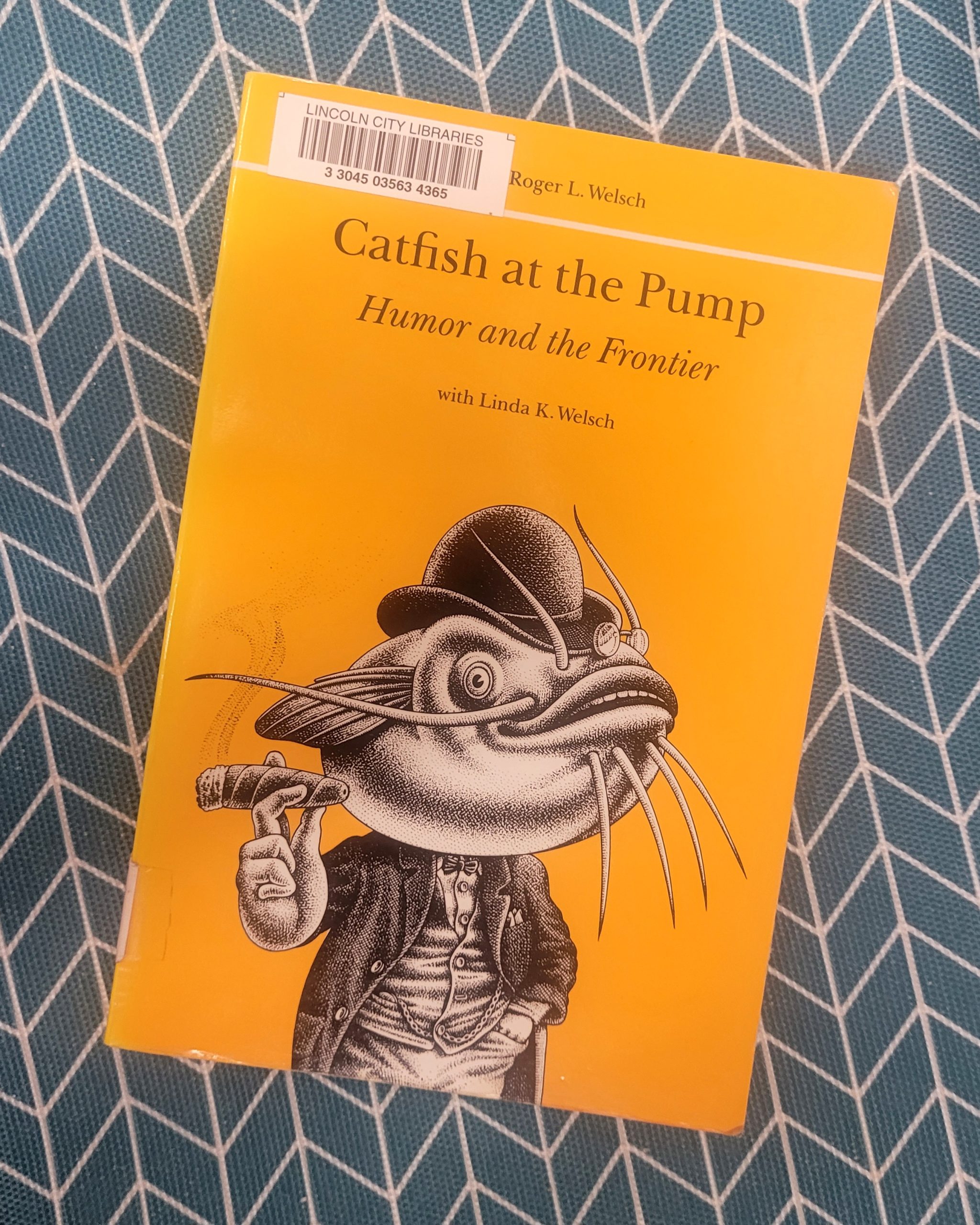
The “Catfish at the Pump” by Roger L. Welsch, with Linda K. Welsch, is now available on cartridge and for download on BARD, the Braille and Audio Reading Download service. BARD is a service offered by the Nebraska Library Commission Talking Book and Braille Service and the National Library Service for the Blind and Print Disabled at the Library of Congress.
Were our forefathers liars? “You bet they were,” says Roger Welsch, “and damned fine ones at that.” The proof is in “Catfish at the Pump”, a collection of the kind of humor that softened the hardships of pioneering on the Great Plains. From yellowed newspapers, magazines, and forgotten Nebraska Federal Writers’ Project files, the well-known folklorist and humorist Roger Welsch has produced a book to be treasured. Here are jokes, anecdotes, legends, tall tales, and lugubriously funny poems about the things that preoccupied the pioneer plainsman: weather extremes; soil quality; food and whiskey; an arkload of animals, including grasshoppers, bed bugs, hoop snakes, the ubiquitous mule, and some mighty big fish; and even sickness and the poverty that would inspire black laughter again in the Great Depression.
“The book is more than a collection of good tales and jokes; it is, in fact, a serious study about humor. . . . well documented and well written.”
—Nebraska History
TBBS borrowers can request the “Catfish at the Pump,” DCB02038 or download it from the National Library Service BARD (Braille and Audio Reading Download) website. If you have high-speed internet access, you can download books to your smartphone or tablet, or onto a flash drive for use with your player. You may also contact your reader’s advisor to have the book mailed to you on cartridge.
Throwback Thursday: Welcome Sign, Crawford NE
Take some time to enjoy the great outdoors this #ThrowbackThursday!
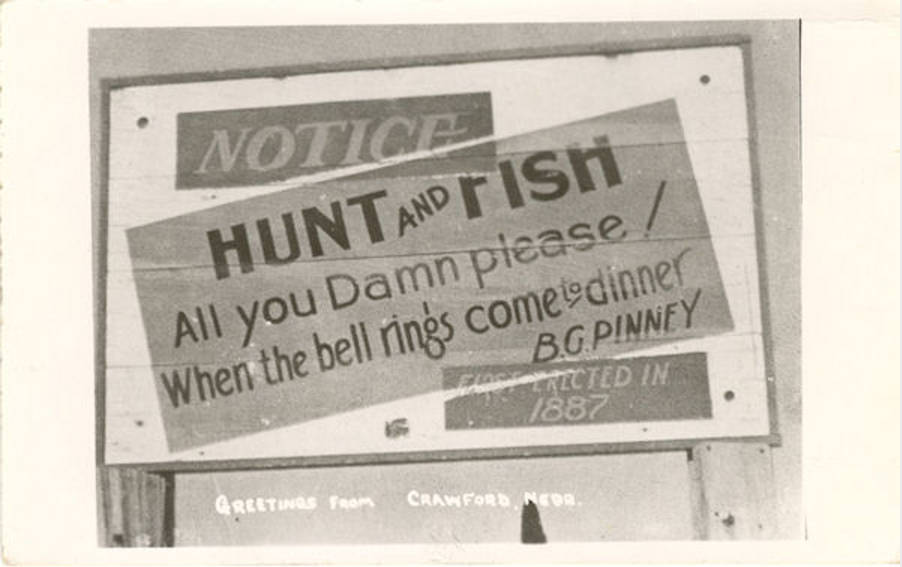
This 4″ x 6″ black and white postcard shows the now-famous sign that was erected at the entry of Pinney Ranch along White River in Dawes County. It reads, “Notice: Hunt and Fish all you Damn please! When the bell rings come to dinner. B.G. Pinney, First Erected in 1887.” Just below the sign the postcard reads “Greetings from Crawford, Nebr.” The ranch was owned by Bailey G. (“BG”) Pinney from 1864-1938.
This image is published by the Crawford Public Library, and owned by the Crawford Historical Society and Museum. They partnered together to digitize a number of images of the Crawford area in the late 1800s and early 1900s.
See this collection and many more on the Nebraska Memories archive!
The Nebraska Memories archive is brought to you by the Nebraska Library Commission. If your institution is interested in participating in Nebraska Memories, see http://nlc.nebraska.gov/nebraskamemories/participation.aspx for more information.
Throwback Thursday: Linotype NPG
We’re back with another #ThrowbackThursday!
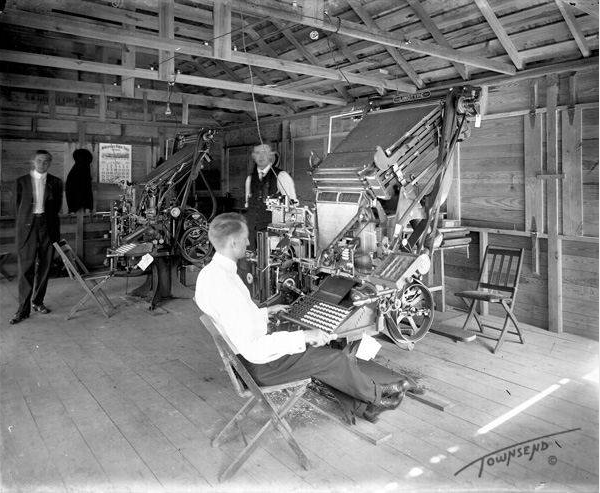
This 8” x 10” glass plate negative was taken in June of 1915, as shown by the calendar in the back of the room advertising the Nebraska State Fair in Lincoln. The negative shows off a wooden room with two linotype machines, one currently in use.
This image is published and owned by Townsend Studio, which has been in continuous operation since its foundation in 1888 in Lincoln, Nebraska. The studio holds a collection of glass plate and acetate negatives of early Lincoln and its residents.
See this collection and many more on the Nebraska Memories archive!
The Nebraska Memories archive is brought to you by the Nebraska Library Commission. If your institution is interested in participating in Nebraska Memories, see http://nlc.nebraska.gov/nebraskamemories/participation.aspx for more information.
New Book Now Available on BARD!

The “The Battle of the Little Bighorn” by Mari Sandoz, introduction by Elaine Marie Nelson, is now available on cartridge and for download on BARD, the Braille and Audio Reading Download service. BARD is a service offered by the Nebraska Library Commission Talking Book and Braille Service and the National Library Service for the Blind and Print Disabled at the Library of Congress.
Mari Sandoz’s beautifully written account of the battle in which General George Armstrong Custer staked his life and lost it reveals on every page the author’s intimate knowledge of her subject. The character of the Sioux, the personality of Custer, the mixed emotions of Custer’s men, the plains landscape all emerge with such clarity that the reader is transported to that spring in 1876 when the Army of the Plains began its fateful march toward Yellowstone. The background of the tragedy is here: the history of bad blood and broken treaties between the Indigenous nations and the United States, the underlying reason for Custer’s expedition and for the convocation of Indians on the Little Bighorn that particular year. Sandoz’s final book was the first analysis of Custer’s motives and political ambitions to shed light on an old mystery that was hotly disputed by the general’s admirers. Historian Elaine Marie Nelson introduces this iconic work to a new generation and details the long, challenging road this book took to publication. Sandoz raced against time to complete the volume while undergoing cancer treatments, and the book was published just three months after her death. “The Battle of the Little Bighorn” is widely considered the apex of her writing.
“Mari Sandoz’s beautifully written account of the battle in which General George Armstrong Custer staked his life in 1876-and lost it-reveals on every page the author’s intimate knowledge of her subject. Historian Elaine Marie Nelson introduces this iconic work to a new generation.”
—Bison Books
TBBS borrowers can request the “The Battle of the Little Bighorn,” DCB02003 or download it from the National Library Service BARD (Braille and Audio Reading Download) website. If you have high-speed internet access, you can download books to your smartphone or tablet, or onto a flash drive for use with your player. You may also contact your reader’s advisor to have the book mailed to you on cartridge.
#BookFaceFriday “Miss Morissa” by Mari Sandoz
We’ve struck gold this #BookFaceFriday!
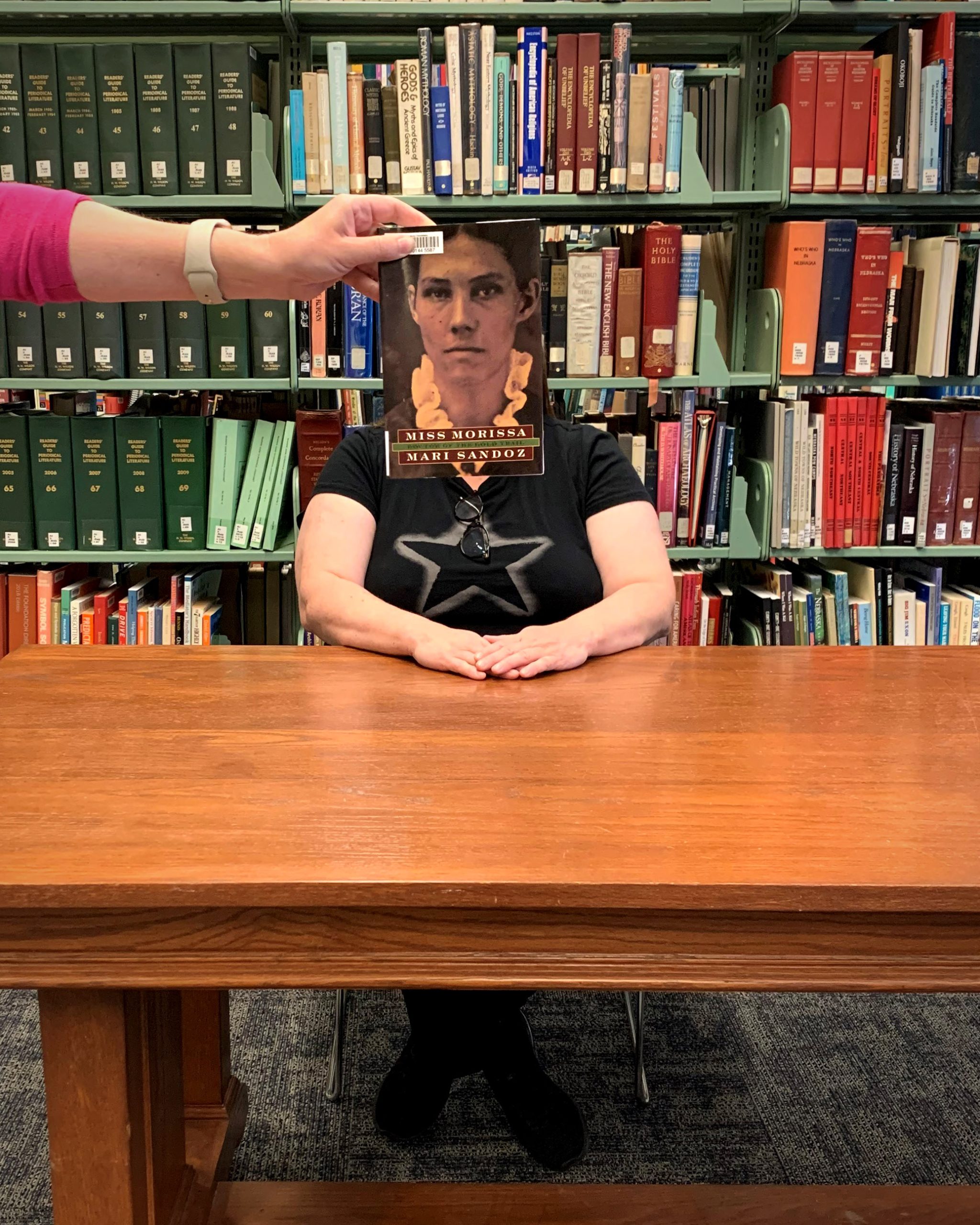
This week’s #BookFace is “Miss Morissa: Doctor of the Gold Trail” by Nebraskan author Mari Sandoz; it tells the story of a young pioneering woman doctor on the Nebraska frontier in the 1870’s as rumors of gold strikes begin to spread. This dramatic and moving historical fiction novel is available as a part of our Book Club Kit collection, along with eight other books written by Mari Sandoz.
“Beautifully written and full of striking images and masterful descriptions.”
—New York Times
This week’s model is model is our brand-new Computer Help Desk Support, Kim Ramsey! Kim recently transferred to the Library Commission from Nebraska Dept. of Health and Human Services. She reached 25 years of state employment in May and most of that time has been providing computer and technical support to state employees and other agencies. Kim lives in Lincoln with her husband Mike, and their two cats, Mei and Juno, who are their entertainment and sometimes their alarm clock. Science fiction is her favorite genre and she is currently re-reading “The Expanse” series by authors Daniel Abraham and Ty Franck. Gardening and reading are her stress relief, and garden/plant talk is probably the best way to distract her from whatever she’s supposed to be doing. If you get the chance, say hello to Kim!
Book Club Kits Rules for Use
- These kits can be checked out by the librarians of Nebraska libraries and media centers.
- Circulation times are flexible and will be based upon availability. There is no standard check-out time for book club kits.
- Please search the collection to select items you wish to borrow and use the REQUEST THIS KIT icon to borrow items.
- Contact the Information Desk at the Library Commission if you have any questions: by phone: 800/307-2665, or by email: Information Services Team
While we don’t have this particular title available through Nebraska OverDrive Libraries, we do have a significant number of the author’s other works available. You can find eleven books by Mari Sandoz, including the 2007 One Book One Nebraska selection “Crazy Horse” on Nebraska Overdrive! Libraries participating in the Nebraska OverDrive Libraries Group currently have access to a shared and growing collection of digital downloadable audiobooks and eBooks. 194 libraries across the state share the Nebraska OverDrive collection of 26,898 audiobooks, 36,794 ebooks, and 5,133 magazines. As an added bonus it includes 130 podcasts that are always available with simultaneous use (SU), as well as SU ebooks and audiobook titles that publishers have made available for a limited time. If you’re a part of it, let your users know about this great title, and if you’re not a member yet, find more information about participating in Nebraska Overdrive Libraries!
Love this #BookFace & reading? Check out our past #BookFaceFriday photos on the Nebraska Library Commission’s Facebook page!
Posted in Books & Reading, General
Tagged book club kit, Book Covers, bookfacefriday, Historical Fiction, libraries, Mari Sandoz, Miss Morissa, Nebraska Author, Reading
Leave a comment
Throwback Thursday: New Moon
Happy #ThrowbackThursday, did you know there’s a new moon tonight?
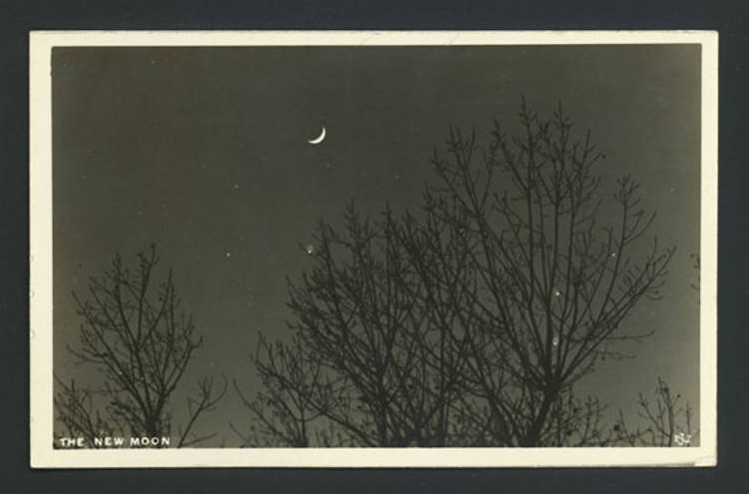
This black and white photograph on a postcard shows a photo of the night sky, taken by John Nelson, focusing on the new moon with stars through the treetops. The photographer’s initials appear in the lower right corner, with the J imposed on the N, and the title “The New Moon” is written in the lower left hand corner.
This image is owned and published by History Nebraska. They digitized content from the John Nelson and the J. A. Anderson collection. John Nelson came to Nebraska with his parents at the age of seventeen from Sweden. His photographs tell the story of small town life in Nebraska during the first decades of the twentieth century.
See this collection and many more on the Nebraska Memories archive!
The Nebraska Memories archive is brought to you by the Nebraska Library Commission. If your institution is interested in participating in Nebraska Memories, see http://nlc.nebraska.gov/nebraskamemories/participation.aspx for more information.
Throwback Thursday: Bookmobile at Nehawka Public Library
Let’s take a drive down memory lane this #ThrowbackThursday!
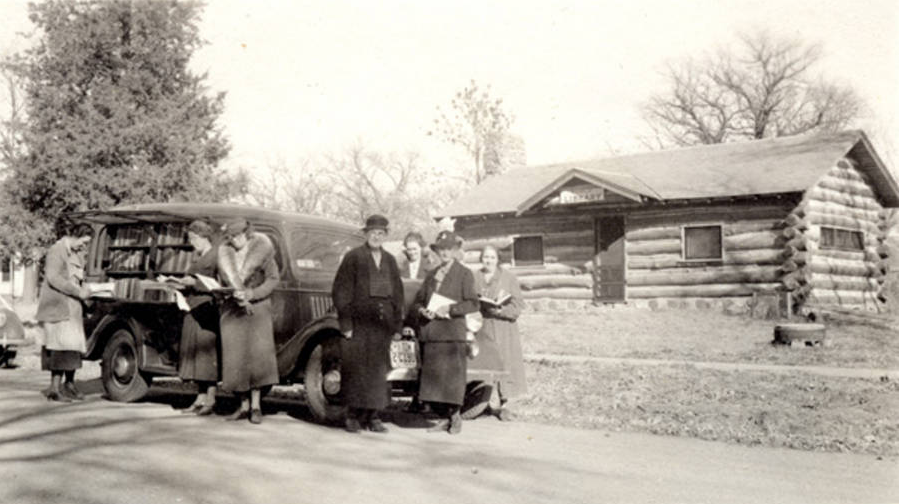
This 4-1/8″ x 2-1/2″ black and white photograph dated 11/09/1937 shows several woman standing beside a bookmobile parked on Maple Street outside of the log cabin building of Nehawka Public Library, which continues to serve as a library to this day. The panel doors on the truck are open, showing books on shelves inside, and several of the woman are either reading or posing with a book. Among the woman are Isadore Sheldon Tucker on the far left and Evelyn Wolph on the far right. Isadore Sheldon Tucker’s father built Sheldon General Store in 1888 and Miss Wolph was a long time 4-H leader in Cass County.
This image is published by the Nebraska Library Commission. The collections include material on the history of libraries in the state of Nebraska, items from the 1930s related to the Nebraska Public Library Commission bookmobile, as well as items showcasing the history of Nebraska’s state institutions.
See this collection and many more on the Nebraska Memories archive!
The Nebraska Memories archive is brought to you by the Nebraska Library Commission. If your institution is interested in participating in Nebraska Memories, see http://nlc.nebraska.gov/nebraskamemories/participation.aspx for more information.
Nebraska Cookbook Available on BARD!
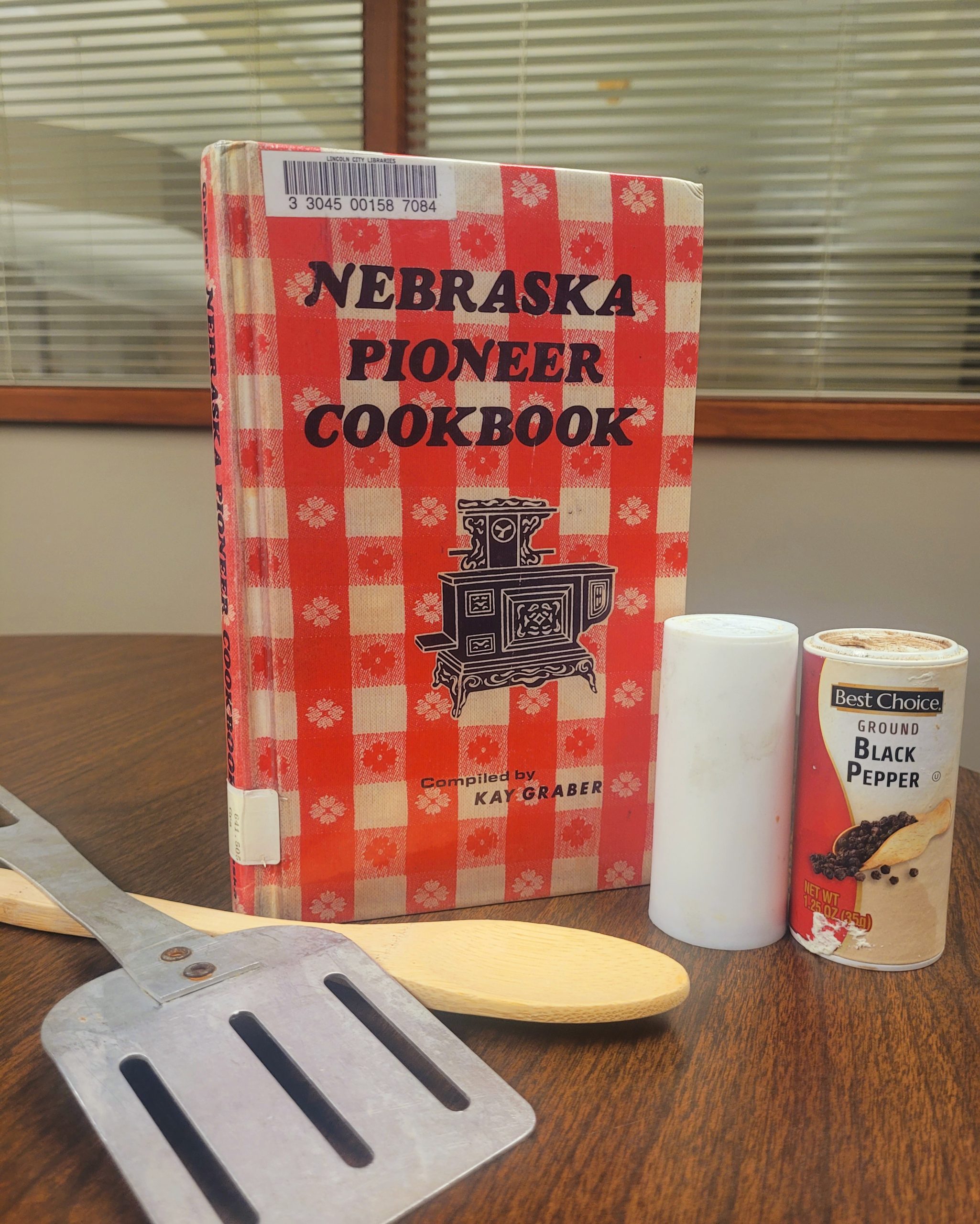
The “Nebraska Pioneer Cookbook” by Kay Graber is now available on cartridge and for download on BARD, the Braille and Audio Reading Download service. BARD is a service offered by the Nebraska Library Commission Talking Book and Braille Service and the National Library Service for the Blind and Print Disabled at the Library of Congress.
Nebraska’s pioneer food tells us much about how our forebearers lived, and in compiling this cookbook the aim was to achieve a balance between recipes and descriptions of the way of life the pioneers exemplified. Interspersed with the recipes are descriptions of food preparation and fare which tell us much about how our forebears lived—industriously, ingeniously, and sometimes very well. Although many of the recipes could not be duplicated in today’s kitchens, there is plenty here to challenge and stimulate amateur and professional chefs—and plenty of food for thought for social historians. Published by University of Nebraska Press.
TBBS borrowers can request the “Nebraska Pioneer Cookbook,” DCB02022 or download it from the National Library Service BARD (Braille and Audio Reading Download) website. If you have high-speed internet access, you can download books to your smartphone or tablet, or onto a flash drive for use with your player. You may also contact your reader’s advisor to have the book mailed to you on cartridge.
Throwback Thursday: Edwin Lyndon May Jr. and Dog
This #ThrowbackThursday is extra adorable!
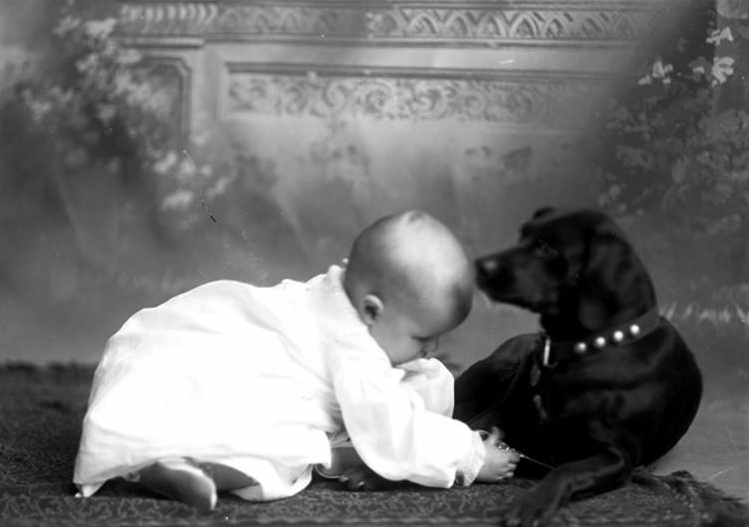
This 4″x6″ glass plate negative is a portrait photograph of Edwin Lyndon “Ned” May Jr. and a small dog. Edwin was born in Nebraska, December 15, 1904, and the photograph is dated October 16, 1906 making him just under two years old in the portrait. He was the son of Edwin and Jennette May, and according to the 1920 census, the family was living in Beatrice, Nebraska, where his parents ran a hotel. Later in life Edwin married Evelyn Johnson on October 8, 1942, in Jackson County, Missouri. He died at the age of 89 on May 9, 1994, in Pierce, Nebraska.
This image is published as part of the Boston Studio Project collection, and is owned by both them and the Thorpe Opera House Foundation. The Boston Studio Collection consists of over 68,000 negatives that record life in and around David City, Nebraska from 1893 to 1979.
See this collection and many more on the Nebraska Memories archive!
The Nebraska Memories archive is brought to you by the Nebraska Library Commission. If your institution is interested in participating in Nebraska Memories, see http://nlc.nebraska.gov/nebraskamemories/participation.aspx for more information.

