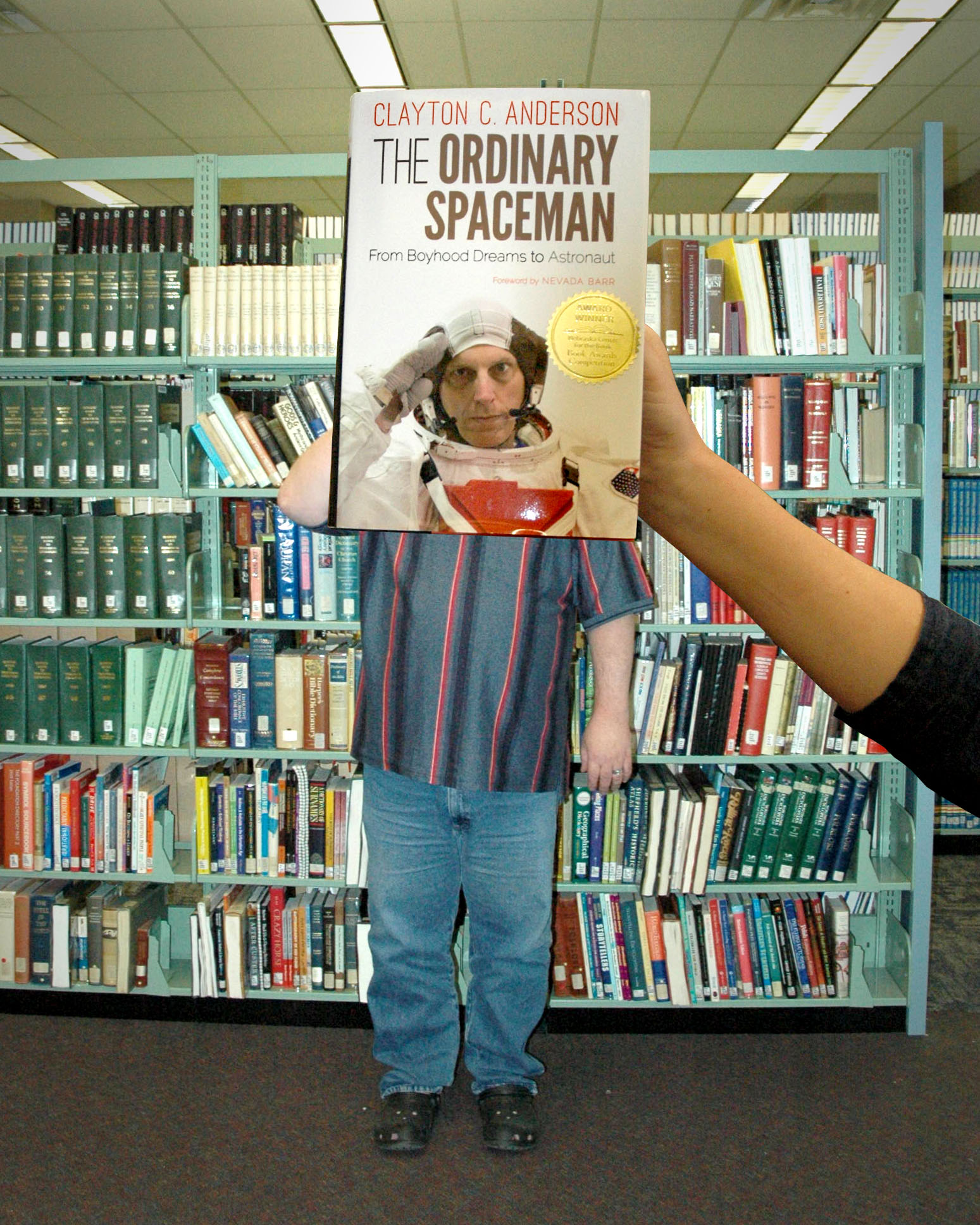
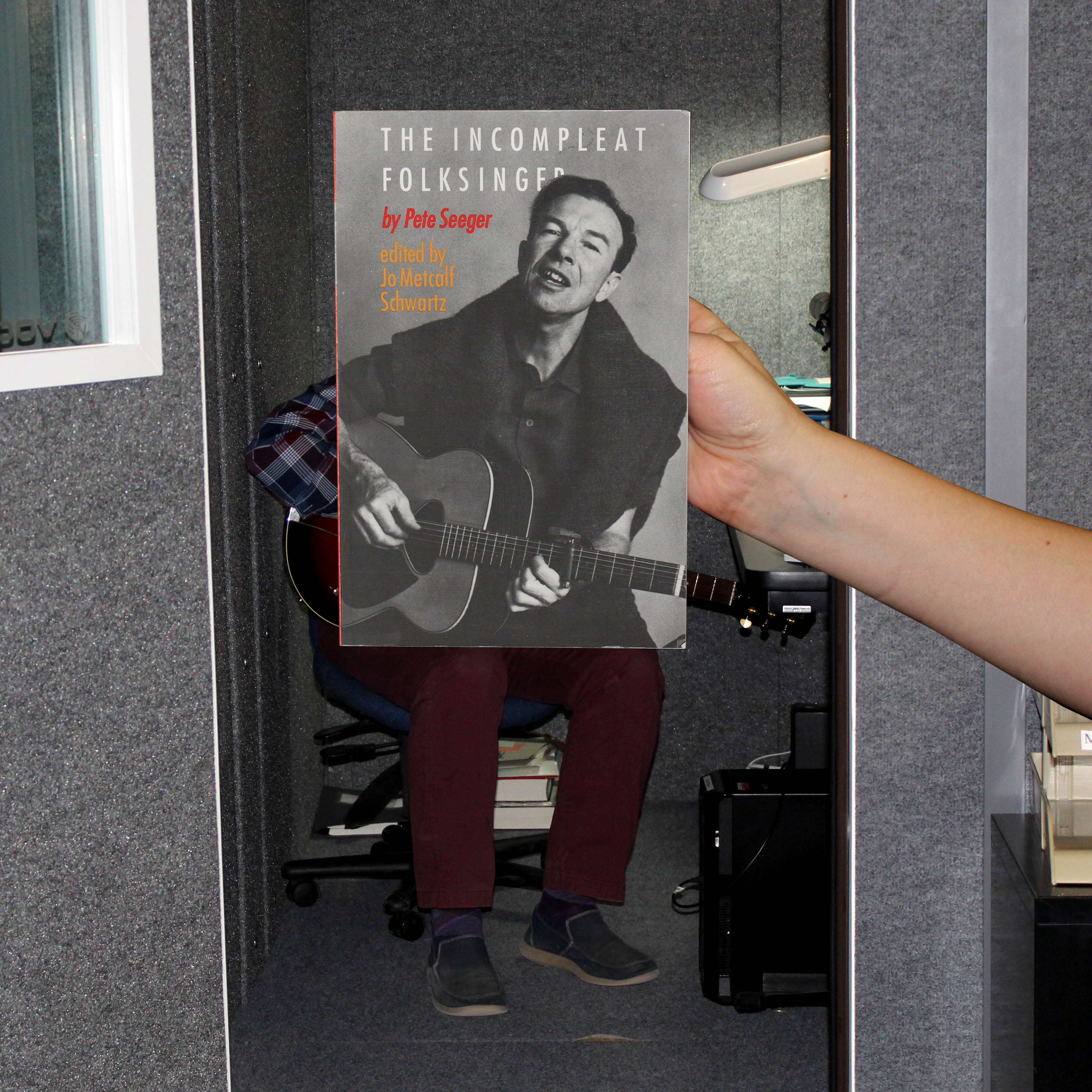
Tag Archives: University of Nebraska Press

Book Briefs: New University of Nebraska Press Books at the Nebraska Publications Clearinghouse

The Nebraska Publications Clearinghouse receives documents every month from all Nebraska state agencies, including the University of Nebraska Press (UNP).  UNP books, as well as all Nebraska state documents, are available for checkout by libraries and librarians for their patrons.

Here are the UNP books the Clearinghouse received in September and October, 2025:

Daddy Issues: Stories, by Eric C. Wat. Series: Zero Street Fiction.

Winner of the Barbara DiBernard Prize in Fiction.

Daddy Issues is a collection of moving and complex—yet simply and directly told—stories of queer Asian American experiences in Los Angeles. In many of these stories, the protagonists are artists and writers and other creative thinkers living on the fringe of survival, attempting to align a life of the imagination with the practical considerations of career, income, and family: a gay father who hasn’t come out to his young son; a social worker, numbed by the destitution of his clients, who finds himself lost in self-destruction; a trans man who returns home to a father with dementia to help his family pack as they are pushed out by gentrification; a husband who can only stand aside as his wife heals from a miscarriage; and a broke writer who learns to love his stories again.

The stories in Daddy Issues offer different contemplations on solitude—the good and the bad of it. Ultimately, this collection by Eric C. Wat is full of hope, and it shows how we can find the connections we need once we allow ourselves to become vulnerable.

Death Does Not End at the Sea, by Gbenga Adesina. Series: The Raz/Shumaker Prairie Schooner Book Prize in Poetry.

Winner of the Raz/Shumaker Prairie Schooner Book Prize in Poetry

In Gbenga Adesina’s groundbreaking debut book of poems, a defiant and wise exploration of exile, voyages, and spiritual odysseys, we encounter figures embarking on journeys haunted by history—a son keeps dreaming he carried his dead father across the sea; a young Black father, tired of fear and breathlessness, travels with his son in search of the ghost of James Baldwin—to Paris, the south of France, Turkey, and Senegal to investigate his ancestral roots; and finally, a group of immigrants on small boats in the middle of the Mediterranean Sea sing in order not to drown, in a stunning sequence that invokes the middle passage. In a lyrical voice at once new and surprisingly ancient, Adesina’s Death Does Not End at the Sea explores the complexity of elusive citizenship, an immigrant’s brokenhearted prayer for a new beginning, a chorus of elegies, and a cosmic love song between the living and the dead.

Dreams of a Young Republic, by John J. Harney. Series: Studies in Pacific Worlds.

The Congregation of the Mission, a Catholic order known as the Vincentians after their founder Saint Vincent de Paul, began missionary work in China in 1699. First run by French priests and nuns, a large vicariate in the south of China was taken over by American priests in 1921. French envoys of nineteenth-century imperialism had given way to American priests who ascribed to an idealized vision of a modern democratic China. For the Americans, China was a dream: a place liberated from centuries of imperial orthodoxy, a nascent democracy, a country that would forever be free and democratic—and thus one that would inevitably be capitalist and more friendly to Catholicism.

In Dreams of a Young Republic John J. Harney examines the perceptions and expectations of this group of American Catholic missionaries between the 1911 revolution that created the Republic of China and the communist revolution of 1949 that led to the collapse of that republic on the Chinese mainland. The Vincentians experienced warlordism, Nationalist leader Chiang Kai-shek’s partial unification of the country, Japanese invasion during World War II, and communist revolution. Through all this they clung to a vision of a free, democratic China friendly to the West. As Harney contextualizes the Vincentians’ observations and desires, he provides insight into the China that came to be and offers a history of a Sino-American relationship with much deeper roots than the antagonisms of the Cold War and the decades that have followed.

Our People Believe in Education: the Unlikely Alliance of the Miami Tribe and Miami University, by Cameron M. Shriver with Bobbe Burke. Series: Indigenous Education.

Across the United States, many institutions are striving to acknowledge and repair oppressive pasts and unequal presents, even as Indigenous communities are struggling to reclaim and revitalize the philosophies and knowledges of their elders. Our People Believe in Education explores the stories of the Miami Tribe of Oklahoma and Miami University to show how two organizations with almost nothing in common, aside from the name Miami, have collaborated to support Indigenous language and cultural revitalization. Founded in 1809, Miami University is a midsize public university in Oxford, Ohio, on land that once belonged to the Miami Tribe. The Miami Tribe of Oklahoma was, like many tribal nations, forcibly removed from its homelands and is now headquartered in northeast Oklahoma.

Cameron M. Shriver and Bobbe Burke provide a reflective examination of why a relationship developed between the two entities despite significant geographical and ideological hurdles, and how that partnership has evolved since 1972, when Myaamia chief Forest Olds first visited Miami’s university campus in his nation’s homeland. This intimate history of a tribe and a university struggling to reconcile colonial education with Indigenous survival offers a jumping-off point for new conversations in, and between, these two spheres.

Raising the Redwood Curtain: Labor Landscapes and Community Violence in a Pacific Littoral, by Michael T. Karp. Series: Studies in Pacific Worlds.

Raising the Redwood Curtain explores how shifting land use practices and exploitative labor patterns spurred by the colonial settlement of the Pacific world influenced the genocide of California’s Native people, anti-Asian campaigns, and the oppression of eastern European immigrant workers. By carefully examining these local developments, it explores how global capitalism fundamentally reordered labor patterns and social relations.

By analyzing the history of three episodes of labor and racial violence in Humboldt County, California, Michael T. Karp spans nearly a century in a detailed examination of the causes and interconnections between the Indian Island massacre of 1860, the expulsion of Chinese and Japanese people from the county between 1885 and 1906, and the killing and persecution of eastern Europeans during the Great Lumber Strike of 1935.

Regional labor and land use patterns shaped these events, but so did global economic developments and environmental change, connecting disparate acts of racial violence across time. By bringing together new scholarship on the American West, environmental history, and the Pacific world, Michael T. Karp illustrates the importance of considering communities on the periphery to better understand the violence that defined the colonial settlement of North America.

Twinless Twin: a Novel, by Dean Marshall Tuck. Series: The James Alan McPherson Prize for the Novel.

The James Alan McPherson Prize for the Novel, AWP Award Series Winner.

Twinless Twin finds a family maimed by a troubled, enigmatic son, whose unspeakable actions leave the family reeling, torn between moving on and searching for answers. A twin who survives their sibling twin may sometimes be plagued with lifelong feelings of loss, guilt, and even a strange sense of urgency—a need to live two lives in one. In this story, the tragedy of the lost child reverberates through the surviving sibling and ripples through the rest of the family and beyond.

Set largely in twentieth-century America in the foothills of an unnamed mountain, this insular landscape breeds rumor, legend, desperation, daydreams, and a mystery that runs deeper than the family who inhabits its woods. Raising questions regarding culpability in the face of tragedy and the responsibilities of those who remain after a family has been splintered, Twinless Twin ultimately asks: What must be done to salvage the family, their reputation, and their homeplace?

Wolves in Shells, by Kimberly Ann Priest. Series: The Backwaters Prize in Poetry.

Winner of the Backwaters Prize in Poetry.

Wolves in Shells is a modern monomyth telling the story of a woman navigating homelessness, trauma, and memories as she attempts to leave a violent partner. Reflecting on her familial heritage, this survivor grapples with the way she, the women of her history, and her daughter have been conditioned to accommodate the demands of the male ego and predation. Reflective, clear-eyed, and incisive, the poems of Wolves in Shells feature O-Six, a wolf born into the rewilding territory of Yellowstone National Park in the 1990s who serves as a metaphor for women who must cope with violence and survive on their own. Drawing from Gaston Bachelard’s quote “wolves in shells are crueler than stray ones,” the narrative considers how survival requires a balance of protectiveness, risk, trust, and escape.

**Pictures and Synopses courtesy of University of Nebraska Press.

Posted in Books & Reading, General, Information Resources, What's Up Doc / Govdocs | Tagged , , , , , | Leave a comment

#BookFaceFriday “George Norris, Going Home: Reflections of a Progressive Statesman”

In order to form a more perfect #BookFace!

This past Wednesday, September 17th, was Constitution Day, celebrating the ratification of the U.S. Constitution in 1787. What better way to celebrate here in Nebraska than highlighting our own contributor to the Constitution, Senator George Norris? Senator George William Norris was the main author and sponsor of the Twentieth Amendment to the Constitution (the “Lame Duck” amendment), which shortened the time period between the November election and the date when the newly-elected officials take office. He was also instrumental in the creation of the Tennessee Valley Authority and the Rural Electrification Act. Closer to home, he secured the funding for the Tri-County Project that helped create the Kingsley Dam and Lake McConaughy, and he led the conversion of Nebraska’s legislature from a bicameral to unicameral system, which remains the only one-house legislative system in the United States. Check out “George Norris, Going Home: Reflections of a Progressive Statesman by Gene A. Budig and Don Walton (Bison Original, 2013), with a preface by George W. Norris, is one of many titles about Senator Norris available in the Nebraska Library Commission’s government documents collection, as well as Nebraska Overdrive Libraries.

One of the most prestigious academic presses in the country, the University of Nebraska Press sends us around 75 select titles per year, which are added to the Nebraska Publications Clearinghouse, also known as the Nebraska State Documents Collection. This collection is comprised of publications issued by Nebraska state agencies, ensuring that state government information is available to a wide audience and that those valuable publications are preserved for future generations. University of Nebraska Press books, as well as all state documents, are available for checkout by libraries and librarians for their patrons.

“A remarkable account of the life of one of the most influential politicians in the last hundred years. . . . His extraordinary achievements for all American people offer a rare glimpse at what can be achieved when people and politicians put aside narrow interests. . . . Budig and Walton have produced a short and powerful document that draws on the reflections of the Senator and others who knew him at the end of his life. It would serve us well if a copy of this book were in every school library across the country.”

—Richard Sterling, former president of the National Writing Commission

This title can also be found as a eBook on Nebraska OverDrive Libraries. Libraries participating in the Nebraska OverDrive Libraries Group currently have access to a shared and growing collection of digital downloadable audiobooks and eBooks. 194 libraries across the state share the Nebraska OverDrive collection of 26,898 audiobooks, 36,794 ebooks, and 5,133 magazines. As an added bonus it includes 130 podcasts that are always available with simultaneous use (SU), as well as SU ebooks and audiobook titles that publishers have made available for a limited time. If you’re a part of it, let your users know about this great title, and if you’re not a member yet, find more information about participating in Nebraska Overdrive Libraries!

Love this #BookFace & reading? Check out our past #BookFaceFriday photos on the Nebraska Library Commission’s Facebook page!

Posted in Books & Reading, General, What's Up Doc / Govdocs | Tagged , , , , , , , , , | Leave a comment

Book Briefs: New University of Nebraska Press Books at the Nebraska Publications Clearinghouse

The Nebraska Publications Clearinghouse receives documents every month from all Nebraska state agencies, including the University of Nebraska Press (UNP).  UNP books, as well as all Nebraska state documents, are available for checkout by libraries and librarians for their patrons.

Here are the UNP books the Clearinghouse received in July and August, 2025:

Autobiography of a Kiowa Indian, by Charles E. Apekaum. Series: American Indian Lives.

Born during the final years of the Kiowa, Comanche, and Apache Reservation, Charles E. Apekaum, grandson of Kiowa chief Stumbling Bear, served as the principal interpreter for the Santa Fe Laboratory of Anthropology field expedition in 1935. Educated, bilingual, and world traveled, Apekaum’s services as a translator were sought by anyone who dealt with the Kiowa Indian Agency personnel, politicians, and scholars.

The following year, Apekaum traveled throughout Oklahoma with anthropologist Weston La Barre and ethnobotanist Richard Evans Schultes, serving as their liaison as they documented the peyote religion. During off days, Apekaum narrated his life story to La Barre, recounting the final days of the reservation, allotment, the early days of Anadarko, Oklahoma, his seventeen years attending boarding schools, service in the navy during World War I and then as a state game warden, his work translating for politicians, and his involvement in the Native American Church. La Barre never published the manuscript, which contains rich details about intertribal variants of the sacred peyote rite as well as about Apekaum’s life experience.

In Autobiography of a Kiowa Indian Benjamin R. Kracht presents Apekaum’s autobiography for the first time. This eyewitness account is an important addition to Native American life narratives and the reconstruction of Kiowa cultural, social, and religious life in the late nineteenth and early twentieth centuries in the southern Great Plains.

Character Witness: a Memoir, by Jason Brown. Series: American Lives.

When Jason Brown’s mother is arrested for stealing $38,000, he agrees to serve as a character witness for her, hoping to keep her out of prison.

Thus begins Character Witness, a memoir, a chronicle of a mother’s struggle with mental illness, addiction, and poverty, and an inquiry into whether we can escape the legacy of the past. Brown realizes that his troubles as a young man mirrored his mother’s, and as he chronicles how sexual abuse can pass down through generations—from father to daughter, and later from mother to son—he begins to look for answers about whether people can change.

Brown and his mother share a difficult history, but they also share a common sense of humor and a sense of the absurd. More than simply a recovery narrative, Character Witness centers the necessity of staying with loved ones even in their worst moments.

The Earth is Evil, by Steven Swarbrick. Series: Provocations.

The Earth Is Evil examines the connection between subjectivity and lack, arguing for a destituent ecology that sees lack as the universalist core of social, political, and environmental struggles. Steven Swarbrick maintains that psychoanalysis does not simply help us integrate our desires into a constituency of multispecies actors. Instead, psychoanalysis destitutes our fantasies of ecological and psychic wholeness. That destitution, he argues, is the unconscious source of our enjoyment. Exploring films by Lars von Trier, Kelly Reichardt, Daniel Kwan, and Daniel Scheinert, among others, and intervening in trenchant debates about negativity and desire, Swarbrick urges a return to the existentialist subject of lack against the flattening of subjectivity by ecocriticism. The Earth Is Evil is a vigorous attempt to construct a leftist environmental movement in dialogue with the most radical currents of critical theory.

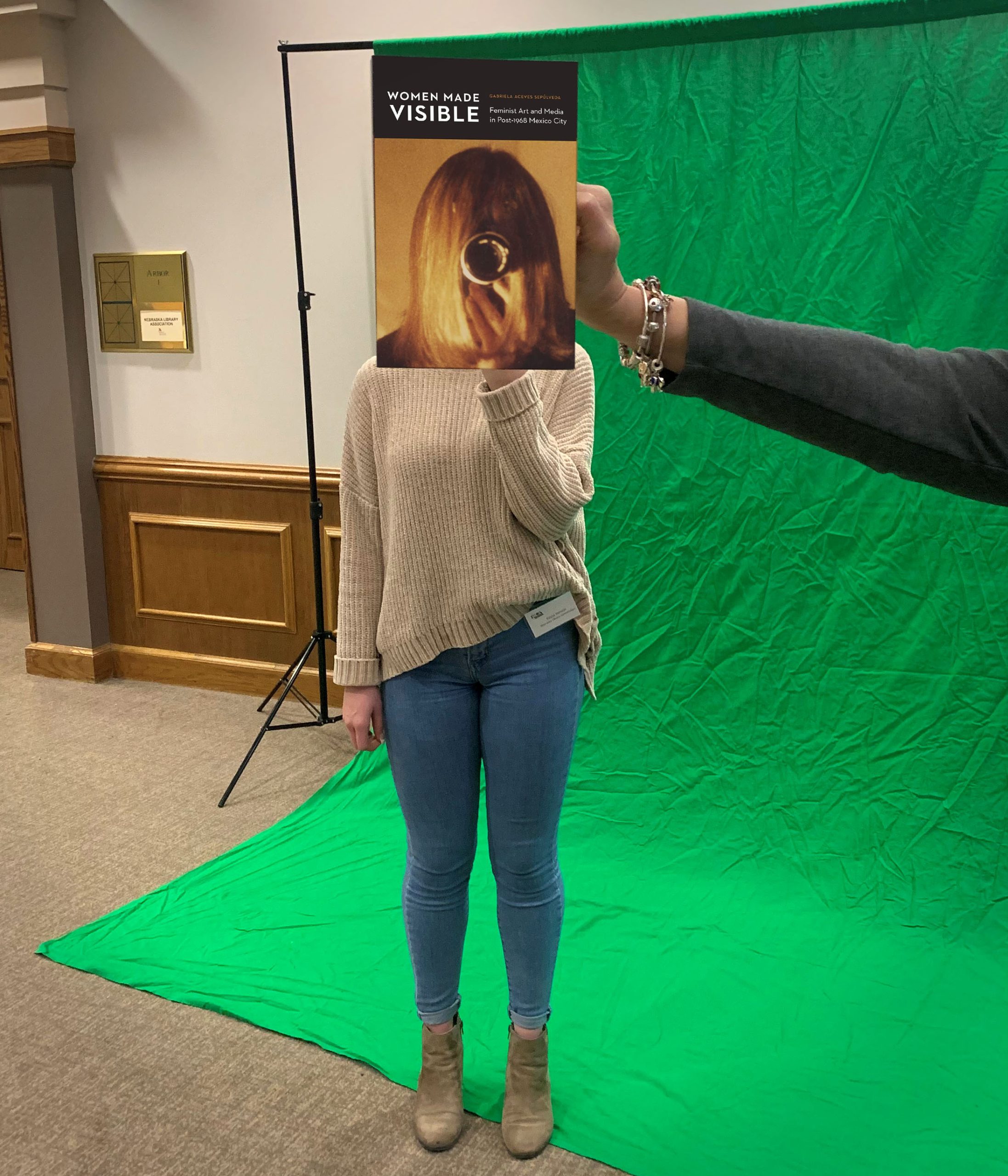
Freethinkers and Labor Leaders: Women, Social Change, and Politics in Modern Mexico, by María Teresa Fernández Aceves, translated by Tanya Huntington. Series: Confluencias.

The interpretation of the revisionist historiography of the Mexican Revolution (1910–17) has focused primarily on revolutionary leaders who were men, pushing the heroines of the war to the sidelines. If women happened to be mentioned, they appeared only as symbols, not as social agents. However, the role of the Adelitas, the Cristeras, the Hijas del Anáhuac, and the women of the Ácrata Group were essential to the revolution. In Freethinkers and Labor Leaders María Teresa Fernández Aceves tells the stories of five militant feminist women who aided in the creation of a modern culture in revolutionary and postrevolutionary Mexico and, in some ways, Latin America as a whole: Belén de Sárraga Hernández (1872–1950), Atala Apodaca Anaya (1884–1977), María Arcelia Díaz (1896–1939), María Guadalupe Martínez Villanueva (1906–2002), and María Guadalupe Urzúa Flores (1912–2004).

These five women formed part of two cultural generations that participated together in the Mexican Revolution, in the consolidation of state cooperative institutions, and in the antiestablishment and dissident politics that evolved in the late 1940s. Through these social processes and their struggles as women, mothers, and workers, these women fought for secular education, labor rights, and the civil and political rights of women, redefining cultural and social constructions. Based on original, pathbreaking research, Freethinkers and Labor Leaders demonstrates how five women transformed Latin American society’s ideas of citizenship, femininity, masculinity, and politics.

Invitation: Stories, by Mi Jin Kim. Series: The Raz/Shumaker Prairie Schooner Book Prize in Fiction.

Winner of the Raz/Shumaker Prairie Schooner Book Prize in Fiction.

In Invitation, men and women try and fail to connect to the people they want to be with. As they remember the first people who dominated their lives—parents, best friends, cousins, crushes—they find themselves repeating old patterns. A boy shares seemingly disturbing details about his mother’s disappearance with an aloof tutor. A man stalks an ex-girlfriend but finds her missing. A woman wakes up in an empty apartment—and to every mother’s worst nightmare. When a callous young man penetrates the bell jar of an elderly couple’s quiet life, their live-in assistant learns a cruel lesson about loyalty.

The Perils of Girlhood: a Memoir in Essays, by Melissa Fraterrigo. Series: American Lives.

Like many girls growing up in the eighties and nineties, Melissa Fraterrigo leaned on popular culture to transition from childhood to adolescence and beyond. Judy Blume told stories about girls embracing their imperfections; Madonna encouraged bold moves. But Fraterrigo’s experiences with dating and attempts to refashion her body through diet and exercise left her feeling far from empowered. It wasn’t until Fraterrigo became a mother to twin daughters and they began their own self-criticisms that she questioned how she might help them navigate their own girlhoods.

A handsome swim coach’s advances, an anxious daughter soothing her father’s temper, the history of Mace, and the joy of female friendship: these are some of the memories that shape Fraterrigo’s worldview as an adult. Written with lyricism and insight, The Perils of Girlhood provides a reckoning and a reclamation. And while these personal narratives developed from Fraterrigo’s desire to guide her daughters, their universal truths compel us to consider how best to bring all of our daughters into the future.

Recovering Ancestors in Anthropological Traditions, edited by Regna Darnell and Frederic W. Gleach. Series: Histories of Anthropology Annual

Recovering Ancestors in Anthropological Traditions, volume 15 of the Histories of Anthropology Annual, focuses on themes of individual scholars and national developments, with each specific case building toward an understanding of an international discipline. Similar to the cultures that anthropologists study, anthropology’s four-field discipline contains myriad practices, theories, and methodologies that are often divergent, contradictory, and associated with nationally based schools of thought, contributing to a vital and diverse global discipline.

This volume emphasizes the challenges international scholars face as they engage both local and global movements. Several European traditions are represented, including two chapters adding to the body of work on Portugal from previous volumes in the series. North American traditions are well represented, including a collection of works on Nancy Lurie. Also included is an important examination of the collection of human skeletal remains in Argentina, presented in English for the first time. Readers will find both new information and new ways of understanding this complex history.

Ties That Bind: People and Perception in U.S. and Korean Transnational Relations, 1905–1965 by Hannah Kim. Series: Studies in Pacific Worlds

Ties That Bind narrates five stories of how a transnational community helped shape American perceptions and understandings of Korea and Koreans, from a time when only a small number of Americans knew anything about Korea to a time when most Americans were aware of Korea’s geopolitical significance. Three of the moments took place when Korea was a colony of Japan: the so-called Conspiracy Case in 1911, the independence movement of 1919, and the efforts to recognize Korean independence during World War II. The other two moments transpired in the context of the Cold War, when Korean orphans and Korean exchange students came to the United States in the 1950s.

In these five stories, the interplay of people, perceptions, and official and unofficial policy can be seen in the work of people who tried to influence U.S. and Korean relations by binding Americans and Koreans through shared values and experiences. They did so by portraying Koreans as Christian converts, as supporters of democracy and democratic ideals, and as people embracing Western or American cultural norms. The actors in this book did not always succeed in their goals, but through their endeavors, they facilitated policy discussions, forged ties between the United States and Korea, and began to break down cultural barriers between Koreans and Americans.

Top Gun Performance: From the Cockpit to the Boardroom, by Ted Carter and Jack A. Stark.

Top Gun Performance can help readers learn to achieve happiness, success, and health in school, sports, work, and life. Ted Carter, a Top Gun graduate, and Jack Stark, a performance psychologist and psychotherapist, have observed, commanded, and treated the behaviors of thousands of individuals. Both understand the need to pursue a specific lifestyle to perform at the very top. Both are tuned in to what people want out of life, what is getting in their way, and what they can do to overcome the mental and physical obstacles keeping them from achieving a Top Gun performance in all areas of their lives.

Carter and Stark use their personal and professional histories to teach readers the psychological and mental performance tools they can use on a daily basis to meet the challenges they face. The authors share behind-the-scenes stories, techniques, and analysis to provide readers with a blueprint for building their own exceptional performance. Reviewing their careers in helping other people obtain successful outcomes, Carter and Stark offer a program readers can use in their own lives.

**Pictures and Synopses courtesy of University of Nebraska Press.

Posted in Books & Reading, General, Information Resources, What's Up Doc / Govdocs | Tagged , , , , , | Leave a comment

#BookFaceFriday “Old Jules Country” by Mari Sandoz

Oh give me a home where the #BookFaces roam!

If you enjoy sunsets and long walks on the beach, this week’s #BookFace is for you. Actually, if you you enjoy the Sandhills, settlers literature, and slightly obscure writings of Nebraska authors, then this #Bookface is for you. Check out “Old Jules Country: A Selection from “Old Jules” and Thirty Years of Writing after the Book was Published” by Mari Sandoz (University of Nebraska Press, 1965) which includes selections from six volumes of Sandoz’s Great Plains Series The Beaver Men, Crazy Horse, Cheyenne Autumn, The Buffalo Hunters, The Cattlemen, and Old Jules and from her study of a great people, These Were the Sioux, also included are two essays, “The Lost Sitting Bull” and “The Homestead in Perspective,” a Cheyenne prayer and two sketches unavailable elsewhere—”Snakes” and “Coyotes and Eagles”—complete this collection. This title is part of the Nebraska Publications Clearinghouse, which receives documents every month from all Nebraska state agencies, including the University of Nebraska Press (UNP). UNP books, as well as all Nebraska state documents, are available for checkout by libraries and librarians for their patrons.

“This anthology provides a stimulating sampling for readers not yet acquainted with Sandoz’s work. For her extensive following, it offers the opportunity for a satisfying reappraisal of her overall achievement.”

University of Nebraska Press

Love this #BookFace & reading? We suggest checking out all the titles available for book clubs at http://nlc.nebraska.gov/ref/bookclub. Check out our past #BookFaceFriday photos on the Nebraska Library Commission’s Facebook page!

Posted in Books & Reading, General | Tagged , , , , , , , , , | Leave a comment

#BookFaceFriday “Shane” by Jack Schaefer

Like a #BookFace Cowboy!

Riding out on a horse in a star-spangled rodeo, this week’s #BookFaceFriday is sure to get you in the mood for the Nebraska State Fair or your county rodeo! “Shane” by Jack Schaefer (University of Nebraska Press, 1984) is a classic teen and YA western revolving around the Starrett family and the titular Shane’s arrival on their farm and how he shapes their lives. It’s available as an eBook and audiobook on through Nebraska OverDrive Libraries and is also available as a book club kit through the Nebraska Library Commission. The novel is also part of the Nebraska Publications Clearinghouse, which receives documents every month from all Nebraska state agencies, including the University of Nebraska Press (UNP). UNP books, as well as all Nebraska state documents, are available for checkout by libraries and librarians for their patrons.

“If you read only one Western in your life, this is the one.”

(Roland Smith, author of the Peak Marcello adventure novels)

Libraries participating in the Nebraska OverDrive Libraries Group currently have access to a shared and growing collection of digital downloadable audiobooks and eBooks. 194 libraries across the state share the Nebraska OverDrive collection of 26,898 audiobooks, 36,794 ebooks, and 5,133 magazines. As an added bonus it includes 130 podcasts that are always available with simultaneous use (SU), as well as SU ebooks and audiobook titles that publishers have made available for a limited time. If you’re a part of it, let your users know about this great title, and if you’re not a member yet, find more information about participating in Nebraska Overdrive Libraries!

Book Club Kits Rules for Use

Contact the Information Desk at the Library Commission if you have any questions: by phone: 800/307-2665, or by email: Information Services Team

  1. These kits can be checked out by the librarians of Nebraska libraries and media centers.
  2. Circulation times are flexible and will be based upon availability. There is no standard check-out time for book club kits.
  3. Please search the collection to select items you wish to borrow and use the REQUEST THIS KIT icon to borrow items.
  4. Contact the Information Desk at the Library Commission if you have any questions: by phone: 800/307-2665, or by email: Information Services Team

Love this #BookFace & reading? We suggest checking out all the titles available for book clubs at http://nlc.nebraska.gov/ref/bookclub. Check out our past #BookFaceFriday photos on the Nebraska Library Commission’s Facebook page!

Posted in Books & Reading, General | Tagged , , , , , , , , , , , | Leave a comment

Book Briefs: New University of Nebraska Press Books at the Nebraska Publications Clearinghouse

The Nebraska Publications Clearinghouse receives documents every month from all Nebraska state agencies, including the University of Nebraska Press (UNP).  UNP books, as well as all Nebraska state documents, are available for checkout by libraries and librarians for their patrons.

Here are the UNP books the Clearinghouse received in May and June, 2025:

At the Corner of Past and Future: a Collection of Life Stories, by Pamela Carter Joern.

With keen observation and deep reflection, Pamela Carter Joern probes her life. No topic is too small or too sacred, from gutting chickens to Gaudí’s cathedral. Through a range of experiences—growing up in rural Nebraska, raising children, surviving cancer, becoming a writer—she explores the tenuous link between memory and truth. Joern displays a gift for mining wisdom through surprising connections, juxtaposing her father’s life to the discoveries of Isaac Newton or the writer’s task to the ancient art of alchemy. She weds philosophical insight and spiritual imagination and laces this amalgam with candor and wit, resulting in a work that is engaging, intimate, and illuminating.

Into the Void: Adventures of the Spacewalkers, by John Youskauskas and Melvin Croft. Series: Outward Odyssey: A People’s History of Spaceflight.

The world had been fascinated with astronauts and spaceflight since well before the first crewed launches in 1961, when Yuri Gagarin, Alan Shepard, and John Glenn became household names. But when Alexei Leonov of the Soviet Union exited his spacecraft in March of 1965, a new era in spaceflight began. And when Ed White, clad in his gleaming space suit with a large American flag on his left shoulder, eased himself outside his Gemini spacecraft later that year, Americans too had a new space hero. They also learned a new acronym: EVA, short for extravehicular activity, more commonly known as “spacewalking.”

Though few understood the tremendous risks White was taking in his twenty-two-minute space walk, Americans watched with immense pride and patriotism as White, tethered to Gemini 4, propelled himself around the spacecraft with a pressurized oxygen-fueled zip gun. But White’s struggle to fit his space-suited body back inside the claustrophobic Gemini spacecraft and close the hatch confirmed what NASA should have known: spacewalking wasn’t easy.

More than fifty years and hundreds of space walks later, the art of EVA has evolved. The first space walks, preparation for walking on the moon, intended to prove that humans could function in raw space inside their own miniature spacecraft—a space suit. After the end of the lunar program, both the Americans and Soviets turned their focus to long-duration flights on space stations in low Earth orbit, and space walks were crucial to the success of these missions. The construction of the International Space Station—the most sophisticated spacecraft to date—required hundreds of hours of work by spacewalkers from many countries.

In Into the Void John Youskauskas and Melvin Croft tell the unique story of those who have ventured outside the spacecraft into the unforgiving vacuum of space as we set our sights on the moon, Mars, and beyond.

Invisible Contrarian: Essays in Honor of Stephen O. Murray, edited by Regna Darnell and Wendy Leeds-Hurwitz. Series: Critical Studies in the History of Anthropology

In Invisible Contrarian Regna Darnell and Wendy Leeds-Hurwitz have assembled scholars to memorialize and celebrate the prescient vision and interdisciplinary contributions of the late Stephen O. Murray (1950–2019), who did pioneering research in ethnolinguistics and anthropology of gender and homosexuality. His socially relevant work continues to provide a cogent example of an emergent, forward-looking anthropology for the twenty-first century.

Murray’s wide-ranging work included linguistics, regional ethnography in Latin America and Asia, activism, history of anthropology in relation to social sciences, and migration studies.

Along with a complete list of his publications, Invisible Contrarian highlights Murray’s methodological innovations and includes key writings that remain little known, since he never pursued a tenured research position.  Murray’s significant, prolific contributions deserve not only to be reexamined but to be shared with contemporary and future audiences. Ideal both as a primer for those who have not yet read Murray’s work and as an in-depth resource for those already familiar with him, this volume demonstrates the wide-ranging accomplishments of a man who modeled how to be an independent scholar outside an academic position.

James Cowles Prichard of the Red Lodge: a Life of Science During the Age of Improvement, by Margaret M. Crump. Series: Critical Studies in the History of Anthropology

EIn James Cowles Prichard of the Red Lodge Margaret M. Crump offers the first in-depth biography of the early Victorian British scientist James Cowles Prichard (1786–1848). An intellectual giant in the developing human sciences, he was a pioneering psychiatric theorist in the formative years of the discipline and one of Europe’s leading anthropologists. With evocative detail, Crump draws readers into the social and cultural milieu of early nineteenth-century Bristol, a world of pre-scientific medicine and the emerging fields of anthropology and psychiatry.

As the century’s premier theorist of the common origin of all humanity, known as monogenism, Prichard asserted the affinity and equal capacity of all humans. Even though he was politically and socially conservative, Prichard worked behind the scenes to support abolitionism, and he advocated for the humane treatment of colonial British subjects. He challenged the rising tide of scientific racism starting to fester in the academic halls of Europe and the United States. He is also considered one of the pioneers of Celtic linguistics. His influential publications on neurological and psychological conditions called for the humane care and treatment of the mentally ill and mentally disabled and protection of their civil liberties. Born into changing, challenging times, during a revolution in British culture and at the threshold of modern science, Prichard fully embodied the Age of Improvement.

Prison Town: Making the Carceral State in Elmira, New York, by Andrea R. Morrell. Series: Anthropology of Contemporary North America

Elmira, a town of about twenty-six thousand people in central New York, is in some ways a typical town—with quiet, tree-lined residential streets, an art museum, local coffee shops, and a small college. The city, however, is best known as home to Elmira Correctional Facility and, until its closure in March 2022, the Southport Correctional Facility. Hundreds of locals have worked at the prisons, the town plays host to visitors of the incarcerated, and local medical institutions provide treatment to prisoners. The prisons and Elmira are inseparable.

In Prison Town Andrea R. Morrell illustrates the converging and shifting fault lines of race and class through a portrait of a prison town undergoing deindustrialization as it chooses the path of prison expansion. In this ethnography, Morrell highlights the contradictions of prison work as work that allows a middle-class salary and lifestyle but trades in other forms of stigma. Guards, prisoners, prisoners’ families, and meager amounts of money and care work travel through spaces of free and unfree via the porous borders between prison and town. As Morrell captures the rapid expansion of the carceral state into upstate New York from the perspective of a small city with two prisons, she demonstrates how the prison system’s racialized, gendered, and classed dispossession has crossed its own porous borders into the city of Elmira.

Rising Above: Language Revitalization in the Eastern Band of Cherokee Indians, by Benjamin E. Frey. Series: Many Wests

Today there are roughly two hundred first-language Cherokee speakers among the seventeen thousand citizens of the Eastern Band of Cherokee Indians in North Carolina. In 2019 the United Keetoowah Band, the Cherokee Nation, and the Eastern Band of Cherokee Indians declared a state of emergency for the Cherokee language.

In Rising Above Eastern Band Cherokee citizen Benjamin E. Frey chronicles his odyssey of being introduced to the Cherokee language with trepidation as a young adult and his eventual work revitalizing the Cherokee language in a Cherokee way. In the first book to examine the process of language shift and revitalization among this band, Frey explores the institutional, economic, and social factors that drove the language shift from Cherokee to English, interpreted through the lens of a member of the Eastern Band Cherokee community in conversation with other community members. Rising Above navigates Frey’s upbringing, the intricacies of language and relationships, the impact of trauma, and the quest for joy and healing within the community.

In addition to language documentation and preservation, Rising Above explores how to breathe new life into the language and community, using storytelling to discuss the Cherokee language, its grammatical components, and its embedded cultural ideologies alongside its interactions with broader American society.

Sacred Wonderland: The History of Religion in Yellowstone, by Thomas S. Bremer. Series: America’s Public Lands

ince its beginning in 1872, Yellowstone National Park has been an alluring destination with significance beyond its stunning mountain scenery, abundant wildlife, and the world’s largest collection of geysers and hot springs. Once deemed America’s “wonderland,” this national park has long been a repository of meanings for and aspirations of the American people. In Sacred Wonderland Thomas S. Bremer explores the historical role of religion in making Yellowstone National Park an American icon.

The park’s religious history spans nineteenth-century evangelical Christian ideas of Manifest Destiny in addition to religiously informed conservationist movements. Bremer touches on white supremacist interpretations of the park in the early twentieth century and a controversial new religious movement that arrived on the scene in the 1980s. From early assumptions about Native American beliefs to eclectic New Age associations, from early rivalries between nineteenth-century Protestants and Catholics to twentieth-century ecumenical cooperation, religion has been woven into the cultural fabric of Yellowstone. Bremer reveals a range of religious beliefs, practices, and interpretations that have contributed to making the park an appealing tourist destination and a significant icon of the American nation.

Too Good to Be Altogether Lost: Rediscovering Laura Ingalls Wilder’s Little House Books, by Pamela Smith Hill.

Laura Ingalls Wilder, author of the well-known Little House series, wrote stories from her childhood because they were “too good to be altogether lost.” And those stories seemed far from being lost during the remainder of her lifetime and through most of the twentieth century. They were translated into dozens of languages; generations of children read them at school; and dedicated readers made pilgrimages to the settings of the Little House books. With the release of NBC’s Little House on the Prairie series in 1974, Wilder was well on her way to becoming an international literary superstar. Simultaneously, however, the novels themselves began to slip from view, replaced by an onslaught of assumptions and questions about Wilder’s values and politics and even about the books’ authenticity. From the 1980s, a slow but steady critical crescendo began to erode Wilder’s literary reputation.

In Too Good to Be Altogether Lost, Wilder expert Pamela Smith Hill dives back into the Little House books, closely examining Wilder’s text, her characters, and their stories. Hill reveals that these gritty, emotionally complex novels depict a realistic coming of age for a girl in the American West. This realism in Wilder’s novels, once perceived as a fatal flaw, can lead to essential discussions not only about the past but about the present—and the underlying racism young people encounter when reading today. Hill’s fresh approach to Wilder’s books, including surprising revelations about Wilder’s novel The First Four Years, shows how this author forever changed the literary landscape of children’s and young adult literature in ways that remain vital and relevant today.

The Whiz Kids: How the 1950 Phillies Took the Pennant, Lost the World Series, and Changed Philadelphia Baseball Forever, by Dennis Snelling.

Before the 1950 World Series, the Philadelphia Phillies were infamous for a record-breaking lack of achievement that dated from their conception in 1883 through the 1940s. When twenty-eight-year-old Robert Carpenter Jr. took over in 1944, the Phillies had won only a single National League title in more than sixty years. For the next five years, Carpenter and the newly hired general manager, Herb Pennock, would overhaul the team’s operations, building a farm system from scratch and spending a fortune on young talent to build a team that would gain immense popularity and finally bring a National League pennant in 1950.

Nicknamed the “Whiz Kids” because they had so many players under thirty, the team caught lightning in a bottle for one season. Although they lost the World Series to the New York Yankees, the team became legendary in Philadelphia and beyond. The Whiz Kids is about a team that shocked everyone by winning, and then shocked everyone by never winning again. It includes a cast of characters and unusual storylines: a first baseman targeted for murder by a woman he had never met; a young catcher from Nebraska, Richie Ashburn, who became a Hall of Fame center fielder and later voice of the team for nearly three decades; a left fielder who lived and played in the shadow of his legendary father, then inspired Ernest Hemingway with the most legendary swing of a bat in franchise history; and a thirty-three-year-old bespectacled relief pitcher who won the Most Valuable Player Award with an undertaker as his personal pitching coach. The team succeeded under the watchful eye of its young owner, whose father handed him the team, and a college professor manager, only to see it slowly crumble as the slowest in the National League to integrate.

The Whiz Kids recounts the history of a team that, though hand-built to be champions, fell short—yet remains legendary anyway.

**Pictures and Synopses courtesy of University of Nebraska Press.

Posted in Books & Reading, General, Information Resources, What's Up Doc / Govdocs | Tagged , , , , , | Leave a comment

#BookFaceFriday “The Southpaw” by Mark Harris

Take me out to the #BookFace!

If you’re a fan of America’s greatest pastime or you just love a slow afternoon at the ballpark check out this week’s #BookFaceFriday, “The Southpaw” by Mark Harris and Henry W. Wiggin (Bobbs-Merrill, 1953) it would be a great choice for your next read. This novel revolves around a left-handed pitcher on a fictional New York baseball team, it is a part of the Nebraska Publications Clearinghouse, which receives documents every month from all Nebraska state agencies, including the University of Nebraska Press (UNP). UNP books, as well as all Nebraska state documents, are available for checkout by libraries and librarians for their patrons.

“As the temperature warmed up in recent days, there was no better way to prepare for the season than to reread Mark Harris’s “The Southpaw, ” one of the finest sports books I know. . . . Harris loves the game itself, and he never loses sight of its value to America.” —George Vecsey, “The New York Times”

This week’s #BookFace model is Bruce Oorlog, NLC’s Mail/Material Specialist and avid baseball fan!

Love this #BookFace & reading? We suggest checking out all the titles available for book clubs at http://nlc.nebraska.gov/ref/bookclub. Check out our past #BookFaceFriday photos on the Nebraska Library Commission’s Facebook page!

Posted in Books & Reading, General | Tagged , , , , , , , , , , | Leave a comment

Book Briefs: New University of Nebraska Press Books at the Nebraska Publications Clearinghouse

The Nebraska Publications Clearinghouse receives documents every month from all Nebraska state agencies, including the University of Nebraska Press (UNP).  UNP books, as well as all Nebraska state documents, are available for checkout by libraries and librarians for their patrons.

Here are the UNP books the Clearinghouse received in March and April, 2025:

The Bears of Grand Teton: a Natural and Cultural History, by Sue Consolo-Murphy. Series: America’s Public Lands

The Bears of Grand Teton is the first comprehensive history of bears, black and grizzly, and their interactions with people in Grand Teton National Park and the surrounding area of Jackson Hole, Wyoming. It is also a personal account by Sue Consolo-Murphy, who spent thirty years as a wildlife manager for the National Park Service.

Consolo-Murphy focuses on the natural, cultural, and administrative histories of bears in and around Grand Teton National Park and the nearby John D. Rockefeller Jr. Memorial Parkway, paying particular attention to bears’ interactions with livestock. Entertaining and educational, The Bears of Grand Teton also explores the phenomenon of social media celebrity bears—such as Grizzly 399, the world’s most famous bear—and the challenges of listing and removing grizzly bears from Endangered Species Act protection.

A Grammar of Nakoda (Assiniboine), by Linda A. Cumberland. Series: Studies in the Native Languages of the Americas

A Grammar of Nakoda (Assiniboine) is the first complete grammar of the Native American language Assiniboine, also known by the endonym Nakoda, a member of the Siouan language family. It addresses all major grammatical categories, including phonology, nouns, verbs, adverbs, enclitics, determiners, syntax, and kinship terminology. It also includes groundbreaking analysis of motion verbs of coming and going, demonstrating that such verbs compose a closed system that is consistent in varying degrees across all Siouan languages.

Over the past century and a half, the classification of the Assiniboine language has suffered due to a complicated history regarding the Dakotan branch of the Siouan language family. Once spoken over a vast contiguous area of the northern plains, Assiniboine/Nakoda is used today among the Assiniboine people in and around Fort Belknap and Fort Peck in Montana and in five reserves in Saskatchewan. A Grammar of Nakoda (Assiniboine) establishes the singular basis of the language while also relating its unique features to other Great Plains American Indian languages.

Locomotive Cathedral, by Brandel France de Bravo. Series: The Backwaters Prize in Poetry Honorable Mention

With wit and vulnerability, Brandel France de Bravo explores resilience in the face of climate change and a global pandemic, race, and the concept of a self, all while celebrating the power of breath as “baptism on repeat.” Whether her inspiration is twelfth-century Buddhist mind-training slogans or the one-footed crow who visits her daily, France de Bravo mines the tension between the human desire for permanence and control, and life’s fluid, ungraspable nature. Poem by poem, essay by essay, she builds a temple to the perpetual motion of transformation, the wondrous churn of change and exchange that defines companionship, marriage, and ceding our place on Earth: “not dying, but molting.”

Memories of Buffalo Bill, by Louisa Frederici Cody. Series: The Papers of William F. “Buffalo Bill” Cody

Written with the help of Courtney Ryley Cooper, Memories of Buffalo Bill offers an idealized account of William F. Cody’s life from the perspective of his wife, Louisa. True to its origins, this account offers many more details about Cody’s domestic life, including his children, than any other preceding work. Although William and Louisa’s real-life marriage was marred by some high-profile scandals, it endured until her husband’s death in 1917.

Memories of Buffalo Bill, the first biography of William F. Cody to appear after his death, strikes a celebratory tone in narrating highlights of his life and enterprises. Through its introduction, notes, and appendixes, this edition offers a broader context for the Codys’ marriage, evidencing its private realities and the collaboration required to preserve the Buffalo Bill image in the public eye. Out of print since its first publication, Louisa Cody’s memoir highlights the processes involved in crafting and preserving a national myth. Both for what it does and does not say, it was the first step in laying a foundation for the enduring legacy of Buffalo Bill as an American icon.

Nebraska Government and Politics, edited by Robert Blair, Christian L. Janousek, and Jerome Deichert. Series: Politics and Governments of the American States

Nebraska Government and Politics offers an in-depth examination of the connection between the political culture, traditions, and heritage of Nebraska and its governmental institutions. This new edition discusses federalism, constitutionalism, and the continuing American frontier, paying special attention to the effects and frameworks of Nebraska’s political culture. The contributors emphasize enduring trends and issues through Nebraska’s history as they examine the cultural foundations of the state’s political institutions, the major governmental structures in the state, and the political and administrative relationships at play. The chapters cover periodic populism, the state constitution, nonpartisanship and direct democracy, budgeting and financial policies, the unicameral, the executive branch, local government, political culture, and capital punishment.

Robert Blair, Christian L. Janousek, and Jerome Deichert provide a long view of Nebraska, a state whose unique political culture is reflected in its institutions.

Old Rags and Iron: New and Selected Poems, by R.F. McEwen. Series: Ted Kooser Contemporary Poetry

Old Rags and Iron is a collection of narrative poems about the life experiences of working-class people with whom the author, R. F. McEwen, is not only acquainted but whose lives he has shared. McEwen supplemented his income as a teacher while working as a professional logger and tree trimmer, and he writes with great love and respect for blue-collar families.

Set primarily in the back-of-the-yard neighborhood of South Side Chicago, where McEwen grew up, as well as Pine Ridge, South Dakota, western Nebraska, Ireland, and elsewhere, the poems celebrate many voices and stories. Utilizing tree-trimming as a central metaphor, these poems of blank verse fictions reverberate like truth.

Silence in the Quagmire: The Vietnam War in U.S. Comics, by Harriet E.H.Earle. Series: Encapsulations: Critical Comics Studies

Old Rags and Iron is a collection of narrative poems about the life experiences of working-class people with whom the author, R. F. McEwen, is not only acquainted but whose lives he has shared. McEwen supplemented his income as a teacher while working as a professional logger and tree trimmer, and he writes with great love and respect for blue-collar families.

Set primarily in the back-of-the-yard neighborhood of South Side Chicago, where McEwen grew up, as well as Pine Ridge, South Dakota, western Nebraska, Ireland, and elsewhere, the poems celebrate many voices and stories. Utilizing tree-trimming as a central metaphor, these poems of blank verse fictions reverberate like truth.

Tell Me About Your Bad Guys: Fathering In Anxious Times, by Michael Dowdy. Series: American Lives

Michael Dowdy perceives the world as a poet, one with an anxiety disorder. As a result he has rarely experienced fathering or his relationship with his daughter, A, as a linear narrative. Rather, his impressions of fathering coalesce in encounters with the conditions of our time, producing intense flashes of awareness and emotion. Critiquing his own fathering practices, Dowdy’s essays move between simplicity—being present for his daughter—and complexity—considering the harrowing present of entrenched misogyny, school shootings, climate change, and other threats to childing and fathering with love, optimism, and joy.

The essays in Tell Me about Your Bad Guys do not provide easy answers. They follow instead an interrogative mode, guided by A’s unruly questions and Dowdy’s desire to avoid fatherhood literature’s traps: false modesty, antic ineptitude, and defensive clowning. This means understanding fathering not as an ironclad identity or a cohesive story but as a process of trial and error, self-reflection, and radical openness. With measures of dark humor, the essays take seriously the literary, material, and political stakes of fathering and in doing so challenge patriarchal norms and one-dimensional accounts of fatherhood.

Thank You for Staying with Me: Essays, by Bailey Gaylin Moore. Series: American Lives

Urgent, meditative, and searching, Thank You for Staying with Me is a collection of essays that navigates the complexities of home, the vulnerability of being a woman, mother-daughter relationships, and young motherhood in the conservative and religious landscape of the Ozarks. Using cosmology as a foil to discuss human issues, Bailey Gaylin Moore describes praying to the sky during moments of despondency, observing a solar eclipse while reflecting on what it means to be in the penumbra of society, and using galaxy identification to understand herself. During a collision of women’s rights, gun policy, and racial tension, Thank You for Staying with Me is a frank and intimate rumination on how national policy and social attitudes affect both the individual and the public sphere, especially in such a conservative part of the United States.

Turning the Power: Indian Boarding Schools, Native American Anthropologists, and the Race to Preserve Indigenous Cultures, by Nathan Sowry. Series: Critical Studies in the History of Anthropology

In Turning the Power Nathan Sowry examines how some Native American students from the boarding school system, with its forced assimilationist education, became key cultural informants for anthropologists conducting fieldwork during the late nineteenth and early twentieth centuries. Salvage anthropologists of this era relied on Native informants to accomplish their mission of “saving” Native American cultures and ultimately turned many informants into anthropologists after years of fieldwork experience.

Sowry investigates ten relatively unknown Native American anthropologists and collaborators who, from 1878 to 1930, attended a religiously affiliated mission school, a federal Indian boarding school, or both. He tells the stories of Native anthropologists Tichkematse, William Jones, and James R. Murie, who were alumni of the Hampton Institute in Virginia. Richard Davis and Cleaver Warden were among the first and second classes to attend the Carlisle Indian Industrial School in Pennsylvania. Amos Oneroad graduated from the Haskell Indian Industrial Training School in Lawrence, Kansas, after attending mission and boarding schools in South Dakota. D. C. Duvall, John V. Satterlee, and Florence and Louis Shotridge attended smaller boarding and mission schools in Montana, Wisconsin, and Alaska Territory, respectively.

Turning the Power follows the forced indoctrination of Native American students and then details how each of them “turned the power,” using their English knowledge and work experience in the anthropological field to embrace, document, and preserve their Native cultures rather than abandoning their heritage.

**Pictures and Synopses courtesy of University of Nebraska Press.

Posted in Books & Reading, General, Information Resources, What's Up Doc / Govdocs | Tagged , , , , , | Leave a comment

Discovering State Docs: “There Once Was a Man from Nebraska…”

An offset stack of books, all by the poet and author Ted Kooser

Happy National Poetry Month! When you hear “state government documents” do you immediately think of poetry? Me neither! The Nebraska Publications Clearinghouse receives documents every month from all Nebraska state agencies, including the University of Nebraska Press, which recently sent us Ted Kooser’s “The Windflower Home Almanac of Poetry.” It is a reprint of his original 1980 book, and one of many of his titles we have in this collection.

Cover of Ted Kooser's book The Windflower Home Almanac of Poetry

“The Windflower Home Almanac of Poetry is an anthology of poems originally selected by Ted Kooser in 1980 and published by his Windflower Press, a small, independent publisher that specialized in poetry from the Great Plains. The collection contains almost two hundred poems from dozens of poets and was designed to resemble a commonplace farmer’s almanac.

The Windflower Press was the sole operation of Kooser, who was later named the first U.S. poet laureate from the Great Plains. His press gained national recognition for highlighting the work of the region’s young poets, and its Windflower Home Almanac of Poetry earned notice from the Library Journal as one of its era’s best small press books.”

– – Book synopsis from University of Nebraska Press

In the Editor’s Note, Kooser talks about the process of typesetting and pasting the poems together with illustrations he’d collected from old almanacs, long before the advent of software to ease these tasks.

One of the most prestigious academic presses in the country, the University of Nebraska Press sends us around 75 select titles per year, which are added to the Nebraska Publications Clearinghouse, also known as the Nebraska State Documents Collection. This collection is comprised of publications issued by Nebraska state agencies, ensuring that state government information is available to a wide audience and that those valuable publications are preserved for future generations. University of Nebraska Press books, as well as all state documents, are available for checkout by libraries and librarians for their patrons.

Kooser, Ted (Ed.). The Windflower Home Almanac of Poetry. University of Nebraska Press, 2024.

Posted in Books & Reading, General, Information Resources, What's Up Doc / Govdocs | Tagged , , , , , , , | Leave a comment

Great Plains Recipe Book Available on BARD!

Wild Seasons: Gathering and Cooking Wild Plants of the Great Plains” by Kay Young is now available on cartridge and for download on BARD, the Braille and Audio Reading Download service. BARD is a service offered by the Nebraska Library Commission Talking Book and Braille Service and the National Library Service for the Blind and Print Disabled at the Library of Congress.

For nature lovers as well as cooks, there’s plenty to whet the appetite in this unique field guide-cum-cookbook. Starting with the first plants ready for eating in the early spring (watercress and nettles) and following the sequence of harvest through the late fall (persim-mons and Jerusalem artichokes), Kay Young offers full, easy-to-follow directions for identifying, gathering, and preparing some four dozen edible wild plants of the Great Plains. And since most of the plants occur elsewhere as well, residents of other regions will find much of interest here.

‘This is not a survival book,” writes the author; “only those plants whose flavor and availability warrant the time and effort to collect or grow them are included.” The nearly 250 recipes range from old-time favorites (poke sallet; catnip tea; horehound lozenges; hickory nut cake; a cupboardful of jams, jellies, and pies) to enticing new creations (wild violet salad, milkweed sandwiches, cattail pollen pancakes, day-lily hors d’oeuvres, prickly-pear cactus relish).
Synopses courtesy of University of Nebraska Press

“Kay Young knows more than anyone else I know about wild plants and their uses. . . . If you are interested in wild plants, the Plains, and good eating, you will want a copy of Wild Seasons in your library.” — Roger Welsch, Roger, Over and Out

TBBS borrowers can request “Wild Seasons: Gathering and Cooking Wild Plants of the Great Plains” DBC02011 or download it from the National Library Service BARD (Braille and Audio Reading Download) website. If you have high-speed internet access, you can download books to your smartphone or tablet, or onto a flash drive for use with your player. You may also contact your reader’s advisor to have the book mailed to you on cartridge.

Posted in Books & Reading, General, Talking Book & Braille Service (TBBS) | Tagged , , , , | Leave a comment

#BookFaceFriday – “Thanks for This Riot” by Janelle Bassett

We’re not gonna take it with #BookFaceFriday!

Thanks for This Riot: Stories” by Janelle Bassett (University of Nebraska Press, 2024) is a part of the Raz/Shumaker Prairie Schooner Book Prize in Fiction and is available as a part of our Nebraska State Documents Collection.

The Prairie Schooner journal selects one short story collection from contemporary writers each year for this prize series. The series is sponsored and vetted by the staff of Prairie Schooner and a venerable committee of judges, and the selected volumes are published each year by UNP with Kwame Dawes as series editor.

One of the most prestigious academic presses in the country, the University of Nebraska Press sends us around 75 select titles per year, which are added to the Nebraska Publications Clearinghouse, also known as the Nebraska State Documents Collection. This collection is comprised of publications issued by Nebraska state agencies, ensuring that state government information is available to a wide audience and that those valuable publications are preserved for future generations. University of Nebraska Press books, as well as all state documents, are available for checkout by libraries and librarians for their patrons.

“Janelle Bassett’s voice is one I can’t get enough of. The stories in Thanks for This Riot are fresh and unique and wickedly off-kilter but also burn with a wry, age-old, ironic wisdom. This collection is bitingly funny but sincerely so, with little lies and harmless untruths taking on an edge and inflicting irresistible damage.”

― Timothy Schaffert, author of The Perfume Thief and The Titanic Survivors Book Club

Love this #BookFace & reading? Check out our past #BookFaceFriday photos on the Nebraska Library Commission’s Facebook page!

Posted in Books & Reading, General | Tagged , , , , , , , | Leave a comment

Nebraska Cookbook Available on BARD!

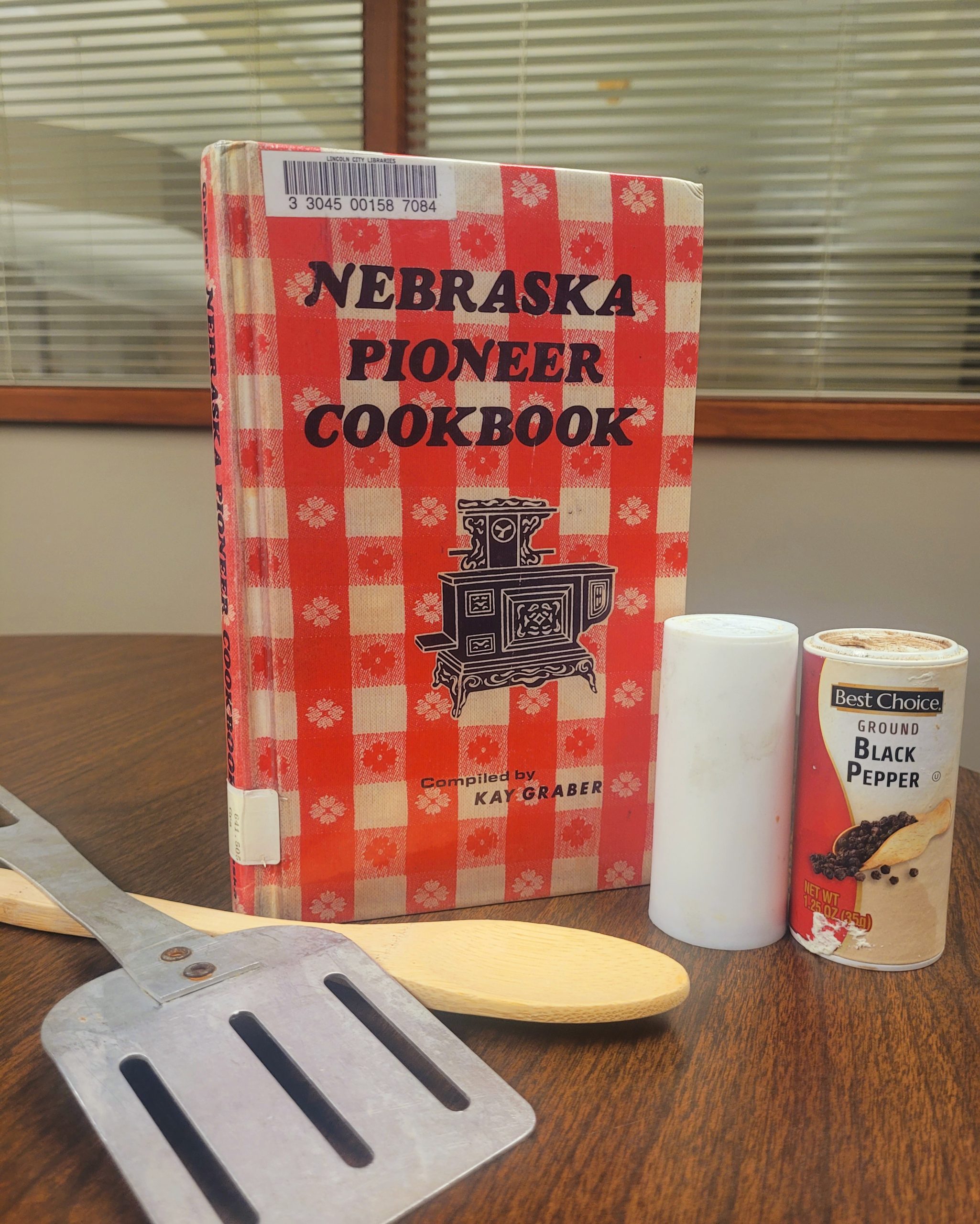
The “Nebraska Pioneer Cookbook” by Kay Graber is now available on cartridge and for download on BARD, the Braille and Audio Reading Download service. BARD is a service offered by the Nebraska Library Commission Talking Book and Braille Service and the National Library Service for the Blind and Print Disabled at the Library of Congress.

Nebraska’s pioneer food tells us much about how our forebearers lived, and in compiling this cookbook the aim was to achieve a balance between recipes and descriptions of the way of life the pioneers exemplified. Interspersed with the recipes are descriptions of food preparation and fare which tell us much about how our forebears lived—industriously, ingeniously, and sometimes very well. Although many of the recipes could not be duplicated in today’s kitchens, there is plenty here to challenge and stimulate amateur and professional chefs—and plenty of food for thought for social historians. Published by University of Nebraska Press.

TBBS borrowers can request the “Nebraska Pioneer Cookbook,” DCB02022 or download it from the National Library Service BARD (Braille and Audio Reading Download) website. If you have high-speed internet access, you can download books to your smartphone or tablet, or onto a flash drive for use with your player. You may also contact your reader’s advisor to have the book mailed to you on cartridge.

Posted in Books & Reading, General, Talking Book & Braille Service (TBBS) | Tagged , , , , , , | Leave a comment

#BookFaceFriday “Might Kindred” by Mónica Gomery

An ode to #BookFaceFriday!
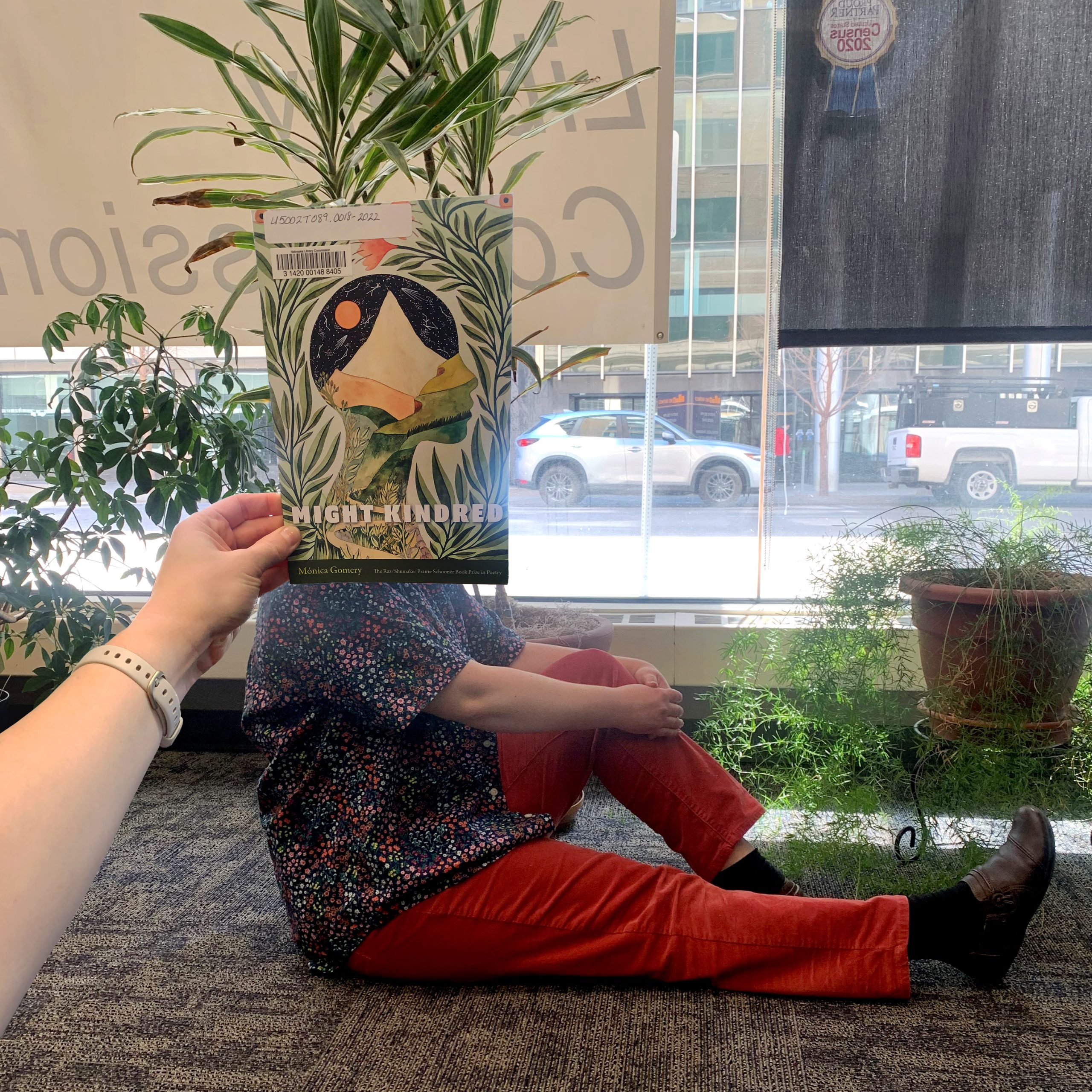
April is National Poetry Month, and we wanted to celebrate by highlighting some of the amazing poetry NLC has in its collection. Like this week’s #BookFaceFriday, “Might Kindred” (University of Nebraska Press, 2022) is a winner of the Raz/Shumaker Prairie Schooner Book Prize in Poetry.

One of the most prestigious academic presses in the country, the University of Nebraska Press sends us around 75 select titles per year, which are added to the Nebraska Publications Clearinghouse, also known as the Nebraska State Documents Collection. This collection is comprised of publications issued by Nebraska state agencies, ensuring that state government information is available to a wide audience and that those valuable publications are preserved for future generations. University of Nebraska Press books, as well as all state documents, are available for checkout by libraries and librarians for their patrons.

“These generous and sensitive meditations on belonging and the first-generation experience cast intimate light on shared human experiences.”
Publishers Weekly
Love this #BookFace & reading? Check out our past #BookFaceFriday photos on the Nebraska Library Commission’s Facebook page!
Posted in Books & Reading, General, What's Up Doc / Govdocs | Tagged , , , , , , , | Leave a comment

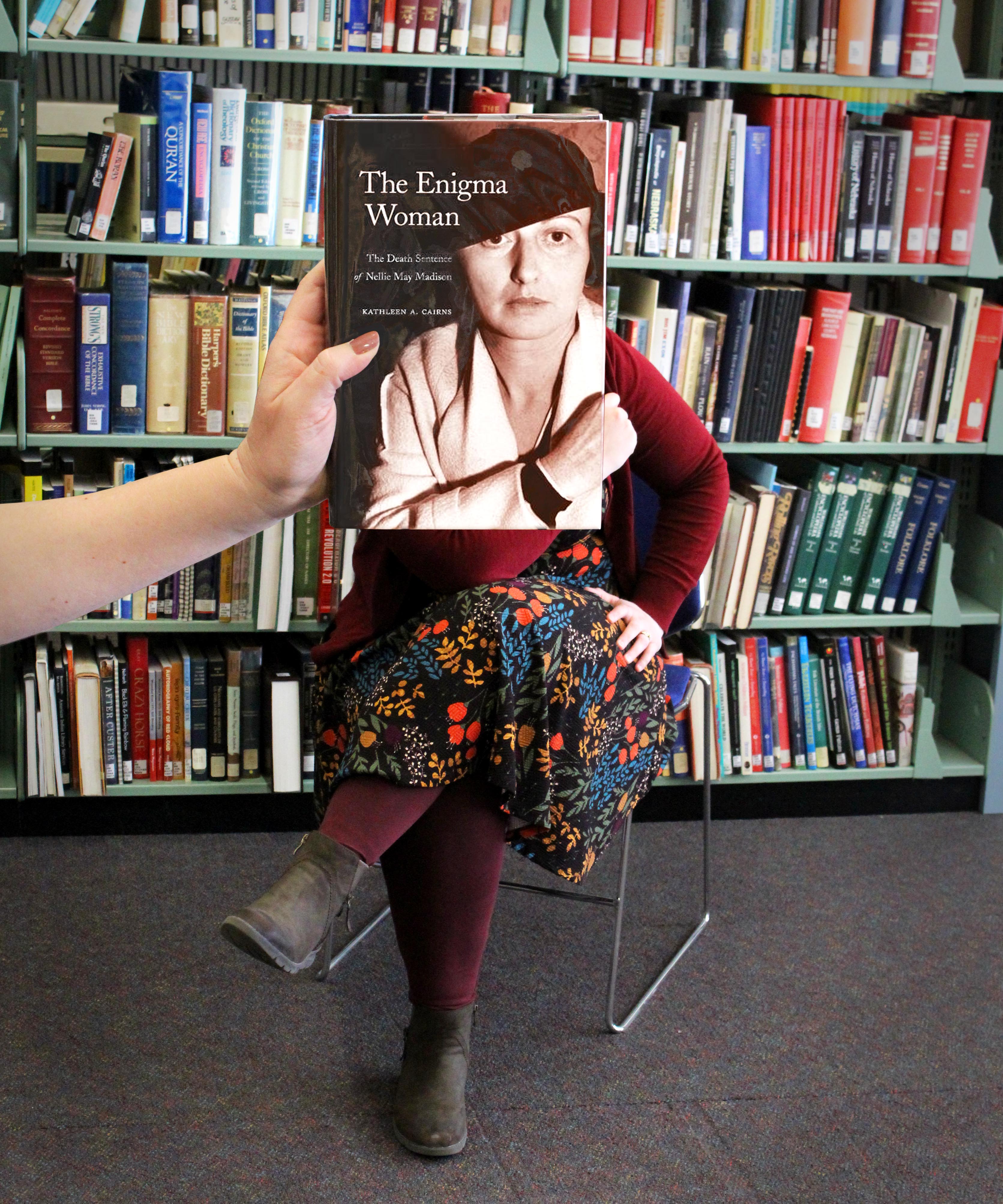
#BookFaceFriday – “Louise Pound: Scholar, Athlete, Feminist Pioneer” by Robert Cochran

This #BookFaceFriday is a hole in one!
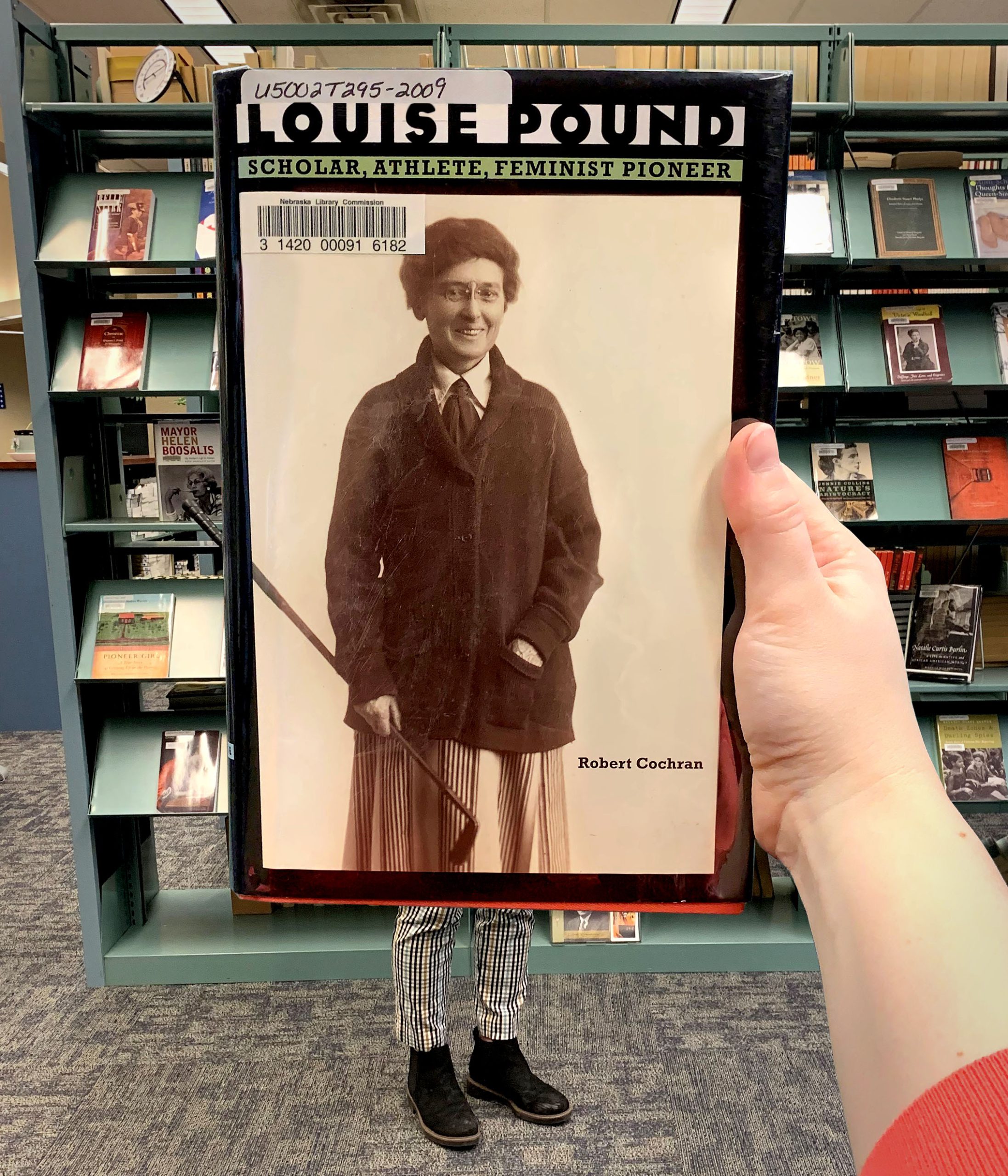
March is Women’s History Month and we’re shining a light on the impressive Nebraska women featured in our collection. Like this week’s #BookFace,Louise Pound: Scholar, Athlete, Feminist Pioneer” by Robert Cochran (‎University of Nebraska Press; Illustrated edition, 2009.) You can find this title in the Nebraska Library Commission’s permanent collection; the Nebraska Publications Clearinghouse receives documents every month from all Nebraska state agencies, including the University of Nebraska Press (UNP). UNP books, as well as all Nebraska state documents, are available for checkout by libraries and librarians for their patrons. Find great reads to celebrate Women’s History Month in all of NLC’s collections, including Book Club Kits, and Nebraska OverDrive Libraries.

“Cochran’s well-researched and well-written book places Louise Pound securely in her time and place and reveals much about the plight of women in higher education in a not-so-distant  past. . . . It is an invaluable work on the history of women in the professions in the early twentieth century.”

—Shirley Anne Leckie, Journal of American History

Love this #BookFace & reading? Check out our past #BookFaceFriday photos on the Nebraska Library Commission’s Facebook page!

Posted in Books & Reading, General | Tagged , , , , , , , , , | Leave a comment

#BookFaceFriday – “Cotton Candy” by Ted Kooser

That one looks like a…#BookFaceFriday!
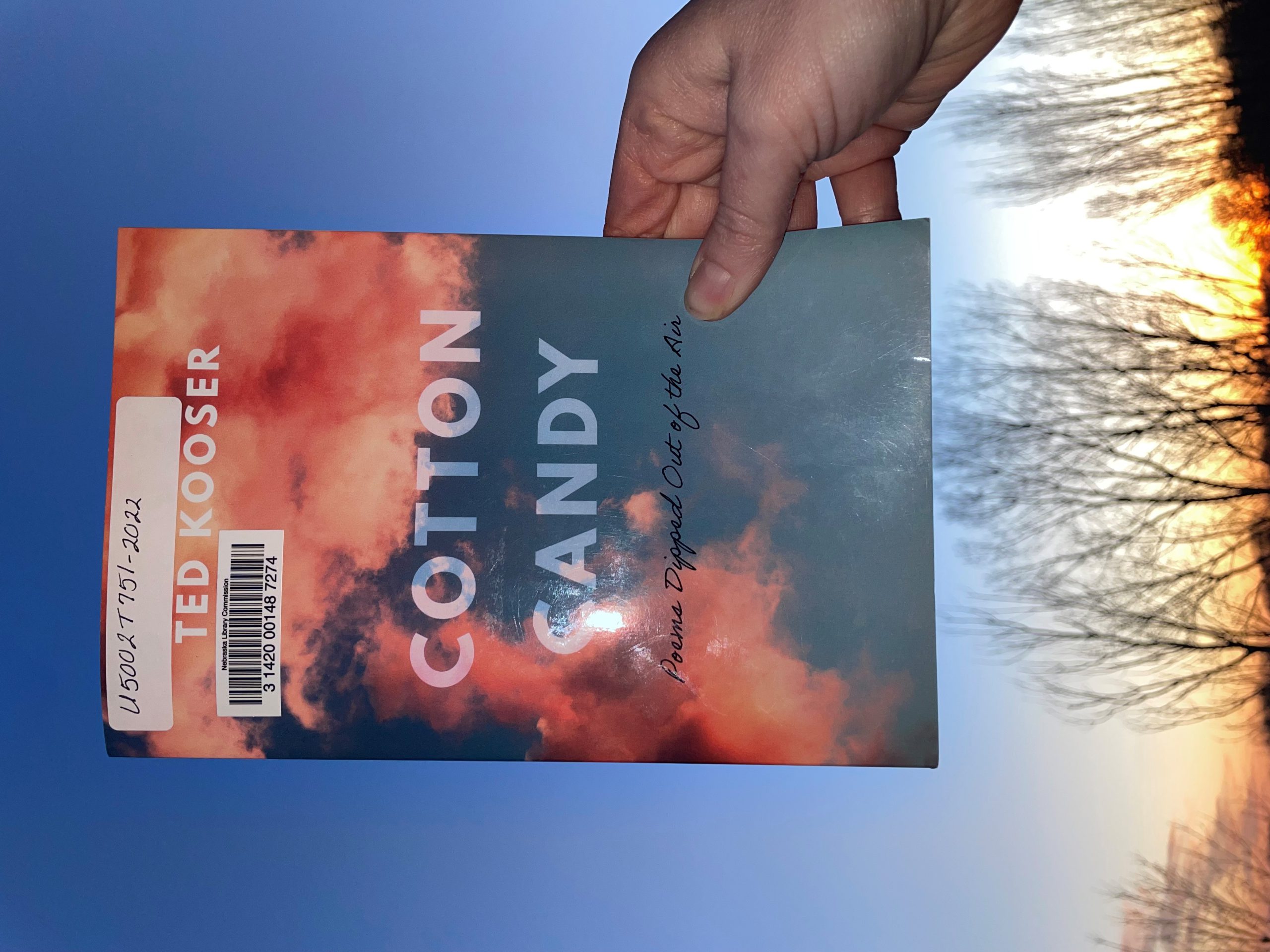
There is something so sweet about this week’s #BookFaceFriday, “Cotton Candy: Poems Dipped Out of the Air” by Ted Kooser (‎University of Nebraska Press; 2022.) Kooser was the U.S. poet laureate from 2004-2006, and won the Pulitzer Prize for Poetry in 2005. You can find this title and many more of his works in the Nebraska Library Commission’s permanent collection; the Nebraska Publications Clearinghouse receives documents every month from all Nebraska state agencies, including the University of Nebraska Press (UNP). UNP books, as well as all Nebraska state documents, are available for checkout by libraries and librarians for their patrons.

“That Kooser often sees things we do not would be delight enough, but more amazing is exactly what he sees. Nothing escapes him. Everything is illuminated. ―Library Journal

Love this #BookFace & reading? Check out our past #BookFaceFriday photos on the Nebraska Library Commission’s Facebook page!

Posted in Books & Reading, General | Tagged , , , , , , | Leave a comment

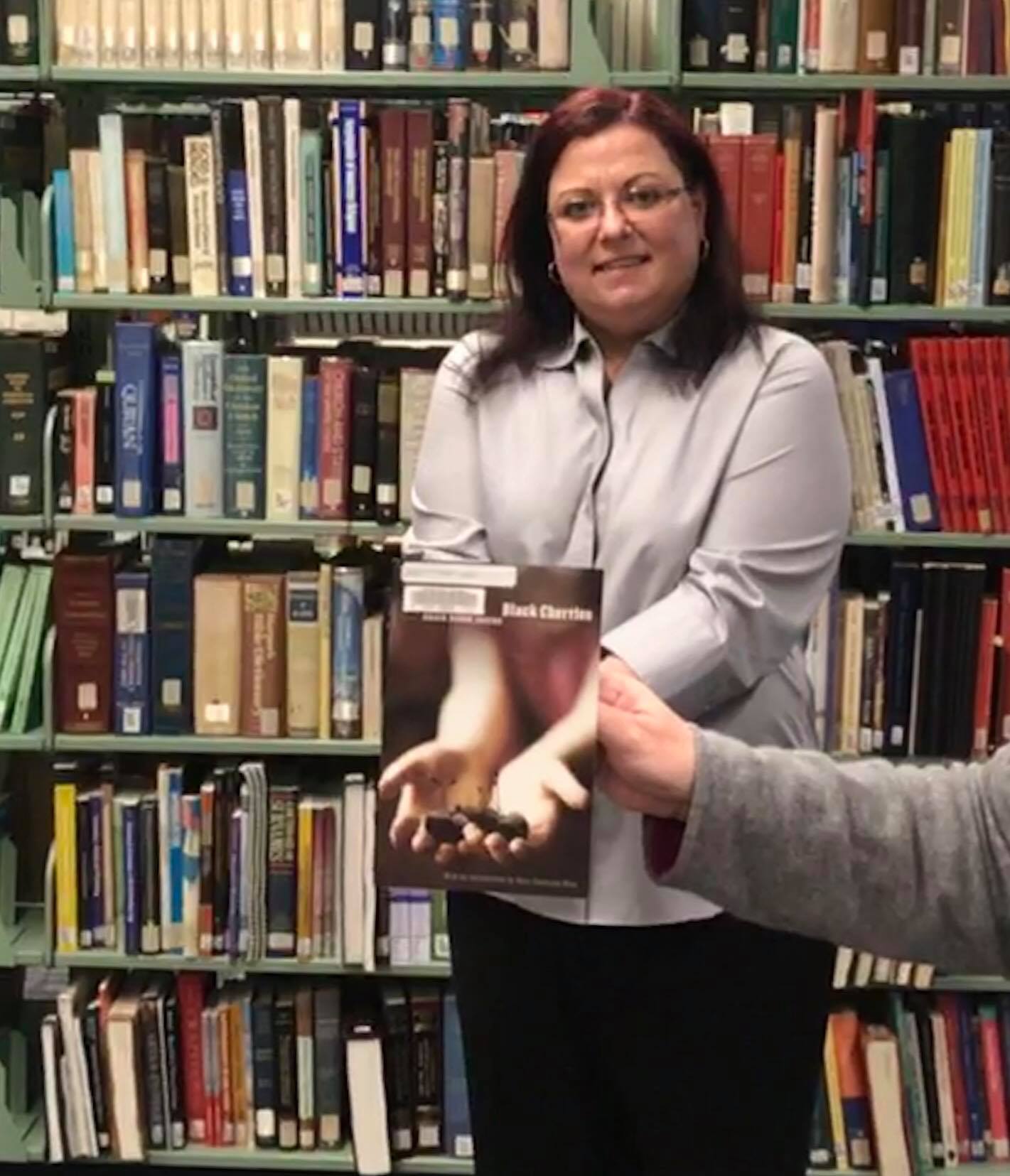
#BookFaceFriday – “Black Print with a White Carnation” by Amy Helene Forss

#BookFaceFriday celebrates Black History Month!
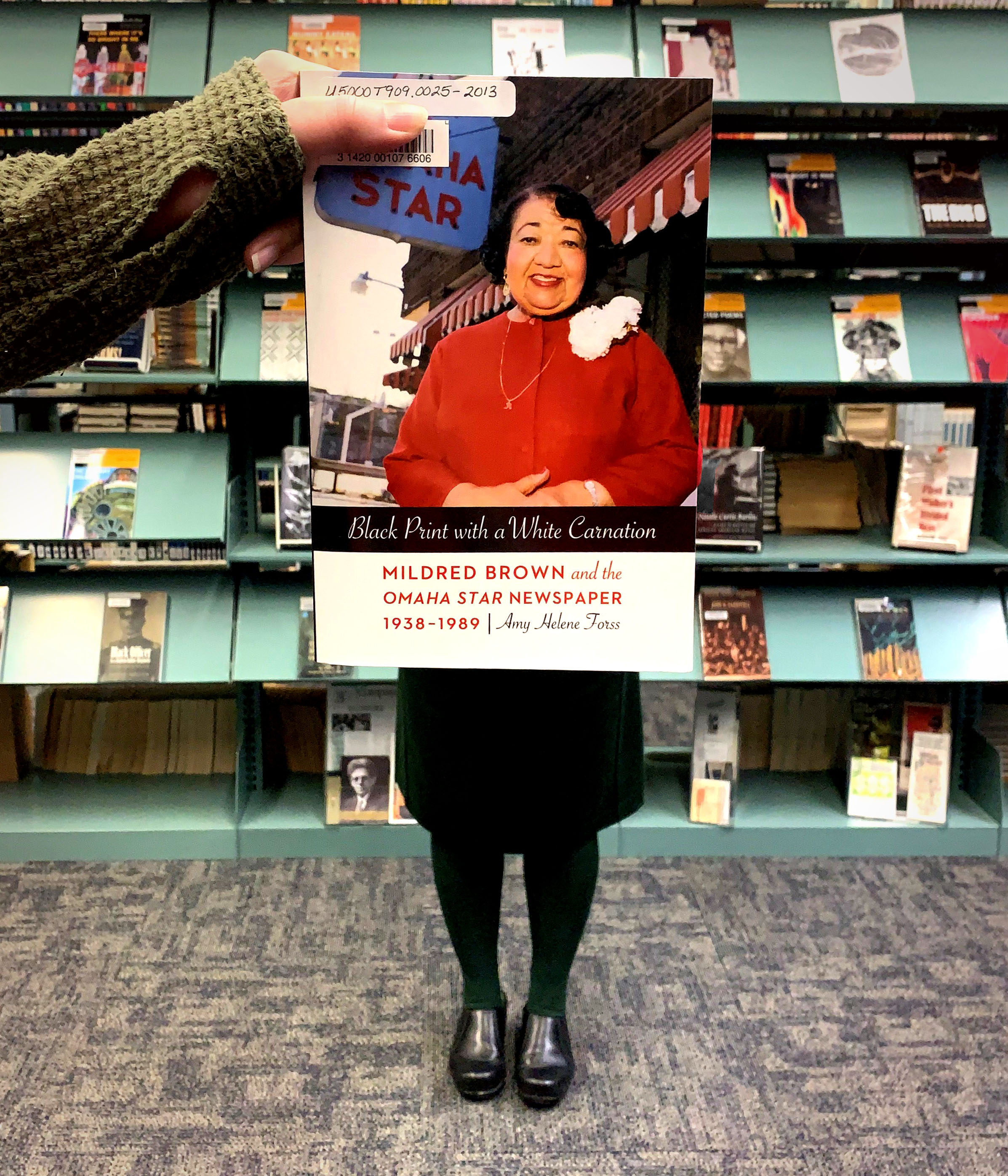
Extra, extra, read all about it with this week’s #BookFaceFriday,Black Print with a White Carnation: Mildred Brown and the Omaha Star Newspaper, 1938-1989” by Amy Helene Forss (‎University of Nebraska Press; Illustrated edition, 2014.) You can find this title in the Nebraska Library Commission’s permanent collection; the Nebraska Publications Clearinghouse receives documents every month from all Nebraska state agencies, including the University of Nebraska Press (UNP). UNP books, as well as all Nebraska state documents, are available for checkout by libraries and librarians for their patrons. Find great reads to celebrate Black History Month in all of NLC’s collections, including Book Club Kits, and Nebraska OverDrive Libraries.

“In addition to its well-researched look at Brown’s career, the book provides an informative description of the history of black-owned newspapers in North America, going back to the founding in 1853 of the Provincial Freeman, an antislavery newspaper in Canada.” ―Omaha World-Herald

Love this #BookFace & reading? Check out our past #BookFaceFriday photos on the Nebraska Library Commission’s Facebook page!

Posted in Books & Reading, General | Tagged , , , , , , , , , | Leave a comment

#BookFaceFriday – “Emily Hamilton & Other Writings” by Sukey Vickery

Sit a spell with this week’s #BookFaceFriday.
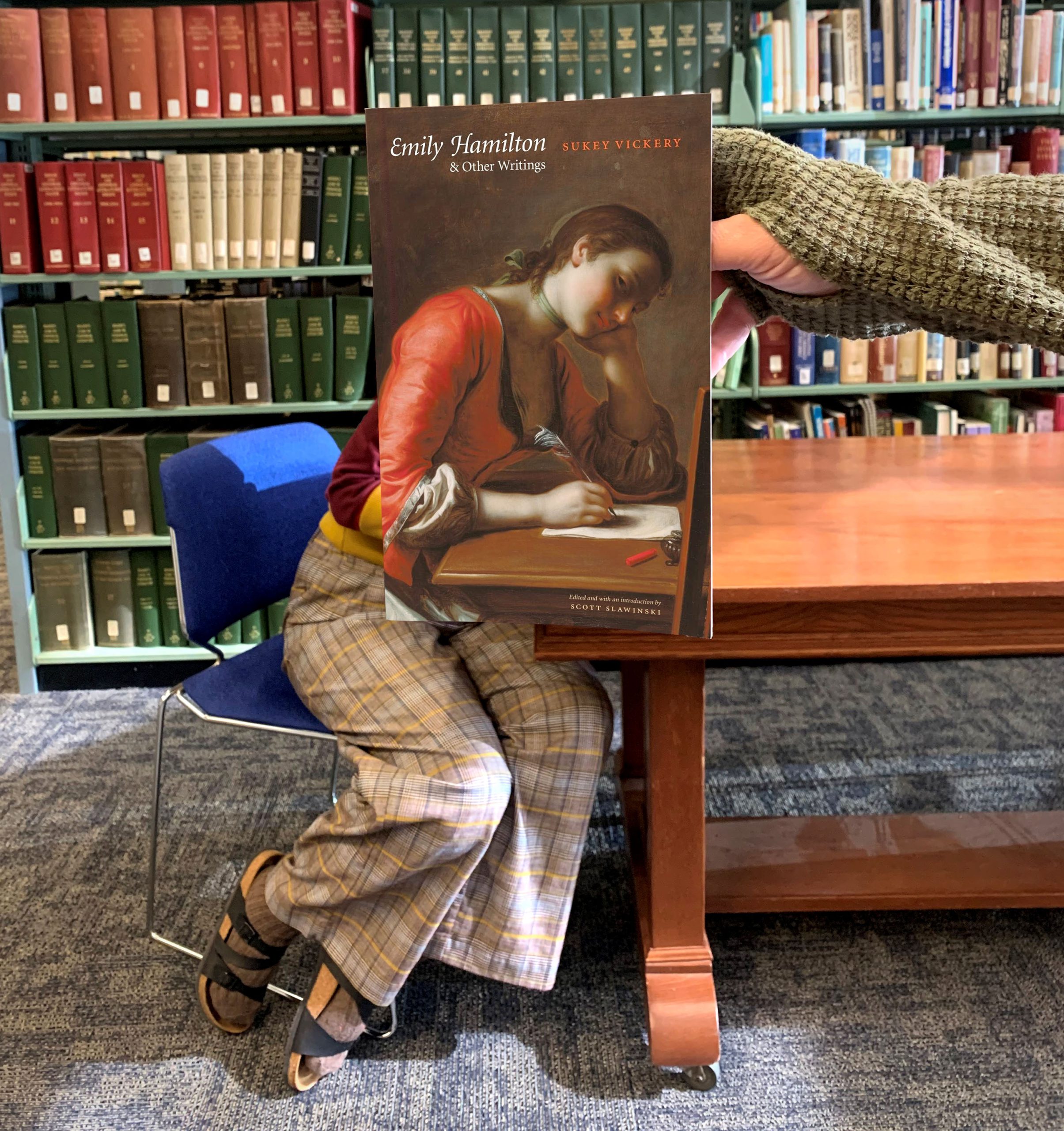
Get your thoughts down on paper just like this week’s #BookFaceFriday, “Emily Hamilton & Other Writings (Legacies of Nineteenth-Century American Women Writers)” by Sukey Vickery, edited by Scott Slawinski (University of Nebraska Press, 2009.) The Nebraska Library Commission’s Collection is always growing; the Nebraska Publications Clearinghouse receives documents every month from all Nebraska state agencies, including the University of Nebraska Press (UNP). UNP books, as well as all Nebraska state documents, are available for checkout by libraries and librarians for their patrons.

The careful editing and cogent and engaging introduction to this volume will guide students and scholars alike, thus helping Sukey Vickery’s work to receive the attention that it deserves.”

—Amy E. Winans, Women’s Studies

“Sukey Vickery’s Emily Hamilton is an epistolary novel dealing with the courtship and marriages of three women. Originally published in 1803, it is one of the earliest examples of realist fiction in America and a departure from other novels at the turn of the nineteenth century. From the outset its author intended it as a realist project, never delving into the overly sentimental plotting or characterization present in much of the writing of Vickery’s contemporaries. Emily Hamilton explores from a decidedly feminine perspective the idea of a woman’s right to choose her own spouse and the importance of female friendship. Vickery’s characterization of women further diverges from the typical eighteenth- and early nineteenth-century didactic of the righteous/sinful woman and depicts, instead, believable female characters exhibiting true-to-life behavior.”

from the book jacket

Our model this week is a new addition to the Nebraska Library Commission! Welcome to Laura Mooney, our new Federal Documents Staff Assistant. She joins us from the History Nebraska Museum in Lincoln, as their Senior Objects Curator. Laura enjoys reading nonfiction; she’s currently reading a book about Julia Child. She prefers to read physical books, as it gives her a chance to take a break from screens. Along with reading and spending time with her 17 year old cat named Allie, her hobbies include gardening, vintage clothing, and anything related to food (experimenting in the kitchen, learning about food history, etc!) Welcome Laura!

“I’m thrilled to be joining the Nebraska Library Commission, and delighted to be part of the team that is making publications accessible online through digitization. In my first few weeks here I have been digitizing materials from the Nebraska Department of Agriculture and Department on Aging. It’s been fascinating to learn about the depth of information within these collections. There are so many resources that will be useful for scholars, historians, genealogists and more.”

Love this #BookFace & reading? Check out our past #BookFaceFriday photos on the Nebraska Library Commission’s Facebook page!

Posted in Books & Reading, Education & Training, What's Up Doc / Govdocs | Tagged , , , , , , , , | Leave a comment

#BookFaceFriday – “Millennial Cervantes” by Bruce R. Burningham

We’re tilting at windmills with this week’s #BookFaceFriday.
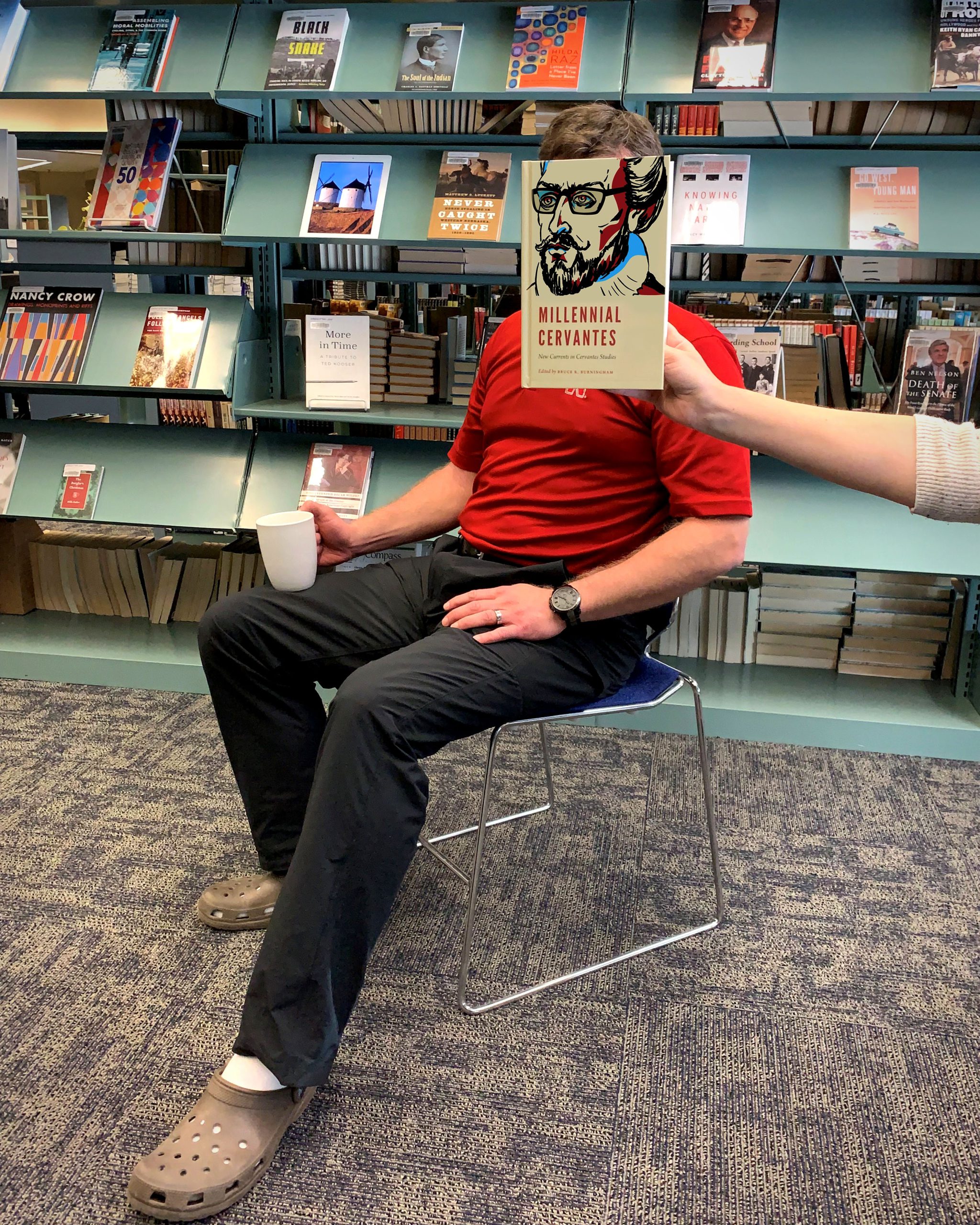
Go on an adventure with this week’s #BookFaceFriday, “Millennial Cervantes: New Currents in Cervantes Studies (New Hispanisms)” edited by Bruce R. Burningham (University of Nebraska Press; Illustrated Edition, 2020.) The Nebraska Library Commission’s Collection is always growing, the Nebraska Publications Clearinghouse receives documents every month from all Nebraska state agencies, including the University of Nebraska Press (UNP). UNP books, as well as all Nebraska state documents, are available for checkout by libraries and librarians for their patrons.

“Millennial Cervantes explores some of the most important recent trends in Cervantes scholarship in the twenty-first century. It brings together leading Cervantes scholars of the United States in order to showcase their cutting-edge work within a cultural studies frame that encompasses everything from ekphrasis to philosophy, from sexuality to Cold War political satire, and from the culinary arts to the digital humanities.”

Book jacket

“This collection of nine provocative, beautifully elaborated essays explores the impact of Cervantes’s writings in their own time and place, and well beyond.”

—E. H. Friedman, Choice

Love this #BookFace & reading? Check out our past #BookFaceFriday photos on the Nebraska Library Commission’s Facebook page!

Posted in Books & Reading, Education & Training, What's Up Doc / Govdocs | Tagged , , , , , , , | Leave a comment

#BookFaceFriday “Private Way” by Ladette Randolph

We’re all wrapped up in this week’s #BookFaceFriday!

We like everything about this week’s #BookFaceFriday, the book, the author, the publisher, and the model! “Private Way: A Novel is the latest book by famed Nebraska author, Ladette Randolph (University of Nebraska Press, 2022). One of the most prestigious academic presses in the country, the University of Nebraska Press sends us around 75 select titles per year, which are added to the Nebraska Publications Clearinghouse, also known as the Nebraska State Documents Collection. This collection is comprised of publications issued by Nebraska state agencies, ensuring that state government information is available to a wide audience and that those valuable publications are preserved for future generations. University of Nebraska Press books, as well as all state documents, are available for checkout by libraries and librarians for their patrons. Our model this week is a new addition to the Nebraska Library Commission! Welcome to Mackenzie Marrow, our new Information Services Technician. They completed their Masters in Library and Information Science from Simmons University last August. When asked about what they like to read, Mackenzie says, “I love any book that has an ensemble cast that is really fleshed out, especially if it’s sci-fi or fantasy.” Mackenzie’s two favorite series right now are “The Locked Tomb” by Tamsyn Muir and “Wayfarers” by Becky Chambers, “I could talk for ages about either one!” Outside of reading, their hobbies include playing DND, and trivia nights at The Happy Raven. They also recently adopted an 11-year-old cat named Mittens! “She’s my first cat, I grew up with dogs, and I love her to death.” So if you get the chance, say hello to Mackenzie!

“A wonderfully wise, vividly written, and deeply absorbing novel that delves into Willa Cather’s question about what is required of ‘a civilized society.’ By turns funny, reflective, and harrowing . . . Private Way is that rare novel that acknowledges the real hazards of civic life while also celebrating its transformative power.”

Suzanne Berne, author of The Dogs of Littlefield: A Novel

Love this #BookFace & reading? Check out our past #BookFaceFriday photos on the Nebraska Library Commission’s Facebook page!

Posted in Books & Reading, General, What's Up Doc / Govdocs | Tagged , , , , , , , | Leave a comment

#BookFaceFriday “Moving Out: A Nebraska Woman’s Life” by Polly Spence

 This #BookFace is all about the good life!
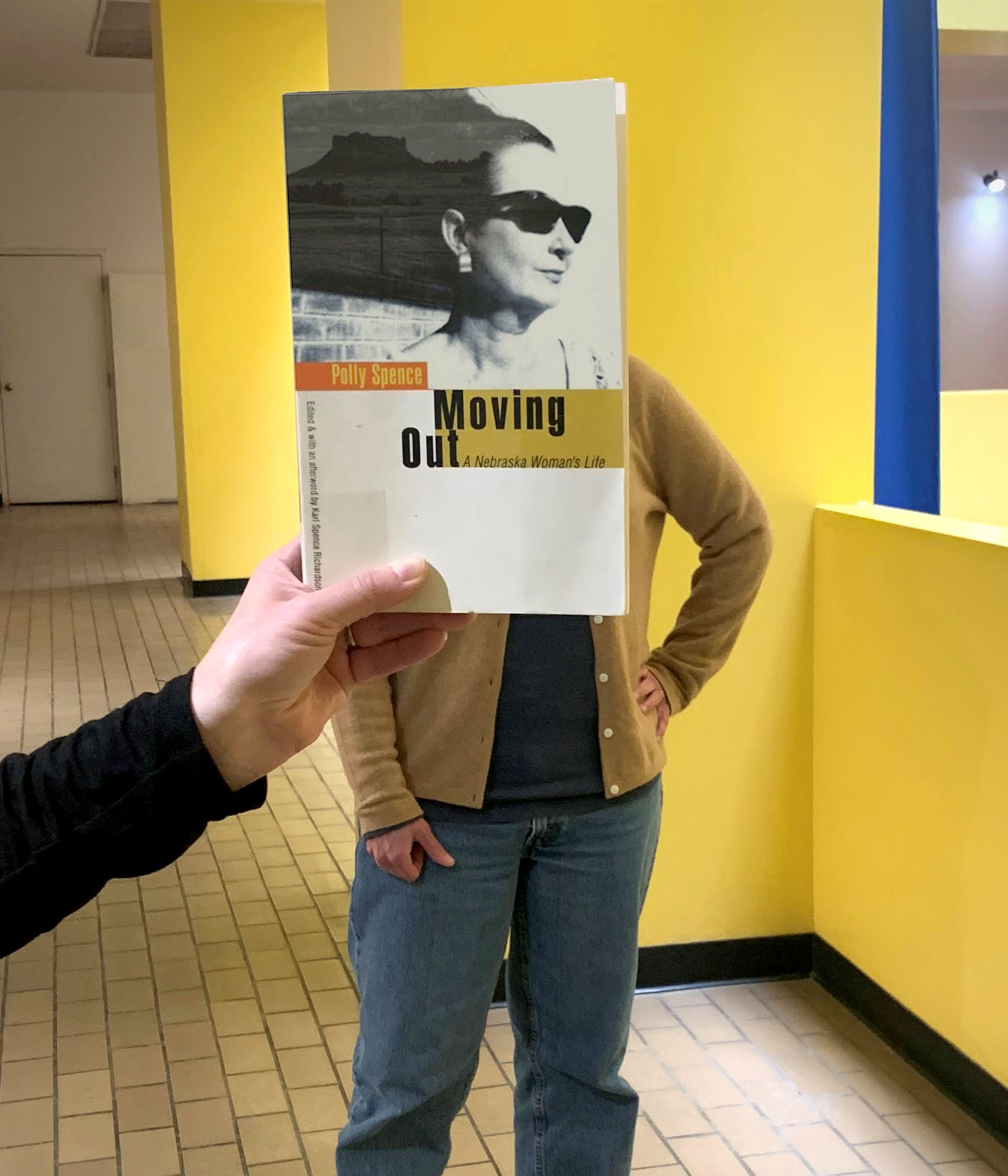
Honor the rich history of women in our state with this week’s #BookFaceFriday, “Moving Out: A Nebraska Woman’s Life (Women in the West) by Polly Spence, edited by Karl Spence Richardson (Bison Books, 2002). This book is one of the hidden treasures of our collection, it’s “an intimate portrait of small-town life in the mid-twentieth century,” written by a native Nebraskan about her own life. Bison Books is an imprint of the University of Nebraska Press, they send us around 75 select titles per year, which are added to the Nebraska Publications Clearinghouse, also known as the Nebraska State Documents Collection. This collection is comprised of publications issued by Nebraska state agencies, ensuring that state government information is available to a wide audience and that those valuable publications are preserved for future generations. University of Nebraska Press books, as well as all state documents, are available for checkout by libraries and librarians for their patrons.

“Not only does Spence relate her own story, but also the stories of people around her, making Moving Out a collection of humorous and touching narratives.”

Utah Historical Society

Love this #BookFace & reading? Check out our past #BookFaceFriday photos on the Nebraska Library Commission’s Facebook page!

Posted in Books & Reading, General, What's Up Doc / Govdocs | Tagged , , , , , , , , , | Leave a comment