Search the Blog
Categories
- Books & Reading
- Broadband Buzz
- Census
- Education & Training
- General
- Grants
- Information Resources
- Library Management
- Nebraska Center for the Book
- Nebraska Memories
- Now hiring @ your library
- Preservation
- Pretty Sweet Tech
- Programming
- Public Library Boards of Trustees
- Public Relations
- Talking Book & Braille Service (TBBS)
- Technology
- Uncategorized
- What's Up Doc / Govdocs
- Youth Services
Archives
Subscribe
Tag Archives: Friday Reads
Friday Reads – The Labors of Hercules Beal by Gary D. Schmidt
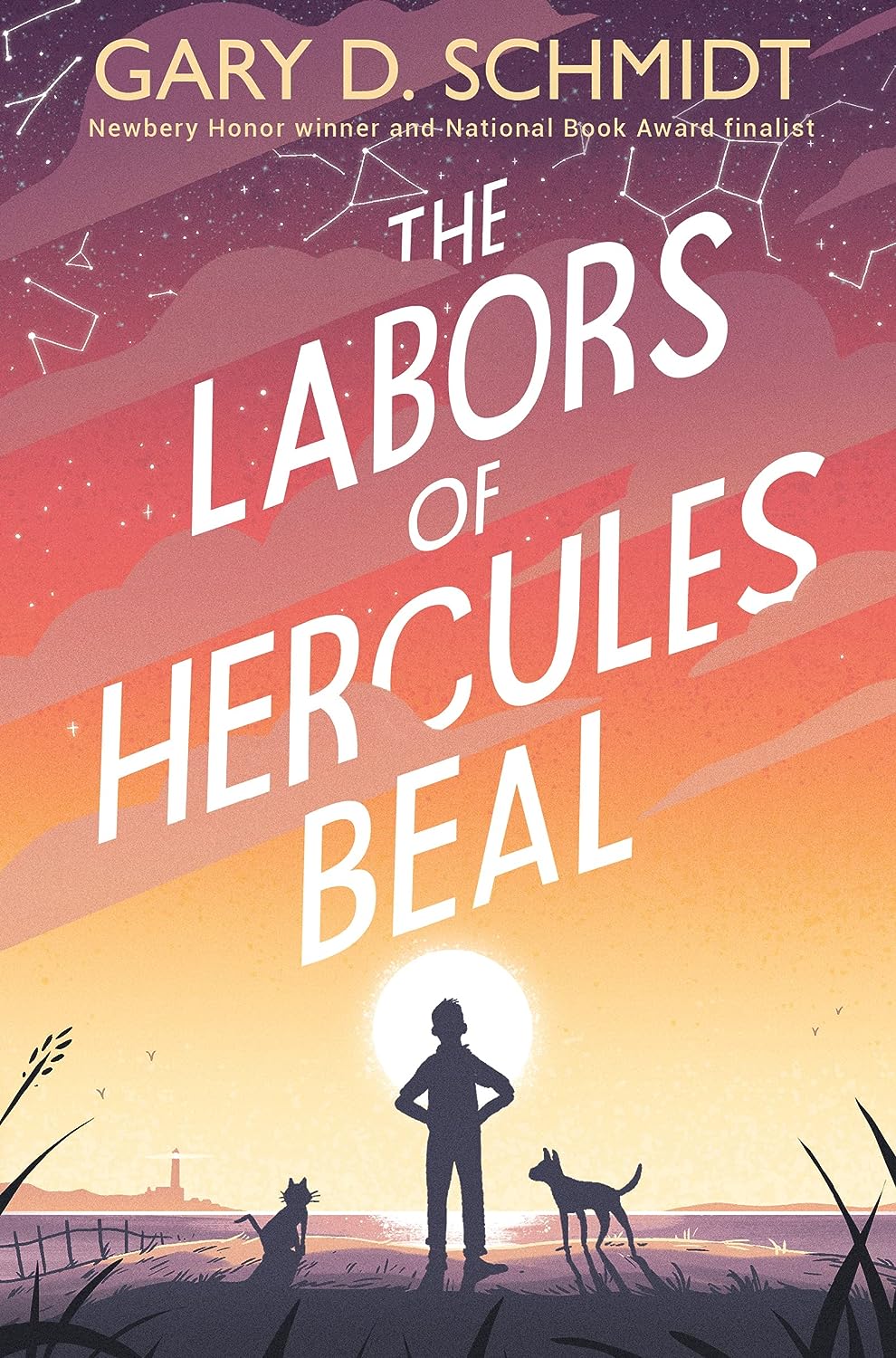
I do read more age-appropriate books occasionally, I promise. But when my hold for The Labors of Hercules Beal became available, I tossed aside the mystery I was halfway through to dive into this instead. Whodunit? Who cares? Gary D. Schmidt is just that good.
If you have never read one of his middle-grade novels, start with The Wednesday Wars, or Okay for Now (both are available as Book Club Kits here at the Nebraska Library Commission!). If you are more familiar with Schmidt’s writing, this latest book will feel like coming home.
Hercules Beal is about to start 7th grade. But instead of joining his friends on the bus to the local public middle school, he will be walking to the Cape Code Academy for Environmental Sciences. He is not excited about this latest revelation, but not surprised. Over the last 18 months, it’s been nothing but bad news. He lost both of his parents in The Accident. His older brother Achilles reluctantly moved home, leaving his globe-trotting journalism career to run the Beal Family Farm and Nursery. His request for a pet dog was overruled in favor of a pet rabbit named “Honey Bunny.” Oh, and his new teacher this fall is a retired Marine lieutenant colonel. That’s a lot of rotten luck for a kid who hasn’t yet hit his Beal Family Growth Spurt.
But middle school begins, as sure as the sun rising over the dunes of Cape Cod, and Hercules does grow, both in his statute and in his understanding of what great possibilities life still has in store. Lt. Colonel Hupfer gives each student in his class a yearlong assignment based on a mythological topic. Our “hero” is tasked with performing the Twelve Labors of Hercules, or as close to them as he can manage. As he struggles through each labor, he receives help from some unexpected sources. Many things go wrong… so very, very (often hilariously) wrong! But many more go just heart-breakingly right.
That is my favorite aspect of Schmidt’s novels; how wonderfully he captures the ups and downs of adolescent life. He makes me laugh out loud, and then burst into tears in the next chapter. Will he have the same affect on actual adolescents? Maybe, maybe not. Maybe I’m more susceptible to the tear-jerking scenes because I’ve already been through this part of life and I know how it turns out. But even if you are a 13 year old kid and you don’t cry when the [redacted so you can find out for yourself], I hope you can at least recognize that when Schmidt’s characters feel alone, but they are not actually alone; there are people looking out for them, cheering them on, ready to help when things get tough. And if you are well past middle school, as I am, I hope you can remember what those years were like, and keep an eye out for those kiddos that might need a supportive grownup in their corner.
Schmidt, Gary D. (2023). The Labors of Hercules Beal. Clarion Books.
Posted in Books & Reading, General
Tagged books, Friday Reads, Gary D. Schmidt, juvenile fiction, middle grade, mythology, Reading
Leave a comment
#BookFaceFriday “Chasing Bright Medusas” by Benjamin Taylor
O #BookfaceFriday!
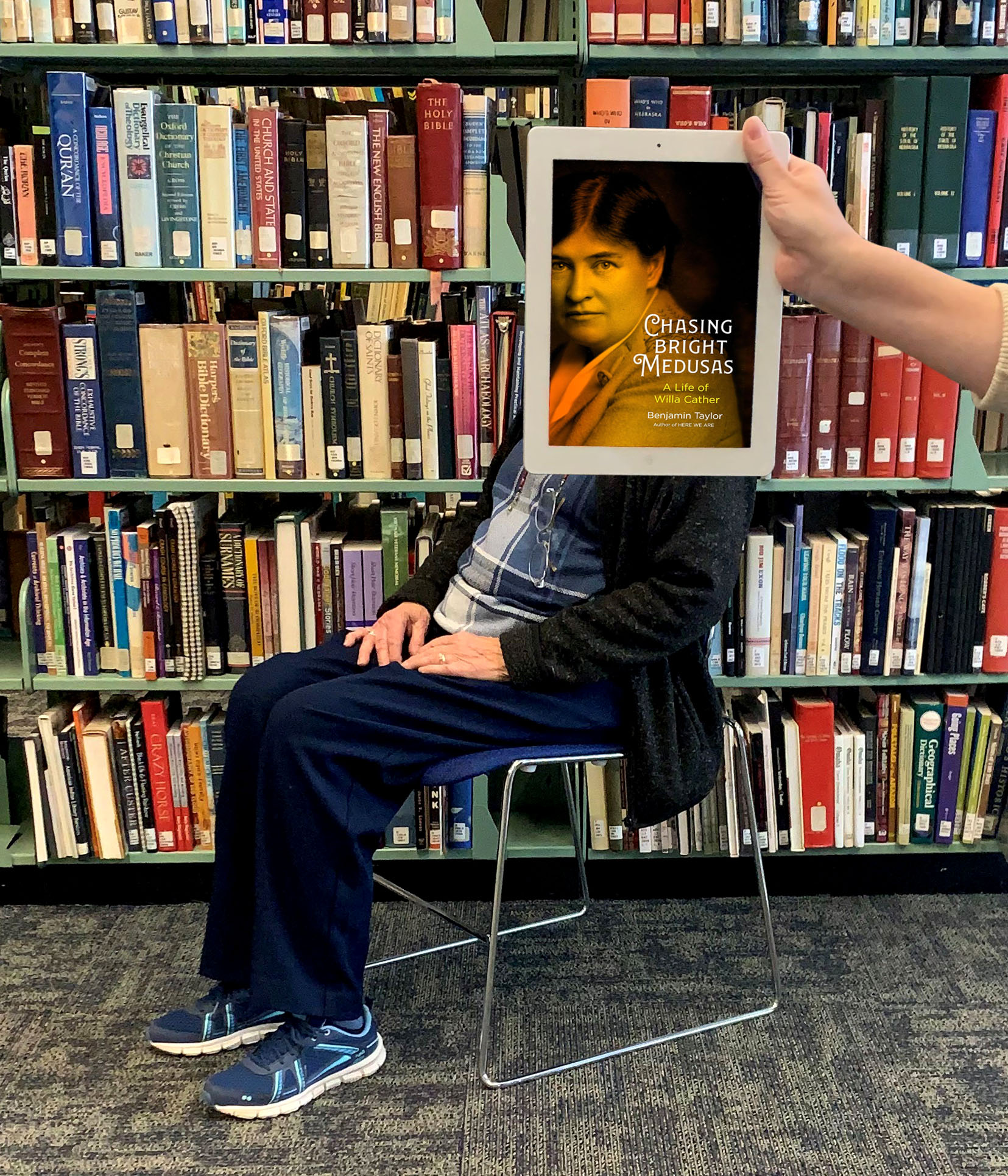
This week’s BookFace is brand new to our collection! Next week, December 7th, we’ll be celebrating Willa Cather’s 150th birthday. What better way to get the party started than with highlighting all of Cather’s works, as well as nonfiction titles about Willa Cather, like “Chasing Bright Medusas: A Life of Willa Cather” by Benjamin Taylor (Viking, 2023.) This title is available as an eBook and Audiobook on Nebraska Overdrive Libraries, we also have several of Cather’s books on Nebraska Overdrive Libraries, including My Ántonia, Death Comes for the Archbishop, and Song of the Lark. NLC also has nine of Willa Cather’s books available as Book Club Kits. Let us know your favorite book by or about Willa Cather as we celebrate one of Nebraska’s most treasured authors.
“…Taylor provides a remarkably revealing account of the life and creative output of Willa Cather…Taylor’s connection of Cather’s personal life and her literary inventions is consistently astute, and the exuberant force of her imagination emerges vividly…the author presents a rewarding and perceptive portrait, providing a valuable assessment of Cather’s intriguing character and the enduring importance of her oeuvre. Keen, insightful commentary on a literary master.”
— Kirkus Reviews
Speaking of celebrations, today’s Bookface model is being honored today as she ends her time with us here at the Nebraska Library Commission and begins her retirement! Kay Goerhing, our Senior Readers Services Advisor with the Talking Book & Braille Service, is a 44 year veteran of the Library Commission, and will be truly missed by staff and patrons alike. Congratulations Kay!
Find this title and many more through Nebraska OverDrive! Libraries participating in the Nebraska OverDrive Libraries Group currently have access to a shared and growing collection of digital downloadable audiobooks and eBooks. 191 libraries across the state share the Nebraska OverDrive collection of 21,696 audiobooks, 35,200 eBooks, and 3,964 magazines. As an added bonus it includes 130 podcasts that are always available with simultaneous use (SU), as well as SU ebooks and audiobook titles that publishers have made available for a limited time. If you’re a part of it, let your users know about this great title, and if you’re not a member yet, find more information about participating in Nebraska Overdrive Libraries!
Love this #BookFace & reading? Check out our past #BookFaceFriday photos on the Nebraska Library Commission’s Facebook page!
Friday Reads: Cat + Gamer by Wataru Nadatani
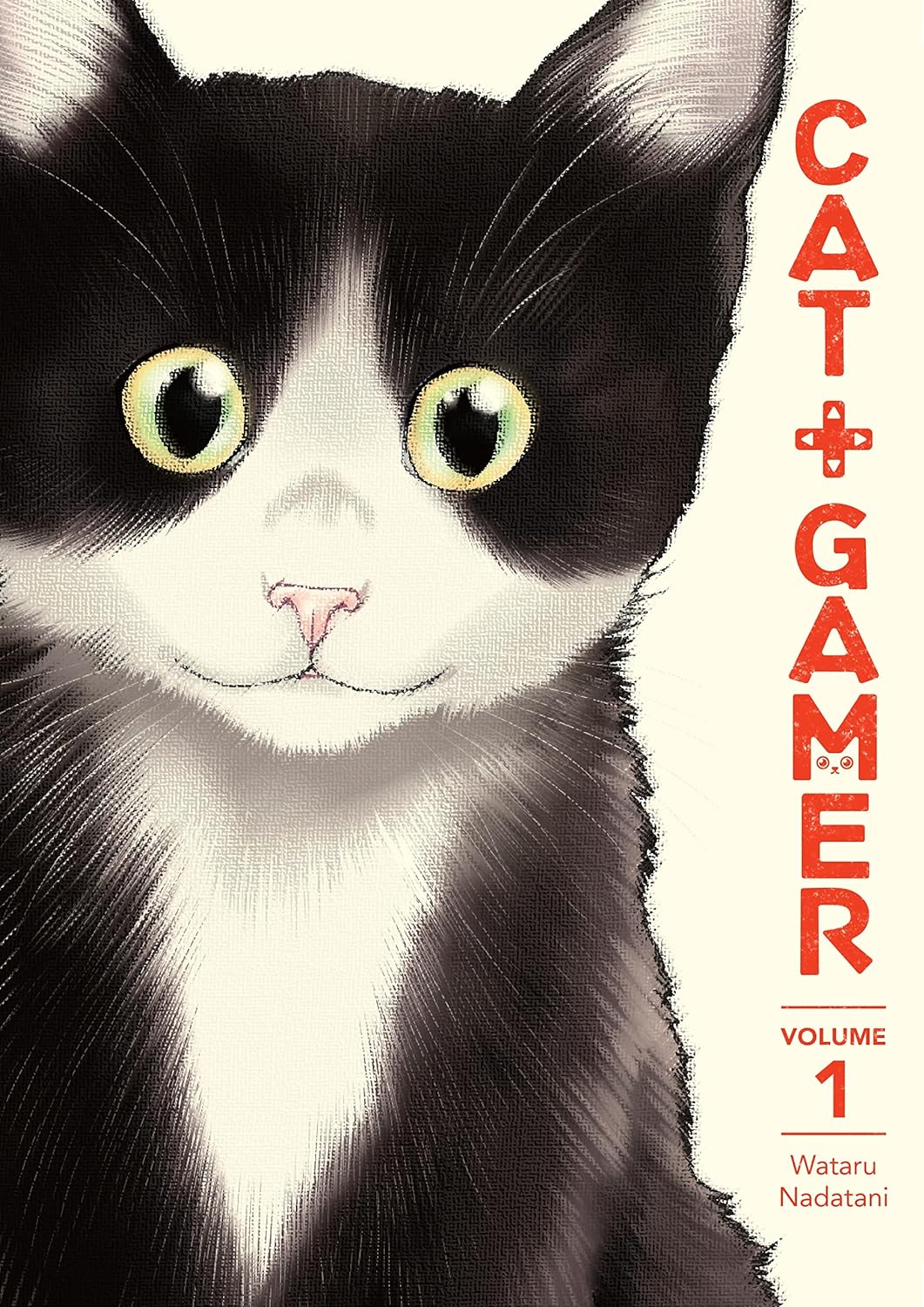
I am a gamer, and I have had cats as pets for almost my entire life. So, obviously, I had to read this book.
Cat + Gamer is the first volume of the English translation of the Japanese manga, written and illustrated by Wataru Nadatani. Dark Horse Comics is releasing the collected volumes in North America. So far three volumes are available, with five more to come.
The manga tells the story of Riko, an incredibly efficient office worker. She always goes above and beyond when it comes to her job, and leaves work promptly at 5pm every day. Her co-workers try to invite her to join them for after work hours socializing, but she’s never available. Some of them think she’s anti-social, others say she’s just a very private person.
But, they are all curious – what is her secret life? Well, Riko has a passion for video games! All of her free time is spent playing video games, researching all of the side quests and boss fights, making sure she doesn’t miss a thing. As far as she’s concerned, it’s the most fun and rewarding thing to do.
Until one day her life changes forever. A stray kitten is found in the parking lot of her office building, and for reasons she doesn’t understand, she agrees to take it home.
The book alternates between her viewpoint and the cat’s viewpoint, as they both learn about each other. Riko uses her gaming skills to raise the kitten, ‘leveling up’ the tiny animal, vowing to ‘max out this cat!’.
Cat + Gamer is a story that will obviously appeal to gamers and cat owners. But, anyone looking for a fun, quirky read will appreciate it, too. And don’t worry, the gaming parts of the book are described in a way that I think anyone can understand.
I’ve only read the first volume so far, but I enjoyed it so much, I’m definitely going to be picking up the others.
#BookFaceFriday “The Leftover Woman” by Jean Kwok
Pass the #BookfaceFriday!
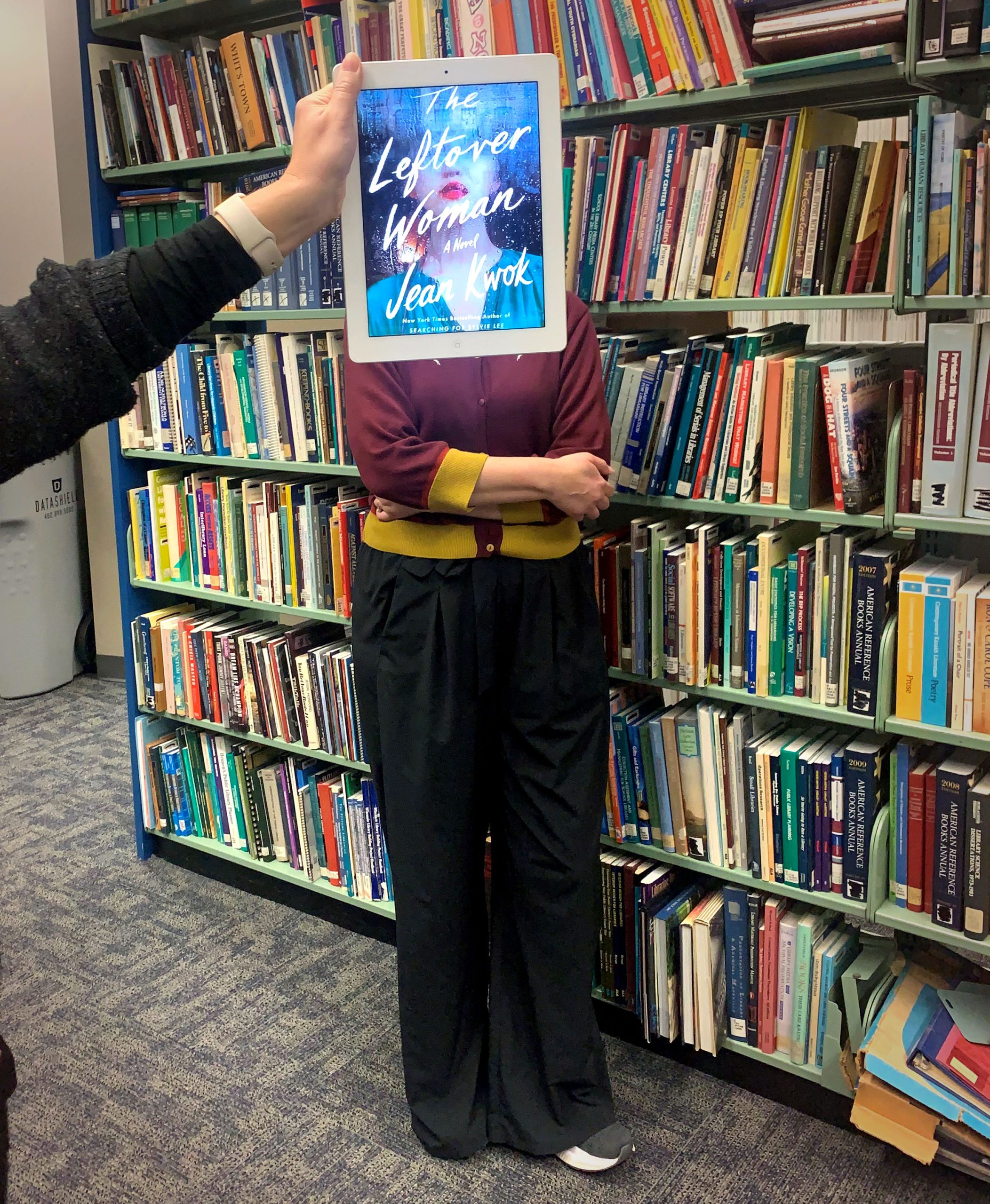
This week’s BookFace selection is all about what to do with those pesky Thanksgiving leftovers. Just kidding, “The Leftover Woman: A Novel” by Jean Kwok (William Morrow, 2013) is all about motherhood and identity.
This title is a must for your TBR list. “The Leftover Woman” is available as an eBook and Audiobook on Nebraska Overdrive Libraries!“An utterly riveting novel about two very different mothers, The Leftover Woman is not only an absolutely propulsive thriller but also a profound exploration of poverty and privilege, oppression and escape, desire and the self. This spellbinding narrative of immigration and hidden identity proves in so many ways that love has no boundaries.”
— Lan Samantha Chang, author of The Family Chao
Find this title and many more through Nebraska OverDrive! Libraries participating in the Nebraska OverDrive Libraries Group currently have access to a shared and growing collection of digital downloadable audiobooks and eBooks. 189 libraries across the state share the Nebraska OverDrive collection of 21,696 audiobooks, 35,200 eBooks, and 3,964 magazines. As an added bonus it includes 130 podcasts that are always available with simultaneous use (SU), as well as SU ebooks and audiobook titles that publishers have made available for a limited time. If you’re a part of it, let your users know about this great title, and if you’re not a member yet, find more information about participating in Nebraska Overdrive Libraries!
Love this #BookFace & reading? Check out our past #BookFaceFriday photos on the Nebraska Library Commission’s Facebook page!
Posted in Books & Reading, General
Tagged bookfacefriday, Ebook, Friday Reads, Jean Kwok, Nebraska OverDrive Libraries, Novel, OverDrive, Reading, The Leftover Woman
Leave a comment
Friday Reads: A First Time for Everything by Dan Santat
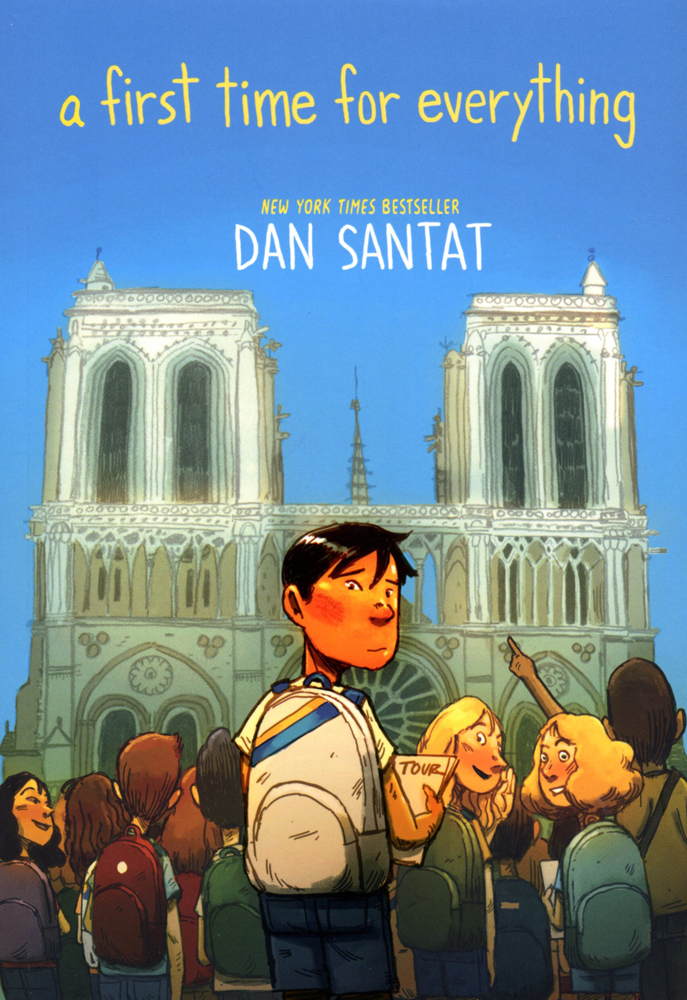
Announced yesterday, A First Time for Everything has won the National Book Foundation Award for Young People’s Literature.
It is on my Summer Reading Program list for 2024 and is a memoir of a three week school trip to Europe in 1989, the summer after 8th grade. In middle school Dan learned to be “…quiet. Small. … invisible.” (p. 11) Then one day, at the end of a school assembly Dan was unexpectedly asked (forced) to give his speech as practice for the speech tournament. It was a poem by A. A. Milne. He was ridiculed.
Then he took the three week school trip to Europe. Quiet at first, he slowly begins to have fun with some of the other students. And actually enjoying the trip. He does get lost in the middle of the night in France, but manages to steal a bike and find his way back (not proud of stealing the bike). Kirkus says, “Full of laughter and sentiment, this is a nudge for readers to dare to try new things.” (12/15/22)
Other Finalists for the Award for Young People’s Literature were:
Gather by Kenneth M. Cadow
Huda F Cares? by Huda Fahmy
Big by Vasti Harrison
The Lost Year: A Survival Story of the Ukrainian Famine by Katherine Marsh
Visit their web page to learn more. You can also see the winners and finalists in the other four categories on this web site.
Dan Santat is an author and illustrator of a variety of children and teen books, including After the Fall (How Humpty Dumpty Got Back Up Again), The Aquanaut, Sidekicks: A Graphic Novel, and Lift by Minh Lê and illustrated by Dan Santat.
Santat, Dan. A First Time for Everything. First Second/Macmillan, 2022.
Friday Reads: Goldenrod by Maggie Smith
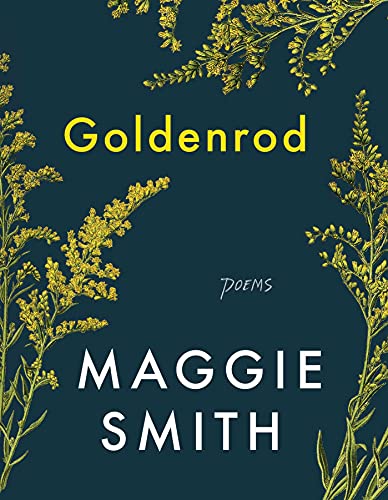
I am going to come out and say it: when our license plates were the meadowlark and the goldenrod, I loved them. I thought they were beautiful. Goldenrod may look like the allergy sufferer’s nemesis, ragweed, but is it innocent, blameless, unfairly maligned! A lovely, important part of our ecosystem, and a worthy state flower.
That was not why I chose to read Maggie Smith’s 2021 poetry collection, Goldenrod, but it was a point in her favor. One of my favorite poems is actually Smith’s “Good Bones.” My copy of Goldenrod was gifted to me from a friend and former mentor; it is possible that I have shared “Good Bones” to my social media so often that I have become associated with Maggie Smith (high praise).
Goldenrod is composed of three sections of poetry, the themes of which are: birth, death, nature, motherhood, and life. There’s a sprinkling of an homage to Mary Oliver — just a hint, just a flavor; to me, no one can hold a candle to Mary. But Mary was just one part of the conversation, and there must be other voices now.
A couple of poems that stood out after my reading were: “For My Next Trick” and “Wild.”
“For My Next Trick” centers around a conversation between the narrator — a mother — and her daughter, who asks
“Where was I …
before I was in your body?
–What was I?”
It’s a conversation about where we (might) come from, and what (might) happen after we die, and the connection between death and life, and what (might) go on after us. The (maybe) answer comes in the last stanzas of the poem-conversation:
I tell her the stars
are the exception–
burned out but still lit.
No, not ghosts,not exactly. Nothing
to be scared of.
That final sentence “Nothing to be scared of” is so poignant in its simplicity, the tone perfectly set for talking to a child — and as a result, it is comforting regardless of age.
“Wild” really called to mind the Mary Oliver homage for me; there is so much to loving the world, and struggling to love it, and just existing despite the brutality of man and nature. “Wild” also feels like a worthy companion to “Good Bones.”
I’ve talked so much about loving the world
without any idea how to do it.
…
The world I’m trying to love
is all teeth and need, all gray mange
All poetry is conversation, and I hear these lines as speaking towards “At the River Clarion“, specifically one of my favorite lines, which itself spins back to Tennyson, and nature, red in tooth and claw (In Memoriam A. H. H.):
If God exists he isn’t just butter and good luck.
He’s also the tick that killed my wonderful dog Luke.
Said the river: imagine everything you can imagine, then keep on going.
Overall, a delightful and meditative collection of poetry that can be read in an afternoon — but probably should be read slowly, and savored like a good cup of tea.
Maggie Smith is the author of several other poetry collections, as well as her 2023 memoir, You Could Make this Place Beautiful.
Smith, Maggie. Goldenrod: Poems. One Signal Publishers/Atria, 2021.
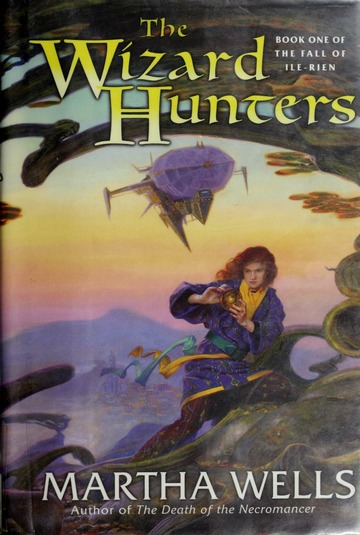
Friday Reads, the Wizard Hunters, Book 1 of the Fall of Ile Rien series, by Martha Wells
Years ago I read The Wizard Hunters, by Martha Wells, and waited expectantly for the rest of the series to come out, The Ships of Air, and The Gate of Gods. So after reading her more recent work (the Murderbot series), I wondered how the older series compared. It’s still wonderful world building, character building, and plotting,
We meet Tremaine Valiarde at her home estate, trying to find a suitable manner of suicide. Her city, country, and world, are under attack by an unknown enemy they call the Gardier. They don’t even know where on their world these people come from. The sinister black dirigibles started attacking with bombs and were protected with a magic they couldn’t protect themselves from. Tremaine has been working in the war effort, risking her life in the ruins to save lives, and is so very tired. She’s been put on leave by her relief group. In Tremaine’s world, Ile Rien is her country, somewhat French in flavor, and set approximately the early 1900s—along with magic and wizards; there are telephones, electric lights, radios, motor cars, and guns.
Tremaine is recruited, with a magical childhood toy, the Damal Sphere, to assist in classified work on an unknown spell left by the foremost wizard of her country, and her godfather, Damal, and Nicholas Valiard, her father, after they disappeared shortly before the war. The sphere had been copied for use with the spell, but backfired tragically. The hope is that the original will make it work correctly. It does, of course, and transports them to a different world. Where wizards are called Sorcerers and are all homicidally mad. The natives of the closest nation are Syprians, and each city is built near a magical source they call a God, which protects them from sorcerers, and their creations, curslings. It is on a small island off the Syprian coast often used by sorcerers, that the group from Ile Rien find themselves shipwrecked. A Chosen of the God, Giliad, and his foster brother Illias, are trying to check the same island for the return of a sorcerer, which is their job, to find and kill sorcerers. Instead of traditional sorcerers, they find a Gardier base. Since the technology is beyond their own level, the assume most of it is “curse” driven, (spelled), when it’s actually guns, electric lights, and an air ship. But the Gardier have magic, too. The pair have never seen or heard of these people before. Syprians are well-traveled merchants, trade with other countries and groups in their world.
Tremaine is an interesting character to begin with, her father is much like a blend of Sherlock Holmes and Moriarity. Two of her guardians are wizards, and one, unknown to her until the events of the book, is one of the Queen’s guard. While she herself feels a bit split about her personality—she was known as a playwright before the war, and the way she can react to threats, is commented on by her new friend, Florian, a wizard in training. She tries to keep the more menacing side of her personality hidden, as well as the strange set of talents learned from her father and his friends. However, in the situations in the series, she certainly grows to accept them, as they come in handy.
Illias and Gilead, from the Syprian mainland are also an interesting pair of men. Their civilization is a matriarchy, so property is passed through the female line, although wars are fought by both sexes. As a Chosen of the God, Gilead can sense “curses”, but has more difficulty sensing the spells of the Ile Rien wizards. They both have a tragic backstory, where a sorcerer fooled them both, and cursed to death three female members of their family.
The Fall of Ile Rien series is much like potato chips—it’s hard to stop at just one.
Posted in Books & Reading
Tagged Fantasy, Friday Reads, Martha Wells, The Wizard Hunters
Leave a comment
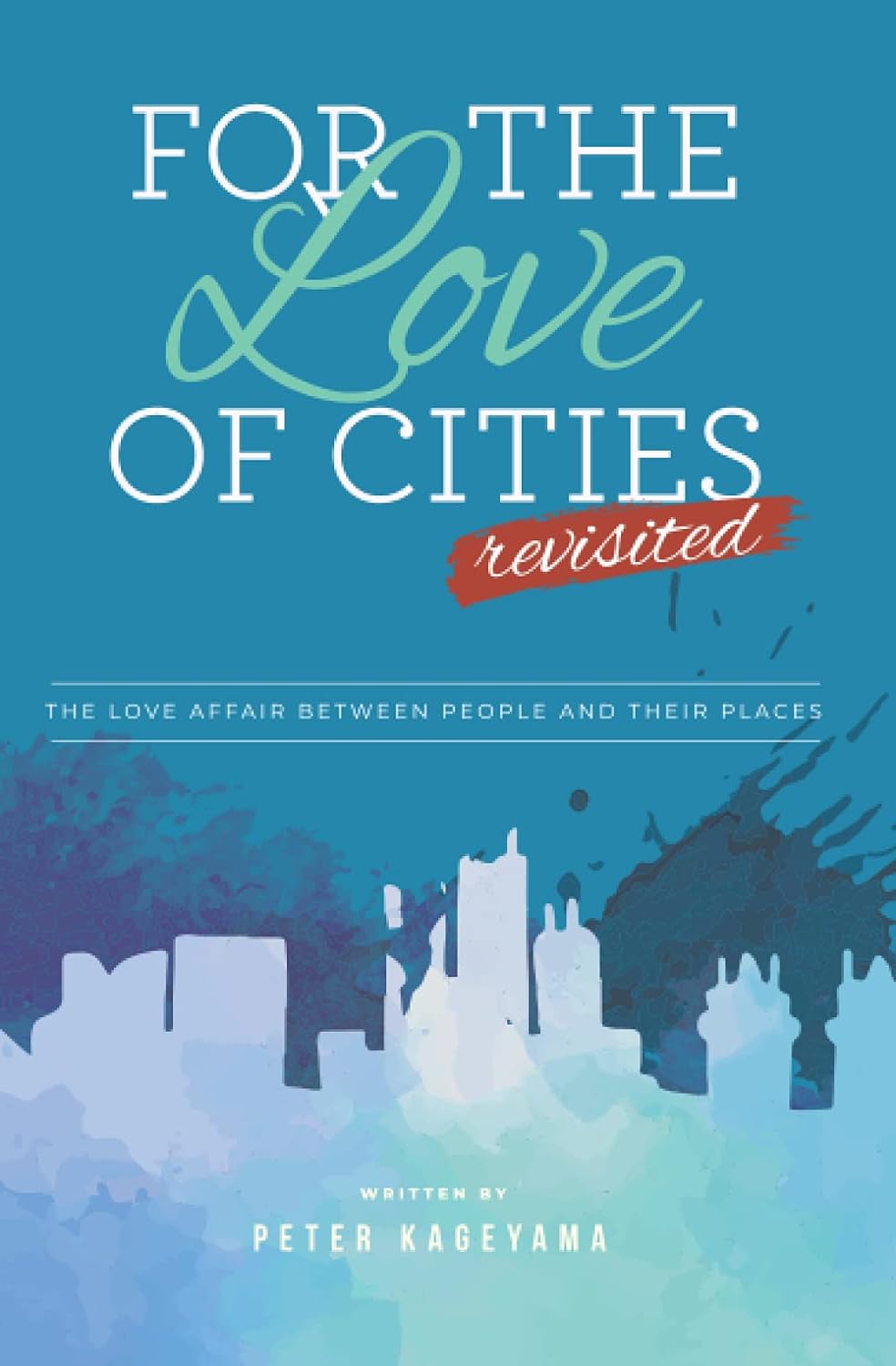
Friday Reads: For the Love of Cities, revisited by Peter Kageyama
A lot of you know that I’m not from Nebraska. I was born near Milwaukee, WI and lived there until I went to college in Minnesota. Over the years I’ve visited a lot of places too. Everywhere I go, I talk to people and get a feel for the place. I was in Tokyo, Japan most recently, so I’ll use that as an example. As I walked the streets of this foreign land, I had to remember that most people in the city were just home. Bear in mind that I don’t speak Japanese very well, but you can still tell who’s happy where they are, and who is crawling out of their skin waiting for a chance to leave.
That’s what For the Love of Cities: revisited by Peter Kageyama is all about. What does it take to make people fall in love with their city? Why do people choose some cities over others? Whenever I visit a new place, I can instinctively tell whether or not I could live there. I never really considered any actual criteria for the decision until I read this book. I just knew. Now I see greenery, coffee shops, places to relax and connect with people, clean streets, and plenty of shops and art embedded into the fiber of the community. I learned how to really look at a city.
My academic days still make me refer to authors by their last name. But this book makes people feel like family. So I’ll call him Peter. I don’t think he’ll mind, and I’ll also never meet him to find out. Peter digs into how cities come to be, and the many variables that force change over time. I also watched the author talk Peter did with Heritage Village. It’s free on YouTube if you want to check it out. That video adds visuals to his stories about how history shaped cities like Chicago, Detroit and many others. Sometimes dark parts of history like racial segregation and hate shape city lines that must be repaired over time for the city to adapt and thrive in the future.
When I visit other cities I usually dress to blend in. Just another Midwesterner in a t-shirt and leggings. In Japan I didn’t even try. Pretty sure I was the only curly-headed Native American in the whole country, so I wore bright colors or coffee t-shirts and capris everyday. My body type was never going to fit into such a petite country anyway. Even though their waffles are surprisingly good. I digress. Japan was awesome.
If you didn’t factor in the language barrier and distance from everything and everyone I know, I would actually live there. I walked the streets in my deeply American sandals and pondered how cities draw people in to live and work in a new land. What drew me to Lincoln, NE? What made me stay? The people? The place? The job? A little bit of all the above? I have new answers now.
Read this book if you want to look at your city differently. It’s a book full of stories and observations about little things that blend into the background of the place you’ve lived for years. When you’re done, take a walk around your city. Town. Wherever you call home. Try it with any town. Ask yourself why people choose this place? Why do people stay? If people are leaving, what could change to turn the tides? Peter will help you explore old places with fresh eyes. Just give it a try.
Friday Reads: The Brothers Hawthorne, by Jennifer Lynn Barnes
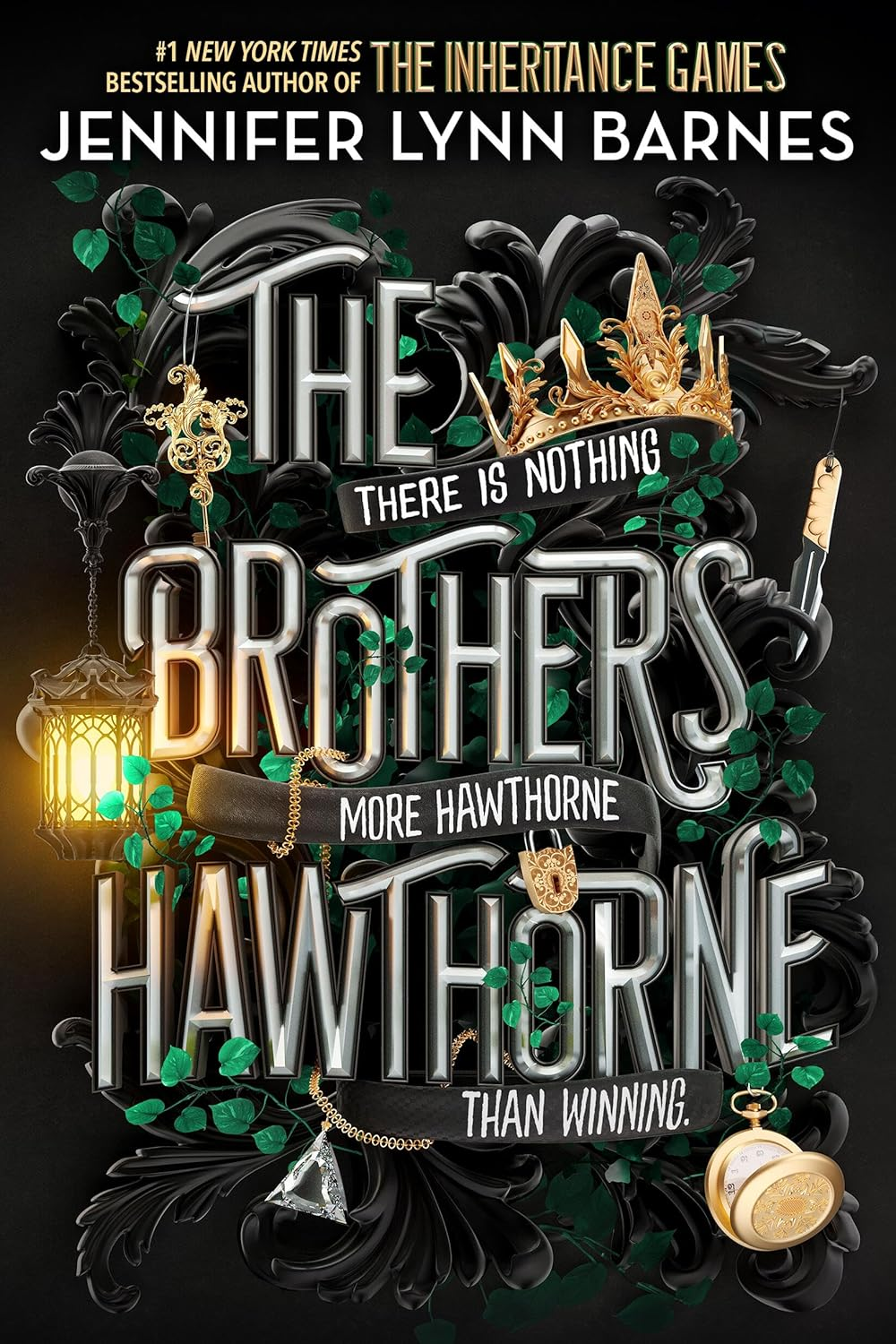
After Holli Duggan wrote a Friday Reads post about it, I listened to the Inheritance Games trilogy last year–and loved it! So when a fourth book in this YA series was released this summer, I had to listen to that as well, and it did not disappoint. A 5th book, The Grandest Game, is due out in July 2024.
Four brothers. Two missions. One explosive read. And the stakes have never been higher.
Grayson Hawthorne was raised as the heir apparent to his billionaire grandfather, taught from the cradle to put family first. Now the great Tobias Hawthorne is dead and his family disinherited, but some lessons linger. When Grayson’s half-sisters find themselves in trouble, he swoops in to do what he does best: take care of the problem—efficiently, effectively, mercilessly. And without getting bogged down in emotional entanglements.
Jameson Hawthorne is a risk-taker, a sensation-seeker, a player of games. When his mysterious father appears and asks for a favor, Jameson can’t resist the challenge. Now he must infiltrate London’s most exclusive underground gambling club, which caters to the rich, the powerful, and the aristocratic, and win an impossible game of greatest stakes. Luckily, Jameson Hawthorne lives for impossible.
Drawn into twisted games on opposite sides of the globe, Grayson and Jameson—with the help of their brothers and the girl who inherited their grandfather’s fortune—must dig deep to decide who they want to be and what each of them will sacrifice to win.
** Synopsis courtesy of Audible.
Posted in Books & Reading, General, Information Resources
Tagged Book Covers, books, Friday Reads, Reading
Leave a comment
Friday Reads: Nasty, Brutish, and Short: Adventures in Philosophy with My Kids, by Scott Hershovitz
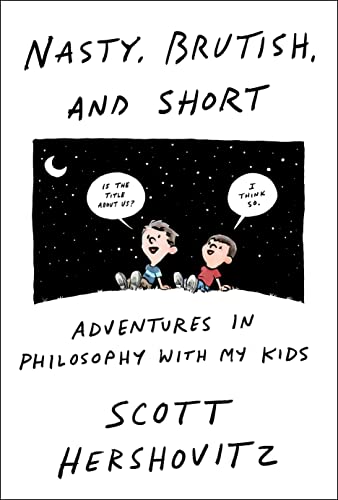
A Facebook friend who also happens to be a librarian recently posted “If you want to have a cursory understanding of a complex topic…get a children’s book about it.” Brilliant counsel! And while that’s not exactly what I did, it was in the back of my mind when I stumbled on Nasty, Brutish, and Short: Adventures in Philosophy with My Kids, by Scott Hershovitz.
Nasty, Brutish, and Short isn’t a children’s book, but it is a book by a philosopher recounting conversations he’s had with his young sons, Rex and Hank, about philosophy. I figured if he could make philosophy accessible to them, maybe he could do the same for me. That, it turns out, was his plan all along. As he writes in the introduction, “[t]his book is inspired by kids, but it’s not for them. In fact, kids are my Trojan horse. I’m not after young minds. I’m after yours.”
In twelve chapters, each devoted to a topic ripe for discussion (rights, punishment, authority, knowledge, truth, etc.), Hershovitz shares stories of children (his own and others’) initiating and participating in philosophical inquiry with greater facility than most adults. In fact, as he goes on to show, they often wind up pondering the exact same questions as renowned philosophers of yore! (Examples include the shifted color spectrum, credited to John Locke, Aquinas’ first cause argument, and Descartes’ Cogito: “I think, therefore I am.”)
Chapter Four of Nasty, Brutish, and Short, titled “Authority,” is a good example of how Hershovitz approaches his subject. He begins with a kid-related anecdote—his son Rex refusing to comply with his father’s request that he put on his shoes. Kids’ chafing at parental authority is nothing new. What kid hasn’t uttered the phrase “You aren’t the boss of me!” to a frazzled parent seeking compliance? And what parent hasn’t responded “Because I said so” when asked “Why” by a stubborn child?
For Hershovitz, however, such encounters are great jumping off points for discussions about power vs. authority, the nature of obligation, and the role reasoning and responsibility should play in compliance. He writes about these concepts as they play out in contemporary life–between bosses and employees, parents and children, teachers and students, the government and the governed. (Gordon Ramsay in Kitchen Nightmares even makes a cameo.) He shares various philosophers’ takes on authority, as well as highlights from his many conversations with Rex and Hank about the subject.
By the end of each chapter you realize not only that Hershovitz has gotten you to “do philosophy” with him, but also that philosophy—thinking carefully about important things–is something worth practicing ourselves and encouraging in our children. (Don’t worry—Hershovitz is well aware that there is a time and a place, especially with kids!)
In his conclusion, titled “How to Raise a Philosopher,” Hershovitz reminds us of what he thinks the goal should be:
The aim is not to raise a professional philosopher. It’s to raise a person who thinks clearly and carefully. It’s to raise a person who thinks for themself. It’s to raise a person who cares what others think—and thinks with them. In short, the aim is to raise a person who thinks.
Definitely a worthy goal! And an inspiring read!
Hershovitz, Scott. Nasty, Brutish, and Short: Adventures in Philosophy with My Kids. New York: Penguin, 2022.
Friday Reads: Chapter and Curse
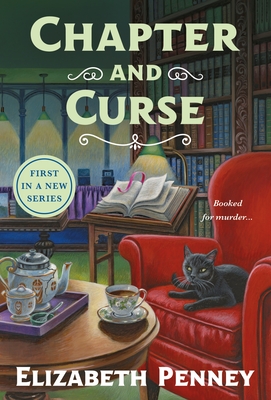
With the cooler weather (and tonight’s freeze warning!), it seems like the sort of morning for another cozy mystery.
Chapter and Curse, by Elizabeth Penney, is the first book in the Cambridge Bookshop series. The third book will be published later this month. Lovely settings, interesting characters, good mysteries, plenty of literary references.
Molly Kimball and her mother, Nina, desperately could use a change in their lives. One day, they receive a letter from Nina’s Aunt Violet asking for help with the family’s struggling 400-year old bookshop in Cambridge, England. Molly (a part-time librarian) jumps at the chance to leave Vermont and help revitalize the family business, while Nina looks forward to reconnecting with family.
They arrive to find the “Thomas Marlowe Manuscripts and Folios” bookshop in rougher shape than expected, especially financially. With loans rapidly coming due, a cousin is threatening to sell the bookshop to a big-box store (which also threatens the other small shops along the same street). Molly decides that the bookshop will host a poetry reading, in coordination with the village’s book festival, to bring in new customers and raise some money.
The event appears to be a huge success until Molly finds one of the guests murdered (and evidence pointing directly towards her great-aunt). Was this driven by the bookshop’s recent money troubles? Blackmail of some kind? Or was it connected to the evening’s famous poet, who happens to be one of Violet’s oldest friends? What really happened with the rest of their friend group over fifty years ago? What other secrets does this charming little street hold?
Determined to clear her great-aunt’s name, Molly tackles these questions with the help of new friends, a possible romantic interest, a few odd family members, and a cat named Puck.
- Penney, Elizabeth. Chapter and Curse. Sept. 28, 2021. St. Martin’s Paperbacks.
- Penney, Elizabeth. A Treacherous Tale. August 23, 2022. St. Martin’s Paperbacks.
- Penney, Elizabeth. The Fatal Folio. October 24, 2023. St. Martin’s Paperbacks.
Friday Reads: Ponyboy, Poetry, Kees, and You
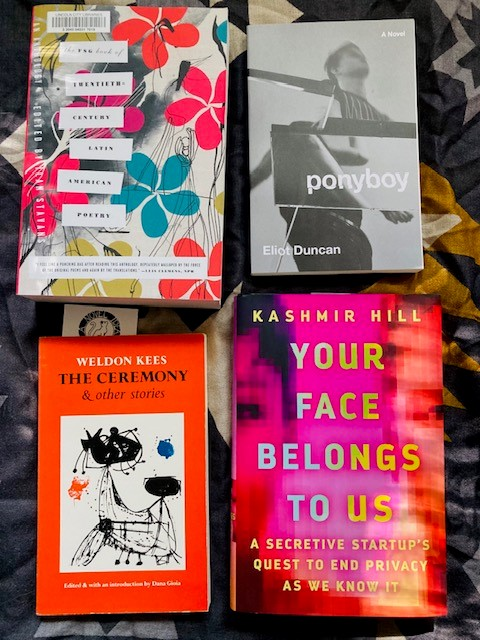
I have started reading too many books to write about just one, so for this post, this time, I’m writing about four books. A debut novel with Nebraska connections getting national critical attention, a poet often overlooked in favor of more famous compatriots, another Nebraskan of cinematic mystique, and a brand new non-fiction book about tech that will make you want to put down your phone camera. Let’s go!
Longlisted for a National Book Award, and written by an author born in Nebraska, Eliot Duncan’s Ponyboy is a globetrotting story with a trans, addicted protagonist—but the story is about relationships: between parent and child, within friend groups, and also the relationships we have with ourselves–and with our pasts and our futures. This is the first novel from the Iowa Writers’ Workshop alumnus. More about the book, the author, and recent press can be found at the author’s website .
I recently read about Gabriela Mistral, the first Latin American writer to win the Nobel Prize for Literature in 1945, and I want to read more of her work. I checked out this enormous book, The FSG Book of Twentieth-Century Latin American Poetry, because it shows each work in its original language as well as its translation into English. Being able to read Mistral’s poems in Spanish and English helps me appreciate her intentions and the beauty of her work. Mistral wrote about unexpected things in unpopular ways. You can read some of her work here.
Weldon Kees is a fascinating character, born in Beatrice in 1914. He had a colorful and exciting life in Nebraska and neighboring states, eventually moving to California, where he disappeared in 1955. He produced art in many forms, and also worked as a librarian, among other interesting jobs. After seeing a recent story about new acquisitions related to Weldon Kees at University of Nebraska Libraries, I picked up a used copy of The Ceremony & Other Stories. I am still waiting for the movie of his life. Check this link for a photo from Kees’ diary in 1954 to see a list of books and movies he enjoyed that year.
Your Face Belongs to Us is an important story about what happens when technology moves faster than ethics or the law. Kashmir Hill writes about the tech company that best optimized facial recognition software, and the various motives of the people involved with the project. If you think they don’t have your best interests at heart, you are correct. No matter your opinion of facial recognition software, if you’re interested in the technology and its effects, this is some old-fashioned shoe-leather reporting that will surprise and disturb you.
Duncan, Eliot. 2023. Ponyboy : A Novel First ed. New York NY: W. W. Norton & Company.
Hill, Kashmir. 2023. Your Face Belongs to Us : A Secretive Startup’s Quest to End Privacy As We Know It First ed. New York: Random House an imprint of Penguin Random House LLC.
Kees, Weldon and Dana Gioia (ed.). 1984. The Ceremony & Other Stories. Port Townsend Wash: Graywolf Press.
Stavans, Ilan. 2011. The FSG Book of Twentieth-Century Latin American Poetry : An Anthology. 1st ed. New York: Farrar Straus Giroux.
Friday Reads: So Many Steves: Afternoons with Steve Martin by Steve Martin and Adam Gopnik
This is another Friday listens as this title is only available in audio format. Published by Pushkin Audio (co-founded by Jacob Weisberg and Malcolm Gladwell) — “Pushkin audiobooks are not your typical author-in-front-of-a-microphone productions. They are immersive — you hear the actual voices of the people being interviewed, archival footage, and beautiful scoring.” I’ve been a Steve Martin fan since his white-suit and arrow-through-the-head days. His SNL skits from Dancing in the Dark with with Gilda Radner to the Festruck Brothers with Dan Ackroyd were legend. Years ago, he loaned a piece of art from his collection for an exhibit in the Sheldon Museum of Art and I often sat and watched it after my campus walks. The proximity was oddly thrilling.
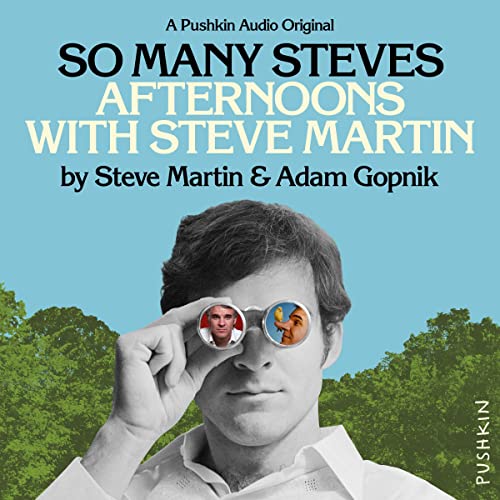
This audio-biography is a series of conversations recorded over the course of a year between Steve and long-time friend Adam Gopnik. The two met in the fall of 1990 at a controversial exhibit Gopnik curated called High and Low: Modern Art and Popular Culture at the Museum of Modern Art. They shared many conversations since that time and decided to record Adam, asking questions about Steve’s evolution in both his personal and professional life. The topics cover Steve as magician, standup comic, actor, writer, playwright, musician, composer, and art collector. Hence the title, So Many Steves, that was inspired by a poem written by e.e. cummings, So Many Selves.
I saved this book to listen to on the morning of my birthday while I walked. I learned that Steve used Carl Reiner as a personality mentor watching and studying Carl’s ease with people in conversation employing deft humor. When Tommy Smothers said that “talking to Steve Martin is like sitting in a room alone” – you understand, Steve knew he needed help overcoming his off stage social ineptitude. The best takeaway was Steve reflecting on his life in the late 80s at a time when he began trusting his craft and wondering what was different. There was a Hungarian word for this, Pihentagyú, which means “a relaxed brain.” It describes a quick-witted person who can come up with sophisticated jokes or solutions because their mind is at rest. With a relaxed brain, it is easier to think quickly and clearly. I would credit this to both age and experience, so listening to this while marking another year was especially meaningful.
Of course, I understand the value of print, and I am a long time audio book listener, but these hybrid audio presentations are exactly what I want from an author and performer. A conversational narrative accompanied with a specific soundtrack relevant to the story. If this sounds like your kind of thing, check out Miracle and Wonder: Conversations with Paul Simon, a finalist for the 2023 audiobook of the year. Audible’s Words+Music recordings with over 35 notable musicians are also something to consider. There’s no shortage of ways to delight your aural senses.
Steve Martin and Adam Gopnik So Many Steves: Afternoons with Steve Martin. Pushkin Industries. 2023.
Friday Reads: “The Wheel of Time Series” by Robert Jordan
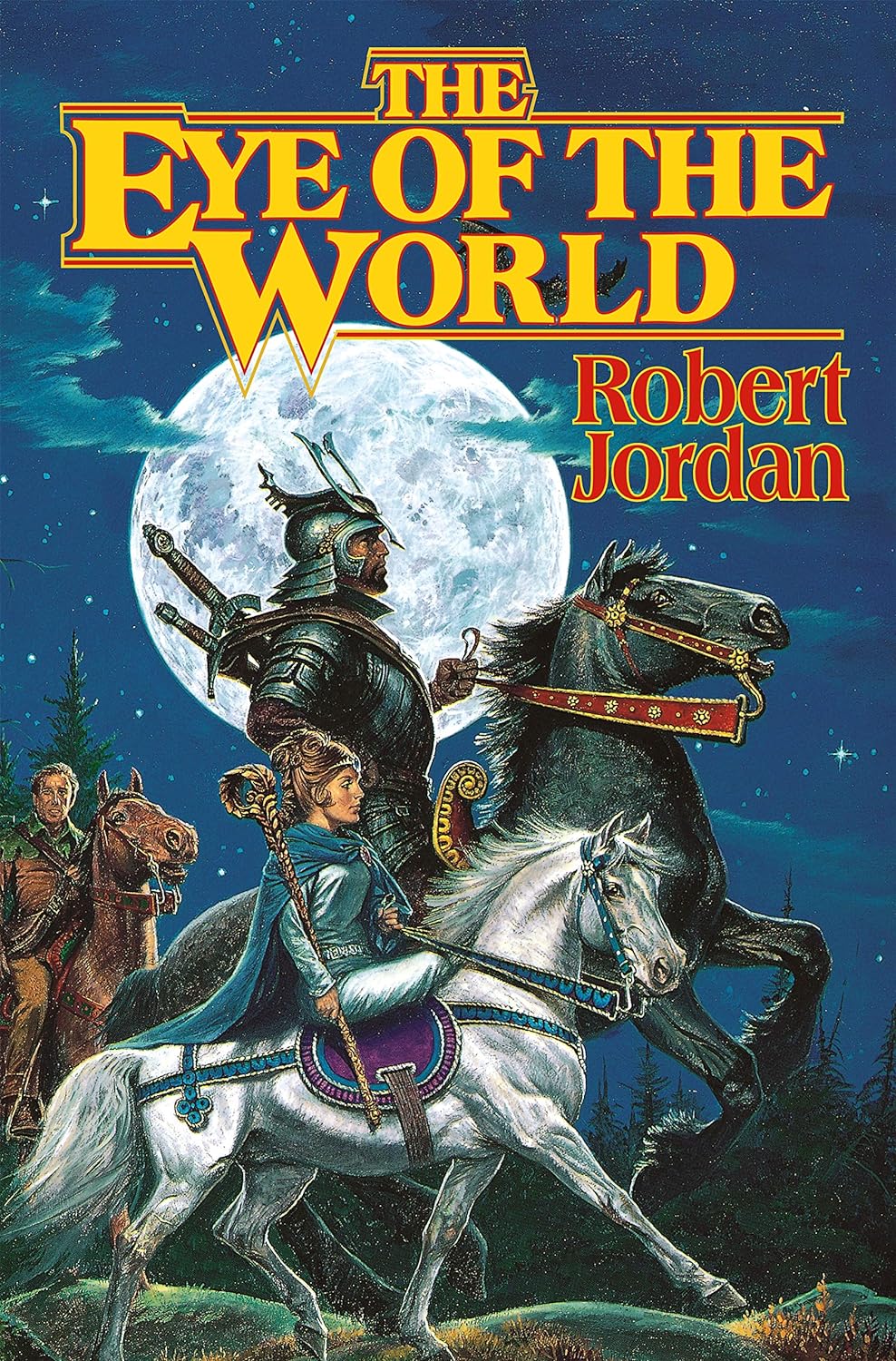
I’ve been reading this series since I was a freshman in high school, and by then the first books were almost 15 years old, so you know they pass the test of time. I’ve been reading and rereading this series off and on ever since. It’s one of my favorite fantasy series, full of flawed characters, adventure, love stories, and tragedies. The first book in the series is The Eye of the World, It follows a group of young adults, childhood friends, as they’re pulled out of the comfortable small village they’ve always known and thrown into a fight between good and evil and the possible destruction of the world as they know it. It’s a long series, 14 books, and Lincoln City Libraries and Nebraska Overdrive Libraries both have all of them in eBook and Audiobook format available on Libby. If you were a fan of Game of Thrones with its multiple character story lines and young heroes and heroines, this is a great series for you. Prime Video came out with a TV series last year, and while I enjoyed it, I will always urge someone to read the books. They are infinitely better.
Jordan, Robert. The Eye of the World. Tor Books. 1990.
Posted in Books & Reading, General
Tagged A Hawthorne and Horowitz Mystery, Anthony Horowitz, Book Review, Friday Reads, mystery, Reading, series, The Word is Murder
1 Comment
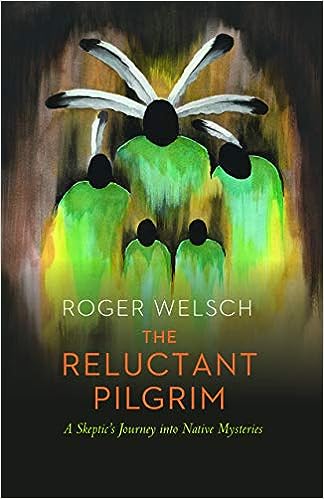
Friday Reads: The Reluctant Pilgrim by Roger Welsch
Roger Welsch’s The Reluctant Pilgrim is a curious and relatable book, a book of inter-connected stories from Welsch’s forty-year exploration of Native American community and spirituality. Known for his humor, this is not a book of humor. It is a thoughtful reflection on personal experiences and associations as an adopted member of the Omaha Tribe. Welsch’s journey expounds on the unexplainable, mysterious, the physical – round stones, eagle feathers, buffalo skulls, coyotes, and crows. In short, a phrase he repeats often “Something Is Going On.” Throughout, Welsch shares the inspiration and wisdom he experiences in his many associations with Native American communities, Native elders, ceremonies, and nature.
I confess to reading only this book among the forty plus Welsch wrote over many years. I do have several on the bookshelf and I look forward to reading them. Like many others, I’ve enjoyed Welsch’s public presentations. Storytelling was his special gift whether as a speaker or as a writer. His humor is notable but his generosity, perspective, wisdom, and devotion to the stories of the Great Plains stands out as truly remarkable.
Welsch left a tenured professorship at the University of Nebraska-Lincoln to move with his family to a small 60-acre property near Dannebrog, Nebraska. From there he intended to pursue a writing and speaking career – and that he did. Like many, I remember Roger Welsch’s twelve plus years as a correspondent presenting his biweekly “Postcards From Nebraska” on CBS News Sunday Morning.
It’s interesting that Roger Welsch, the recognized dean of storytellers, has a nearly uncountable number of stories about his own life that have become a part of our folklore. His interests were eclectic. He developed an interest in tractors and wrote about them. I gave away Busted Tractors and Rusty Knuckles to a farmer family member. Welsch founded the Liars Hall of Fame and he served on his county’s weed-control board to be a voice for preserving native grasses and other plants.
Others who have written about Welsch’s books recommend that The Reluctant Pilgrim be read with his earlier book, Touching the Fire.
Roger Welsch. The Reluctant Pilgrim: A Skeptic’s Journey into Native Mysteries. Lincoln: University of Nebraska Press. 2015.
Friday Reads: Educated by Tara Westover
As a relatively new Nebraska Library Commission employee, I have thoroughly enjoyed learning about the various collections at the Commission, including the impressive book club kits. I’m always curious to see what is being shipped out to libraries across the state on any given week. Knowing my interest in non-fiction, my colleague pointed one of the memoirs in the book club kits: Educated, by Tara Westover. It was not yet on my Libby wish list, so I had to add it, and I later listened to it as an audiobook.
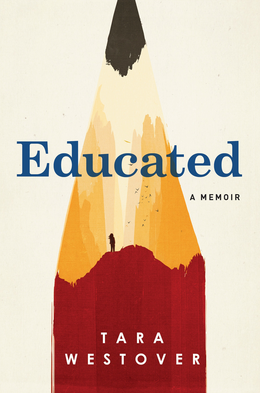
Tara Westover was raised by a fundamentalist Mormon family in rural Idaho. Her parents coached their children to say they were “homeschooled” if anyone inquired, but in reality Tara spent most of her childhood working alongside her father and brothers in the family scrapyard. Her parents were suspicious of many things in the world outside their secluded family. They rejected formal education and modern medicine, preferring to rely on faith and homeopathy. Her father was obsessed with preparing for the end of times, and compulsively stockpiled food and supplies. He distrusted everything about the government and chastised most outsiders as socialists who were influenced by the Illuminati.
Tara’s childhood was filled with fear and sadness. She experienced horrific violence, shaming, and threats from an older brother. The family culture taught that women should be submissive and modest, and she was frequently shamed or witnessed the shaming of other women. But Tara was also inspired to learn and to leave. She decided to follow in the footsteps of an older brother who was self-motivated to study, take the ACT, and go to college.
Tara’s challenges did not disappear after enrolling at BYU at the age of seventeen. Much of the book deals with her collegiate life and self-discovery. Tara’s journey had many ups and downs as she navigated a world she was unfamiliar with, and she dealt with a lot of push and pull from her family, who disputed her claims of abuse. They have continued to disagree with her perspectives, and her mother later published a book of her own.
Educated covers a lot of heavy topics including abuse, mental illness, and many layers of family trauma. But it is also a story about self-discovery, belonging, and finding a voice, which many readers will likely connect with. Educators and those who work with youth may find inspiration in the power of mentoring those without family support to find opportunities and strive to do the big things they never imagined they could do. Larger themes of facing fears and finding strength also run through the book. One of my favorite things Tara discovers is “books were not tricks and I was not feeble.”
Westover, Tara. Educated. Random House, 2018.
Friday Reads: Chaos: Charles Manson, the CIA, and the Secret History of the Sixties

The subject matter in Chaos explores many of the general goings on in the 60’s and 70’s, and a few specific ones. Tom O’Neill begins this journey by examining (with a fresh lens independent of Vincent Bugliosi’s Helter Skelter), the Mason murders and leads to the CIA, government cover-ups, frauds, and numerous examples of “this doesn’t look right”. It would be easy to dismiss all of what O’Neill writes about as conspiracy. I’m certain that some will, without even reading his reporting, but doing so would be a closed minded disservice to understanding important facets of what he explores. Speaking of conspiracy, we live in times where discourse, discussion, and debate are largely dead. Instead, we have labels and zero substance – quick one-liners (often labels) that grab attention and fit our societal mentality of the short or non-existent attention span of citizens. This is consistent with the omnipresent cell phone mentality – use of the phone between sets at the gym, use of the phone during in-person meetings whilst someone else is speaking, and even the use of the phone between writing sentences. It should be noted that the book’s title – Chaos, is a reference to the CIA’s domestic espionage program from 1967 to 1974, encompassing numerous government activities.
Chaos starts with this fresh look at the Manson murders, challenging Bugliosi’s Helter Skelter theories. While O’Neill doesn’t purport to have all the answers or a smoking gun, he illustrates, often from public records and interviews, many inconsistencies in the official narratives. Whether related or unrelated, O’Neill uncovers facets of the CIA’s involvement in a number of things that oddly intersect the Manson players, notably its CHAOS and MK-ULTRA programs. Undoubtedly, the CIA was running in the same circles as the Manson family (as was Hollywood), and O’Neill aptly sums up his conclusion that things did not smell right:
“So when I plunged into their stories with Manson and found evidence of serial dishonesty—again, often connected to federal law enforcement and intelligence agencies—I had to ask myself if I was crazy to be doing all of this.”
This book is relatively long, at 528 pages. O’Neill’s contract was cancelled by the original publisher and sustained threats of lawsuits and smears from Bugliosi, but eventually published after O’Neill’s long period of research. An apt summation can be found in O’Neill’s Epilogue:
“My goal isn’t to say what did happen—it’s to prove that the official story didn’t.”
I imagine that since so much time has elapsed between the events described by O’Neill in Chaos and the current day, much of what he writes will be largely ignored. Likely, had this book been written closer to the Manson murders, O’Neill would probably be smeared under the umbrella of something like the Martha Mitchell effect. Doing so would largely be a mistake that seeks to erase important facets of American history, albeit unflattering to law enforcement and the CIA.
O’Neill, Tom and Piepenbring, Dan. CHAOS: Charles Manson, the CIA, and the Secret History of the Sixties. New York, Little, Brown and Company. 2019.
Friday Reads: The Guest Lecture by Martin Riker
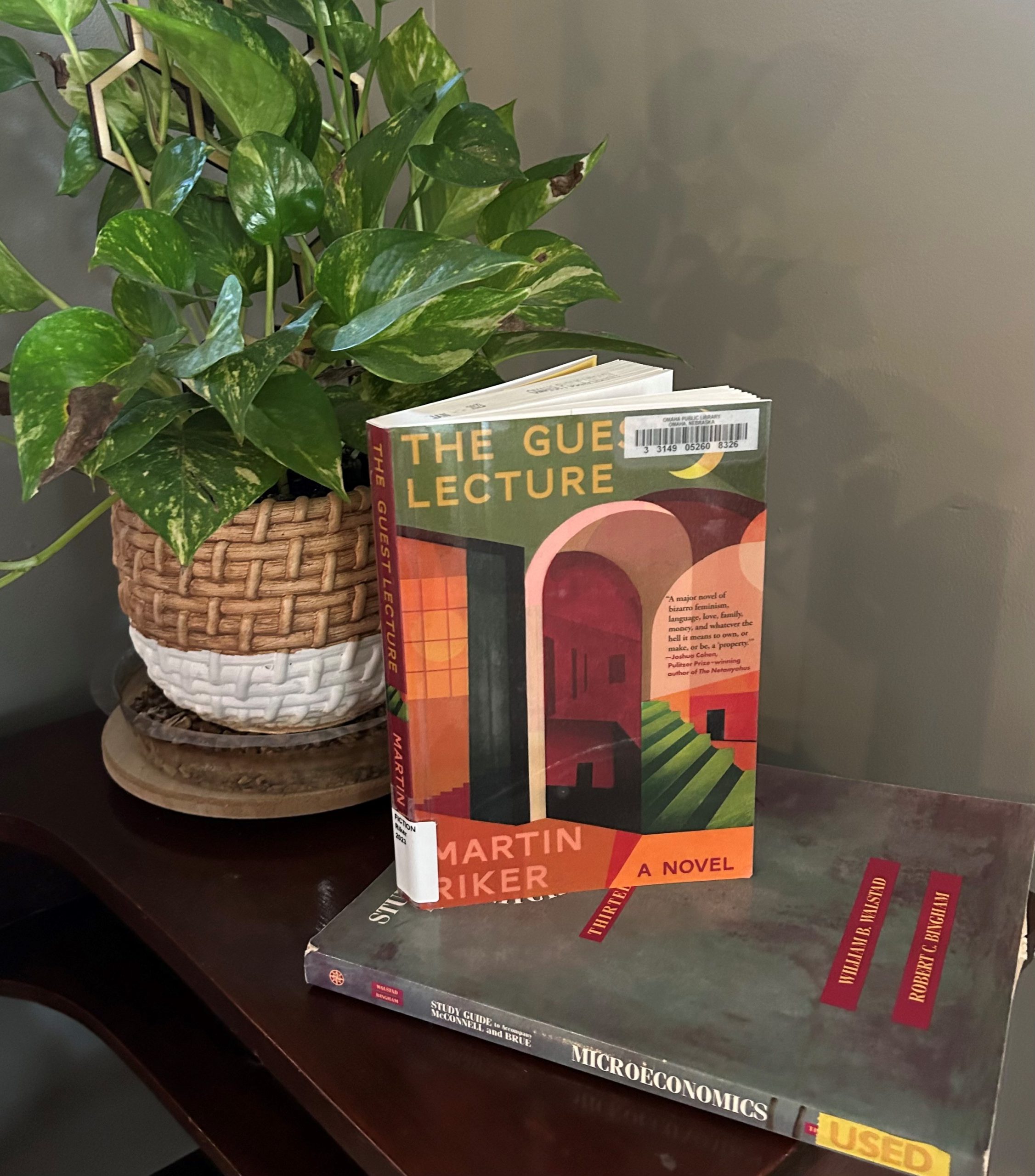
If stream-of-consciousness writing, existential dread, and fun facts about 1930’s economic theory are your jam, you are in for a treat.
When Abby accepted the invitation to give a guest lecture on the economic optimism of John Maynard Keynes, she was full of that rose-colored confidence herself – a published academic on her way to securing tenure at a prestigious university, secure in her marriage, renovated home, and promising career.
Now, the night before the speaking engagement, she lies awake in her shabby hotel room, unable to sleep and burdened with self-doubt. Her entire world upended, she has been denied tenure, her book on Keynes declared derivative, and imposter syndrome looms large. Woefully unprepared for her talk, she attempts to silently rehearse while her family slumbers. With an imaginary Keynes keeping her company, she mentally wanders the rooms of her house while discussing the economist’s predictions and historical relevance. Each room conjures memories of mistakes past, anxiety about current political and environmental crises, and rising panic about her future prospects.
As someone who often has trouble shutting off their brain to drift into dreamland, it was nice to step into someone else’s headspace for a while. I’ll admit, I read well past my bedtime.
Martin Riker. The Guest Lecture. New York, Grove Press, Black Cat, 2023.
Posted in Books & Reading
Tagged books, Friday Reads, literary fiction, Martin Riker, Reading
Leave a comment
Friday Reads: The Druid’s Call by E.K. Johnston
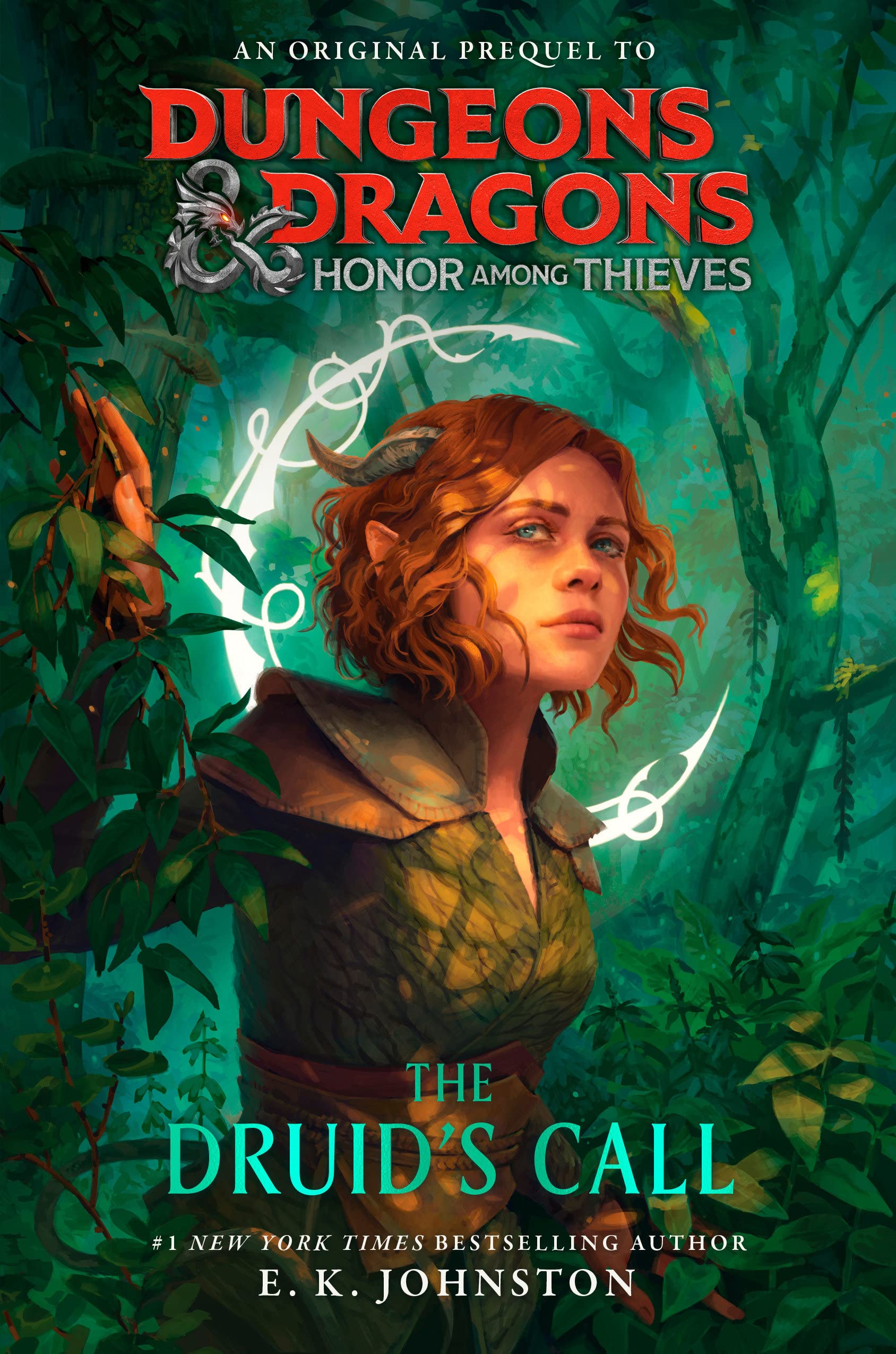
In all good hearts is a spot of darkness, and in all tragedy is a glimmer of light. – back cover quote.
I picked up this novel after watching the new Dungeons & Dragons movie, Honor Among Thieves. I have been playing D&D for almost 20 years, and in my opinion the movie was an accurate representation of a typical campaign. Exciting, fun, and full of unforeseen events and missteps.
The Druid’s Call is a prequel to the movie, telling the origin story of the tiefling, Doric. In the current 5th edition of D&D, tieflings trace their origins to a deal made in ancient times between power hungry humans and devils from the Nine Hells. Now, they look mostly human, but with horns and a tail, reminiscent of their devilish ancestry.
Tiefling ancestry can hide for many generations and as can sometimes happen, Doric was born to human parents who abandoned her as a child, due to her appearance. Doric struggles to find her purpose and even after being taken in and accepted (mostly) by a group of Neverwinter Wood elves, still feels like an outsider. Her best friend, Torrieth, is very supportive of Doric, encouraging her to practice being a ranger, like the other elves. However, they both soon learn that Doric’s abilities are really that of a druid.
As there are no druids in the elven community, Doric must leave the elves and travel to the Emerald Enclave to train as a druid. It is a difficult journey for her, full of adventures and encounters, both good and bad.
In the end, Doric learns to accept her tiefling and druid self so that she can return to her true family, her elven clan, and help protect them from the humans who have started moving deeper into the elves’ woods, destroying the forest as they go.
I was expecting this book to be like the movie, with campy escapades and exciting fight scenes. But, it was much deeper than that, and I truly appreciated how the author delved more into the characters in the book. As a D&D player, I know that The Druid’s Call portrays the Dungeons & Dragons universe accurately. But, you don’t have to know anything about D&D to understand and enjoy this book. (Or the movie.) The author has done a great job of presenting the D&D world so that anyone who likes fantasy, adventure, and an inspiring story will enjoy this book.
Friday Reads: Squished by Megan Wagner Lloyd
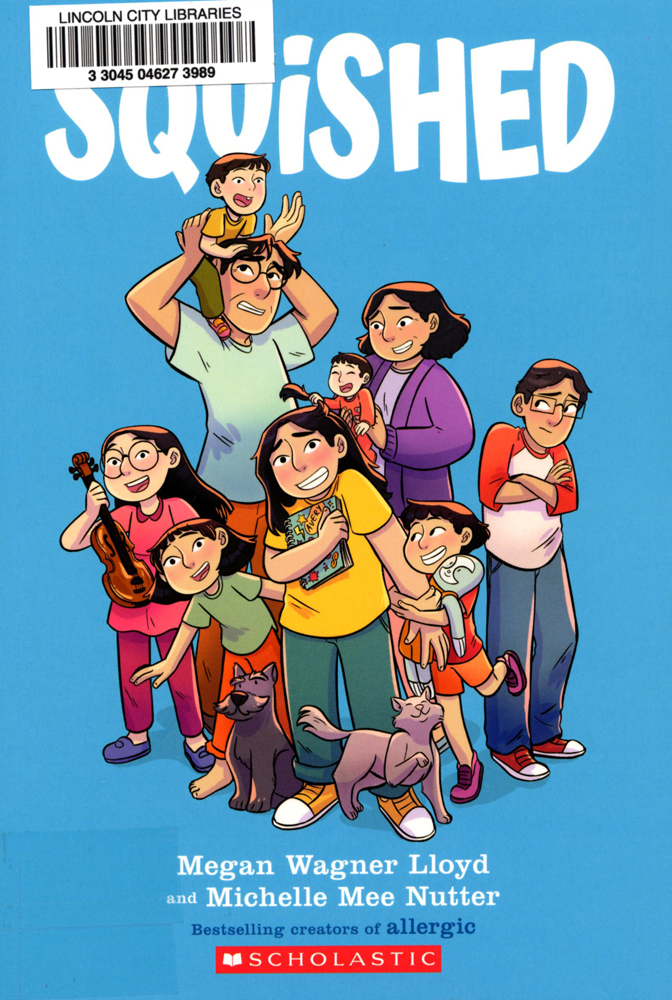
A full color graphic novel for tween readers, ages 8-12 or so. Avery (11) the second-oldest of seven children in the loving Lee family, is beginning to feel squished by her siblings. When her older brother is given a room of his own, and her room of two is becoming a room of three, (younger brother Max is moving in with Avery and her sister, Pearl), she prepares a list of reasons she should have her own room, to no avail.
Avery loves her family, she just gets a bit embarrassed and frustrated by them. She also has some good friends who she spends time with – and they share some inside jokes as well.
Now Avery has decided to earn money in order to have a room built for her in the basement. Walking dogs and selling lemonade do not work out well. Then she learns the family may be moving to Oregon for her mother’s new job, and a room of her own is not even an issue anymore. She doesn’t want to move away from her friends and all she knows.
There is plenty going on and readers will relate to Avery’s ups and downs.
Megan Wagner Lloyd. Squished. New York, Graphix, Scholastic Inc., 2023.

